When a Client Expresses Suicidal Thoughts, Your Response Must Be Immediate and Structured
In behavioral health, few situations carry as much weight as a client expressing suicidal thoughts.
Statements like:
- “I don’t want to be here anymore.”
- “I feel like ending it.”
- “I’ve been thinking about killing myself.”
are not just clinical concerns—they are critical incidents that require immediate, structured, and coordinated action.
In Washington, DC, responding to suicidal ideation is not only about clinical care. It also involves:
- risk assessment using standardized tools
- supervision and escalation
- crisis intervention
- documentation
- and, in serious cases, Major Unusual Incident (MUI) management and reporting
This guide provides a practical, step-by-step approach for providers.
Step 1: Stay Calm and Engage the Client
The first response sets the tone.
Do not panic, rush, or dismiss the statement.
Instead:
- remain calm
- stay physically present
- use a supportive tone
- acknowledge what the client shared
A simple response such as:
“I’m really glad you told me. I’m here with you, and we’re going to get you support.”
helps build trust and prevents escalation.
Your first goal is connection and safety, not problem-solving.
Step 2: Use a Structured Suicide Screening Tool (C-SSRS)
Do not rely on guesswork.
When suicidal ideation is disclosed, staff should use a standardized suicide risk screening tool, most commonly the Columbia-Suicide Severity Rating Scale (C-SSRS).
The C-SSRS helps determine:
- whether suicidal thoughts are present
- how severe they are
- whether there is a plan
- whether there is intent
- whether there has been prior behavior
Core questions assess:
- passive thoughts (“wish to be dead”)
- active thoughts of self-harm
- presence of a plan
- access to means
- intent to act
- previous attempts or behaviors
This tool helps you move from uncertainty to clear risk classification.
Step 3: Determine Level of Risk
Based on your screening and clinical judgment, classify the situation:
Low Risk
- passive thoughts only
- no plan
- no intent
- able to commit to safety
Moderate Risk
- active thoughts
- no immediate plan or intent
- some protective factors present
High / Imminent Risk
- active thoughts with plan
- intent to act
- access to means
- recent attempt or escalating behavior
If risk is high or unclear, treat it as urgent.
Step 4: Ensure Immediate Safety
If there is any meaningful risk:
- do not leave the client alone
- remain with the client or ensure continuous observation
- reduce access to harmful objects if possible
- move the client to a safer, controlled environment
- bring in additional staff if needed
Safety is the priority—everything else comes after.
Step 5: Notify a Supervisor Immediately
This is not a situation to manage independently.
Immediately notify:
- Clinical Supervisor
- Program Director
- On-call clinician (if applicable)
Supervision ensures:
- shared clinical decision-making
- appropriate escalation
- organizational accountability
Step 6: Activate Crisis Resources in DC
In Washington, DC, several crisis response options are available:
988 Suicide & Crisis Lifeline
- Call or text 988
- Available 24/7
- Provides immediate emotional support and crisis guidance
DBH Access HelpLine
- Call 1-888-793-4357 (1-888-7WE-HELP)
- Connects to crisis services and mobile crisis teams
Emergency Services (911)
Use when:
- there is immediate danger
- the client has a plan and intent
- a suicide attempt has occurred or is imminent
Do not delay escalation when risk is high.
Step 7: Develop a Safety Plan (When Clinically Appropriate)
If the client is stable enough and not being transported immediately, create a collaborative safety plan.
Include:
- warning signs
- coping strategies
- supportive contacts (family, friends)
- crisis contacts (988, providers)
- steps to reduce access to harmful means
- immediate follow-up plan
A safety plan must be:
- realistic
- specific
- documented
It is not a substitute for emergency action in high-risk situations.
Step 8: Document the Incident Thoroughly
Documentation must be detailed, clear, and defensible.
Include:
- the client’s exact statements
- results of the C-SSRS or risk screening
- clinical observations
- risk level determination
- actions taken
- supervisor notifications
- crisis services contacted
- client response and outcome
- follow-up plan
Avoid vague language.
Your documentation should tell a complete, chronological story of what happened and why decisions were made.
Step 9: Determine If This Is a Major Unusual Incident (MUI)
In DC behavioral health programs, certain crisis events may qualify as a Major Unusual Incident.
Examples include:
- suicide attempt
- active suicidal intent requiring emergency intervention
- hospitalization due to suicide risk
- serious self-harm
If the situation meets your organization’s MUI criteria, it must be handled through formal incident processes.
Step 10: Manage the MUI Process
Once the immediate crisis is stabilized:
1. Notify Leadership
- Program Director
- Compliance Officer
- Clinical leadership
2. Complete Internal Incident Report
Document:
- what occurred
- timeline
- staff involved
- interventions taken
3. Report as Required
Follow DC DBH requirements and your internal policy:
- initial notification within required timeframe
- full written report within designated period
4. Conduct Internal Review
Evaluate:
- staff response
- adherence to protocol
- documentation quality
- any system gaps
5. Implement Follow-Up Actions
- update care plan
- assign additional supervision
- provide staff training if needed
Common Mistakes to Avoid
Even experienced teams can make errors under pressure:
- not using a structured screening tool
- avoiding direct questions about suicide
- leaving the client alone
- delaying escalation
- incomplete documentation
- failure to notify supervisors
- missed incident reporting timelines
These mistakes increase both clinical and compliance risk.
Why Crisis Management Breaks Down
Most failures are not due to lack of care.
They happen because:
- staff are unclear on protocol
- roles are not defined
- supervision is delayed
- documentation systems are weak
- processes are inconsistent
In a crisis, lack of structure becomes visible immediately.
How BUAMS HR Supports Crisis Response
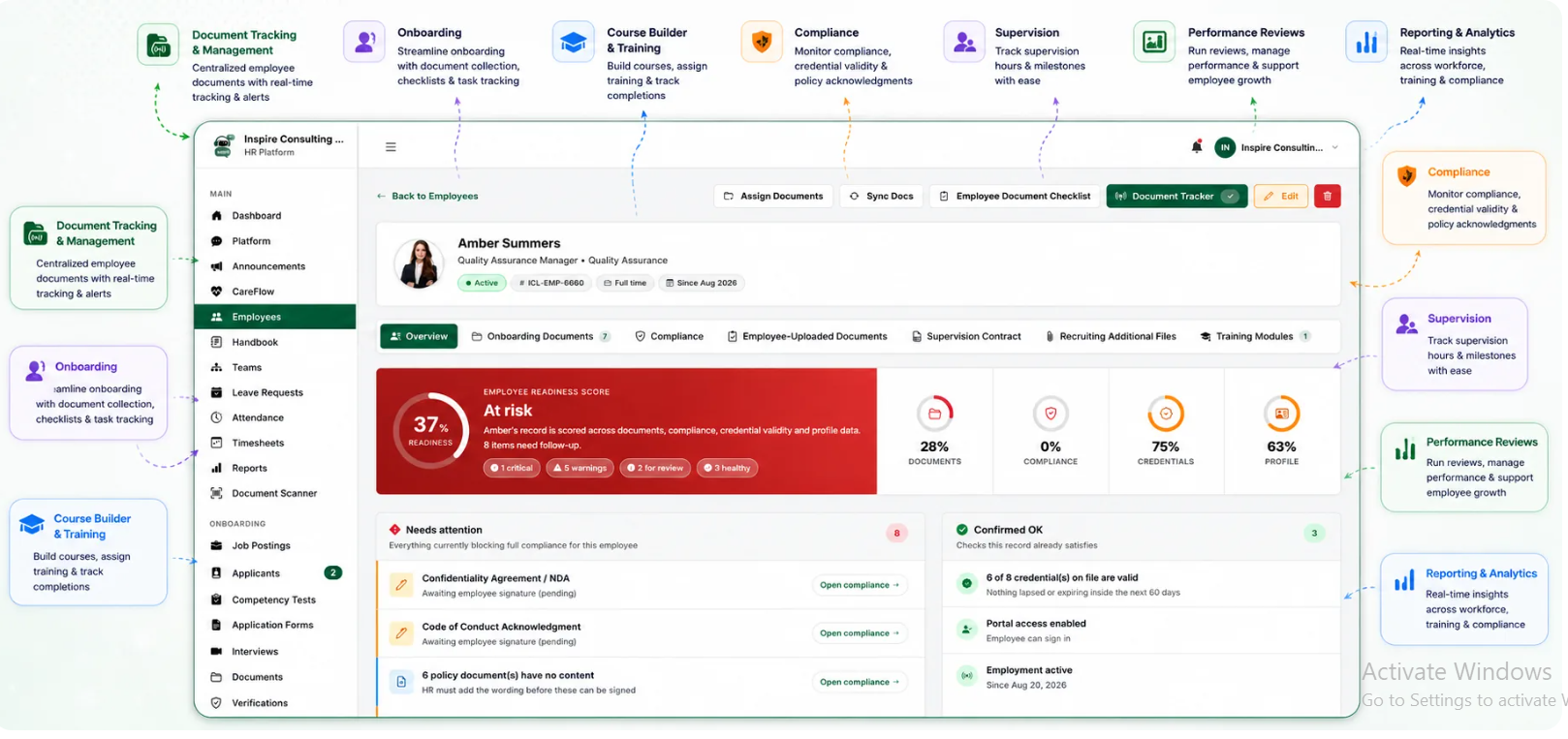
BUAMS HR helps organizations bring structure to high-risk situations by supporting:
- staff accountability and role clarity
- supervision and escalation tracking
- training on crisis protocols
- consistent documentation workflows
- compliance visibility across teams
This ensures that when a crisis happens:
- staff know what to do
- supervisors are involved quickly
- documentation is complete
- reporting is not missed
What Strong Crisis Management Looks Like
An effective organization can:
- respond calmly and immediately
- assess risk using structured tools like the C-SSRS
- escalate appropriately
- activate crisis services without delay
- document thoroughly
- complete MUI processes correctly
- follow up consistently
There is no confusion, no delay, and no gaps.
Final Thoughts
Crisis situations are some of the most critical moments in behavioral health care.
They require:
- clinical skill
- clear communication
- structured processes
- strong supervision
When handled properly, they protect:
- the client
- the staff
- the organization
Call to Action
If your organization needs stronger structure around crisis response, supervision, and compliance:
Use BUAMS HR free for 3 weeks — full access, no credit card, no contract.
See how you can improve accountability, documentation, and incident management across your team.
If it works, continue.
If it doesn’t, walk away.