When a Client Reports Suicidal Thoughts, Your Response Must Be Immediate and Structured
In Maryland behavioral health settings—PRP, OMHC, IOP, SUD, and community-based programs—staff will encounter moments where a client expresses suicidal thoughts.
Statements like:
- “I don’t want to live anymore.”
- “I’ve been thinking about ending my life.”
- “I have a plan.”
require an immediate, structured response.
In Maryland, managing suicidal ideation is both:
- a clinical responsibility, and
- a compliance and risk management event
It may also require incident reporting, depending on severity.
This guide provides a practical, step-by-step approach aligned with Maryland practice expectations.
Step 1: Stay Calm and Engage the Client
Your first response matters.
Do not panic or dismiss what the client is saying.
Instead:
- remain calm
- stay present
- speak in a supportive tone
- acknowledge the disclosure
Example:
“I’m really glad you told me. I’m here with you, and we’re going to get help right now.”
The goal is connection and stabilization.
Step 2: Use a Structured Suicide Screening Tool (C-SSRS)
Do not rely on assumptions.
Use a validated tool such as the Columbia-Suicide Severity Rating Scale (C-SSRS).
The C-SSRS helps determine:
- presence of suicidal thoughts
- severity of ideation
- existence of a plan
- intent to act
- access to means
- prior suicidal behavior
Core areas to assess:
- passive death wishes
- active suicidal thoughts
- plan and method
- intent
- previous attempts
This allows you to move from uncertainty to a clear risk level.
Step 3: Determine Level of Risk
Based on screening:
Low Risk
- passive thoughts only
- no plan or intent
- able to commit to safety
Moderate Risk
- active thoughts
- no immediate plan or intent
- some protective factors
High / Imminent Risk
- plan + intent
- access to means
- recent attempt or escalating behavior
When in doubt, treat as higher risk.
Step 4: Ensure Immediate Safety
If risk is present:
- do not leave the client alone
- maintain observation
- remove access to harmful items if possible
- move to a safer environment
- involve additional staff
Safety comes first—always.
Step 5: Notify Supervisor Immediately
This is not a solo decision.
Notify:
- Clinical Supervisor
- Program Director
- Licensed clinician (if applicable)
Supervision ensures:
- appropriate clinical decisions
- shared responsibility
- compliance with policy
Step 6: Activate Crisis Resources in Maryland
Maryland provides several crisis options:
988 Suicide & Crisis Lifeline
- Call or text 988
- Available 24/7
- Immediate emotional support and crisis intervention
Maryland Crisis Hotline
- Call 1-800-422-0009
- Statewide behavioral health crisis support
Local Mobile Crisis Teams
Available through county behavioral health systems.
Examples include:
- Baltimore Crisis Response, Inc. (BCRI)
- Mobile crisis teams in each jurisdiction
These teams can:
- respond in the community
- assess the client
- determine need for hospitalization
Emergency Services (911)
Use when:
- there is immediate danger
- the client has intent and plan
- a suicide attempt has occurred or is imminent
Step 7: Develop a Safety Plan (When Appropriate)
If the client is stable and not being transported:
Create a collaborative safety plan, including:
- warning signs
- coping strategies
- support contacts
- crisis resources
- removal of means
- follow-up appointments
The plan must be:
- realistic
- specific
- documented
Step 8: Document the Incident Thoroughly
Your documentation should include:
- client’s exact statements
- C-SSRS findings
- risk level determination
- clinical observations
- actions taken
- supervisor involvement
- crisis resources used
- outcome and follow-up
Avoid vague statements.
Documentation should clearly show:
- what happened
- what was assessed
- what decisions were made
- why actions were taken
Step 9: Determine If Incident Reporting Is Required (Maryland)
In Maryland, certain events must be reported depending on:
- program type (PRP, OMHC, etc.)
- severity of the incident
- payer or regulatory requirements
Reportable incidents may include:
- suicide attempt
- serious self-harm
- hospitalization due to suicidal behavior
- significant risk of harm
Follow your organization’s:
- incident reporting policy
- COMAR requirements
- payer-specific guidelines
Step 10: Complete the Incident Reporting Process
If reporting is required:
1. Notify Leadership
- Program Director
- Compliance Officer
- Clinical leadership
2. Complete Internal Incident Report
Include:
- detailed description
- timeline
- staff involved
- actions taken
3. Submit Required Reports
Follow:
- agency timelines
- state or payer requirements
4. Conduct Internal Review
Evaluate:
- staff response
- protocol adherence
- documentation quality
- system gaps
5. Implement Follow-Up
- update treatment plan
- increase supervision if needed
- provide staff training
Common Mistakes to Avoid
- not using C-SSRS or structured screening
- avoiding direct suicide questions
- leaving the client alone
- delaying escalation
- incomplete documentation
- failure to notify supervisors
- missing incident reporting requirements
These increase both clinical and compliance risk.
Why Crisis Management Breaks Down
Breakdowns usually happen because:
- staff are unsure of protocol
- roles are unclear
- supervision is delayed
- documentation systems are weak
- processes are inconsistent
In crisis situations, lack of structure becomes obvious.
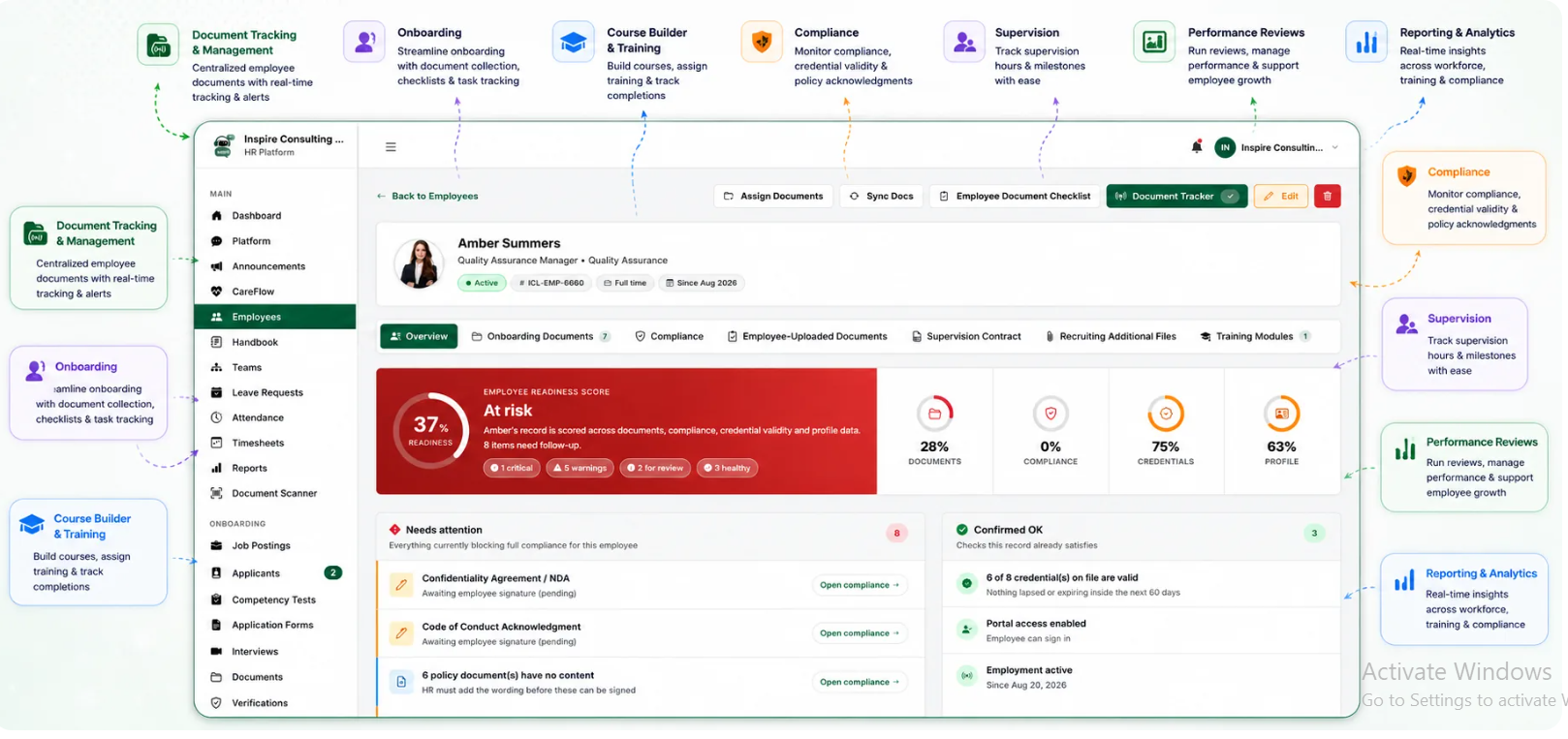
How BUAMS HR Supports Crisis Management
BUAMS HR helps organizations bring structure to crisis response by supporting:
- staff accountability
- supervision and escalation tracking
- training on crisis protocols
- documentation consistency
- compliance visibility
This ensures:
- staff respond correctly
- supervisors are involved quickly
- documentation is complete
- reporting is not missed
What Strong Crisis Management Looks Like
An effective organization can:
- respond calmly and quickly
- use structured tools like C-SSRS
- ensure client safety
- escalate appropriately
- document clearly
- complete required reporting
- follow up consistently
No confusion. No delays. No gaps.
Final Thoughts
Crisis situations are some of the most important moments in behavioral health care.
They require:
- clinical skill
- structured processes
- strong supervision
- clear communication
When handled correctly, they protect:
- the client
- the staff
- the organization
Call to Action
If your organization needs stronger structure around crisis response, supervision, and compliance:
Use BUAMS HR free for 3 weeks — full access, no credit card, no contract.
See how you can improve accountability, documentation, and incident management.
If it works, continue.
If it doesn’t, walk away.