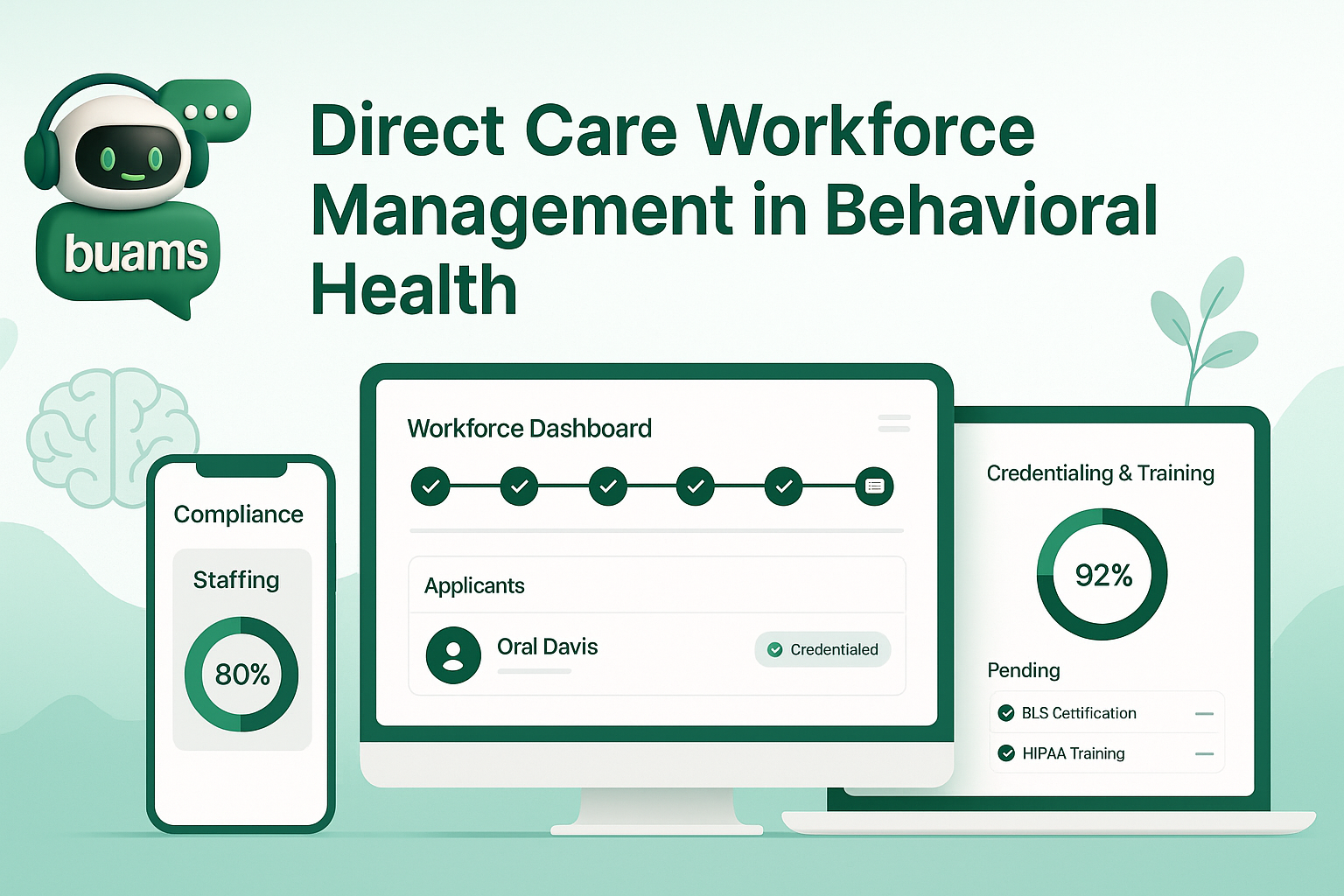
Behavioral health agencies depend on direct care teams to keep services consistent, safe, and compliant. When staffing information lives in spreadsheets, email threads, and disconnected HR files, leaders can lose visibility into onboarding progress, expiring credentials, supervision gaps, and documentation readiness. A stronger approach to direct care workforce management helps agencies support frontline staff while reducing preventable administrative risk.
What Is Direct Care Workforce Management?
Direct care workforce management is the set of HR and operational processes used to support employees who deliver services directly to clients and patients. In behavioral health settings, that can include counselors, case managers, peer support staff, residential team members, supervisors, and other care-facing roles.
It goes beyond scheduling. Agencies need to know whether each team member has completed onboarding steps, signed required documents, maintained active licenses or certifications when applicable, received supervision, and stayed current on training and policy acknowledgments. Without that visibility, coverage decisions and compliance decisions become harder than they should be.
Why It Matters for Behavioral Health Agencies
Behavioral health organizations often operate across multiple programs, service lines, or locations. Leaders may be balancing community-based staff, clinic teams, crisis support roles, and residential coverage at the same time. When workforce data is fragmented, even simple questions can take too long to answer.
These questions affect service continuity, accreditation readiness, and employee experience. Staff members feel the impact too. Delayed paperwork, unclear requirements, and repeated document requests create frustration that can contribute to turnover.
Common Gaps That Weaken Workforce Management
Many agencies already have hardworking HR and program leaders, but the system around them makes the work harder. Common issues include scattered employee records, manual reminder processes, inconsistent onboarding checklists, and limited visibility into pending tasks.
Another frequent problem is the lack of a single source of truth. A supervisor may assume HR has verified a requirement, while HR assumes the program has handled it locally. Those handoff gaps are where missed renewals, incomplete files, and avoidable compliance findings tend to appear.
Best Practices for a Stronger Direct Care Workforce Management Process
Standardize onboarding by role
Different positions need different workflows. A licensed clinician, a peer support specialist, and an administrative employee may each require a different document set, approval path, and readiness checklist. Agencies should define those steps clearly so nothing important depends on memory.
Track expiring requirements in one place
Licenses, certifications, training completions, background checks, and policy acknowledgments should be easy to monitor from a central dashboard. Proactive alerts help teams follow up before an issue affects staffing coverage or compliance status.
Keep employee files organized and audit ready
Digital employee records should be structured consistently so HR can quickly find offer letters, acknowledgments, credential copies, onboarding forms, and supervision-related documentation. Faster retrieval reduces stress during audits and internal reviews.
Make accountability visible
When tasks are assigned clearly and progress is visible, follow-up becomes more reliable. HR can see what is pending, supervisors can see what their teams still need, and leadership can spot bottlenecks before they affect service delivery.
How BUAMS HR Helps
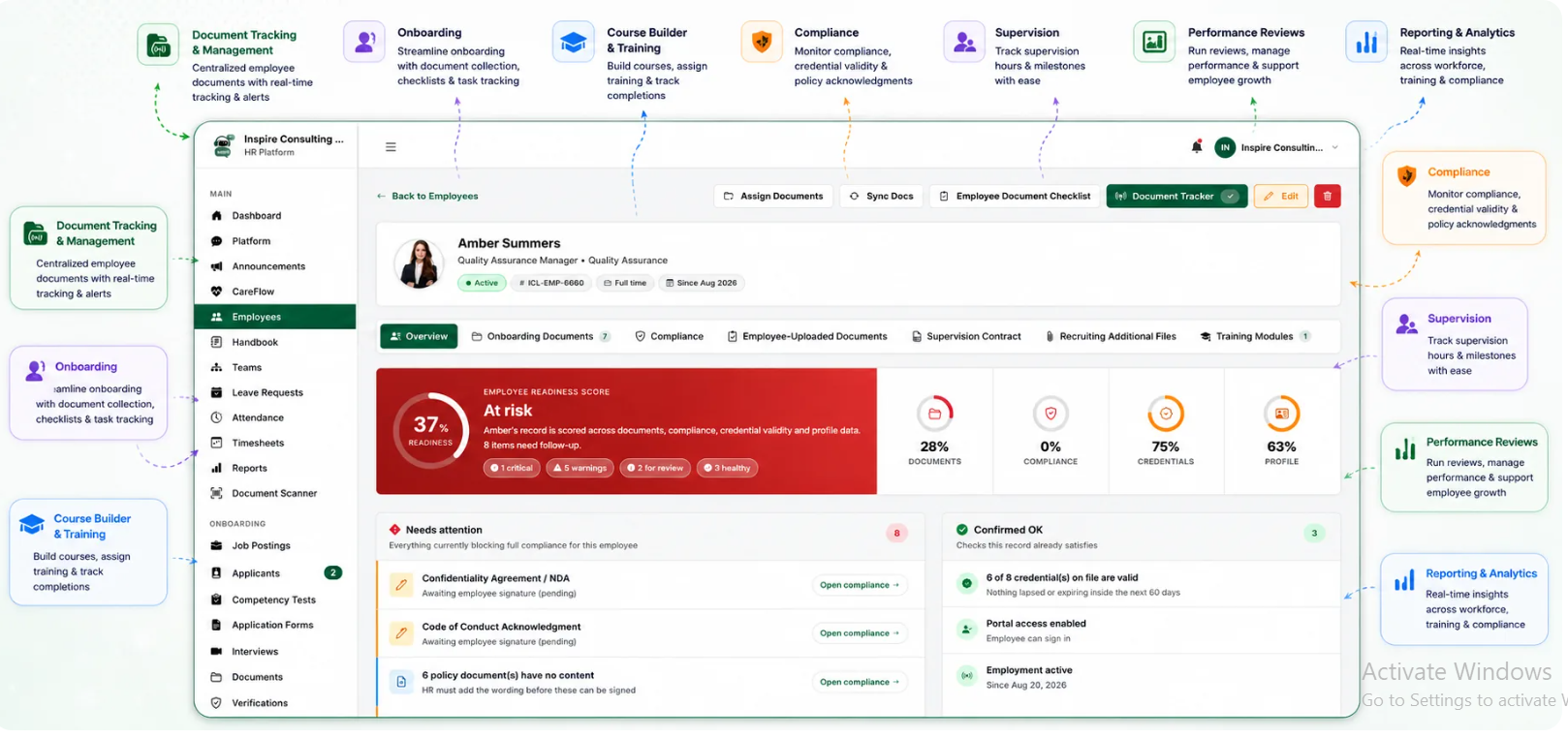
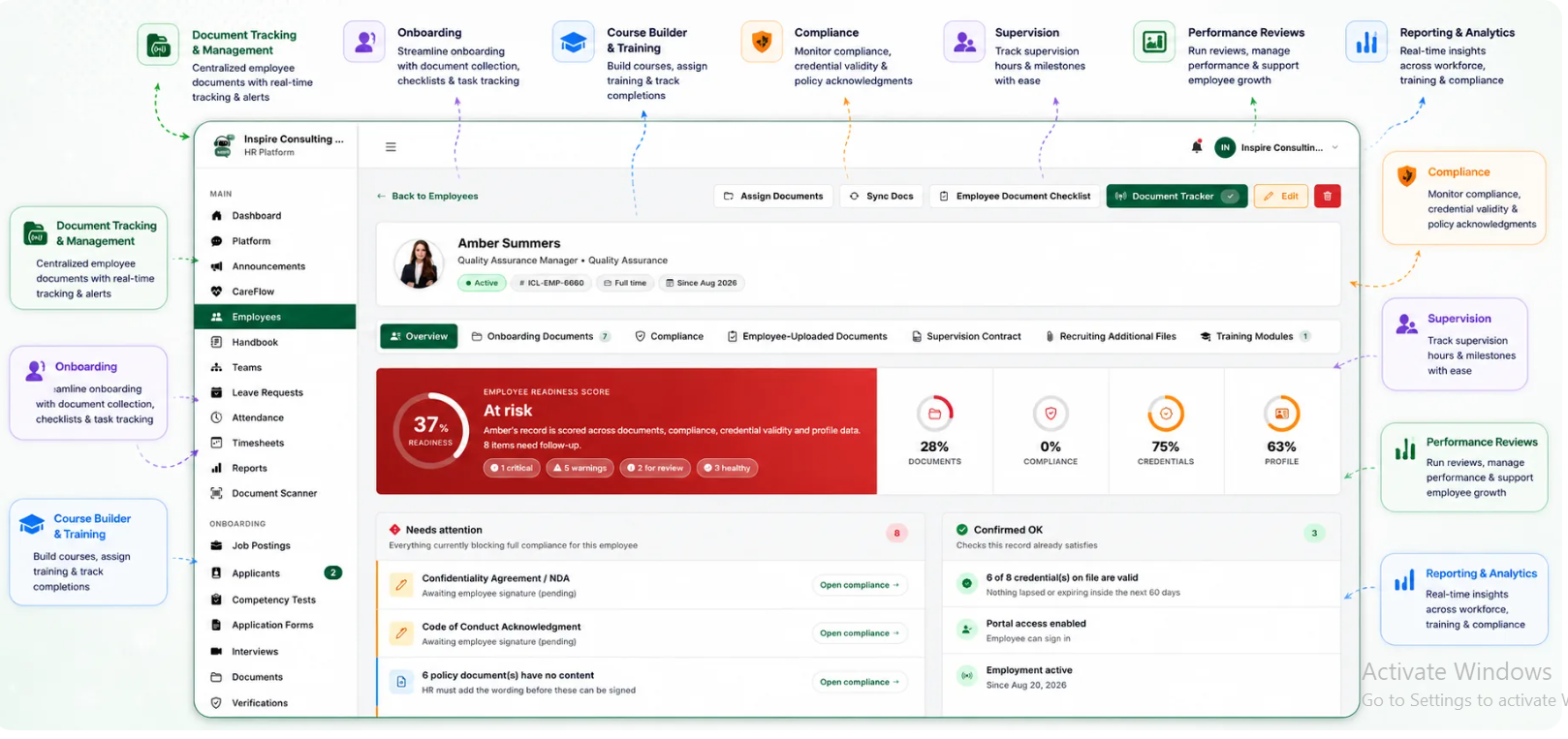
BUAMS HR supports direct care workforce management by bringing core HR processes into one system designed for healthcare and behavioral health organizations. Agencies can manage employee records, onboarding workflows, document collection, and compliance-related follow-up with better structure and less manual tracking.
Instead of relying on separate spreadsheets and inbox reminders, teams can organize employee files, monitor due dates, and create a more consistent experience for both HR and operations. That makes it easier to support frontline staff while maintaining the documentation discipline behavioral health providers need.
Final Thoughts
Strong direct care workforce management is not just an administrative improvement. It helps agencies protect continuity of care, reduce avoidable risk, and give employees a more organized experience from day one. For behavioral health providers facing constant pressure on staffing and compliance, connected HR processes can make a meaningful difference.
BUAMS HR gives agencies a cleaner way to manage the people systems behind quality care, so teams can spend less time chasing paperwork and more time supporting staff readiness.