Behavioral health organizations often feel the cost of slow onboarding twice. New hires wait too long to become fully productive, and existing teams absorb the strain while paperwork, signatures, training steps, and credential checks move across disconnected systems. For agencies trying to grow without compromising care quality, employee onboarding software can turn a messy hiring handoff into a consistent operational process.
When onboarding is standardized, agencies reduce avoidable delays, improve compliance readiness, and give new employees a better first impression. That matters in behavioral health, where staffing stability affects client access, supervision quality, documentation accuracy, and day-to-day service continuity.
What Employee Onboarding Software Solves
Many agencies still rely on email chains, spreadsheets, paper packets, and shared drives to move a new hire through onboarding. That approach usually creates the same set of problems. Documents get missed, version control breaks down, managers are unsure what has been completed, and HR teams spend time chasing status updates instead of improving the process.
Employee onboarding software replaces those disconnected steps with a structured workflow. Instead of manually coordinating every action, agencies can assign requirements, track completion, and keep supporting records in one system. That creates clarity for HR, supervisors, compliance staff, and the employee being onboarded.
Why It Matters for Behavioral Health Agencies
Behavioral health organizations operate in a high-accountability environment. New staff may need role-specific forms, policy acknowledgments, training records, and documentation tied to program requirements or payer expectations. A delayed or incomplete onboarding process can create operational risk quickly.
It also affects retention. When the first few days feel disorganized, new employees may question whether the organization has the infrastructure to support them. In a competitive hiring market, a smoother onboarding experience can strengthen confidence and improve early engagement.
What to Look For in a Strong Onboarding Workflow
1. Task standardization by role
Different job types often need different onboarding steps. Clinical staff, supervisors, billing staff, and administrative hires rarely require the exact same checklist. Good onboarding software makes it easier to create repeatable role-based workflows instead of rebuilding the process for every hire.
2. Centralized document collection
Offer letters, IDs, signed policies, and required internal forms should live in a clear, accessible structure. A single source of truth reduces confusion and helps teams confirm that each employee file is complete.
3. Progress visibility
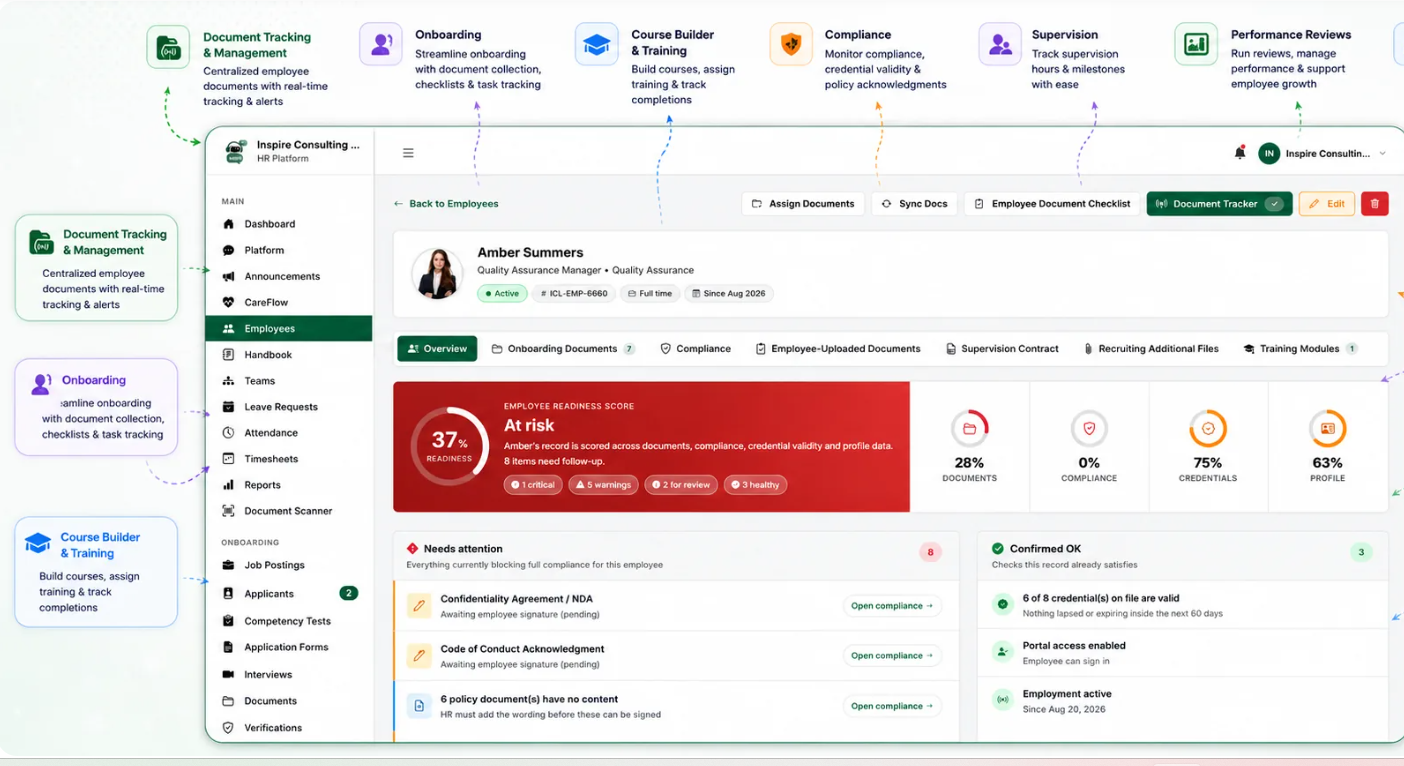
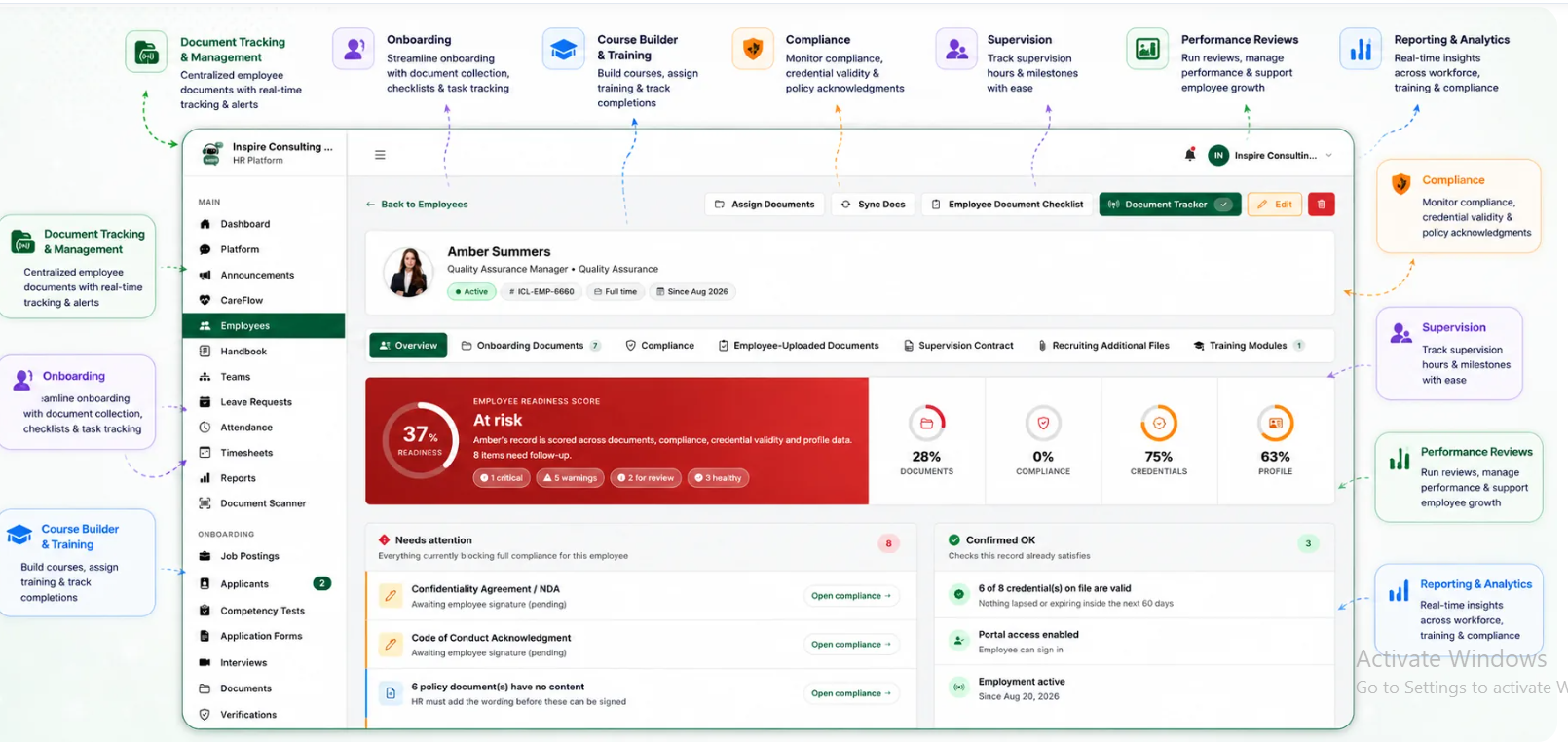
Agencies should be able to see where each new hire stands without sending multiple follow-up emails. Dashboards and status tracking help HR and department leaders identify bottlenecks before they turn into start-date problems.
4. Better compliance readiness
When onboarding records are organized and easy to retrieve, agencies are in a stronger position during audits, reviews, or internal quality checks. The goal is not just speed. It is controlled, documented completion.
How BUAMS HR Helps
BUAMS HR is built for the realities of behavioral health workforce management. Agencies can use it to support cleaner onboarding workflows, manage employee records, and improve visibility across key HR processes. Instead of piecing together status from multiple tools, teams can keep onboarding tasks and supporting files aligned inside a more structured system.
That matters when growth is happening quickly, when multiple hires start close together, or when leadership needs confidence that onboarding is not creating hidden compliance gaps. A system designed for behavioral health operations can help agencies stay organized without adding unnecessary administrative friction.
Final Thoughts
Employee onboarding software is not just an HR convenience. For behavioral health agencies, it is part of building a dependable, scalable operating model. When onboarding is clear, documented, and repeatable, new employees can get settled faster and teams spend less time chasing paperwork.
For organizations looking to improve workforce readiness, employee experience, and compliance discipline at the same time, a stronger onboarding workflow is one of the most practical places to start.