Mental health organizations manage employee records that span hiring documents, licenses, training history, policy acknowledgments, evaluations, and corrective actions. When those records live across inboxes, shared drives, paper folders, and disconnected HR tools, routine work slows down and audit response becomes stressful. A more structured approach to healthcare employee files helps HR leaders keep records complete, accessible, and easier to review when accreditation, payer, or internal requests come in.
What Are Healthcare Employee Files?
Healthcare employee files are the organized HR records tied to each staff member throughout the employment lifecycle. In behavioral health settings, those files often include offer letters, tax forms, background checks, immunization or health documentation when required, job descriptions, training completions, licenses, certifications, supervision notes, policy acknowledgments, performance reviews, and separation records.
The exact contents vary by role and organization, but the main goal stays the same. HR teams need a reliable way to confirm that each employee file contains the right documents, that records stay current, and that authorized staff can quickly locate what they need.
Why Employee File Management Matters in Behavioral Health
Behavioral health providers often operate in a high-accountability environment. Teams may need to demonstrate hiring consistency, training completion, supervision support, credential status, and policy compliance across clinical and non-clinical roles. If employee files are incomplete or scattered, even a simple request can turn into a disruptive manual search.
Disorganized files also create operational risk. Missing acknowledgments can complicate policy enforcement. Outdated credentials can expose the organization to avoidable compliance issues. Inconsistent folder structures make it harder to onboard new HR staff or support leaders across multiple sites. Clean, centralized file management reduces this friction and supports more confident decision-making.
What a Strong Employee File System Should Include
Standardized file checklists by role
Different positions often require different documentation. A therapist, psychiatrist, administrative coordinator, and peer support specialist may each need their own file template. Standardized checklists help HR avoid gaps and keep expectations clear during onboarding and ongoing employment.
Clear naming and version control
Files should be easy to identify without opening each document. Consistent naming conventions, dated uploads, and clear replacement rules help staff avoid duplicate or outdated records. This becomes especially important when policies, certifications, or signed forms are renewed over time.
Access controls and confidentiality
Not every manager needs access to every HR document. A strong system should support role-based permissions so the right people can review the right records without overexposing sensitive information. This is especially important for investigations, disciplinary documentation, and medical or accommodation-related materials.
Retention and offboarding workflows
Employee file management should continue after separation. Organizations need a consistent approach for storing final records, limiting access, and following retention timelines. When offboarding is manual, important records are easier to miss.
Best Practices for Keeping Files Audit Ready
How BUAMS HR Helps Organize Healthcare Employee Files
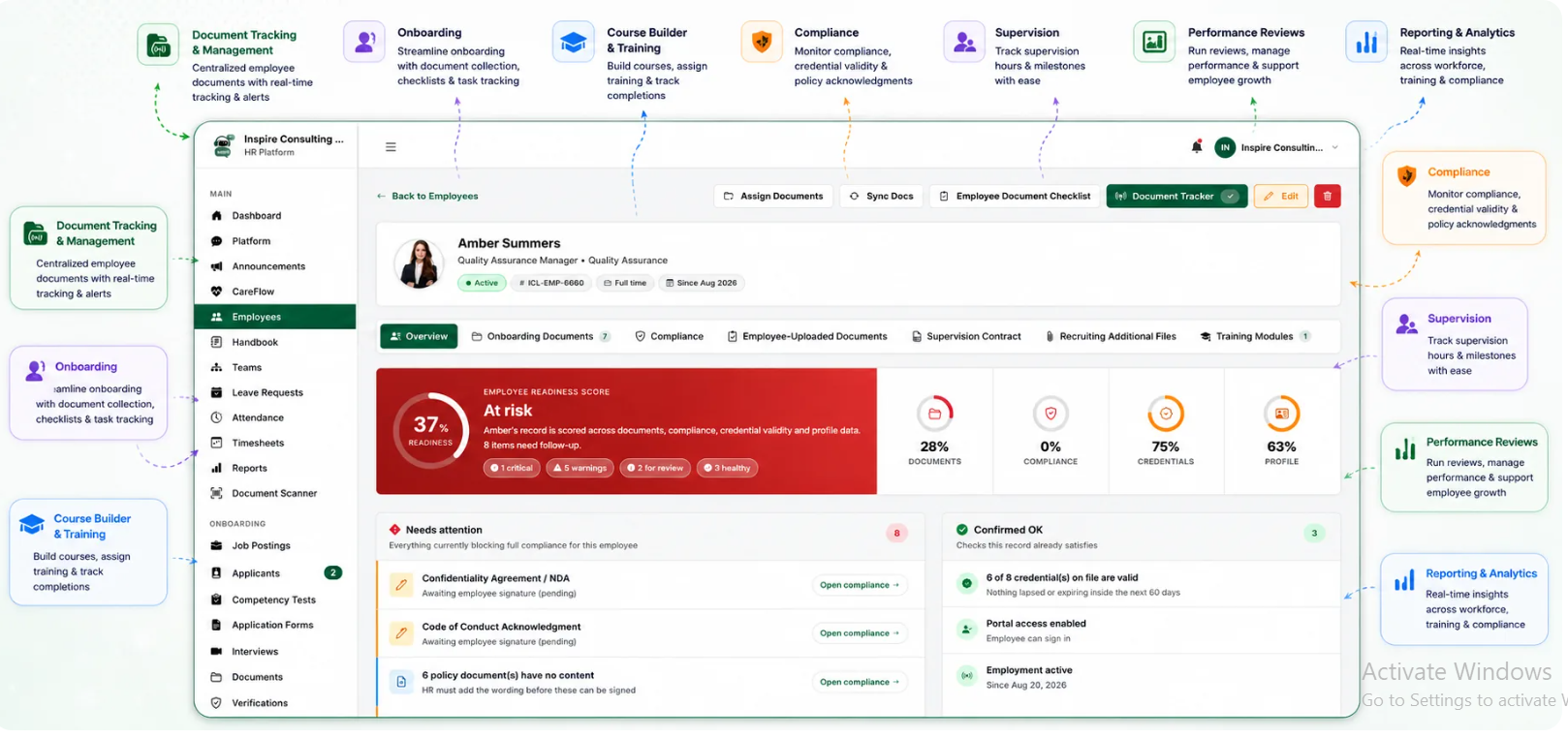
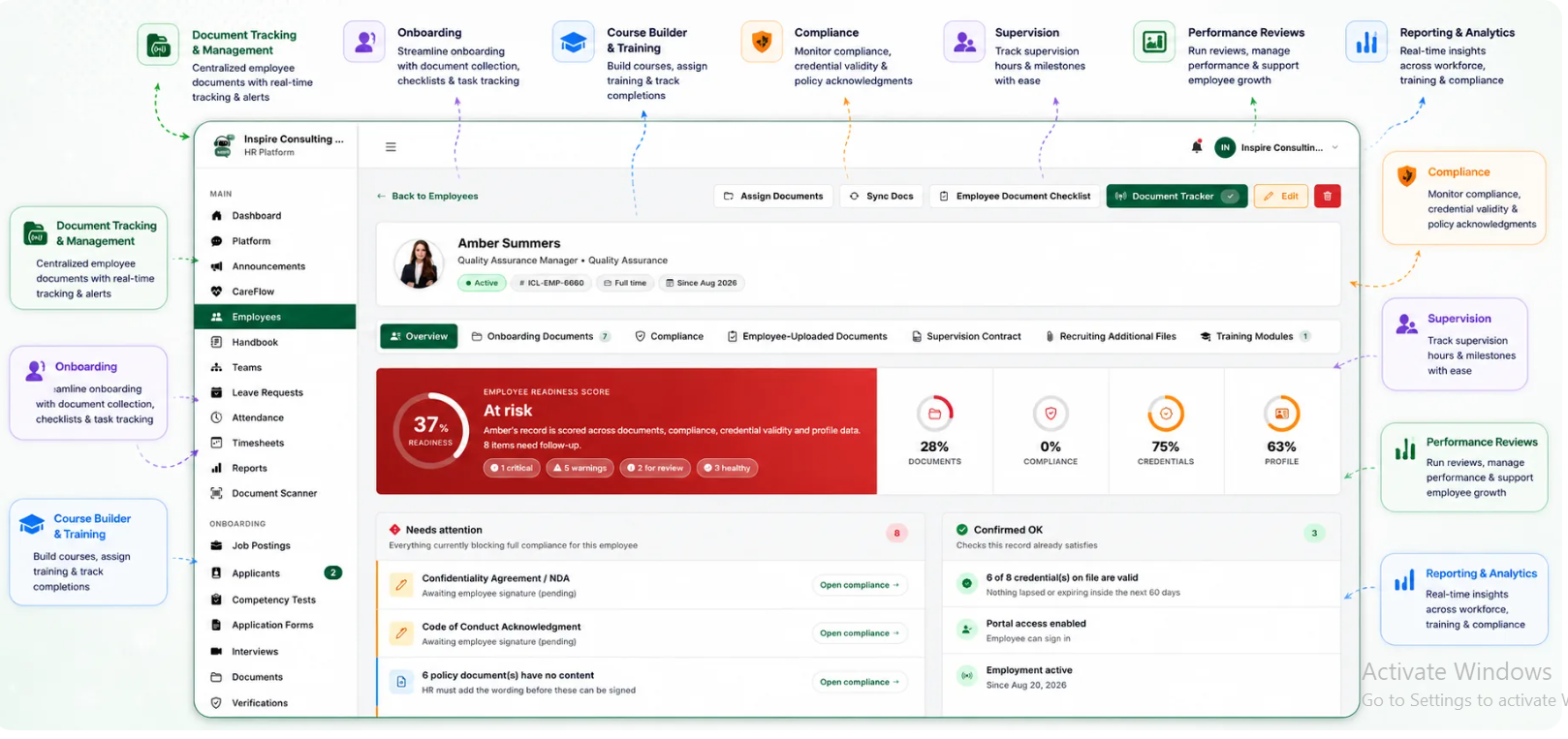
BUAMS HR gives behavioral health and healthcare organizations a more structured way to manage employee files without relying on fragmented tools. Teams can centralize staff records, organize documents by employee, and support a more consistent process for onboarding, compliance review, and ongoing maintenance.
Because BUAMS HR is designed for the realities of healthcare and behavioral health operations, it can also support related workflows such as credential tracking, policy acknowledgments, and employee record visibility across the organization. That makes it easier to connect the file itself with the tasks and deadlines that keep it current.
Final Thoughts
Healthcare employee files are more than a storage issue. They are part of how mental health organizations protect compliance, support managers, and reduce administrative drag. A practical file system helps HR teams move faster, respond with confidence, and spend less time searching for documents that should already be at their fingertips. For organizations that want cleaner processes and better audit readiness, centralized employee file management is a strong place to start.