Let’s Be Honest About PRP Audits
Most PRP audits in Maryland don’t fail because programs aren’t helping people.
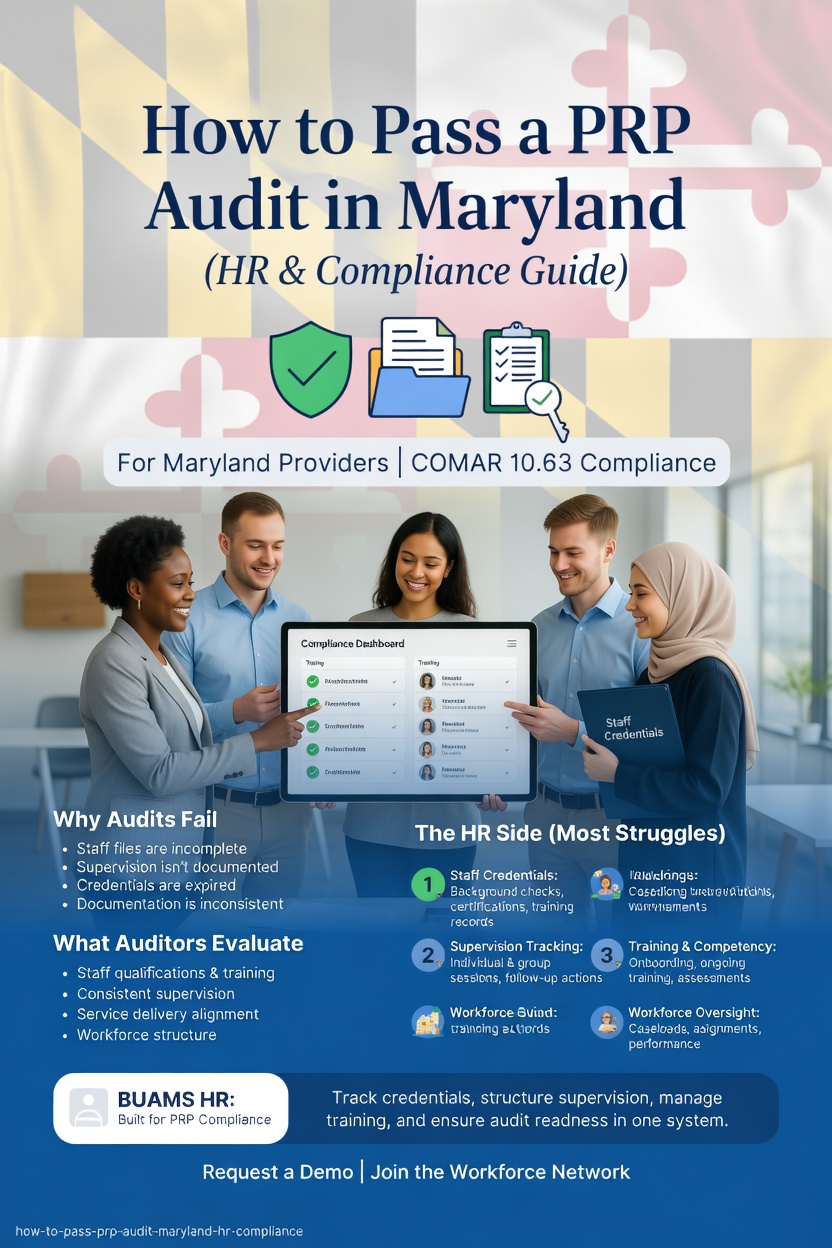
They fail because:
- staff files are incomplete
- supervision isn’t documented
- credentials are expired
- documentation is inconsistent across team members
In other words, it’s not just a clinical issue—it’s an HR and operational issue.
If your workforce systems are not structured, your audit will expose it.
This guide breaks down how to pass a PRP audit from a workforce and compliance perspective, not just documentation.
What Auditors Are Really Evaluating
When auditors review your program, they are not just looking at client files.
They are asking:
- Is your staff qualified and properly trained?
- Are you supervising your team consistently?
- Are services being delivered as required?
- Is your documentation aligned across the board?
At its core, a PRP audit evaluates:
your ability to run a structured, compliant workforce.
The HR Side of PRP Audits (Where Most Programs Struggle)
This is where many programs underestimate the risk.
1. Staff Credential Compliance
Every staff member must have:
- active background checks
- required certifications (CPR, First Aid if applicable)
- role-appropriate qualifications
- ongoing training records
Common audit findings:
- expired background checks
- missing training documentation
- incomplete staff files
2. Supervision Tracking
Supervision must be:
- consistent
- documented
- structured
You should be able to show:
- individual supervision sessions
- group supervision sessions
- topics discussed
- follow-up actions
Common issue:
Supervision happens—but there is no proof.
3. Training & Competency
It’s not enough to hire staff—you must show they are trained and competent.
Auditors expect:
- onboarding training
- ongoing training
- competency assessments
Risk area:
No structured training system.
4. Workforce Oversight
You should be able to answer:
- Who is assigned to which clients?
- Are caseloads reasonable?
- Are staff performing consistently?
If this is unclear, it signals weak program control.
Documentation Still Matters—But It’s Not the Whole Story
Yes, your documentation must be strong:
- assessments
- IRPs
- progress notes
- monthly summaries
But even perfect documentation can fail if:
- staff are not properly supervised
- credentials are missing
- training is inconsistent
Audits look at the entire system, not just the paperwork.
A Simple Framework to Pass a PRP Audit
Think of audit readiness in four areas:
1. Staff Compliance
- All credentials current
- Files complete
- Training documented
2. Supervision
- Regular schedule
- Clear documentation
- Performance tracking
3. Documentation
- Aligned (assessment → IRP → notes → summary)
- Measurable and individualized
- Completed on time
4. Organization
- Files easy to access
- No missing documents
- Consistent structure across staff
If you can confidently check these four areas, you are in a strong position.
Why Many PRP Programs Still Struggle
Even experienced programs run into issues because they rely on:
- spreadsheets for tracking credentials
- manual supervision notes
- disconnected systems for HR and clinical work
This leads to:
- missed expirations
- inconsistent supervision
- gaps in documentation
- last-minute audit scrambling
The system—not the people—is usually the problem.
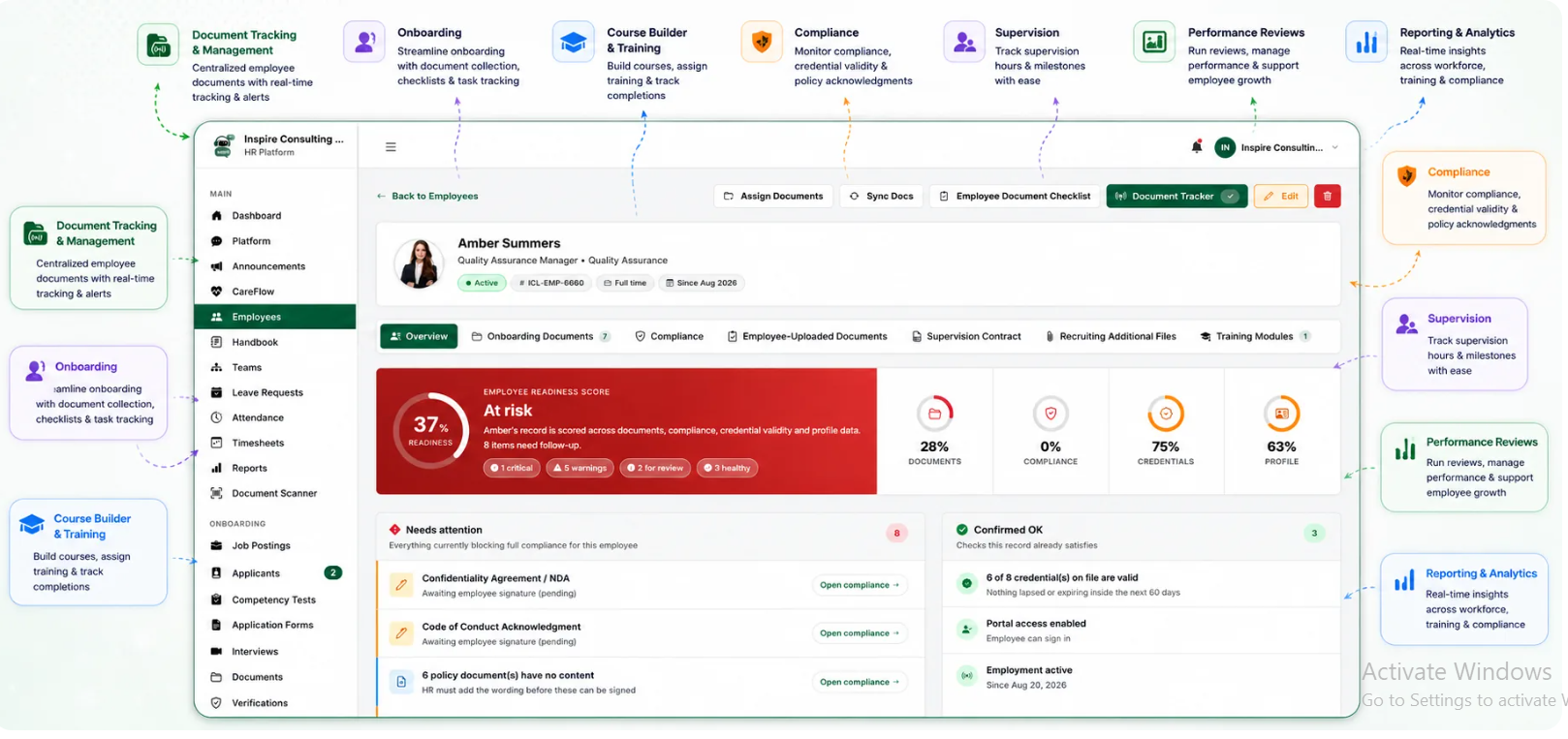
How BUAMS HR Helps You Pass PRP Audits
BUAMS HR was built specifically for programs like PRP that need structure, not just software.
From an HR and compliance perspective, it helps you:
1. Track Staff Credentials Automatically
- alerts for expirations
- centralized staff records
- compliance visibility across your team
2. Structure Supervision
- document individual and group supervision
- track topics and performance
- maintain audit-ready logs
3. Manage Training & Competency
- assign onboarding and ongoing training
- track completion
- maintain competency records
4. Workforce Oversight
- monitor caseloads
- track staff activity
- ensure accountability across the team
5. Audit Readiness in One Place
Instead of pulling documents from multiple systems, everything is organized and accessible.
That’s what auditors want to see.
What “Audit-Ready” Actually Looks Like
A truly audit-ready PRP program can:
- pull any staff file within minutes
- show supervision history instantly
- verify credentials without searching
- demonstrate consistent documentation across clients
No scrambling. No guessing. No gaps.
Final Thoughts
Passing a PRP audit in Maryland is not about perfection.
It’s about structure, consistency, and visibility.
When your workforce is organized and your systems are aligned:
- compliance becomes manageable
- audits become predictable
- your program becomes scalable
Call to Action
If you want to stop preparing for audits at the last minute and start staying ready:
Request a demo of BUAMS HR and see how you can manage workforce compliance, supervision, and training in one system (www.buamshr.com)
Or, if you’re growing your team:
Join the BUAMS workforce network to connect with qualified behavioral health professionals in Maryland and DC. (www.buamshr.com)