Behavioral health organizations often add new programs, locations, and service lines faster than their HR processes can keep up. What starts as a manageable mix of spreadsheets, inbox reminders, and shared folders can quickly turn into delayed onboarding, missing documents, and inconsistent compliance follow-up. For leadership teams trying to grow without creating avoidable risk, the right HR software can bring structure to hiring, records, and workforce accountability.
Key Takeaways
What HR software means in a behavioral health setting
In behavioral health, HR software is more than a digital filing cabinet. It should help organizations manage applicant-to-employee handoffs, required paperwork, staff records, recurring compliance items, and operational visibility across multiple roles and programs. Because providers work under clinical, payer, and accreditation pressures, HR teams need a system that supports consistency and speed without sacrificing documentation quality.
This matters even more when organizations are expanding services such as outpatient care, community-based programs, crisis response, or school partnerships. Each new program can introduce different job titles, supervision structures, training requirements, and timelines. A patchwork process makes that growth harder to control.
Why growth creates HR risk
Growth is good, but it often exposes weak points in back-office coordination. Recruiters may move quickly while onboarding packets lag behind. Managers may assume someone else collected the required file items. Compliance teams may discover upcoming expirations only after a site review or internal audit request. None of these issues are unusual, but they become more expensive as the workforce grows.
For behavioral health providers, those gaps can affect staffing readiness, audit preparation, and confidence in internal controls. A cleaner system reduces the operational drag that often follows expansion.
What to look for in HR software for growing behavioral health organizations
Standardized onboarding workflows
Look for software that helps HR define the same essential steps for each role or program while still allowing for role-specific requirements. The goal is not rigid sameness. It is dependable execution, so the organization knows every employee has completed the right steps before they are marked ready.
Centralized employee files
Scattered storage creates confusion when teams need to review offer letters, acknowledgments, certifications, or other personnel documents. Centralized digital files make it easier to maintain consistent recordkeeping and respond to internal or external requests without a document chase.
Task visibility and accountability
As organizations grow, task ownership matters more. HR software should show what is complete, what is overdue, and who is responsible. Clear visibility helps prevent the common problem of assuming a manager, recruiter, or coordinator handled a step that is still unfinished.
Support for recurring compliance work
Behavioral health employers often need ongoing attention to credentials, acknowledgments, policy updates, and training-related documentation. A useful platform should help teams monitor recurring items and stay ahead of deadlines instead of reacting late.
Reporting that supports decision-making
Leaders need more than a list of names. They need a practical view of onboarding progress, missing records, and workforce readiness trends. Reporting helps organizations spot bottlenecks early and improve how HR supports expansion.
How BUAMS HR helps teams scale with more control
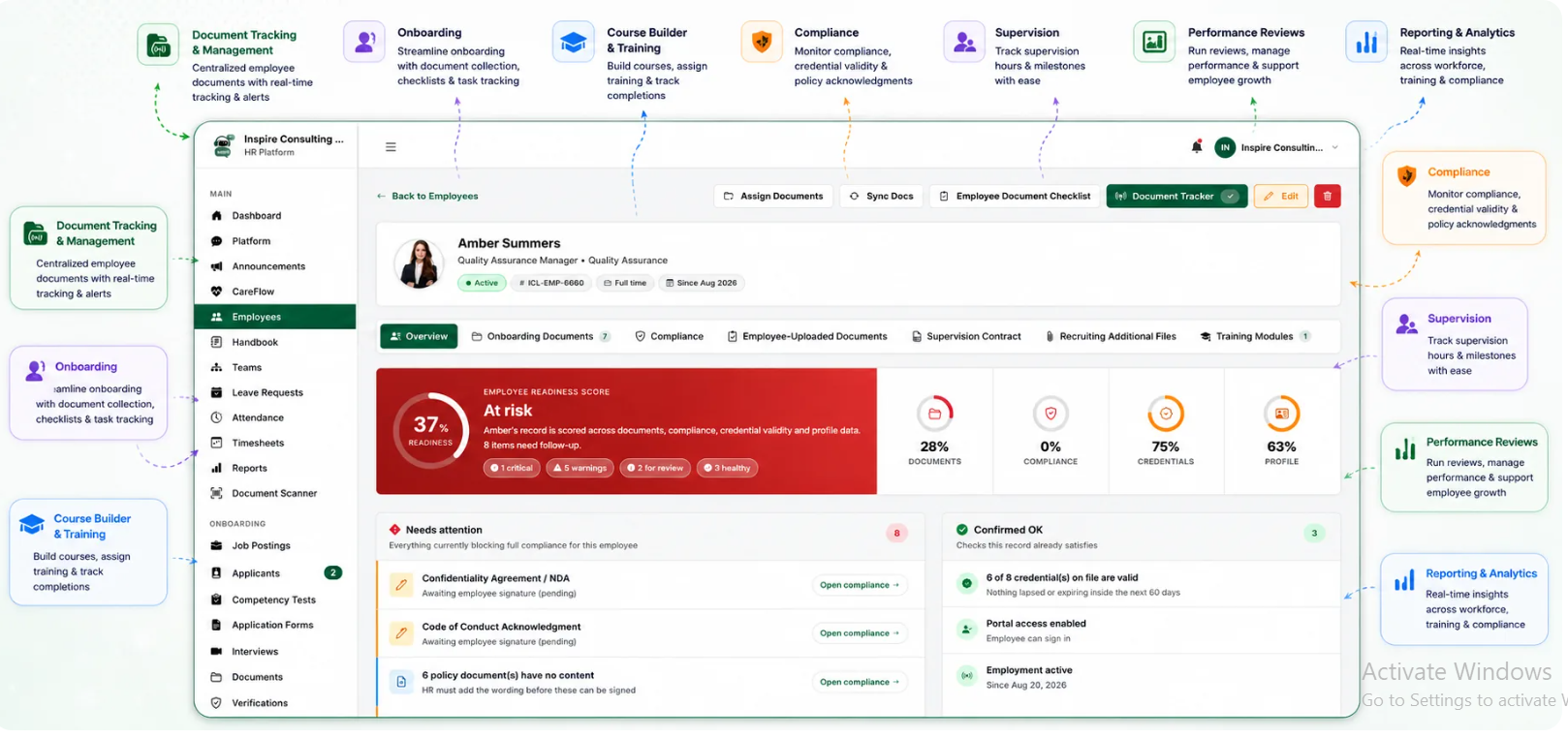
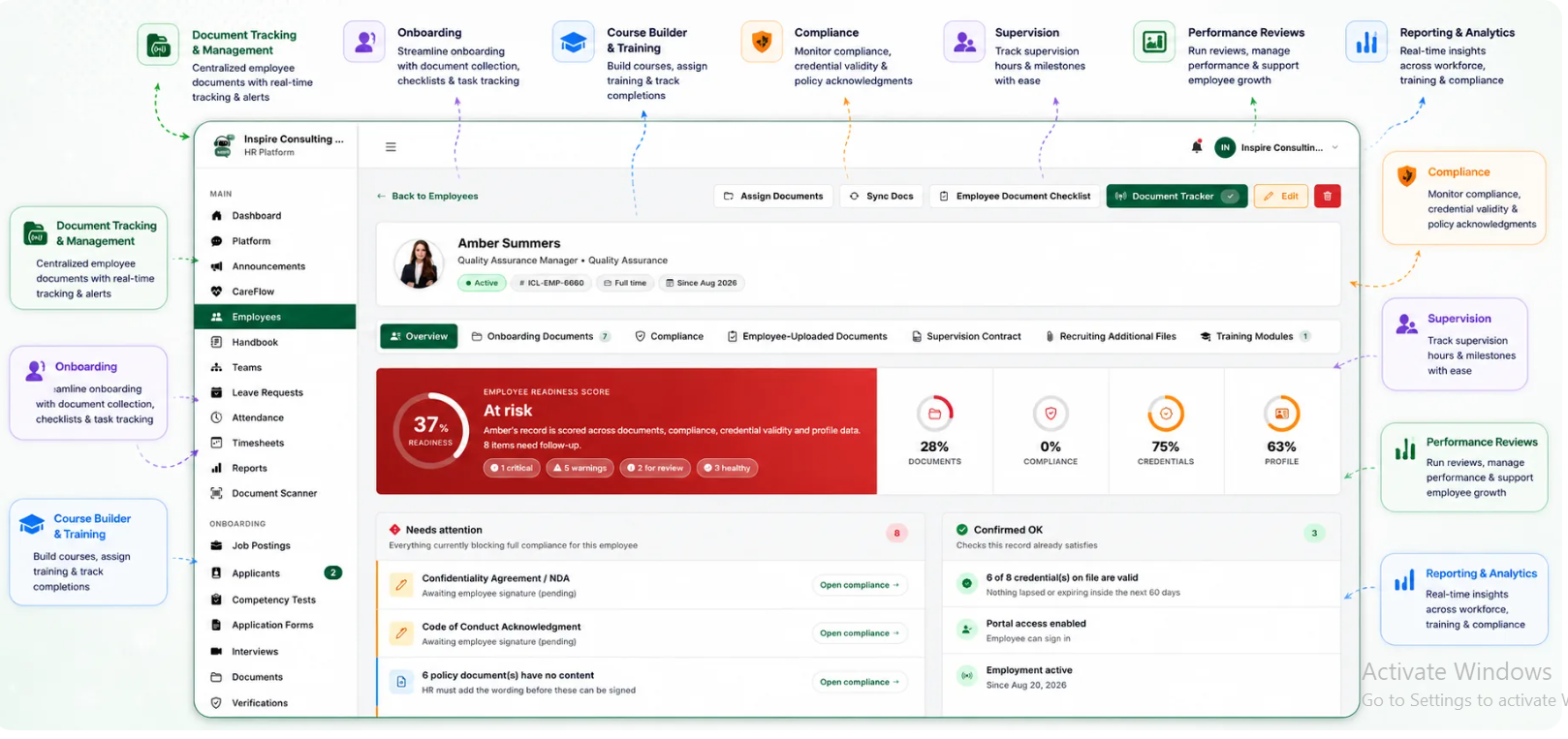
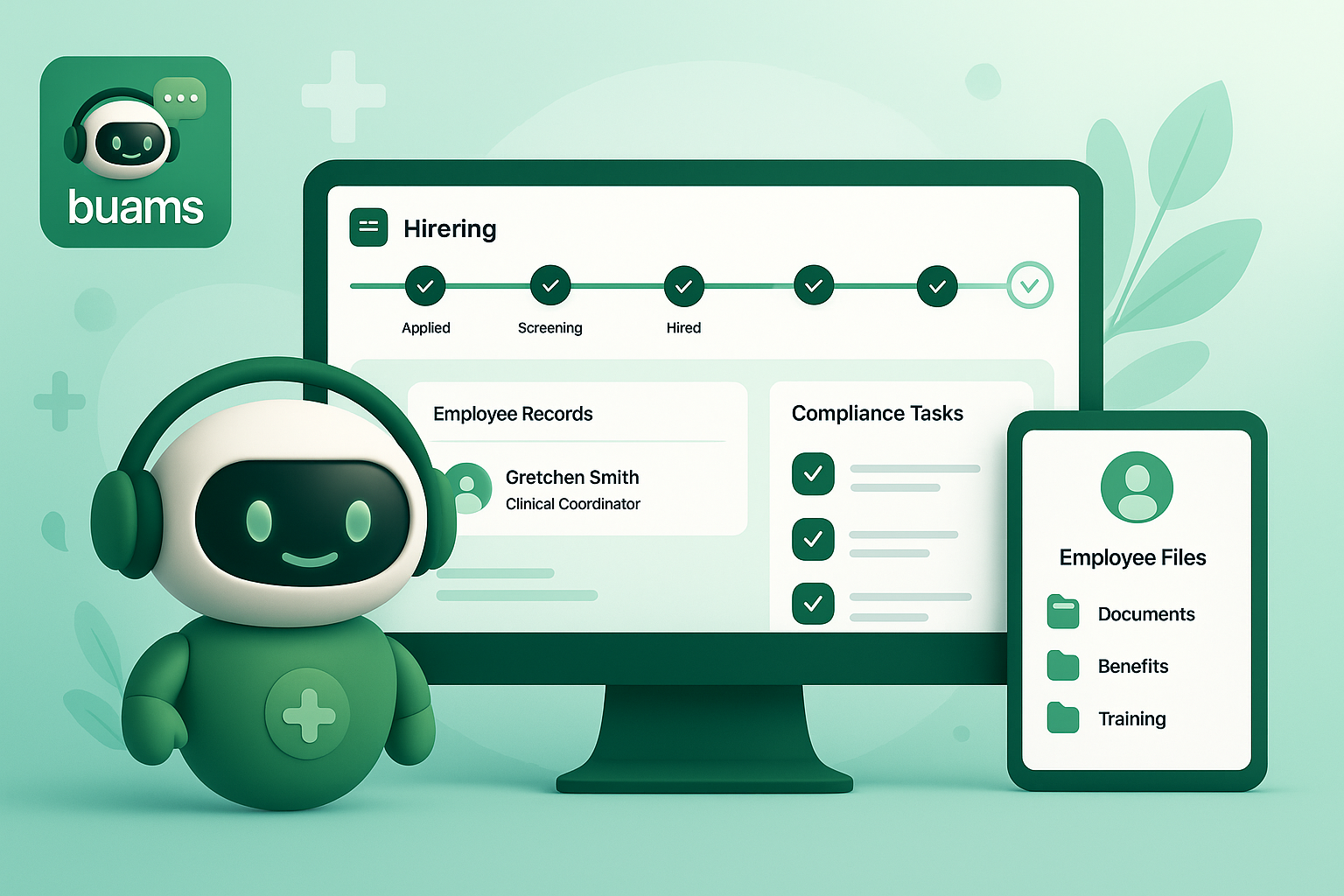
BUAMS HR gives behavioral health organizations one place to manage core HR workflows as they grow. Instead of relying on disconnected tools, teams can organize onboarding, employee files, compliance-related follow-up, and workforce visibility within a single system. That makes it easier to support new programs while keeping expectations consistent across the organization.
For providers operating across multiple service lines or locations, BUAMS HR can help reduce handoff confusion and improve documentation discipline. HR leaders can see what is outstanding, managers can follow a clearer process, and organizations can maintain a more reliable foundation for audits, reviews, and daily operations.
Final thoughts
Growth should not force behavioral health organizations to choose between speed and control. Good HR software helps both. When hiring workflows, employee files, and recurring requirements are managed in a consistent system, teams can expand with fewer delays and less avoidable risk. For organizations trying to build sustainable operations, that structure becomes a real advantage.