Mental Health Agency Software for HR Teams: How to Connect Hiring, Onboarding, and Compliance in One Workflow
Behavioral health organizations rarely struggle because their teams do not care about compliance. More often, they struggle because hiring steps, employee files, credential checks, and follow-up reminders are spread across too many systems. When that happens, HR teams spend more time chasing paperwork than supporting a stable workforce. Mental health agency software can help when it brings those operational steps into one practical workflow.
For agencies managing clinicians, case managers, support staff, and supervisors, disconnected HR processes create risk. A missed document, delayed onboarding task, or expired requirement can slow down hiring and put unnecessary pressure on managers. The right software approach helps teams move faster while keeping records organized and review-ready.
What Mental Health Agency Software Should Solve for HR
Many platforms promise all-in-one agency management, but HR teams need something specific. They need a system that helps them move a person from candidate to active employee without losing visibility along the way. That includes collecting job-related documents, assigning onboarding tasks, tracking required items, and giving managers a reliable view of what is complete and what is still missing.
In mental and behavioral health settings, that workflow often involves more nuance than in other industries. Different roles may require different forms, background steps, training records, supervision plans, or policy acknowledgments. Agencies also need a clear way to keep those items attached to the right employee record so they can respond quickly during internal reviews, accreditation preparation, or external audits.
Why Disconnected HR Systems Create Operational Drag
When agencies rely on inboxes, spreadsheets, shared drives, and manual reminders, every hiring cycle becomes harder to manage. HR may not know whether a supervisor finished a required step. Operations leaders may not know why a start date is delayed. Staff members may send the same file multiple times because there is no shared source of truth.That kind of fragmentation creates three recurring problems:
For mental health agencies trying to scale services or reduce vacancies, those small inefficiencies add up quickly.
What to Look for in a Practical HR Workflow
If an organization is evaluating mental health agency software for HR operations, it helps to focus on workflow clarity rather than broad feature lists. A practical system should make it obvious what happens next, who is responsible, and where documentation belongs.
Role-based onboarding paths
Different job types often need different onboarding checklists. A clinician, a support coordinator, and an administrative team member may each require separate documents or review steps. Software should make it easy to assign the right path without rebuilding the process every time.
Centralized employee records
HR teams need one reliable place for offer documents, acknowledgments, certifications, internal forms, and other employee file content. Centralization reduces confusion and makes retrieval faster when leadership or compliance teams need answers.
Task ownership and reminders
Onboarding delays often happen because no one is sure who owns the next step. Good workflow tools support task assignment, due dates, and reminders so work does not depend entirely on memory or hallway follow-up.
Ongoing compliance visibility
The process does not stop after the first week of employment. Agencies benefit from software that helps them track ongoing requirements, identify gaps early, and keep staff records current throughout the employee lifecycle.
How This Helps Behavioral Health Agencies Day to Day
For behavioral health organizations, cleaner HR workflows support more than paperwork. They improve readiness for staffing changes, reduce avoidable delays in getting new hires fully active, and make it easier for managers to trust the underlying records.
That matters in everyday situations such as opening a new program, backfilling a critical role, preparing for an accreditation review, or responding to a document request from leadership. When HR information is organized and visible, teams can act with more confidence and less scrambling.
It also helps agencies create a more consistent staff experience. New hires notice when onboarding feels clear and coordinated. Managers notice when they can see status without sending multiple emails. HR notices when fewer items fall through the cracks.
How BUAMS HR Supports a More Connected Workflow
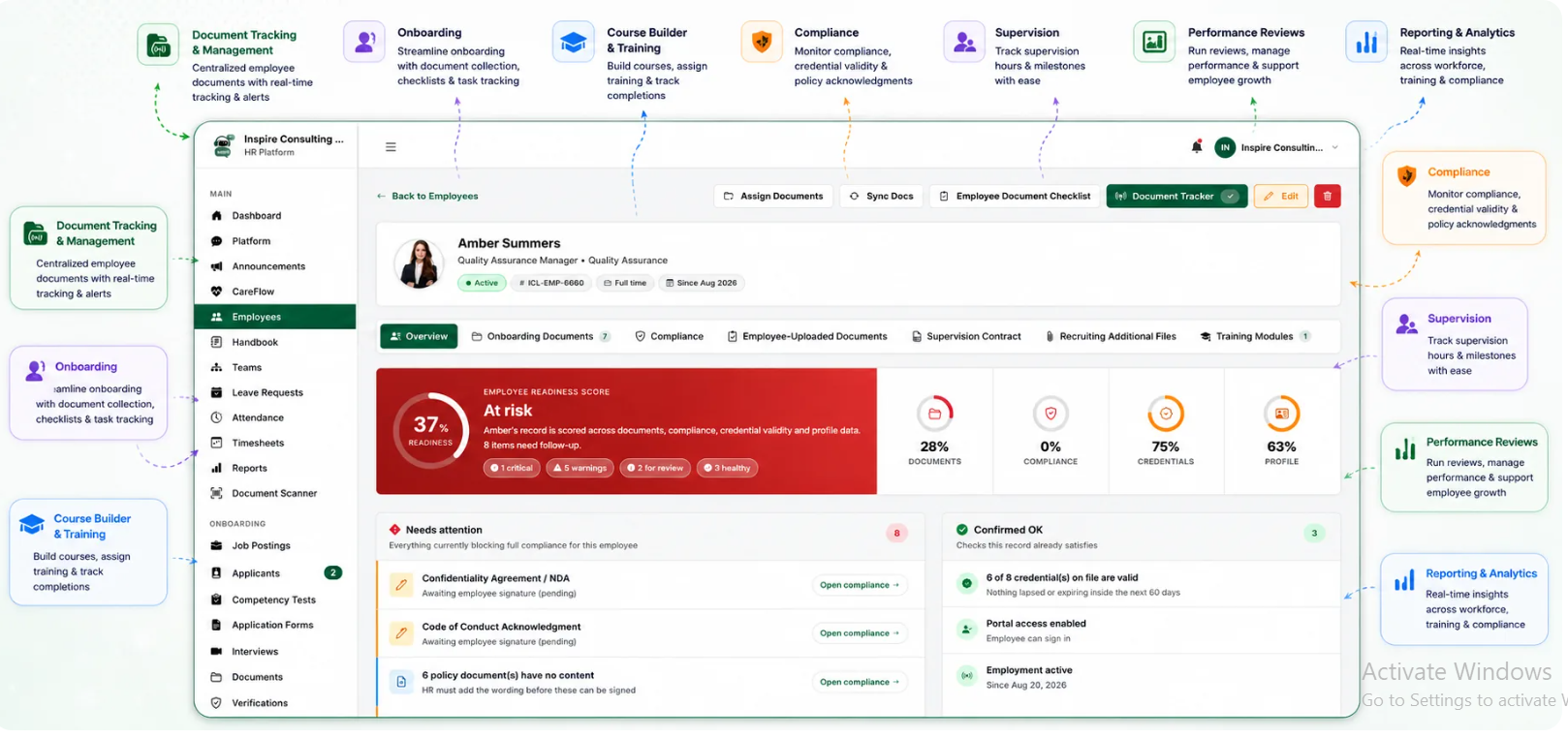
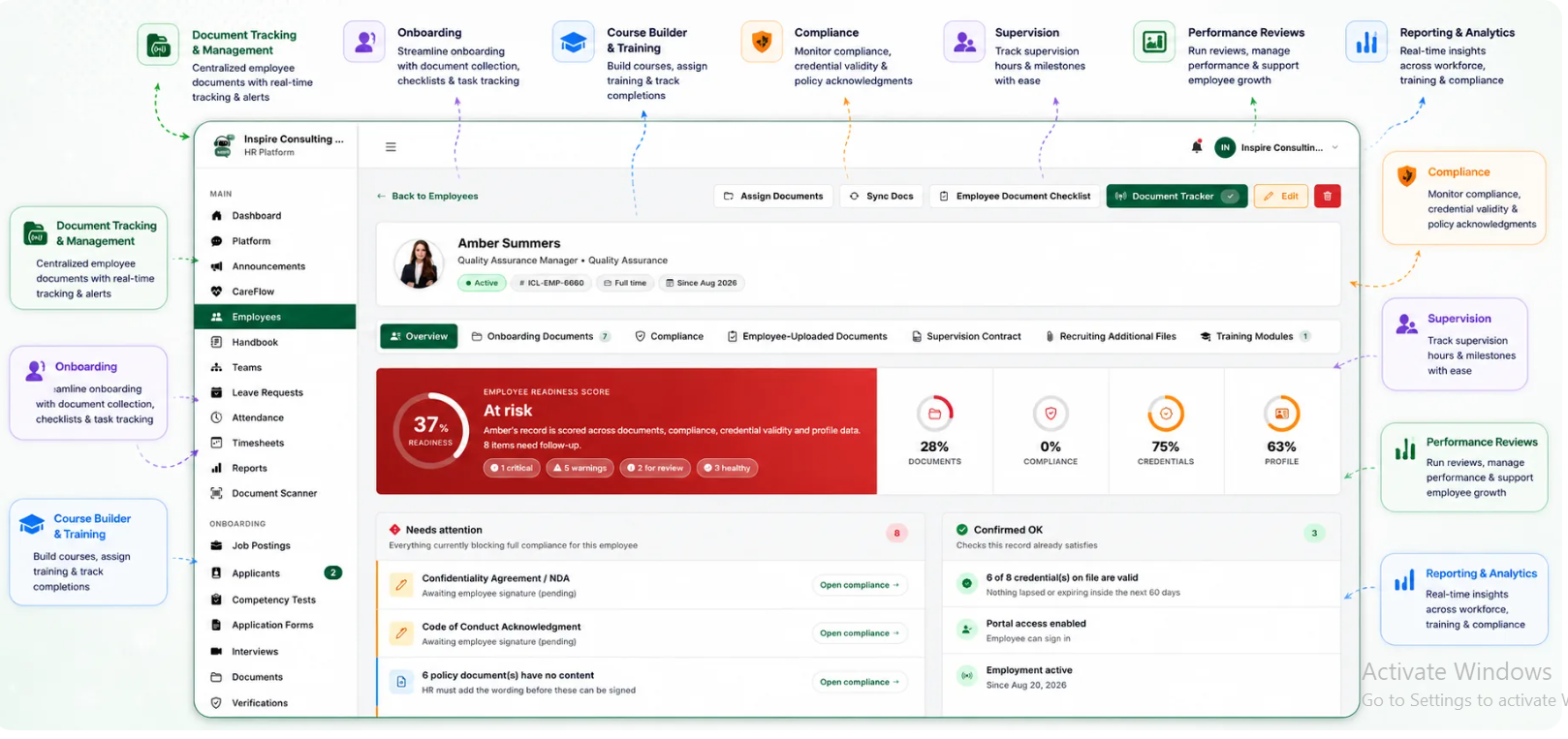
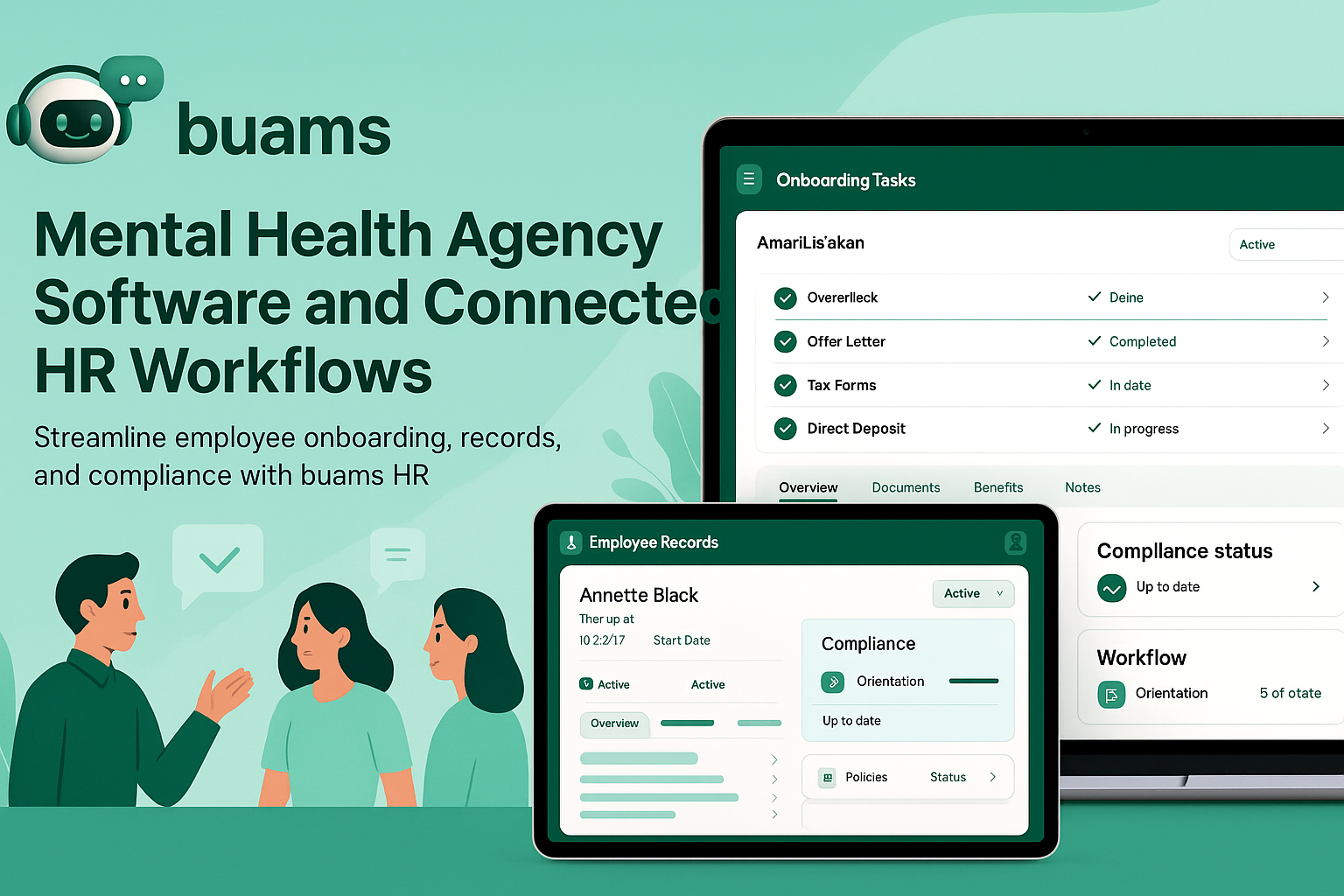
BUAMS HR is built for the operational realities of mental and behavioral health organizations. Instead of forcing HR teams to piece together hiring and compliance steps across separate tools, it supports a more connected process for onboarding tasks, employee records, and workforce follow-up.
With a structured system in place, agencies can standardize onboarding by role, keep documents tied to the correct employee file, and reduce the amount of manual status chasing required to keep hiring moving. That makes it easier to maintain consistency across locations, teams, and supervisors.
For organizations that want mental health agency software to do more than store information, BUAMS HR offers a practical way to turn scattered HR activity into a repeatable workflow.
Final Thoughts
Mental health agency software is most valuable when it helps HR teams simplify real operational work. The goal is not just to digitize forms. The goal is to reduce friction between hiring, onboarding, recordkeeping, and compliance so agencies can support staff more effectively.
When those pieces are connected, organizations spend less time reacting to missing information and more time building a stable workforce. For behavioral health providers facing ongoing staffing pressure, that kind of structure is not just convenient. It is strategic.