Why PRP Documentation Matters More Than You Think
If you’ve ever been through a PRP audit—or even heard stories—you already know this:
Most programs don’t fail because of poor care.
They fail because of poor documentation.
In Maryland, PRP programs are held to strict standards under COMAR 10.63. Documentation is how you prove:
- services were actually delivered
- goals are being worked on
- progress is being tracked
- staff are doing what they’re supposed to do
If it’s not documented properly, it didn’t happen—at least from an audit perspective.
This guide breaks down exactly what you need to stay audit-ready.
The Core PRP Documentation Checklist
At a minimum, every consumer file should include the following:
1. Comprehensive Assessment
This is your foundation.
It should include:
- mental health diagnosis
- functional impairments (DLA-20 or equivalent)
- risk factors
- housing, employment, and social status
What auditors look for:
- Is it complete?
- Is it current?
- Does it justify the need for PRP services?
2. Individualized Rehabilitation Plan (IRP)
Your IRP is where many programs fall short.
It must clearly define:
- measurable goals
- specific objectives
- targeted interventions
Strong IRP example:
Instead of: “Improve hygiene”
Use: “Client will independently complete hygiene routine 5 days per week for 4 consecutive weeks”
Audit focus:
- Are goals measurable?
- Do they relate to functional needs?
- Are they updated regularly?
3. Progress Notes (Rehabilitation-Focused)
Progress notes must show skill-building, not just interaction.
Each note should reflect:
- what intervention was provided
- what skill was addressed
- how the client responded
- next steps
Common mistake:
“Met with client and discussed goals”
That will not pass an audit.
Better example:
“Practiced meal planning and budgeting skills; client required prompting but completed task with guidance”
4. Monthly Summaries
This is one of the most commonly missed requirements.
Monthly summaries should:
- reflect overall progress
- identify barriers
- adjust focus if needed
Audit trigger:
Missing or generic summaries.
5. Service Authorization & Eligibility Documentation
You must be able to show:
- the client is eligible for PRP
- services are authorized
- services match the authorization period
6. Supervision Documentation
Even though it’s staff-focused, it still impacts client files.
You should have:
- supervision logs
- topics discussed
- staff performance notes
Audit concern:
No proof that staff are being supervised.
7. Staff Credential & Training Records
This is often reviewed alongside documentation.
You need:
- background checks (current)
- CPR/First Aid (if required)
- training records
- ongoing competency documentation
What Auditors Actually Look For
Beyond checking boxes, auditors are asking one core question:
“Does this documentation tell a clear, consistent story?”
They look for alignment:
Assessment → IRP → Progress Notes → Monthly Summary
If these don’t connect, it raises red flags.
The Most Common Documentation Mistakes
These are the patterns that repeatedly lead to findings:
- Copy-paste progress notes across multiple clients
- Goals that are vague or not measurable
- Notes that don’t match the IRP
- Missing monthly summaries
- Outdated assessments
- No evidence of progress or regression
Even strong programs get flagged for these.
How to Make Your PRP Documentation Audit-Ready
You don’t need to overcomplicate it. Focus on structure and consistency.
Simple framework:
- Keep assessments updated
- Write clear, measurable goals
- Make every note reflect a skill
- Complete monthly summaries on time
- Keep files organized and accessible
The real challenge isn’t knowing what to do—it’s managing it consistently across staff.
The Real Problem: Manual Systems
Most PRP programs still rely on:
- spreadsheets
- Word documents
- disconnected systems
That leads to:
- missed deadlines
- inconsistent documentation
- compliance gaps
And when audits happen, everything becomes reactive.
How BUAMS HR Helps You Stay Audit-Ready
BUAMS HR was built to solve exactly these issues.
Instead of chasing documentation and compliance manually, you can:
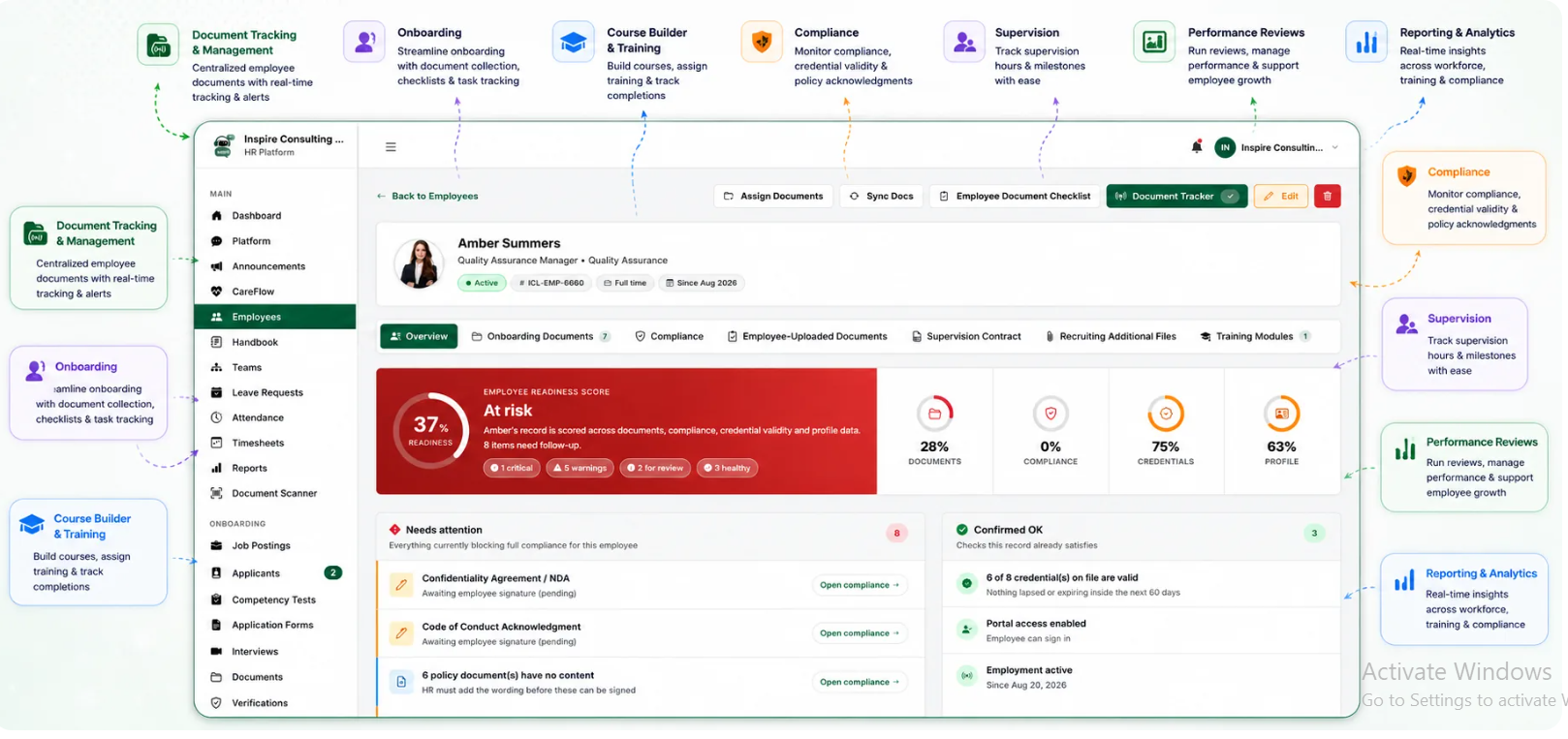
- Track documentation requirements across staff and clients
- Structure supervision and ensure it’s documented
- Monitor staff credentials and expirations
- Assign and track training
- Maintain audit-ready records in one place
This creates consistency across your entire program—not just for one staff member, but for your whole team.
Final Thoughts
PRP documentation doesn’t have to be overwhelming.
When done right, it becomes a system—not a burden.
The goal is simple:
- clear assessments
- measurable plans
- meaningful notes
- consistent tracking
If your documentation tells a clear story, audits become much easier.
Call to Action
If your team is struggling to keep up with documentation and compliance:
Request a demo of BUAMS HR and see how you can simplify documentation tracking, supervision, and audit readiness (www.buamshr.com)
Or if you’re building your team:
Join the BUAMS workforce network to connect with trained behavioral health professionals in Maryland and DC (www.buamshr.com)