Behavioral health organizations manage a steady stream of staff requirements, from licenses and certifications to onboarding documents, policy acknowledgments, supervision records, and recurring training deadlines. When those items live across spreadsheets, inboxes, file folders, and manual reminders, HR teams end up reacting late instead of managing proactively. Staff compliance tracking gives providers a more reliable way to monitor what is due, what is missing, and where follow-up is needed before small gaps become audit or staffing problems.
What Is Staff Compliance Tracking?
Staff compliance tracking is the process of keeping employee-related requirements current, documented, and easy to verify. In behavioral health settings, this often includes professional license dates, certifications, background checks, training completions, health records when required, signed policies, supervision documentation, and role-specific onboarding tasks. The goal is not just to store documents, but to know which requirements apply to each employee, when they expire, and whether the right evidence is already on file.
For growing providers, this matters because compliance is rarely limited to one document type. A single team member may need multiple time-sensitive items tracked across different intervals. Without a centralized system, it becomes difficult to tell whether someone is fully cleared, nearly out of compliance, or waiting on a missing step.
Why It Matters for Behavioral Health Providers
Behavioral health organizations often operate with lean HR teams while managing strict documentation expectations. Missing a renewal date or failing to produce a signed record during review can create unnecessary stress for HR, operations, and clinical leadership. Even when care delivery is strong, inconsistent staff documentation can raise avoidable questions during audits, accreditation reviews, payer reviews, or internal quality checks.
Strong staff compliance tracking also protects day-to-day operations. If a required credential expires unexpectedly, schedules may need to change quickly. If onboarding tasks are incomplete, new hires may be delayed from working at full capacity. If policy acknowledgments are scattered, leaders may struggle to confirm who received updated guidance. A better tracking process helps teams respond earlier, plan better, and maintain confidence in their workforce records.
Common Signs the Current Process Is Too Manual
Many providers know they need a better system when familiar warning signs start piling up. HR may be maintaining several spreadsheets for different requirement types. Managers may send repeated follow-ups because they cannot easily see completion status. Employees may submit files through email, which makes version control and retrieval harder later.
These issues usually do not come from lack of effort. They come from a process that has outgrown the tools supporting it.
What to Look for in a Better Tracking Workflow
A practical staff compliance tracking workflow should start with role-based clarity. Different positions require different documents, training schedules, and review checkpoints. The system should make it easy to assign requirements based on role, program, location, or employment status so HR is not rebuilding the same checklist every time.
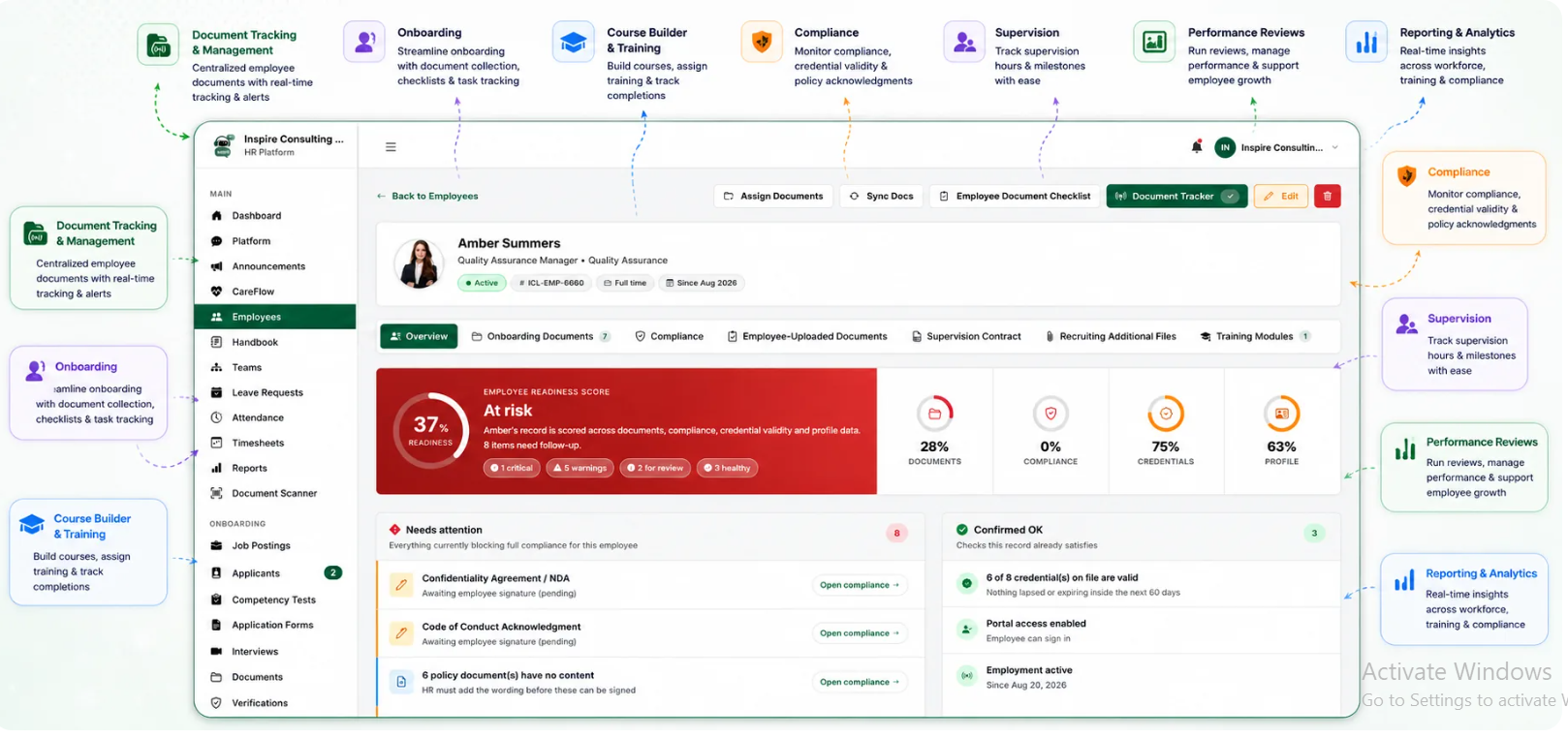
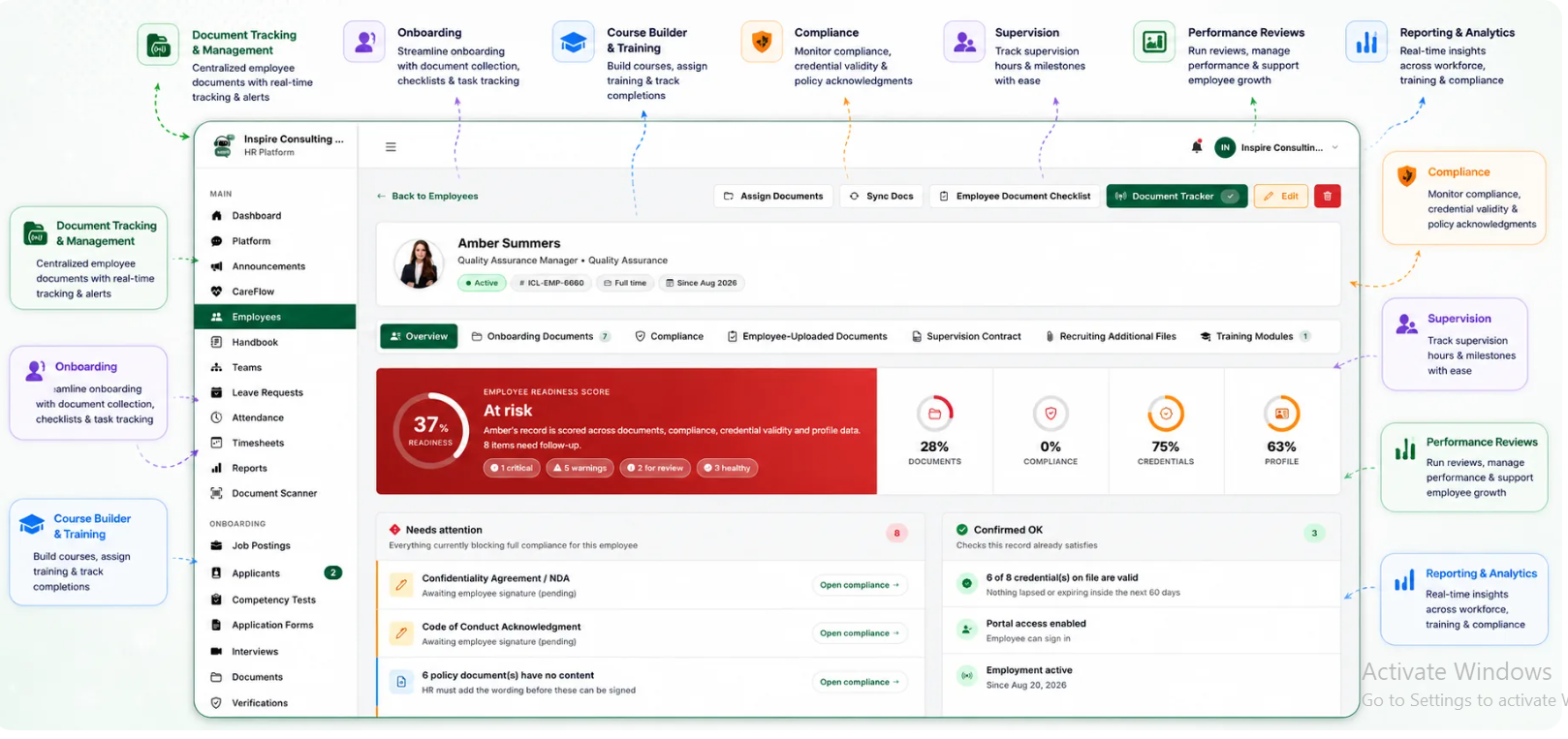
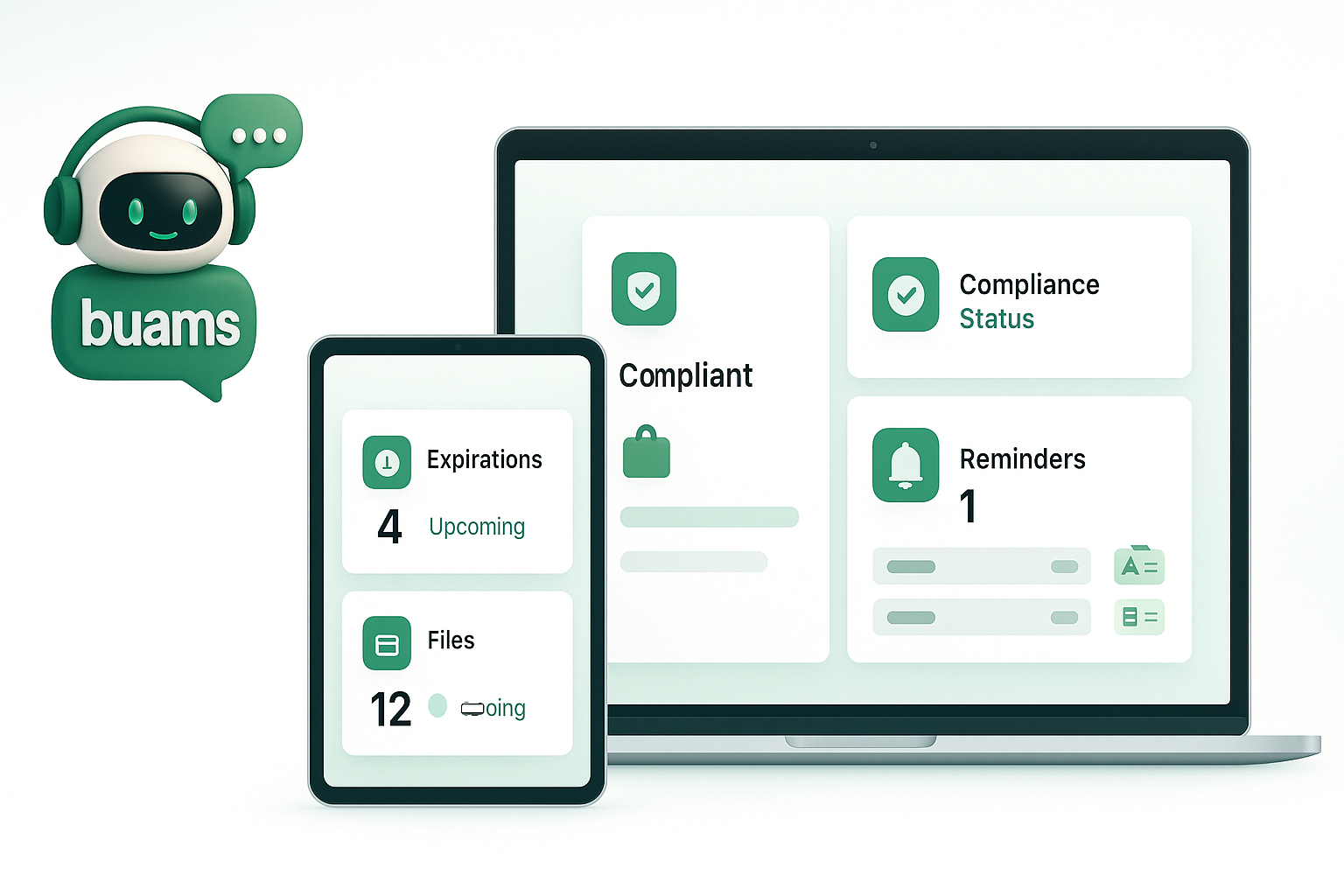
Next, providers need timely visibility. That means being able to see upcoming expirations, overdue items, and incomplete onboarding steps without opening multiple files. Reminders should support action before deadlines are missed, not after. Leaders should also be able to confirm that documentation exists and is stored in the correct employee record.
It also helps to keep evidence attached to the workflow itself. When completion dates, uploaded files, and status tracking live together, HR teams spend less time reconciling information from different systems. This makes reviews faster and reduces the chance of overlooking a missing item.
How BUAMS HR Helps Teams Stay Organized
BUAMS HR helps behavioral health providers bring staff compliance tracking into one structured process. Instead of splitting work across separate spreadsheets, email chains, and shared folders, teams can manage employee records, onboarding tasks, documents, and requirement follow-up from a centralized system.That kind of setup supports cleaner oversight in several ways:
For mental and behavioral health organizations, this is especially useful because workforce compliance touches hiring, onboarding, credential oversight, and retention. When those pieces are aligned, HR can spend less time chasing paperwork and more time supporting stable operations.
Final Thoughts
Staff compliance tracking is not just an administrative exercise. It is part of maintaining a reliable workforce, reducing preventable risk, and keeping organizations ready for the questions that come with growth and oversight. Behavioral health providers that move from scattered reminders to a more structured tracking system are usually better prepared for audits, better equipped to manage deadlines, and less likely to face avoidable last-minute disruptions.
BUAMS HR gives providers a practical way to centralize that work so employee documentation, due dates, and follow-up are easier to manage every day.