Supervision Is Not Optional—It’s Essential
In behavioral health, supervision is often treated as something you “fit in” when there’s time.
But in reality, supervision is one of the most important parts of running a program.
It affects:
- quality of care
- staff performance
- compliance
- client outcomes
- organizational stability
When supervision is strong, everything else improves.
When it’s weak or inconsistent, problems start to show—quickly.
What Supervision Really Means
Supervision is not just checking in with staff or asking how things are going.
It is a structured process where supervisors:
- review client care
- guide staff decision-making
- address challenges and risks
- support professional growth
- ensure services are delivered correctly
It’s where real learning happens.
Why Supervision Matters So Much
Supervision sits at the center of your entire program.
1. It Protects Quality of Care
Staff are making decisions every day that impact clients.
Supervision ensures:
- interventions are appropriate
- risks are addressed
- care stays consistent
2. It Supports Staff Growth
Without supervision, staff can feel:
- unsure
- unsupported
- overwhelmed
Regular supervision builds:
- confidence
- skills
- accountability
3. It Reduces Burnout
Behavioral health work is demanding.
Supervision provides:
- space to process challenges
- guidance on difficult cases
- emotional support
This helps retain staff.
4. It Strengthens Compliance
Supervision is a key area in audits and accreditation.
It shows that:
- staff are being guided
- performance is monitored
- services are being reviewed
Without it, programs are at risk.
Types of Supervision
Strong programs use a mix of supervision styles.
Individual Supervision
- one-on-one sessions
- focused on specific staff needs
- deeper discussion of cases
Group Supervision
- team-based learning
- shared case discussions
- promotes consistency
Administrative Supervision
- focuses on policies, procedures, and compliance
- ensures staff follow organizational expectations
The most effective programs combine all three.
What Good Supervision Looks Like
Good supervision is:
- consistent — happens on a regular schedule
- structured — follows a format
- documented — recorded clearly
- relevant — focused on real client care
- action-oriented — leads to next steps
It is not:
- random
- rushed
- undocumented
- purely conversational
What Should Be Covered in Supervision
A strong supervision session should include:
- review of client cases
- discussion of challenges or barriers
- feedback on staff performance
- risk and safety considerations
- documentation review
- follow-up from previous sessions
Every session should have a purpose.
Common Supervision Mistakes
Many organizations struggle with supervision—not because they don’t care, but because there is no structure.
Common issues include:
- supervision happens but is not documented
- sessions are irregular or inconsistent
- no standard format is used
- discussions are too general
- no follow-up on action items
These gaps often show up during audits.
Why Supervision Breaks Down
Even strong teams face challenges because:
- schedules are overloaded
- supervisors have large caseloads
- there is no tracking system
- processes are informal
Over time, supervision becomes:
- inconsistent
- reactive
- difficult to prove
How to Improve Supervision in Your Organization
You don’t need to rebuild everything. Start with structure.
Set a Schedule
- weekly or biweekly individual supervision
- monthly group supervision
Use a Standard Format
Have a consistent way to document:
- topics discussed
- decisions made
- follow-up actions
Track Completion
Make sure supervision is:
- happening regularly
- completed for all staff
Focus on Real Work
Supervision should connect directly to:
- client care
- documentation
- performance
Follow Up
Each session should lead to:
- clear next steps
- accountability
How BUAMS HR Supports Supervision
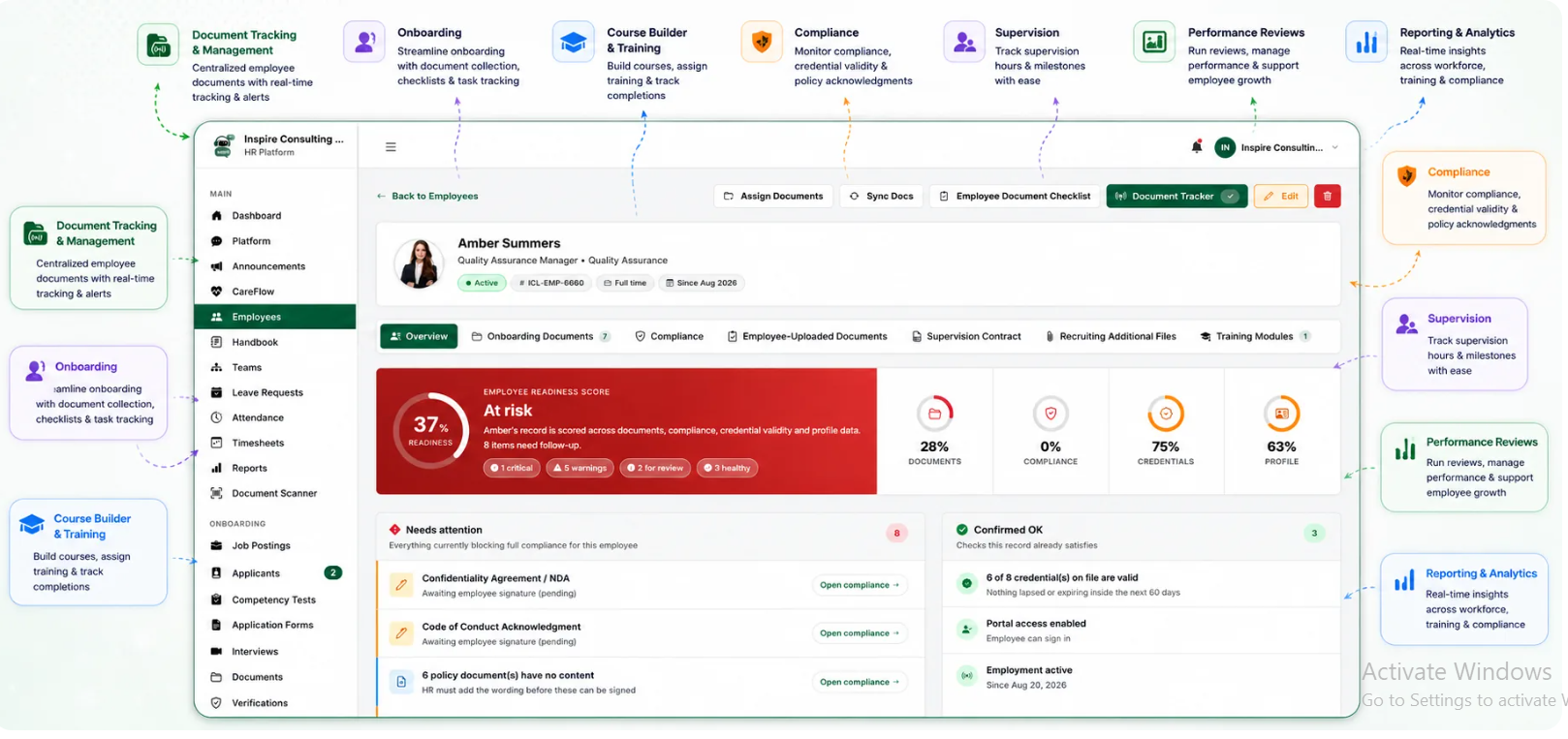
BUAMS HR helps organizations bring structure to supervision without adding extra work.
With BUAMS HR, you can:
- document supervision sessions (individual and group)
- track supervision frequency across staff
- maintain organized, audit-ready records
- monitor staff performance and follow-ups
- ensure consistency across your team
Instead of scattered notes and missed sessions, supervision becomes part of your system.
What Strong Supervision Changes
When supervision is done well:
- staff perform better
- documentation improves
- compliance becomes easier
- audits are less stressful
- teams feel more supported
And most importantly:
your organization becomes more stable and scalable.
Final Thoughts
Supervision is not just a requirement—it’s a foundation.
It connects:
- staff
- clients
- compliance
- leadership
If supervision is strong, everything else has a better chance of working.
Call to Action
If your organization is struggling with supervision structure or consistency:
Use BUAMS HR free for 3 weeks — full access, no credit card, no contract.
See how you can track supervision, improve accountability, and stay audit-ready.
If it works, continue.
If it doesn’t, walk away.