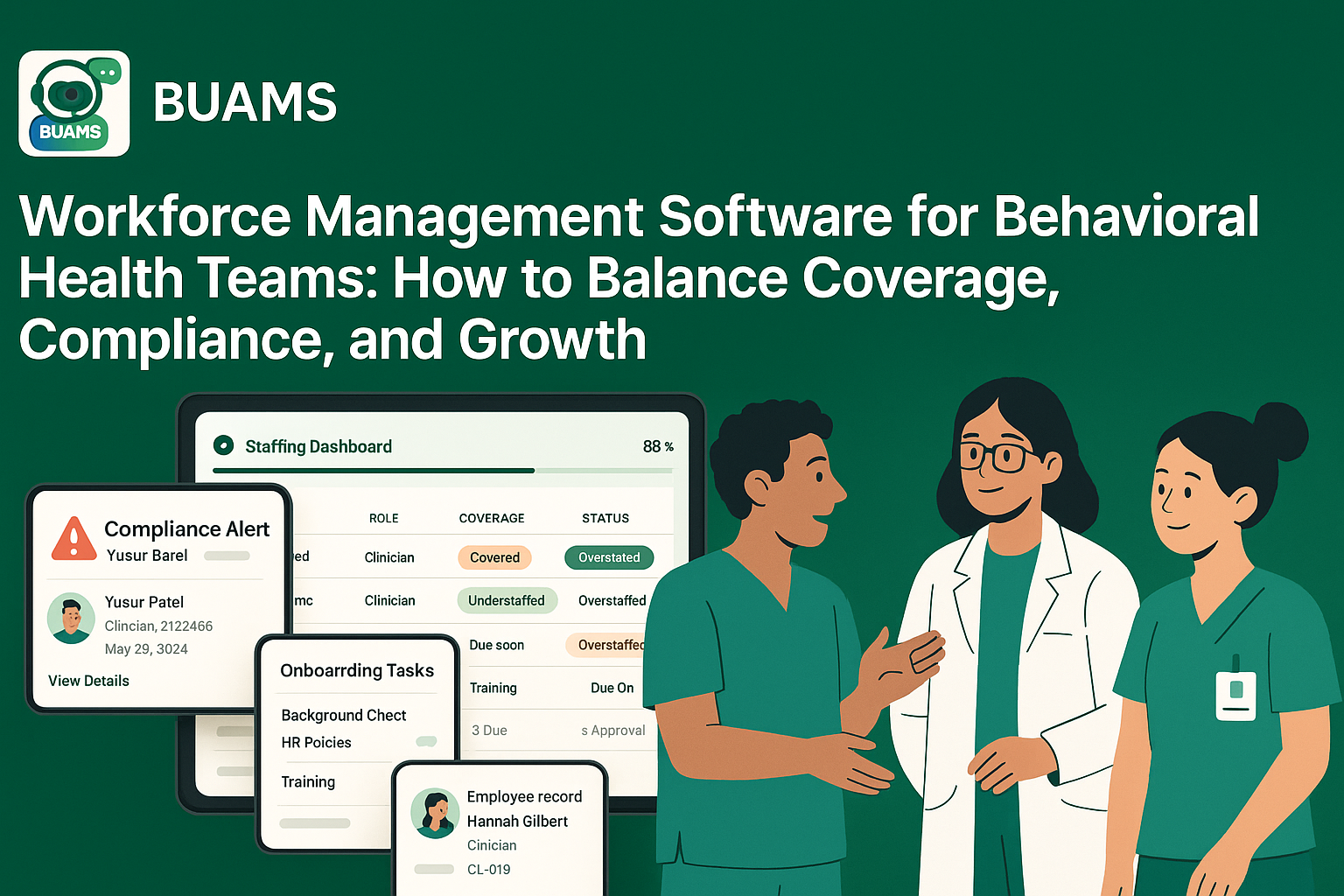
Behavioral health organizations rarely struggle with just one workforce issue at a time. A team may be hiring for open roles, tracking expiring licenses, covering multiple programs, and preparing for an audit all in the same month. When those responsibilities live across spreadsheets, inboxes, shared drives, and manual reminders, routine HR work turns into operational risk. That is why more organizations are looking for workforce management software that gives leaders a clearer view of staffing, readiness, and follow-through.
Key Takeaways
What workforce management software means in behavioral health
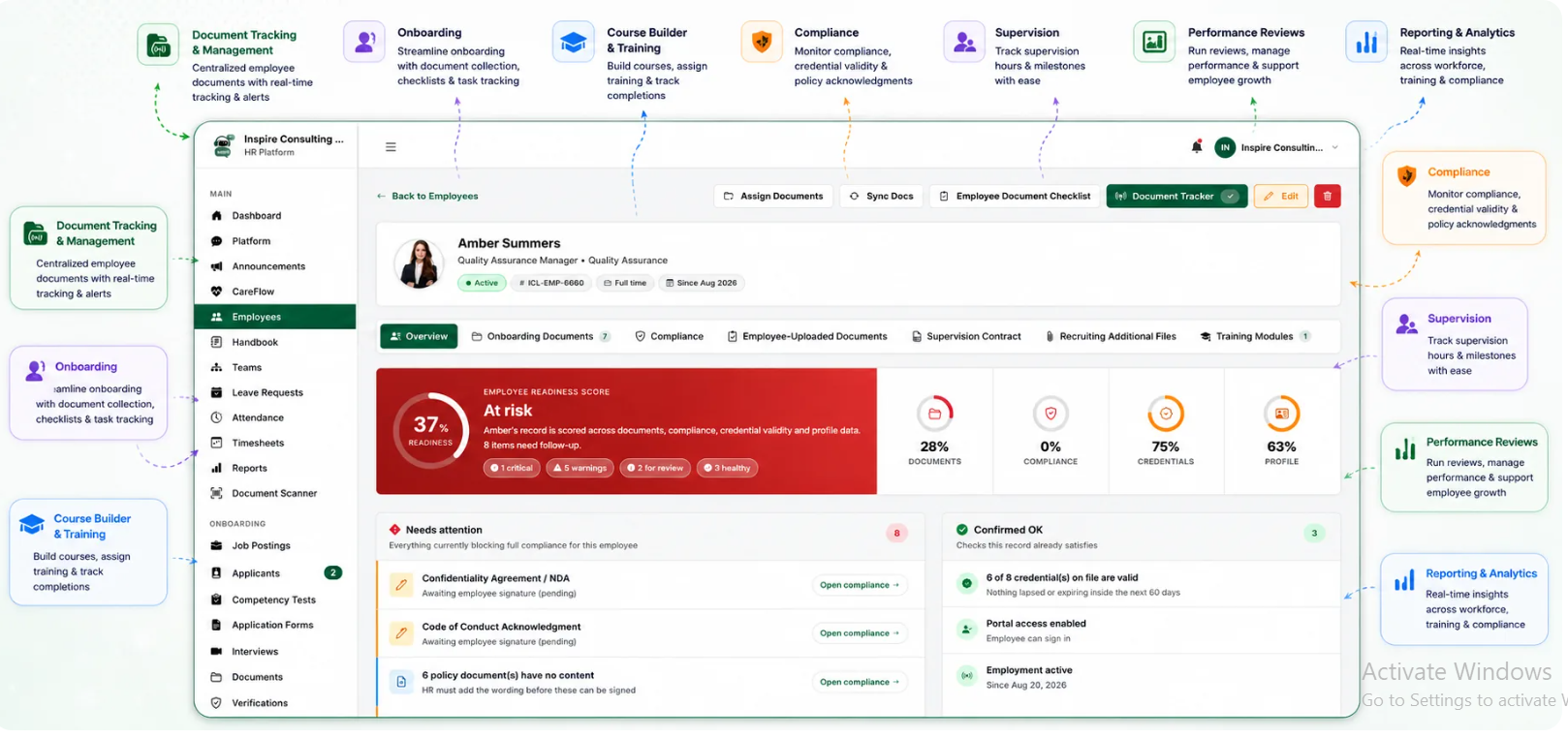
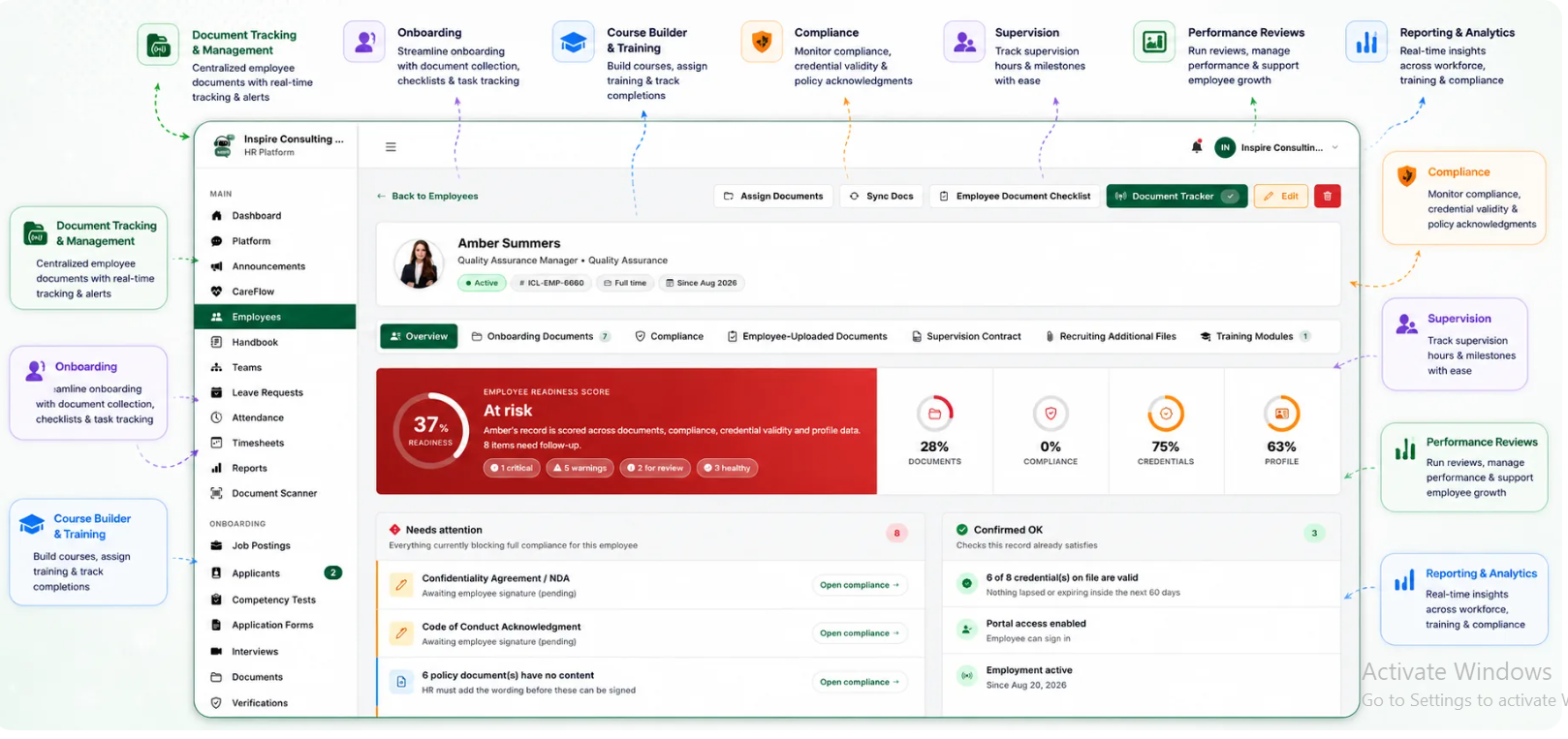
In a behavioral health setting, workforce management software is not only about scheduling. It should help HR and operations teams understand who is hired, who is fully cleared to work, which staff records are complete, and what requirements are coming due. For organizations that serve multiple locations or service lines, this visibility matters because staffing decisions often depend on both operational need and compliance status.
A practical system should support the full employee lifecycle. That includes onboarding progress, document collection, license or certification tracking, policy acknowledgments, and organized employee files that are easy to review when questions come up.
Why it matters for growing provider organizations
Behavioral health providers often grow faster than their back-office processes. New programs, new sites, and new hiring needs can quickly expose gaps in how staff information is maintained. If managers do not have a reliable way to confirm readiness, teams end up chasing documents, escalating missing items late, or delaying assignments that could have been planned earlier.
Workforce management software helps create a more stable operating rhythm. Instead of reacting to scattered updates, HR teams can monitor progress in one place and support supervisors with better information. That is especially important when organizations are trying to reduce vacancy impact, keep employee files current, and avoid last-minute compliance scrambles.
Common signs your current process is too fragmented
Any one of these issues can create avoidable delays. Together, they usually signal that the organization needs a more connected system rather than more reminders.
What to look for in workforce management software
Centralized employee records
HR teams need one reliable place for offer documents, onboarding forms, policy acknowledgments, certifications, and other employment records. Centralization reduces duplicate storage and makes it easier to confirm file completeness before a staff member is assigned.
Clear onboarding visibility
When hiring volume increases, onboarding can become a bottleneck. Software should show what has been completed, what is missing, and who needs to act next. That helps HR move candidates to productive start dates without sacrificing process quality.
Compliance-aware tracking
Behavioral health organizations need more than a static employee list. They need visibility into licenses, certifications, acknowledgments, and other time-sensitive requirements that affect readiness and audit performance.
Support for multi-program operations
If your organization serves different programs or locations, your HR system should make it easier to manage workforce data consistently across the business. Standardized workflows help reduce local workarounds that create reporting gaps later.
How BUAMS HR helps behavioral health teams stay organized
BUAMS HR is designed for organizations that need a practical, compliance-aware way to manage workforce operations. Instead of splitting HR tasks across separate tools, teams can keep employee data, onboarding records, and supporting documents in one structured system.
That makes it easier to answer common operational questions quickly: Is a file complete? What is still outstanding? Which requirements need attention soon? Where can HR and supervisors look for the same status view? With better organization, teams spend less time reconstructing the story of each employee record and more time moving work forward.
For behavioral health providers, that matters because staffing readiness is tied closely to service continuity, supervision, and regulatory expectations. A more connected system supports both the day-to-day work of HR and the broader goal of building a dependable workforce foundation.
Final thoughts
Choosing workforce management software is really about reducing uncertainty. Behavioral health organizations need systems that help them see workforce status clearly, act earlier on gaps, and maintain clean records as they grow. When HR operations are centralized and easier to monitor, teams can support coverage, compliance, and expansion with fewer surprises.