Training is an important part of managing a behavioral health workforce. Employees may need to complete onboarding courses, compliance training, safety training, organizational policies, and role-specific education throughout their employment.
As a behavioral health organization grows, keeping track of these requirements can become difficult. HR teams may rely on spreadsheets, email reminders, shared folders, or separate learning systems to determine which employees have completed their required training.
A structured behavioral health training management process can make it easier to assign courses, monitor completion, maintain training records, and identify outstanding requirements.
What Is Behavioral Health Training Management?
Behavioral health training management is the process of organizing, assigning, tracking, and maintaining employee training within a behavioral health organization.
Training requirements can differ depending on an employee's role.
For example, a therapist, case manager, clinical supervisor, and administrative employee may not need exactly the same training.
A training management system can help organizations create role-specific requirements and monitor employee progress from one centralized location.
Training may include:
- New employee orientation
- Compliance training
- Privacy and confidentiality training
- Safety training
- Workplace policies
- Clinical training
- Role-specific courses
- Recurring annual training
- Professional development
- Organization-specific courses
Why Training Management Matters in Behavioral Health
Behavioral health organizations often have multiple employee roles and ongoing training requirements.
Simply assigning a course is not enough. HR teams also need to know:
- Who has completed the training?
- Who still has outstanding courses?
- When was the training completed?
- Which employees need recurring training?
- Which courses should be assigned to a specific role?
- Can HR quickly access training records
When these questions require manually checking spreadsheets or email records, HR teams can spend unnecessary time managing administrative tasks.
A centralized training process gives organizations better visibility into employee training status.
Common Challenges With Manual Training Tracking
Tracking Employees in Spreadsheets
A spreadsheet might contain employee names, course names, completion dates, and status.
While this can work for a small organization, it becomes harder to maintain as the workforce grows.
HR teams have to manually update completion statuses and make sure the information remains accurate.
Sending Manual Reminders
Employees who have not completed required training may need reminders.
When reminders are handled individually through email, HR staff can spend significant time following up with employees.
Managing Recurring Training
Some training requirements may need to be completed periodically.
Tracking recurring courses manually requires HR teams to remember when each employee needs to complete the training again.
Maintaining Training Records
Organizations may need to retain evidence that employees completed required training.
If completion records are stored across multiple systems, locating the right information can take additional time.
What Should a Behavioral Health Training Management System Include?
A useful training management system should provide more than a list of courses.
Course Creation
HR teams should be able to create and organize courses based on their organization's requirements.
This can include internal training material, policies, compliance courses, and role-specific content.
Employee Assignment
Courses can be assigned to employees based on their role, department, location, or other organizational requirements.
Completion Tracking
HR teams should be able to see which employees have completed assigned courses and which still have outstanding training.
Training Records
Completion records should remain associated with the employee so HR teams can access training history when needed.
Recurring Training
For training that must be repeated, organizations need a way to monitor future requirements instead of treating each course as a one-time task.
Reporting
Training reports can help HR teams identify completion rates and outstanding courses across employees or locations.
Behavioral Health Training and Compliance
Training management is closely connected to compliance management.
An organization may have policies or requirements that employees need to understand and complete through training.
However, simply having a training course available does not demonstrate that every employee completed it.
HR teams need a reliable way to track:
Required course → Assigned employee → Completion status → Completion record
This creates a clearer training history for each employee.
Role-Based Training for Behavioral Health Employees
Not every employee should receive exactly the same training.
A behavioral health organization can create different training requirements for different roles.
For example:
Clinical Staff
Possible requirements may include organization-specific clinical procedures, privacy training, safety training, and other applicable education.
Administrative Staff
Administrative employees may need organizational policies, privacy training, workplace safety, and other relevant courses.
Supervisors
Supervisory employees may have additional leadership, compliance, or management-related training requirements.
The exact requirements should be determined by the organization's policies and applicable professional or regulatory requirements.
Role-based training helps organizations avoid creating one generic training program for every employee.
How Training Management Supports Employee Onboarding
Training is also an important part of employee onboarding.
When a new employee joins a behavioral health organization, HR may need to assign several courses before or shortly after the employee begins their role.
Instead of managing these requirements through separate emails, a centralized onboarding and training workflow can connect the two processes.
For example:
New Employee → Onboarding → Required Courses → Course Completion → Employee Training Record
This gives HR teams a more structured approach to onboarding and training.
Benefits of Centralized Training Management
A centralized system can help behavioral health organizations:
- Organize employee training
- Create role-specific courses
- Assign required training
- Monitor completion status
- Reduce manual follow-up
- Maintain training records
- Manage recurring training
- Improve visibility across locations
- Connect training with employee records
- Support broader HR and compliance workflows
The exact benefits depend on how the organization structures its training requirements and uses the system.
How BUAMS HR Supports Behavioral Health Training
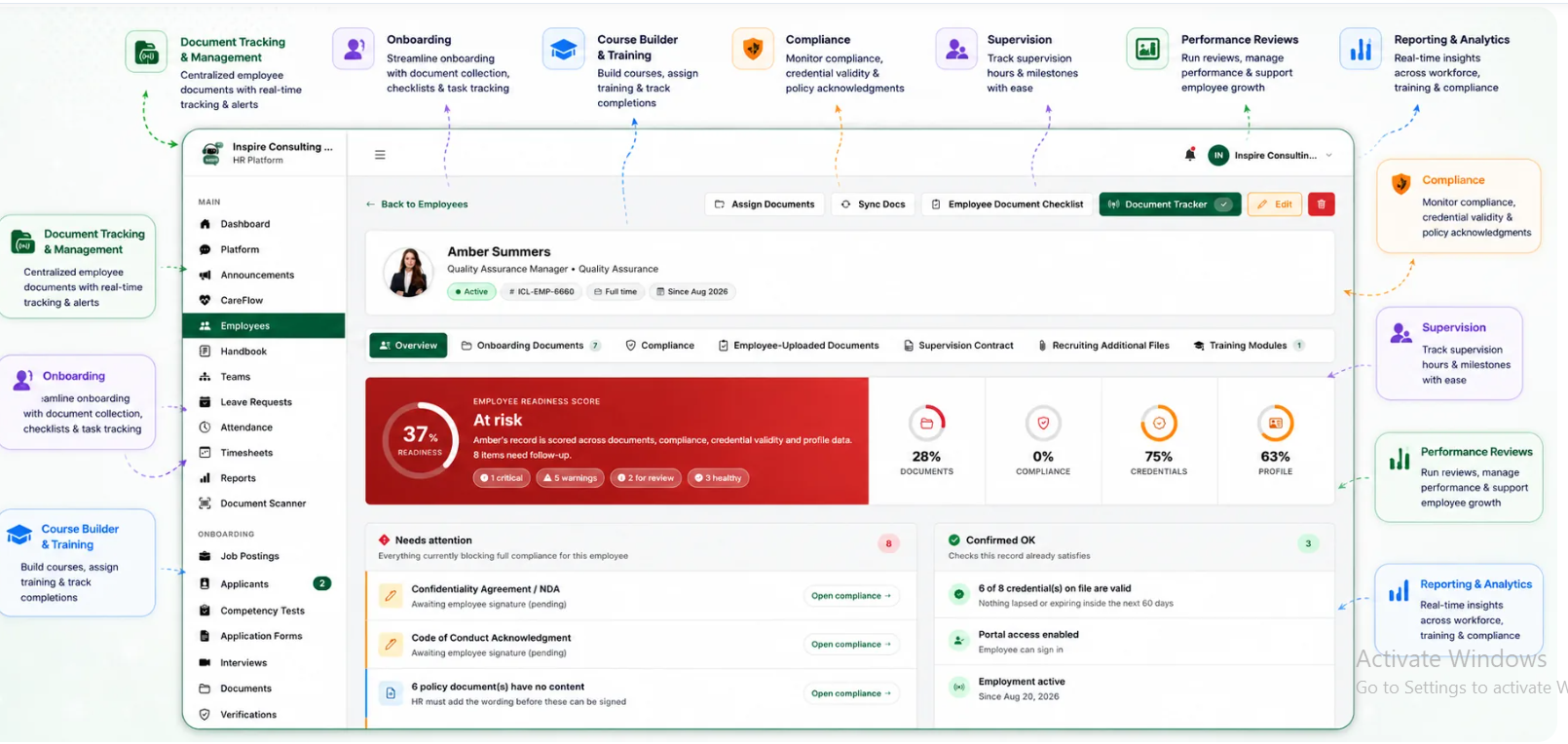
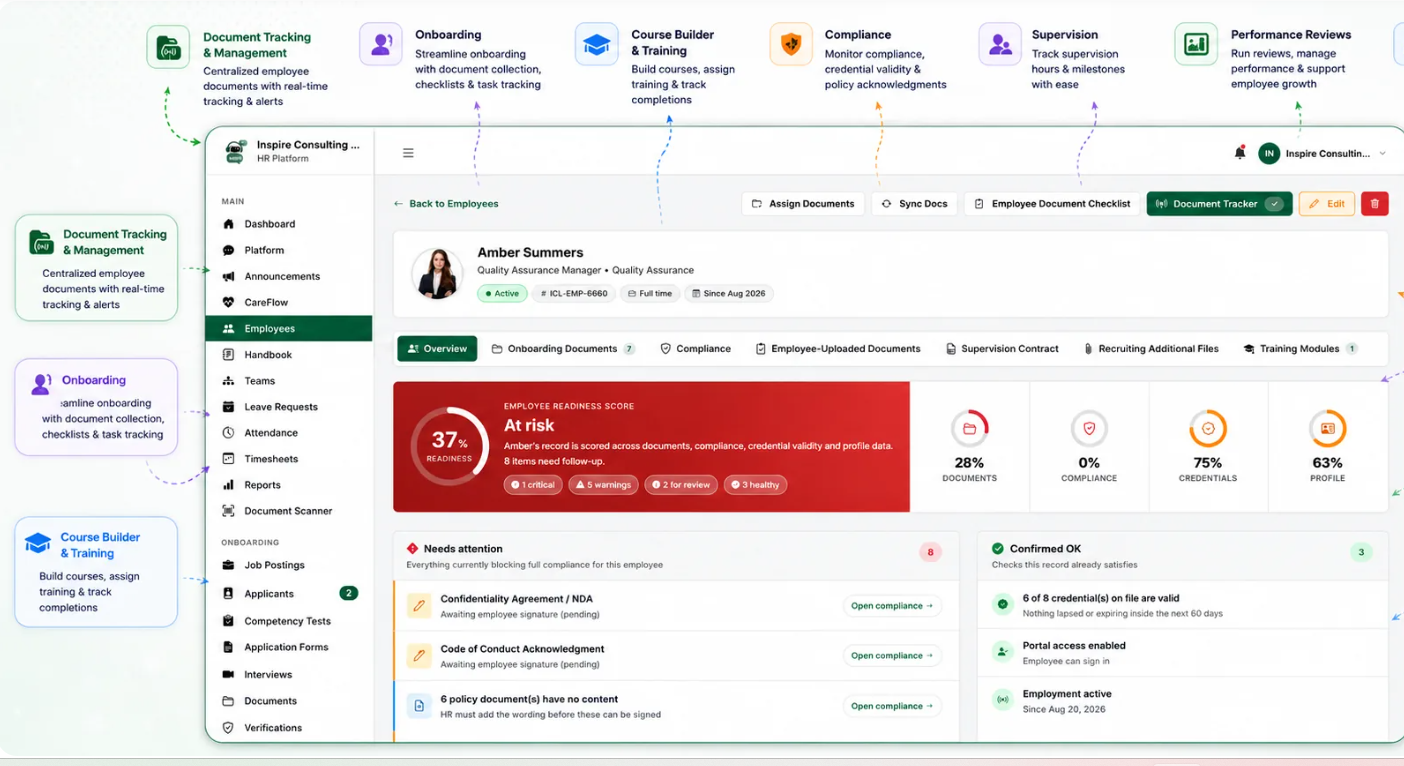
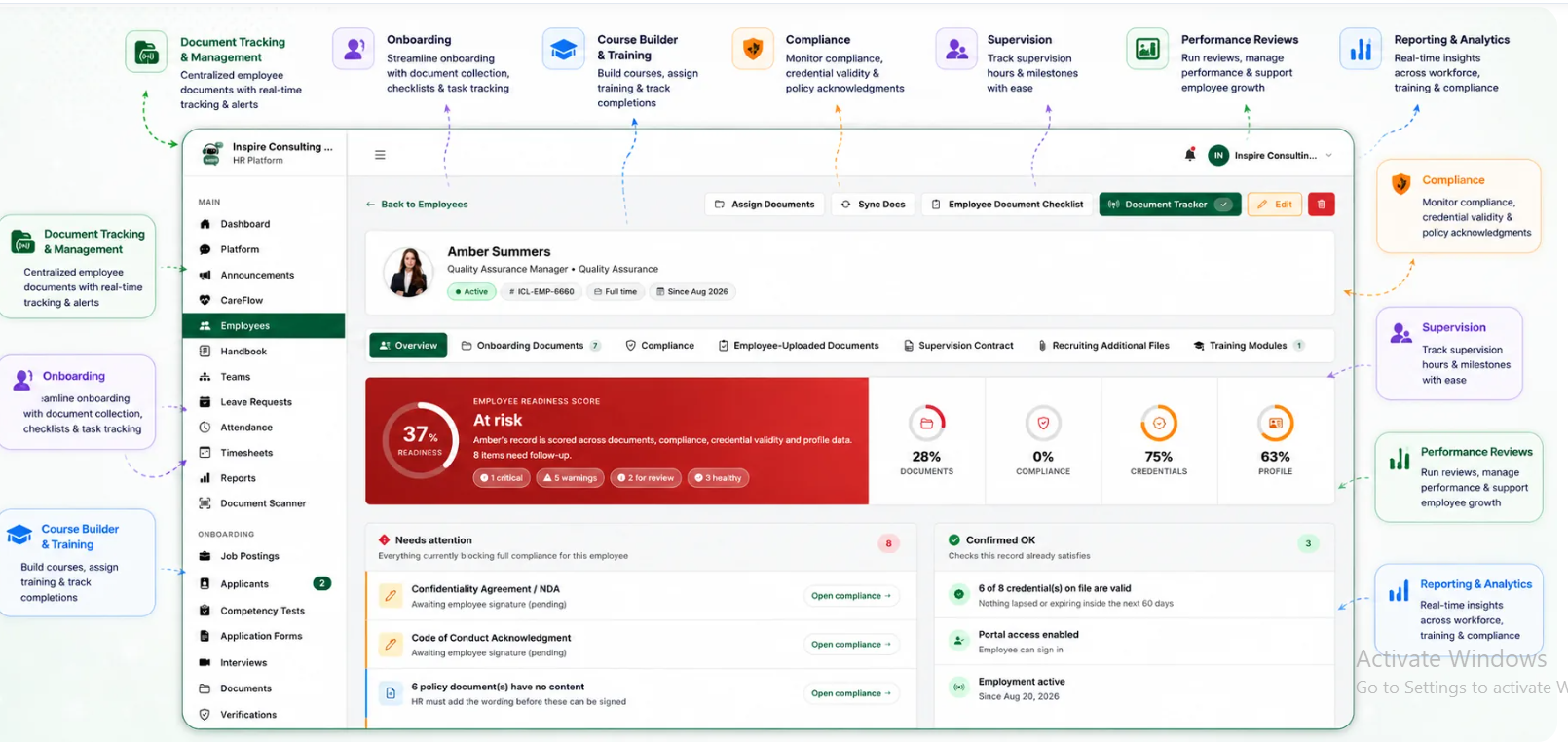
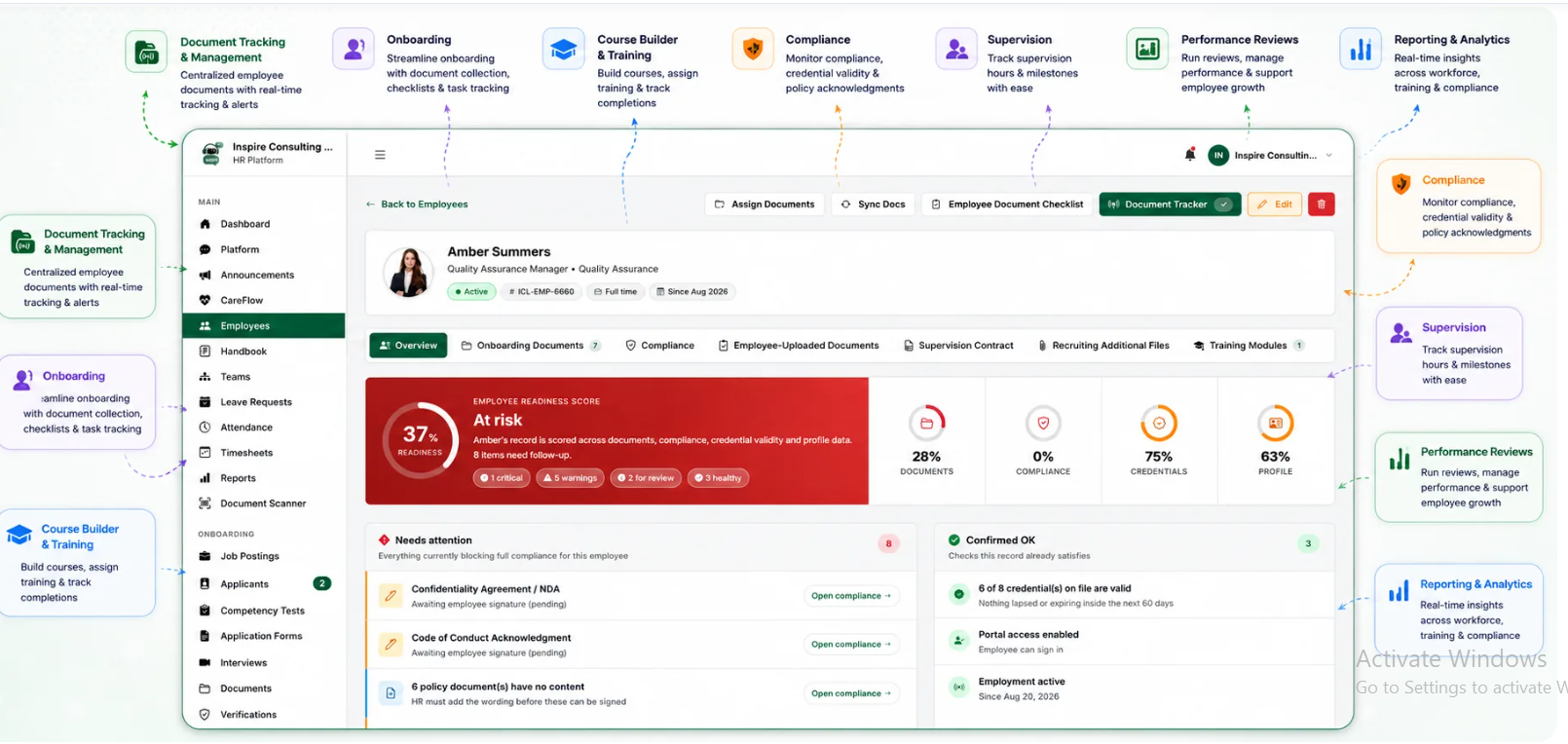
BUAMS HR includes training capabilities designed to work alongside its broader employee and HR management functions.
Organizations can use the platform to create and manage courses, assign training requirements, and monitor employee training progress.
Because training information can be managed alongside employee records, onboarding, documents, credentials, and compliance information, HR teams can reduce the need to maintain separate spreadsheets for different workforce processes.
For behavioral health organizations with multiple employees, roles, and locations, having training information connected to the wider HR workflow can provide a more centralized view of workforce requirements.
Behavioral Health Training Management Checklist
Use this checklist to evaluate your current training process:
- Do you have a centralized list of required courses?
- Are training requirements defined by employee role?
- Can HR easily assign courses?
- Can employees see their outstanding training?
- Can HR see who has completed each course?
- Are completion records maintained?
- Are recurring training requirements tracked?
- Can HR identify overdue training?
- Are training records connected to employee profiles?
- Can managers access relevant training information?
- Are training requirements reviewed regularly?
If many of these processes are handled manually, dedicated training management software may help simplify the workflow.
Final Thoughts
Behavioral health training management involves more than creating courses. Organizations need a consistent way to assign training, monitor employee progress, maintain completion records, and manage recurring requirements.
A centralized training system can help HR teams reduce manual tracking and gain better visibility into workforce training.
BUAMS HR combines employee management, onboarding, training, compliance, document tracking, clinical supervision, and other HR functions in one platform designed for behavioral health organizations.
For growing behavioral health organizations, connecting employee training with the broader HR and compliance workflow can create a more organized approach to workforce management.