Behavioral health providers move quickly when coverage is tight. A supervisor needs a shift filled, a program needs backup for a call-off, or a new hire is expected to start at a site tomorrow. In that pressure, organizations can end up placing someone before every required document, training, approval, or credential check is truly complete. What looked like a small staffing shortcut can turn into a compliance issue, a delayed start, or a scramble to explain why the assignment was allowed in the first place.
Assignment freeze alert software gives HR and operations teams a more controlled way to prevent that problem. Instead of discovering a missing requirement after a placement is already on the schedule, the organization can flag the issue earlier, stop the assignment from moving forward until the right conditions are met, and document who cleared the exception if one is needed. For behavioral health teams balancing staffing pressure with workforce compliance, that kind of alerting can protect both readiness and service continuity.
Key Takeaways
What Is Assignment Freeze Alert Software?
Assignment freeze alert software is a workflow that warns HR, staffing, or operations teams when an employee should not be placed into a role, site, shift, or program because a required condition is still missing. That condition might be an expired credential, incomplete onboarding step, unverified training record, missing supervision document, overdue health clearance, or unresolved approval tied to the assignment.
In behavioral health, that matters because assignment readiness is rarely a simple yes-or-no decision based only on job title. A staff member may be cleared for one program but not another. A float employee may be eligible for one site but still missing orientation for a different population. A new hire may be almost ready, but not ready enough for the assignment under review. Freeze alert software turns those distinctions into visible workflow controls instead of leaving them to memory and manual checking.
The goal is not to create unnecessary delay. The goal is to stop avoidable mistakes before they spread into scheduling, supervision, payroll, or compliance problems.
Why It Matters for Behavioral Health Providers
Behavioral health organizations often need to make staffing decisions quickly, but quick decisions still depend on accurate workforce records. If an employee is scheduled into the wrong setting, the resulting issue can affect more than one team at once. HR may need to chase missing documentation, operations may have to rebuild the schedule, supervisors may lose confidence in the readiness process, and leadership may face extra questions during an audit or internal review.
These risks grow when providers operate across several programs, service lines, or locations. Each assignment can carry different requirements around training, credentials, employee files, health clearances, or supervisory coverage. Without a structured alert, someone may assume that because the employee is active in the system, they are ready for every assignment. That assumption is where preventable exposure begins.
Assignment freeze alert software helps teams apply discipline at the moment when staffing decisions are actually made. Instead of running compliance checks after the schedule is posted, organizations can catch conflicts earlier and route them to the right reviewer before the placement creates downstream disruption.
Common Situations That Should Trigger a Freeze Alert
A strong alert workflow should focus on the gaps that can materially affect assignment readiness. Behavioral health providers often benefit from freeze alerts in situations like these:
These are not edge cases. They are common examples of how manual staffing decisions can outpace documentation and readiness tracking. Freeze alerts help slow down the right moments without slowing down everything.
What to Look For in Assignment Freeze Alert Software
Role- and site-specific rules
The system should evaluate assignment readiness based on the actual conditions attached to the assignment, not only the employee's general active status. Behavioral health providers need to account for program type, site, role, population served, and supervision structure.
Clear reasons for the alert
If an assignment is frozen, the user should see why. A vague warning is not enough. Teams need to know whether the issue is an expired credential, missing training proof, pending approval, incomplete document, or unresolved file review.
Escalation paths and exception handling
Sometimes an organization does need to review a time-sensitive exception. Good software should route the alert to the right approver, document the decision, and show any required follow-up instead of letting the exception happen informally.
Connection to workforce records
Freeze alerts are only reliable when they reflect current employee data. If training records, employee files, and approval status live in separate places, the alerting logic becomes less trustworthy. A connected system improves confidence.
Operational reporting
Leaders should be able to see which programs, sites, or requirement categories trigger the most freezes. That helps the organization find recurring bottlenecks, such as one training step that repeatedly delays placements or one site that often requests staff before readiness is complete.
Best Practices for a Stronger Freeze Alert Process
Start by defining which missing items should truly stop an assignment and which should only create a lower-priority warning. Not every incomplete record deserves the same level of response. Behavioral health providers should separate assignment-critical requirements from routine administrative cleanup so the alert system stays credible.
It also helps to align HR and operations around shared status definitions. If one team believes an employee is ready once documents are uploaded, while another team believes readiness only begins after review and approval, freeze alerts will create confusion. The workflow should make each status clear enough that staffing teams know when they can proceed and when they cannot.
Finally, review freeze alert trends regularly. If the same missing item keeps blocking placements, the issue may not be staff noncompliance. It may be a broken onboarding handoff, a weak reminder process, or unclear ownership between HR, supervisors, and operations. The best alerting systems help organizations improve the upstream process, not just stop work at the last minute.
How BUAMS HR Helps
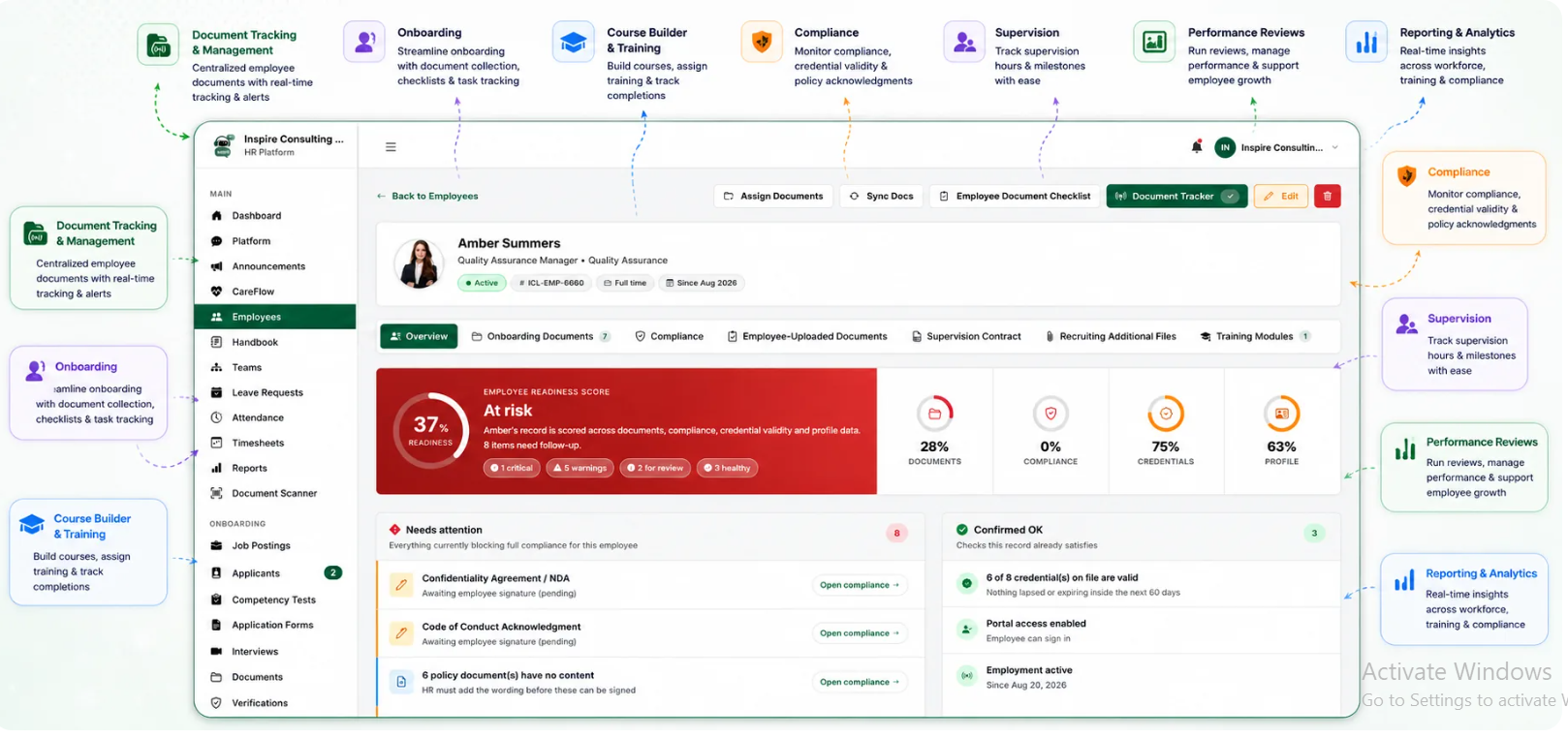
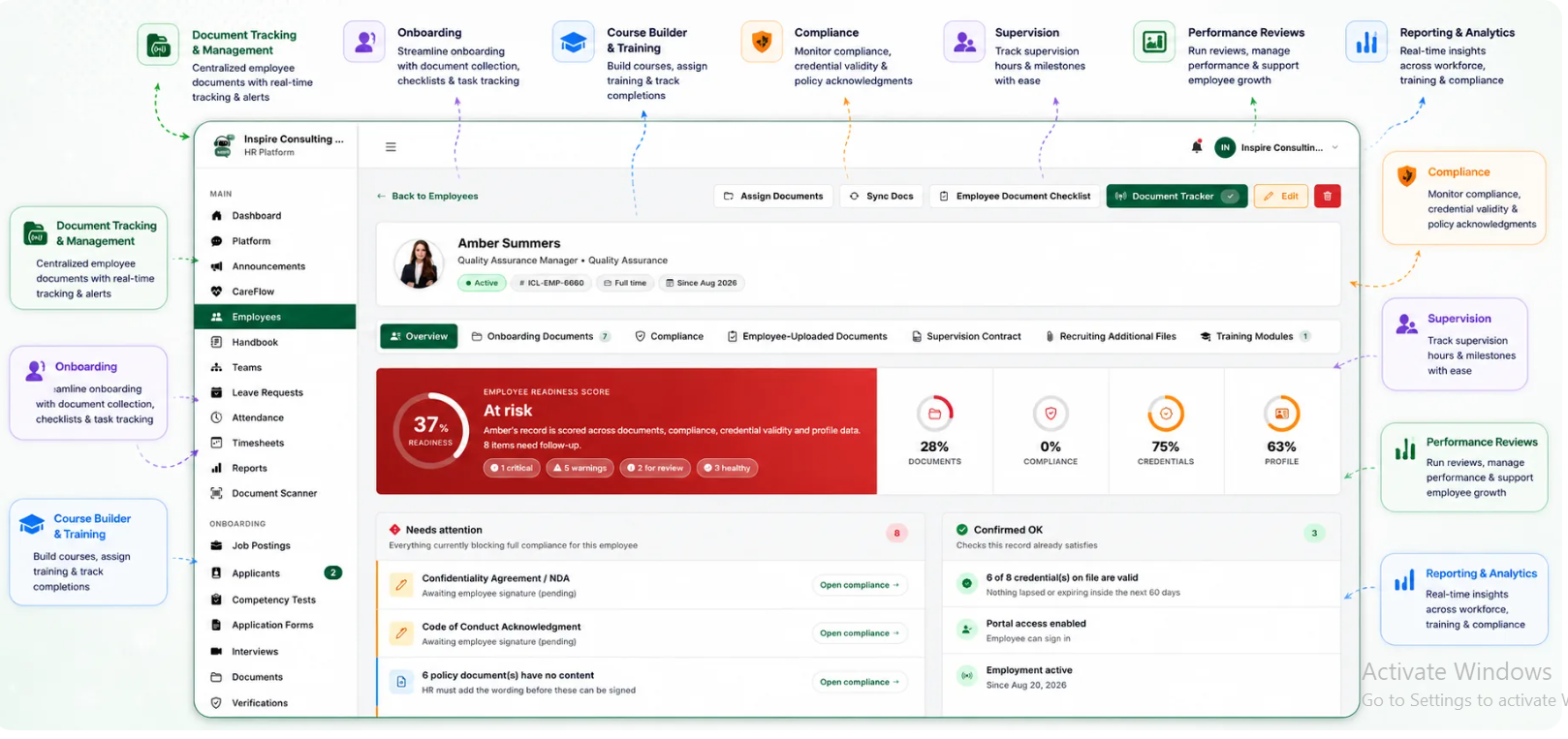
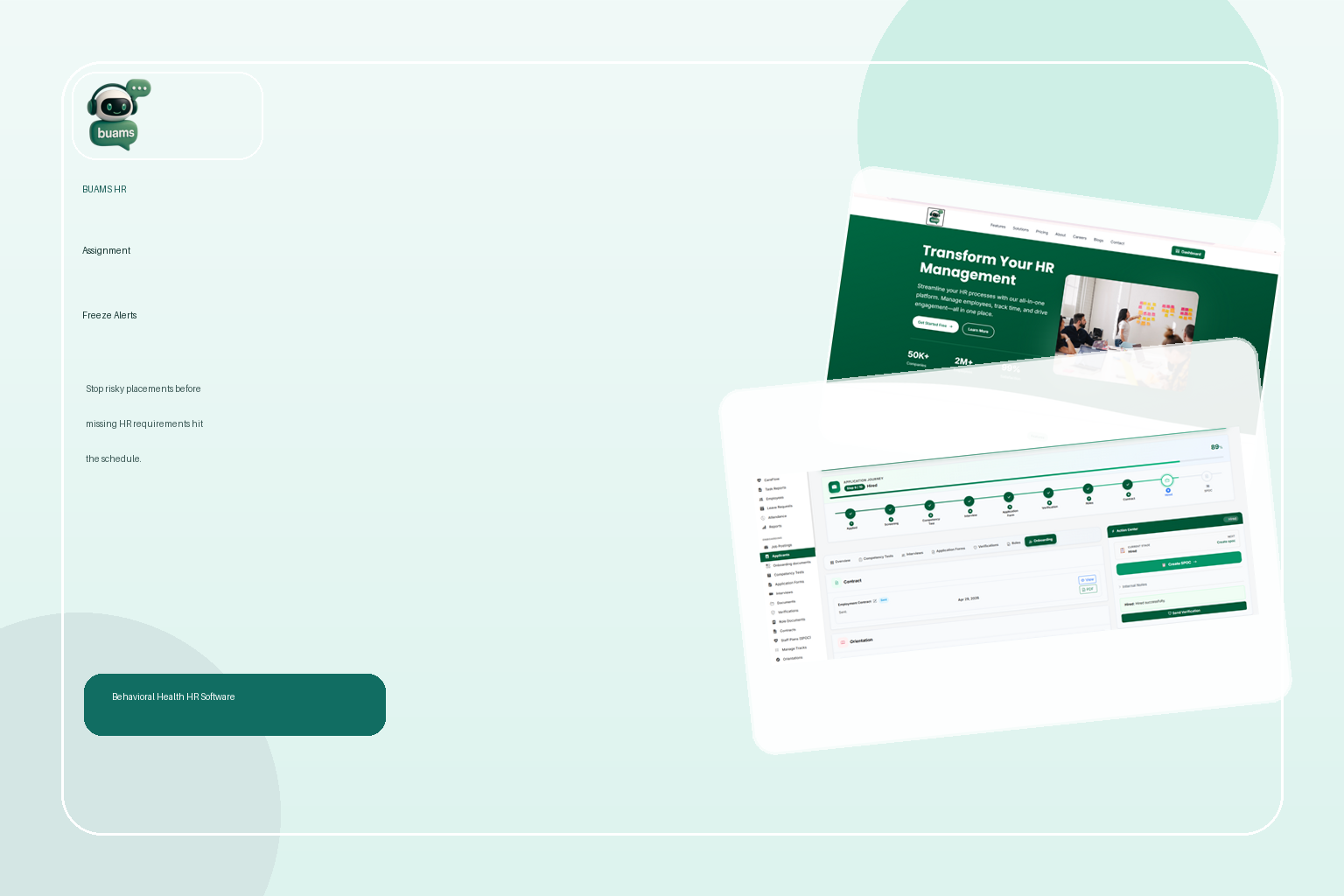
BUAMS HR helps behavioral health providers keep employee records, document requirements, and readiness workflows connected in one place. That gives organizations a better foundation for assignment freeze alerts because the alert logic can reflect current workforce status instead of depending on separate spreadsheets or inbox follow-up.
When HR, compliance, and operations teams can review employee files, training status, approvals, and assignment-related requirements together, it becomes easier to stop risky placements before they create larger operational problems. Teams gain better visibility into why an employee is blocked, what still needs attention, and who should clear the next step.
For multi-site behavioral health providers, that structure is especially useful. Different programs can maintain different readiness requirements while still working inside one consistent process. BUAMS HR helps turn assignment control into a practical operational safeguard instead of a last-minute scramble.
Final Thoughts
Assignment freeze alert software gives behavioral health providers a more disciplined way to protect staffing decisions at the exact moment risk is most likely to slip through. When missing credentials, overdue training, incomplete files, or unresolved approvals can stop a placement before it reaches the schedule, organizations gain more than compliance protection. They also reduce rework, prevent confusion, and support more reliable workforce coordination.
For providers that need to move fast without losing control, BUAMS HR offers a strong foundation for connecting assignment decisions with real employee readiness. That makes freeze alerts more actionable, more trustworthy, and more useful across everyday behavioral health operations.