Behavioral Health HR Reporting and Analytics: A Guide for Growing Organizations
Behavioral health organizations manage a wide range of employee information, including onboarding records, professional credentials, training, compliance documents, performance reviews, and workforce data.
As an organization grows, reviewing this information manually can become time-consuming. HR teams may need to collect data from spreadsheets, employee files, emails, and different software systems before preparing a report for management.
Behavioral health HR reporting and analytics can help organizations organize workforce information and make it easier to review important HR activities.
What Is Behavioral Health HR Reporting and Analytics?
Behavioral health HR reporting and analytics involves collecting, organizing, and reviewing workforce information to understand employee records, HR processes, and operational needs.
Depending on the available system and data, HR reports may cover:
- Employee records and workforce information
- Employee onboarding progress
- Credential and certification status
- Training completion
- Compliance documentation
- Performance review status
- Scheduling and attendance
- Workforce information across locations
The purpose is to make relevant information easier to review so HR teams and organizational leaders can identify outstanding tasks and make informed decisions.
Why HR Reporting Matters for Behavioral Health Organizations
Behavioral health organizations need more than employee records. They also need a practical way to understand the status of those records and the processes connected to them.
For example, HR may need to determine which employees have outstanding onboarding tasks, which training requirements remain incomplete, or which credentials need renewal.
Without organized reporting, answering these questions may require repeated manual checks.
A structured reporting process can help organizations:
- Review workforce information more efficiently
- Identify missing or outdated records
- Monitor outstanding HR tasks
- Review training and compliance status
- Prepare information for internal reviews
- Understand workforce administration across teams
Important HR Reports for Behavioral Health Organizations
1. Employee Records Report
An employee records report helps HR teams review workforce information maintained by the organization.
It can support routine administration by making relevant employee information easier to locate and review.
Organizations should determine which employee fields are necessary and ensure access to sensitive information is appropriately restricted.
2. Credential and Expiration Report
Some behavioral health roles require specific licenses, certifications, or other documentation.
A credential report can help HR teams identify records that are current, approaching expiration, missing, or require follow-up, depending on the system's capabilities.
This information is particularly useful when organizations need to monitor many employee credentials at the same time.
3. Training Completion Report
Behavioral health employees may need to complete onboarding courses, role-specific training, or organization-required education.
A training report can help HR teams review completion status and identify employees who still have outstanding requirements.
It can also support planning for future training activities.
4. Compliance Documentation Report
HR teams may need to review employee documents and other records connected to internal policies or applicable requirements.
Organized compliance reporting can help identify missing documentation and records that need attention.
Reports should support the organization's compliance process rather than replace professional review of applicable laws, licensing rules, or accreditation requirements.
5. Performance Review Report
Organizations may schedule performance reviews at different times for different employees.
A review-status report can help managers understand which reviews are completed and which require follow-up, if this information is tracked in the HR system.
This supports a more consistent approach to employee development and review administration.
6. Workforce and Location Report
Organizations operating multiple clinics or locations may need to review workforce information across different teams.
Where the system supports location-based reporting, HR leaders can use this information to understand workforce distribution and identify administrative tasks requiring attention.
The Problems With Manual HR Reporting
Many HR teams initially rely on spreadsheets to maintain workforce information and prepare reports.
Although spreadsheets can be useful, manual reporting becomes more complicated when information changes frequently or is maintained by several people.
Common challenges include:
Repeated Data Entry
Employees' information may need to be copied from one spreadsheet into another report. This takes time and can introduce errors.
Outdated Information
A report may become inaccurate if the underlying employee records are updated but the report is not refreshed.
Limited Visibility
Managers may struggle to identify outstanding tasks when information is scattered across multiple files.
Time-Consuming Report Preparation
HR staff may spend hours collecting, checking, and formatting information before it is ready for management review.
Difficulty Comparing Locations
If different clinics maintain their own spreadsheets, consolidating information across locations may require additional manual work.
A centralized HR system can help reduce some of these challenges by keeping related workforce records organized in one place.
How HR Analytics Supports Better Decisions
HR reporting helps organizations understand what is happening in their workforce processes. Analytics can go a step further by helping leaders examine patterns and trends in the available data.
For example, an organization may review:
- Whether onboarding tasks are frequently delayed
- Which training requirements have the most outstanding completions
- How many credentials require renewal during a particular period
- Whether HR administration is becoming more demanding as the workforce grows
- Which locations need additional administrative support
These insights depend on the quality and completeness of the underlying data.
Reports should be interpreted in context. A single metric rarely explains the full reason behind a workforce problem.
How to Build a Practical HR Reporting Process
Behavioral health organizations do not need to begin with dozens of complicated reports. A focused process is often easier to maintain.
Step 1: Identify the Questions Management Needs Answered
Start with practical questions, such as:
- Are employee records complete?
- Which credentials require follow-up?
- Are required training courses being completed?
- Which onboarding tasks remain open?
- Are scheduled performance reviews being completed?
Choose reports that directly answer these questions.
Step 2: Standardize Employee Information
Reports are only useful when the underlying data is accurate and consistent.
Establish clear processes for updating employee records, maintaining documents, and recording training or review completion.
Step 3: Set Review Frequencies
Some information may need frequent monitoring, while other reports can be reviewed monthly or quarterly.
The review schedule should reflect the organization's operational needs and the deadlines attached to relevant requirements.
Step 4: Assign Responsibility
Determine who reviews each report and who follows up when an issue is identified.
A report becomes more useful when it leads to a clear next step.
Step 5: Protect Employee Information
HR reports can contain confidential employee information. Limit access to authorized people and share only the information needed for a particular purpose.
Organizations should also follow applicable privacy, security, and record-retention requirements.
How BUAMS HR Fits Into the Reporting Process
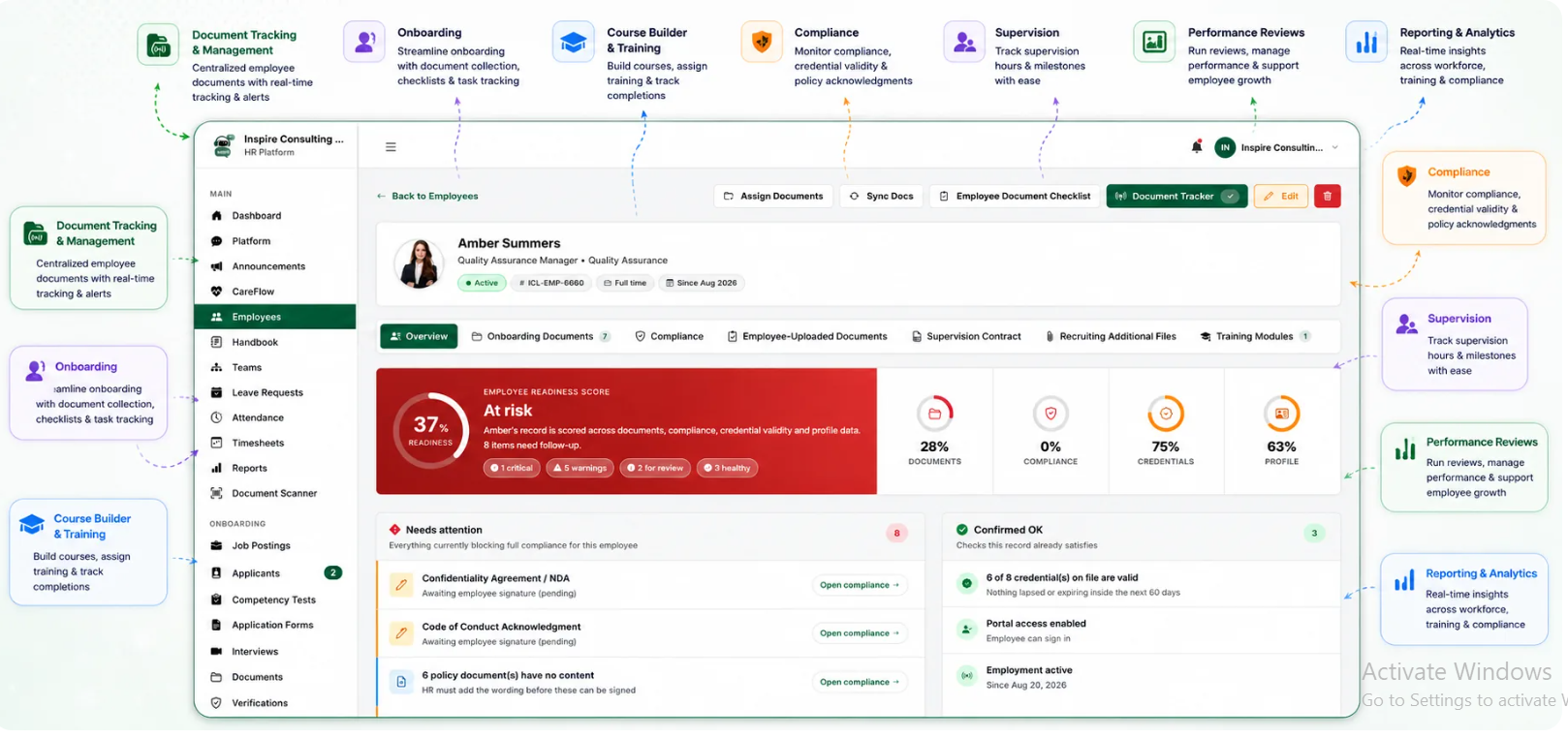
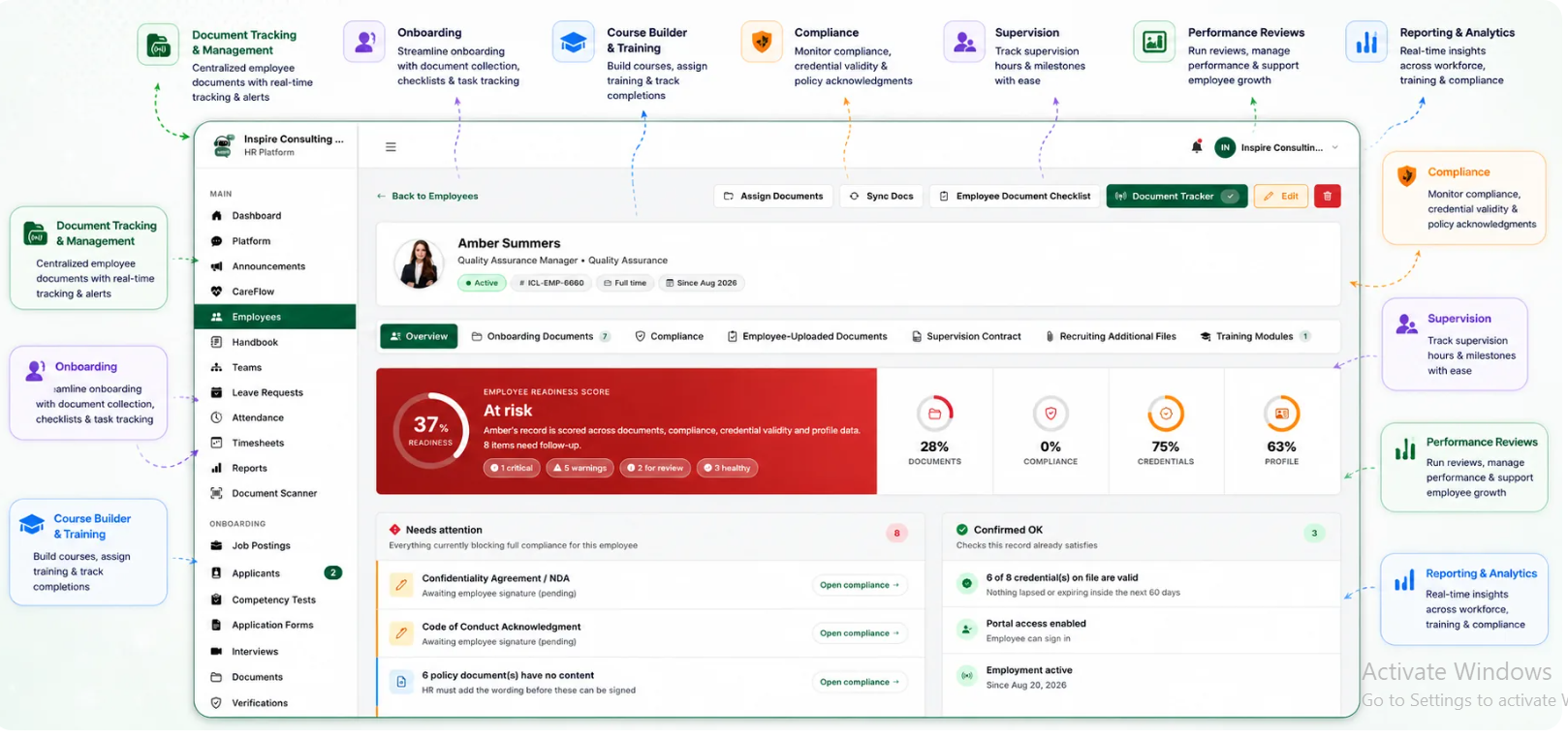
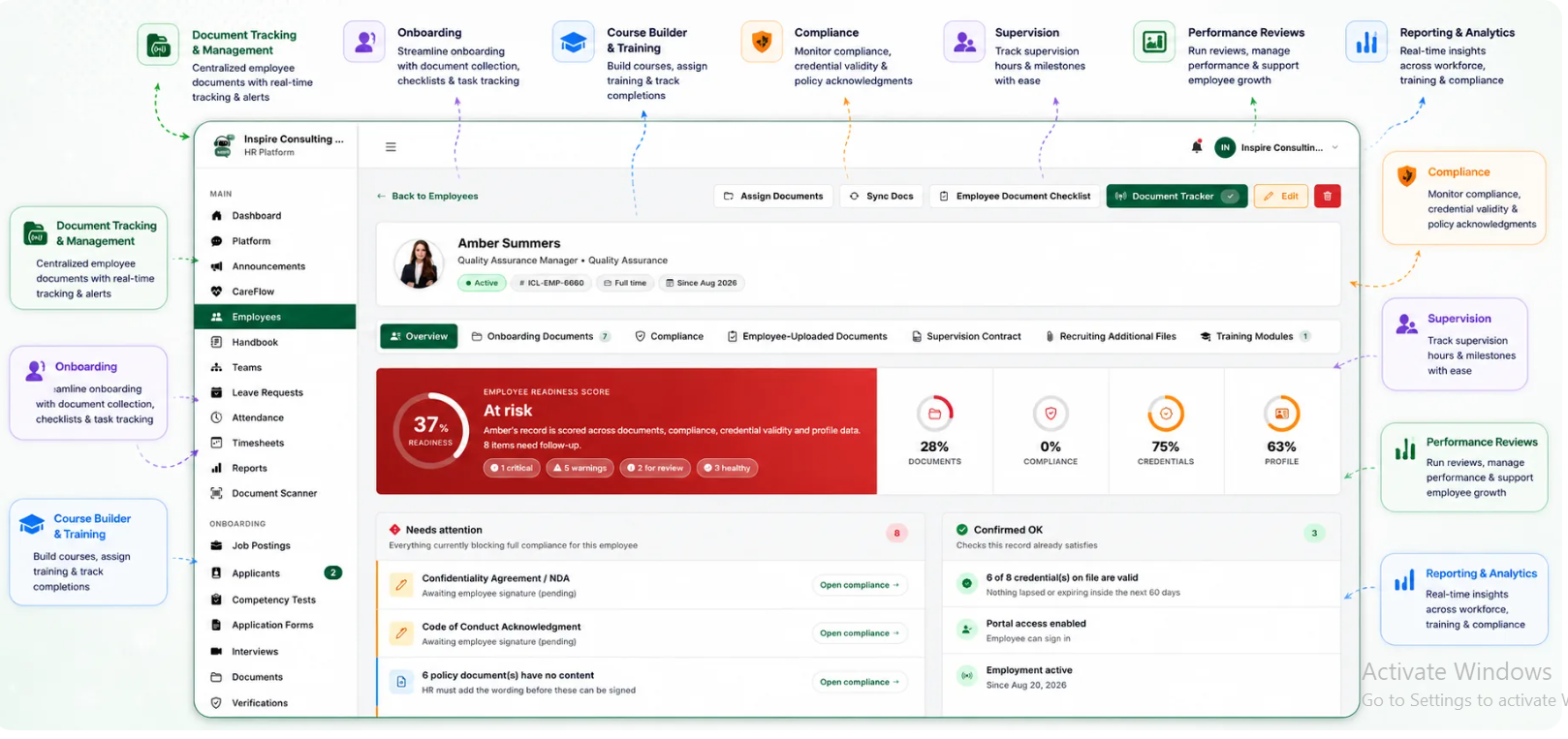
BUAMS HR is designed for behavioral health organizations and brings together multiple HR functions, including employee management, onboarding, document tracking, credential monitoring, training, compliance, clinical supervision, performance reviews, scheduling, attendance, and payroll.
Connecting these processes within one platform can help organizations maintain a more organized view of employee information.
Where supported by the configured features and available data, reporting can help HR teams review workforce records and monitor administrative requirements.
For organizations currently relying on separate spreadsheets and files, a centralized HR platform may simplify how workforce information is maintained and reviewed.
HR Reporting Checklist for Behavioral Health Organizations
Use this checklist to assess your current process:
- Are employee records maintained consistently?
- Can HR identify missing employee documents?
- Are credential expiration dates monitored?
- Can staff training completion be reviewed?
- Are onboarding tasks tracked?
- Are performance reviews documented?
- Can workforce information be reviewed by location where needed?
- Are reports reviewed on a defined schedule?
- Does each report have an assigned owner?
- Is sensitive employee information protected?
- Can managers identify which actions need follow-up?
If several of these activities require manual data collection, improving the HR reporting process may reduce administrative work.
Final Thoughts
Behavioral health HR reporting and analytics can help organizations move from scattered employee records toward a more structured way of reviewing workforce information.
By maintaining accurate records, choosing relevant reports, assigning responsibility, and reviewing information consistently, HR teams can improve visibility into onboarding, credentials, training, compliance, and other workforce processes.
BUAMS HR brings several of these HR functions together for behavioral health organizations. The most effective reporting approach is to use the data and reporting capabilities actually available in the platform to answer practical questions and guide follow-up actions.