Managing employee schedules and attendance can become challenging for behavioral health organizations as their teams grow. Clinics may have therapists, counselors, administrative staff, supervisors, and other professionals working different shifts or schedules.
When schedules and attendance records are maintained through separate spreadsheets, emails, or paper forms, HR teams can spend significant time updating information and resolving discrepancies.
A structured employee scheduling and attendance process helps organizations maintain organized workforce records and coordinate daily operations more effectively.
Why Employee Scheduling Matters in Behavioral Health
Behavioral health organizations depend on employees being available to support scheduled appointments, administrative responsibilities, and other operational activities.
Scheduling difficulties can affect workload distribution, team coordination, and the ability to plan staff coverage.
A clear scheduling process helps managers understand who is expected to work, when employees are available, and where additional coordination may be needed.
Common scheduling challenges include:
- Managing different employee shifts
- Coordinating schedules across teams
- Handling schedule changes
- Maintaining attendance records
- Reviewing absences and late arrivals
- Organizing schedules across multiple locations
The exact requirements depend on the organization's staffing model and operational needs.
Common Attendance Tracking Problems
Attendance tracking may appear straightforward when an organization has only a few employees. However, manual processes can become difficult to maintain as the workforce expands.
1. Separate Attendance Records
When attendance information is stored in multiple spreadsheets or paper records, HR teams may need to combine information manually before reviewing it.
This increases administrative work and makes consistent recordkeeping more difficult.
2. Manual Corrections
Employees and managers may report missing entries, incorrect attendance records, or schedule changes through email or messages.
HR then needs a clear process for reviewing and documenting corrections.
3. Limited Workforce Visibility
Managers may struggle to get an accurate overview of employee attendance when records are spread across different systems.
A centralized process can make attendance information easier to review, provided the system supports the required reporting features.
4. Multi-Location Coordination
Organizations with several clinics may need to coordinate attendance records across locations.
Without consistent procedures, different teams may maintain information in different formats, making consolidated reviews more difficult.
Best Practices for Employee Scheduling
A reliable scheduling process starts with clear policies and consistent communication.
Establish Standard Scheduling Procedures
Define how schedules are created, updated, approved, and communicated to employees.
Employees should understand where to find their schedules and how to report availability changes.
Assign Clear Responsibilities
Determine who is responsible for creating schedules, approving changes, and reviewing attendance records.
Clear ownership reduces confusion when issues arise.
Document Schedule Changes
Schedule changes should be recorded through a consistent process so managers and employees can refer to the latest information.
Plan Staff Coverage
Behavioral health organizations should consider role requirements, employee availability, planned absences, and operational needs when organizing staff coverage.
Scheduling decisions should also respect applicable employment requirements and internal policies.
How to Improve Attendance Tracking
Attendance tracking is most effective when organizations establish consistent procedures for recording and reviewing employee attendance.
Consider these practices:
- Define the organization's attendance policy.
- Use a consistent method for recording attendance.
- Establish a process for correcting inaccurate records.
- Document approved absences and schedule changes.
- Review attendance records regularly.
- Restrict access to sensitive employee information.
- Follow applicable employment, privacy, and record-retention requirements.
Organizations should also distinguish between scheduled hours, recorded attendance, approved leave, and other categories relevant to their policies.
How HR Software Can Support Scheduling and Attendance
HR software can help organizations centralize workforce information and reduce reliance on separate manual records.
Depending on the platform's capabilities, it may support schedule management, attendance records, employee information, and reporting within a connected HR environment.
Before selecting a system, organizations should verify whether it supports the specific scheduling workflows they need, such as shift planning, employee availability, time-clock integration, overtime calculations, or absence approvals.
Not every HR platform includes every feature.
Connecting Scheduling With Other HR Processes
Scheduling and attendance are only part of workforce management.
Behavioral health organizations also need to manage employee onboarding, training, credentials, documentation, and other HR responsibilities.
When these processes are managed separately, HR teams may need to switch between systems to understand an employee's overall status.
A connected HR platform can help organize related employee information within one environment. The available integrations and workflows should be checked against the organization's actual needs.
For example, managers may need to review employee records while HR teams monitor documentation or training requirements.
Scheduling Across Multiple Behavioral Health Locations
Multi-location organizations often face additional coordination challenges.
Each location may have different staffing needs, operating hours, employee availability, and management responsibilities.
To improve coordination, organizations should:
- Standardize scheduling procedures where appropriate.
- Assign clear responsibility to location managers.
- Maintain consistent attendance-recording practices.
- Establish a process for reporting schedule changes.
- Review staffing needs across locations.
- Keep employee information accessible only to authorized users.
A centralized approach can help leadership maintain more consistent processes while allowing individual locations to manage their operational requirements.
How BUAMS HR Fits Into Workforce Management
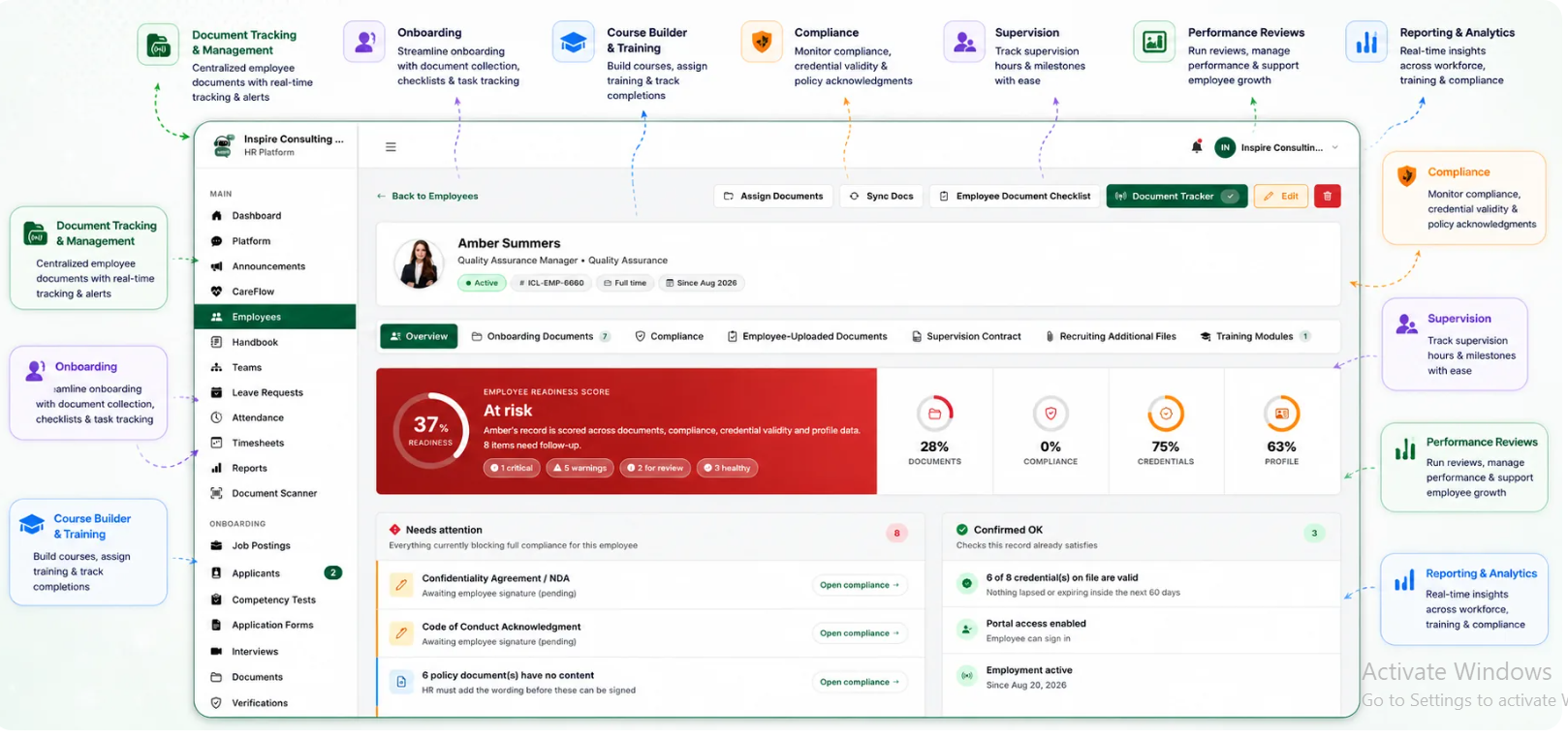
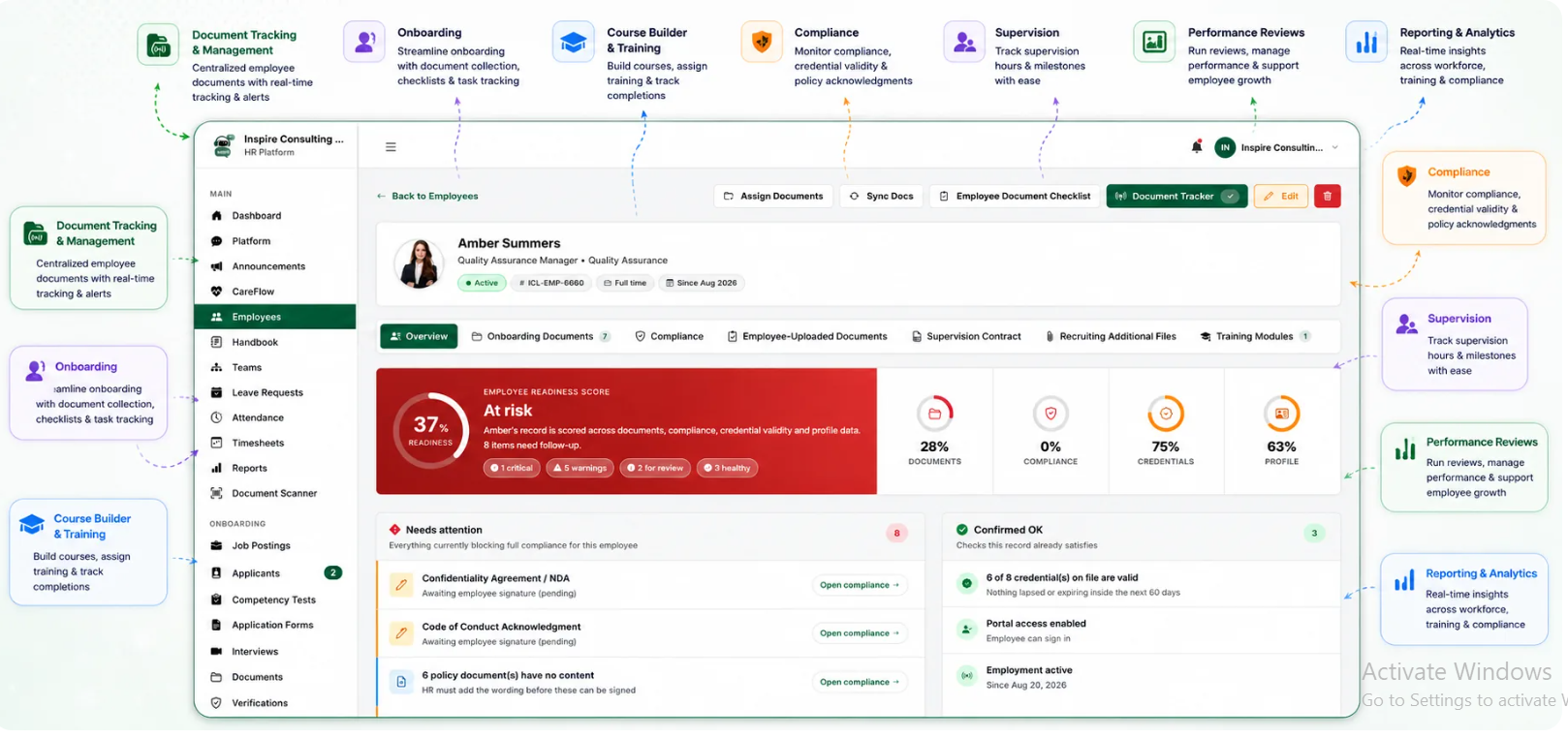
BUAMS HR brings together workforce management functions for behavioral health organizations, including employee management, onboarding, document tracking, credential monitoring, training, compliance, clinical supervision, performance reviews, scheduling and attendance, reporting, and payroll.
Keeping related employee information within a centralized platform can help organizations organize their HR processes and reduce dependence on disconnected records.
Organizations considering BUAMS HR should review the available scheduling and attendance workflows to confirm that they meet their specific operational requirements.
Employee Scheduling and Attendance Checklist
Use this checklist to evaluate your current process:
- Are employee schedules maintained consistently?
- Do employees know where to find schedule updates?
- Are schedule changes documented?
- Is there a defined process for recording attendance?
- Can attendance discrepancies be reviewed and corrected?
- Are absence policies communicated clearly?
- Are responsibilities assigned to managers and HR?
- Can records be reviewed across locations when needed?
- Is employee information appropriately protected?
- Does the current software support the organization's actual scheduling needs?
If several of these activities depend on manual follow-up, reviewing the current workflow may reveal opportunities to simplify workforce administration.
Final Thoughts
Employee scheduling and attendance tracking are important parts of workforce management for behavioral health organizations. As teams expand, consistent procedures become increasingly valuable for coordinating staff, maintaining records, and supporting daily operations.
Organizations can begin by standardizing their scheduling policies, clarifying responsibilities, and maintaining accurate attendance records. The right HR software can then help centralize supported workflows and connect them with broader employee management processes.
BUAMS HR provides a centralized platform for multiple behavioral health HR functions. Reviewing its available scheduling and attendance capabilities can help organizations determine whether it fits their workforce management requirements.