Clinical supervision is an important part of professional development and workforce management in many behavioral health organizations. Depending on an employee's role and professional pathway, organizations may need to coordinate supervisors, monitor supervision activities, maintain records, and track progress toward applicable requirements.
When clinical supervision is managed through spreadsheets, emails, paper records, or disconnected systems, it can become difficult for HR teams and supervisors to maintain a clear view of each employee's progress.
A structured clinical supervision management process can help behavioral health organizations organize supervision information and connect it with broader employee management and compliance workflows.
What Is Clinical Supervision Management?
Clinical supervision management is the process of organizing and monitoring supervision activities for behavioral health professionals.
Depending on the employee's role and applicable requirements, organizations may need to manage information such as:
- Employee and supervisor information
- Supervision assignments
- Supervision dates
- Supervision hours
- Progress toward requirements
- Supervision documentation
- Employee development information
- Related credentials and licensing information
The exact requirements can vary by profession, jurisdiction, employer, and individual circumstances.
Why Clinical Supervision Matters in Behavioral Health
Behavioral health organizations may employ professionals at different stages of their careers.
Some employees may be fully licensed, while others may be working toward professional licensure or completing supervised experience requirements.
This means organizations need a reliable process for keeping supervision information organized.
Without a structured process, supervisors and HR teams may spend time:
- Searching for supervision records
- Updating spreadsheets
- Calculating progress manually
- Sending follow-up emails
- Collecting documentation
- Checking employee progress
Centralized supervision management can make these tasks easier to organize.
Common Challenges With Manual Supervision Tracking
Tracking Supervision Hours
One of the biggest administrative challenges is maintaining an accurate record of supervision activity.
If hours are recorded manually, HR teams or supervisors may need to repeatedly update spreadsheets and verify information.
Managing Multiple Supervisors
An organization may have several supervisors working with different employees.
Without centralized records, it can become difficult to quickly determine who is supervising which employee.
Maintaining Supervision Records
Supervision information may need to be maintained over time.
Keeping records in a centralized employee profile can make it easier to locate relevant information when needed.
Monitoring Progress
Employees working toward applicable requirements may need ongoing monitoring.
A structured system can provide a clearer view of progress rather than requiring HR staff to calculate everything manually.
What Should a Clinical Supervision Management System Include?
A useful system should help organizations organize the major parts of the supervision workflow.
Supervisor Assignments
Organizations should be able to identify the supervisor associated with an employee.
Supervision Tracking
Relevant supervision activities and progress should be recorded in an organized manner.
Employee Records
Supervision information should remain connected to the employee's broader HR record.
Progress Monitoring
HR teams and authorized supervisors should be able to understand employee progress.
Reporting
Reports can help organizations review supervision information across employees, teams, or locations.
Clinical Supervision and Employee Compliance
Clinical supervision can be connected to broader employee compliance and credential management.
For applicable employees, an organization may need to manage:
Employee → Credentials → Supervision → Training → Compliance
Keeping these related processes connected can give HR teams a more complete view of an employee's status.
However, organizations should always determine applicable supervision and licensing requirements based on the relevant professional rules and jurisdiction.
How Software Can Improve Clinical Supervision Tracking
Dedicated software can reduce the amount of manual administrative work involved in supervision management.
Instead of using separate spreadsheets for employees, supervisors, and supervision progress, organizations can maintain this information in a centralized platform.
Potential benefits include:
- More organized supervision records
- Easier access to employee information
- Better visibility into progress
- Reduced manual spreadsheet work
- Easier reporting
- Better connection between supervision and HR records
How BUAMS HR Supports Clinical Supervision
BUAMS HR includes clinical supervision tracking as part of its behavioral health workforce management platform.
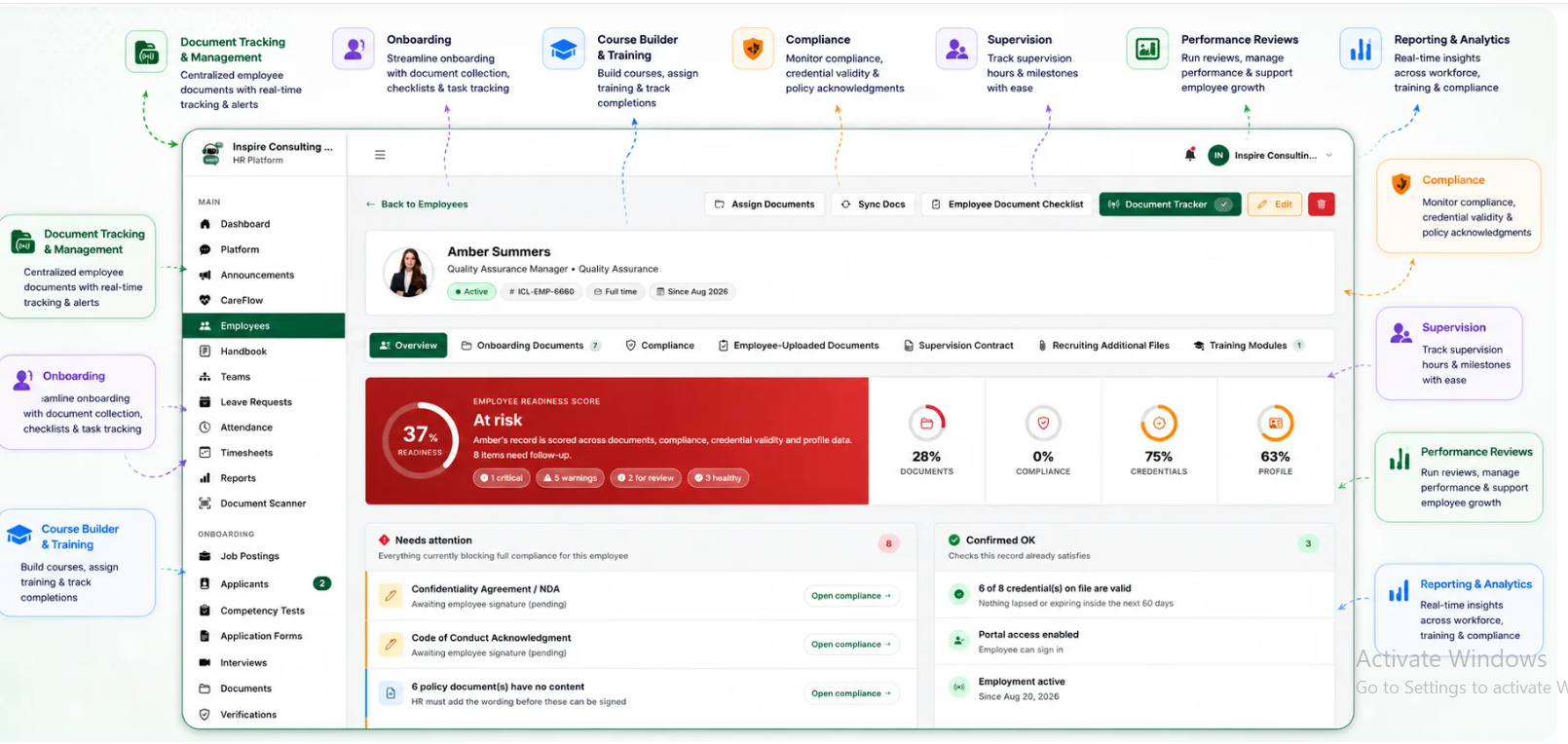
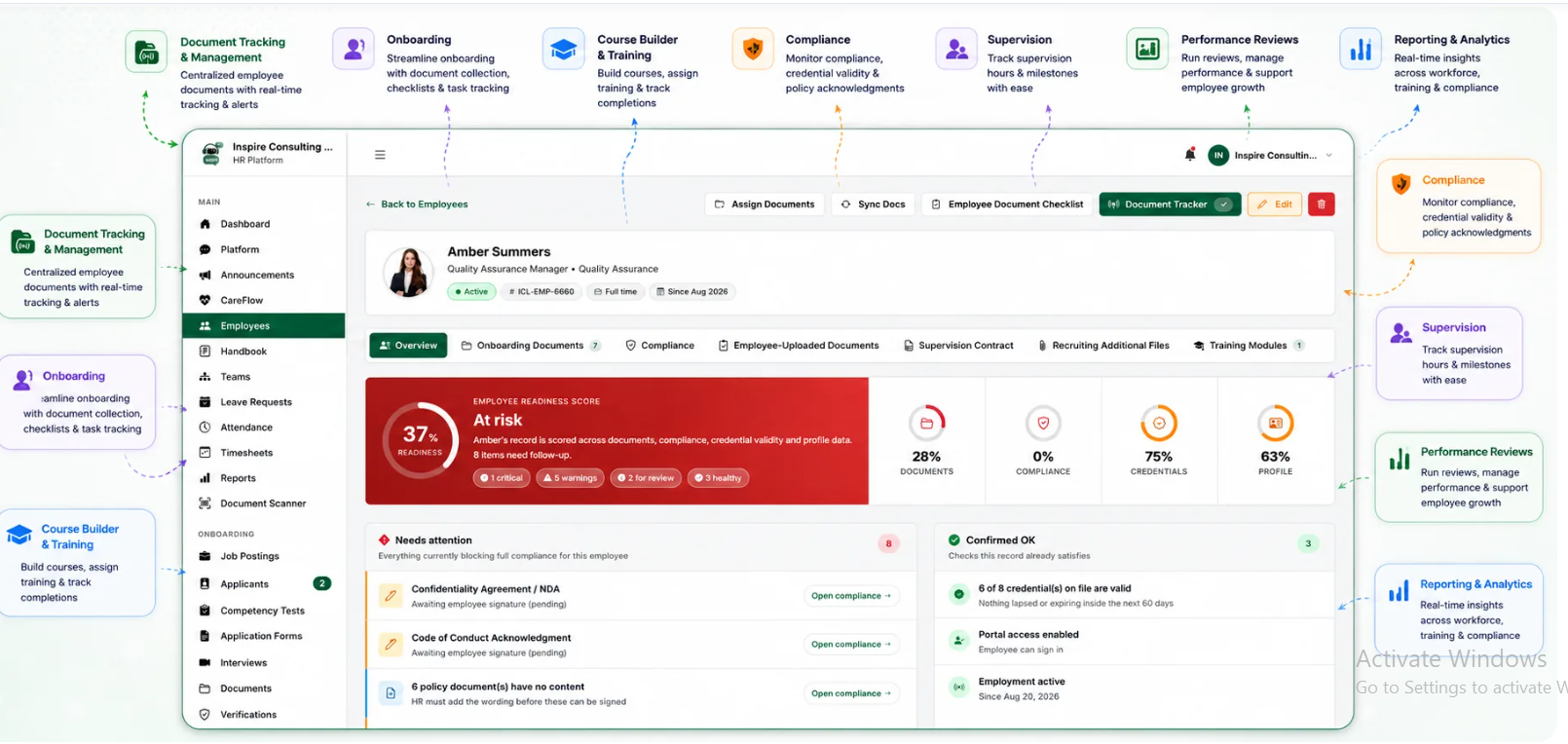
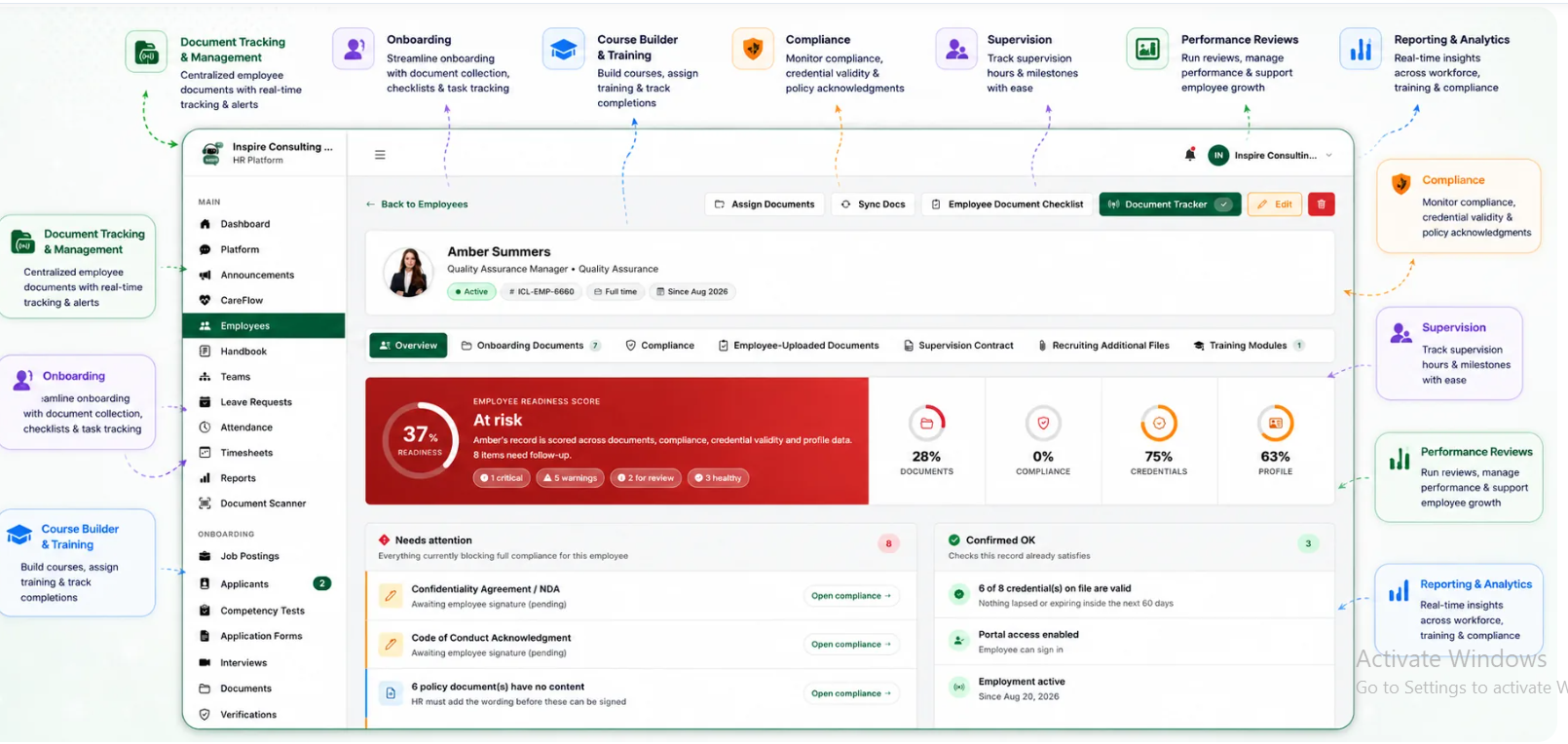
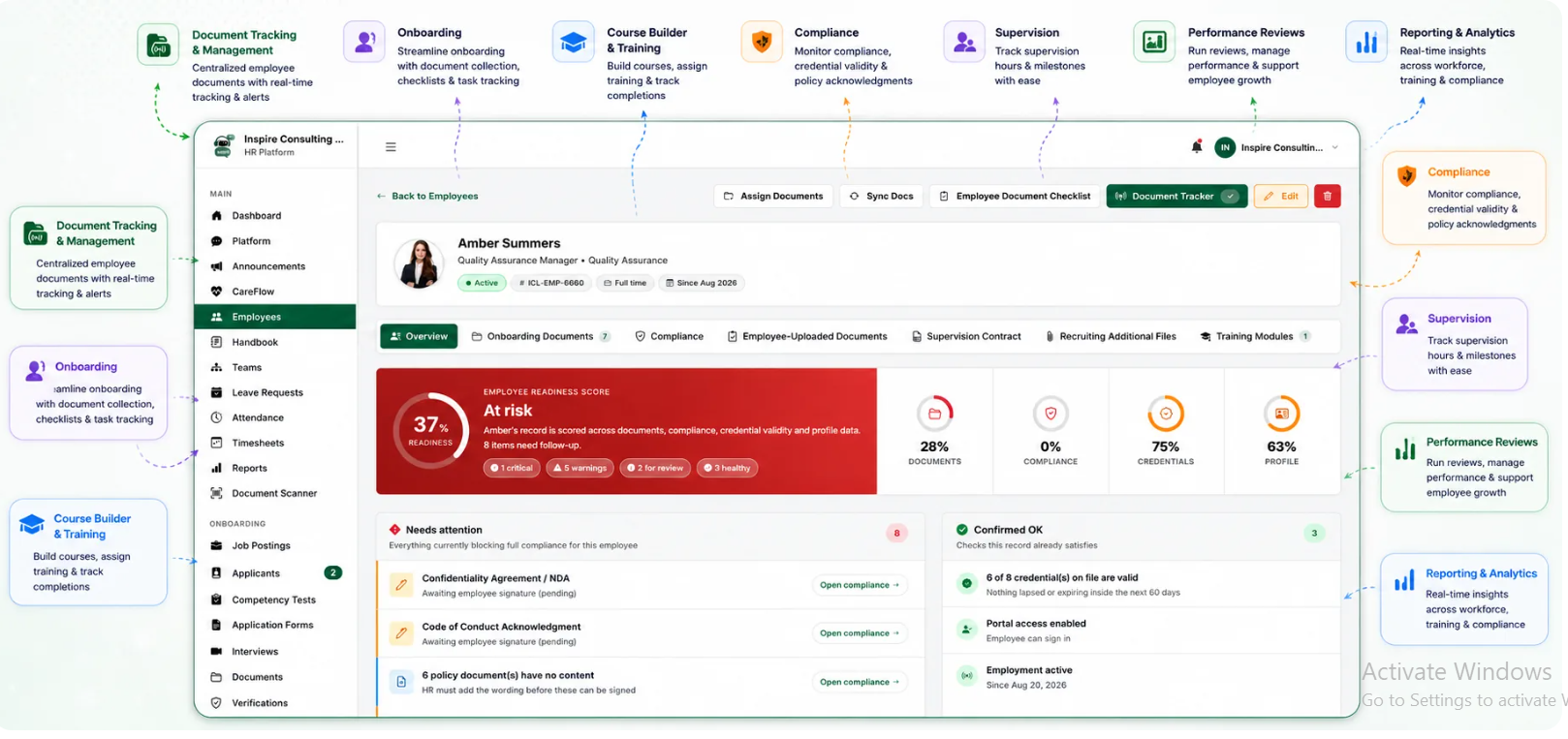
Organizations can connect supervision information with employee records while also managing related HR processes such as onboarding, training, credentials, compliance, documents, and performance.
This allows organizations to manage clinical supervision as part of a broader employee lifecycle rather than keeping supervision records completely separate from HR information.
Clinical Supervision Management Checklist
Organizations can review their current process using the following checklist:
- Are supervisors clearly assigned?
- Are supervision records centralized?
- Are applicable supervision requirements documented?
- Can supervisors track employee progress?
- Can HR access relevant records?
- Are supervision records connected to employee profiles?
- Can reports be generated when needed?
- Are related credentials and compliance requirements monitored?
If these processes are heavily dependent on spreadsheets and manual follow-ups, a centralized supervision management workflow may help reduce administrative work.
Final Thoughts
Clinical supervision management requires organizations to keep supervision information organized and accessible throughout an employee's professional development.
For behavioral health organizations with multiple clinicians, supervisors, and locations, manual tracking can become increasingly difficult.
A centralized platform can connect clinical supervision with employee records, training, credentials, documents, compliance, and other workforce processes.
BUAMS HR provides behavioral health organizations with a centralized platform for managing these connected workforce requirements.