Behavioral Health Workforce Management: A Practical Guide for Growing Organizations
Managing a behavioral health workforce involves much more than hiring employees and maintaining payroll records.
Organizations need to manage employee information, onboarding, credentials, training, compliance requirements, schedules, performance, documentation, and other workforce processes throughout the employee lifecycle.
When these processes are managed through separate spreadsheets, emails, folders, and software systems, HR teams can spend a significant amount of time moving information between different tools.
Behavioral health workforce management provides a more structured approach to managing these workforce processes from hiring and onboarding through ongoing employee management.
What Is Behavioral Health Workforce Management?
Behavioral health workforce management is the process of organizing and managing employees within a behavioral health organization.
It can include:
- Employee records
- Hiring and onboarding
- Credentials and certifications
- Training
- Compliance
- Clinical supervision
- Scheduling and attendance
- Performance management
- Employee documentation
- Workforce reporting
The specific processes an organization needs depend on its size, workforce structure, locations, and employee roles.
The goal is to give HR teams and managers better visibility into the workforce while creating consistent processes for managing employees.
Why Workforce Management Is Important in Behavioral Health
Behavioral health organizations often have a diverse workforce.
A single organization may employ therapists, counselors, social workers, case managers, nurses, supervisors, administrative staff, and other professionals.
Each role can have different responsibilities and requirements.
As the organization grows, HR teams need to manage more:
- Employees
- Documents
- Credentials
- Training requirements
- Expiration dates
- Schedules
- Compliance records
- Performance information
Without a centralized system, important information can become scattered across multiple tools.
Common Challenges in Behavioral Health Workforce Management
Managing Employee Information
Employee information may be stored across HR spreadsheets, payroll systems, email, and document folders.
When HR needs to find information about a specific employee, they may have to search through several systems.
A centralized employee record can make this information easier to access and maintain.
Tracking Credentials
Behavioral health organizations may need to monitor professional licenses and certifications for applicable employees.
These credentials can have expiration dates that require ongoing monitoring.
Manual tracking can become difficult as the workforce grows.
Managing Training
Employees may need to complete onboarding courses, compliance training, recurring training, and role-specific education.
HR teams need visibility into which employees have completed their requirements and which still have outstanding training.
Maintaining Compliance
Compliance management can involve multiple employee requirements.
HR teams need to know which documents are current, which requirements are missing, and which credentials are approaching expiration.
Coordinating Multiple Locations
Growing behavioral health organizations may operate multiple clinics or locations.
Managing employees consistently across locations can become more difficult when each location uses separate spreadsheets or processes.
Key Components of Behavioral Health Workforce Management
Employee Management
A workforce management system should provide a centralized employee record containing relevant HR information.
This gives HR teams a consistent place to manage employee information throughout the employee lifecycle.
Onboarding
New employees often need to complete multiple requirements before becoming fully integrated into the organization.
A structured onboarding workflow can help HR teams organize documents, training, policies, and other tasks.
Credential and Document Tracking
Employee credentials and documents should be organized and monitored throughout employment.
Tracking expiration dates can help HR teams identify upcoming renewals and follow up before documents become outdated.
Training Management
Organizations can assign and monitor training requirements based on employee roles.
This provides a clearer view of employee training progress.
Clinical Supervision
Some behavioral health professionals may require clinical supervision as part of their professional development or licensing pathway.
A structured supervision tracking process can help organizations maintain relevant information alongside the employee record.
Scheduling and Attendance
Workforce management can also include employee scheduling and attendance.
For organizations with multiple employees and locations, centralized scheduling information can help managers understand workforce availability and attendance.
Performance Management
Employee management continues after onboarding.
Organizations may need to conduct performance reviews, document goals, and maintain ongoing performance information.
Reporting and Analytics
Workforce reports can help HR teams understand employee information, compliance status, training completion, and other workforce data.
How Workforce Management Software Can Reduce Administrative Work
One of the main challenges of managing a growing workforce is the amount of repetitive administrative work.
HR staff may spend time:
- Updating spreadsheets
- Sending reminder emails
- Searching for employee documents
- Checking expiration dates
- Following up on training
- Collecting missing information
- Preparing reports
- Updating employee records
A centralized workforce management system can bring many of these processes into a single workflow.
Instead of maintaining separate records for each process, HR teams can manage related employee information within one platform.
Workforce Management for Multi-Location Behavioral Health Organizations
Managing a single behavioral health location is different from managing several clinics.
With multiple locations, organizations may have:
- Different managers
- More employees
- Different schedules
- Multiple teams
- Shared HR processes
- Location-specific requirements
A centralized system can help organizations maintain consistent workforce processes while still organizing employees by location.
This can be especially useful when leadership needs a broader view of the workforce across multiple sites.
How Workforce Management Connects HR and Compliance
Workforce management becomes more useful when employee information, documents, training, and compliance are connected.
For example:
Employee Record → Required Credentials → Training → Compliance → Expiration Monitoring
Instead of treating each process as a separate task, organizations can manage them as connected parts of the employee lifecycle.
This can give HR teams a clearer understanding of each employee's overall status.
How BUAMS HR Supports Behavioral Health Workforce Management
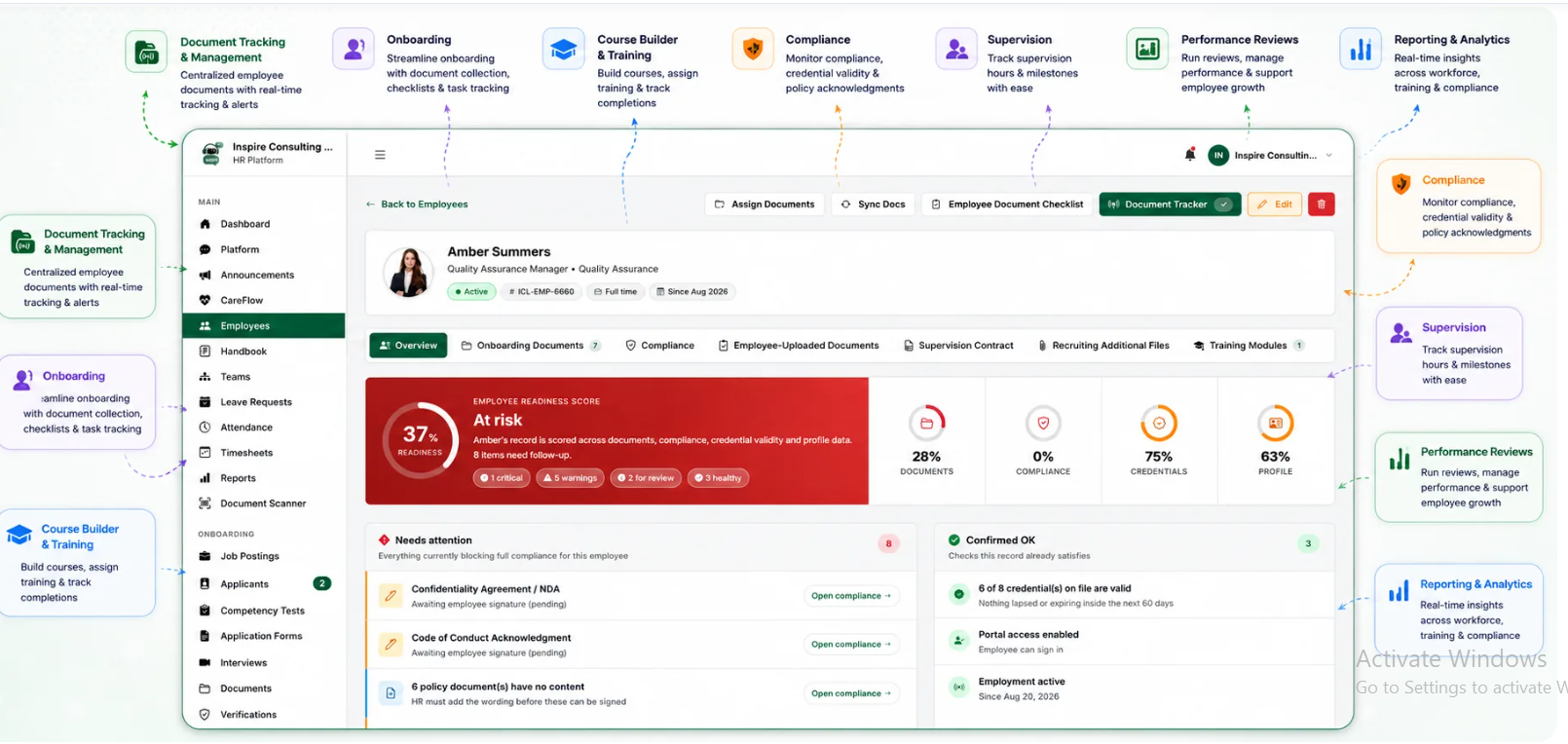
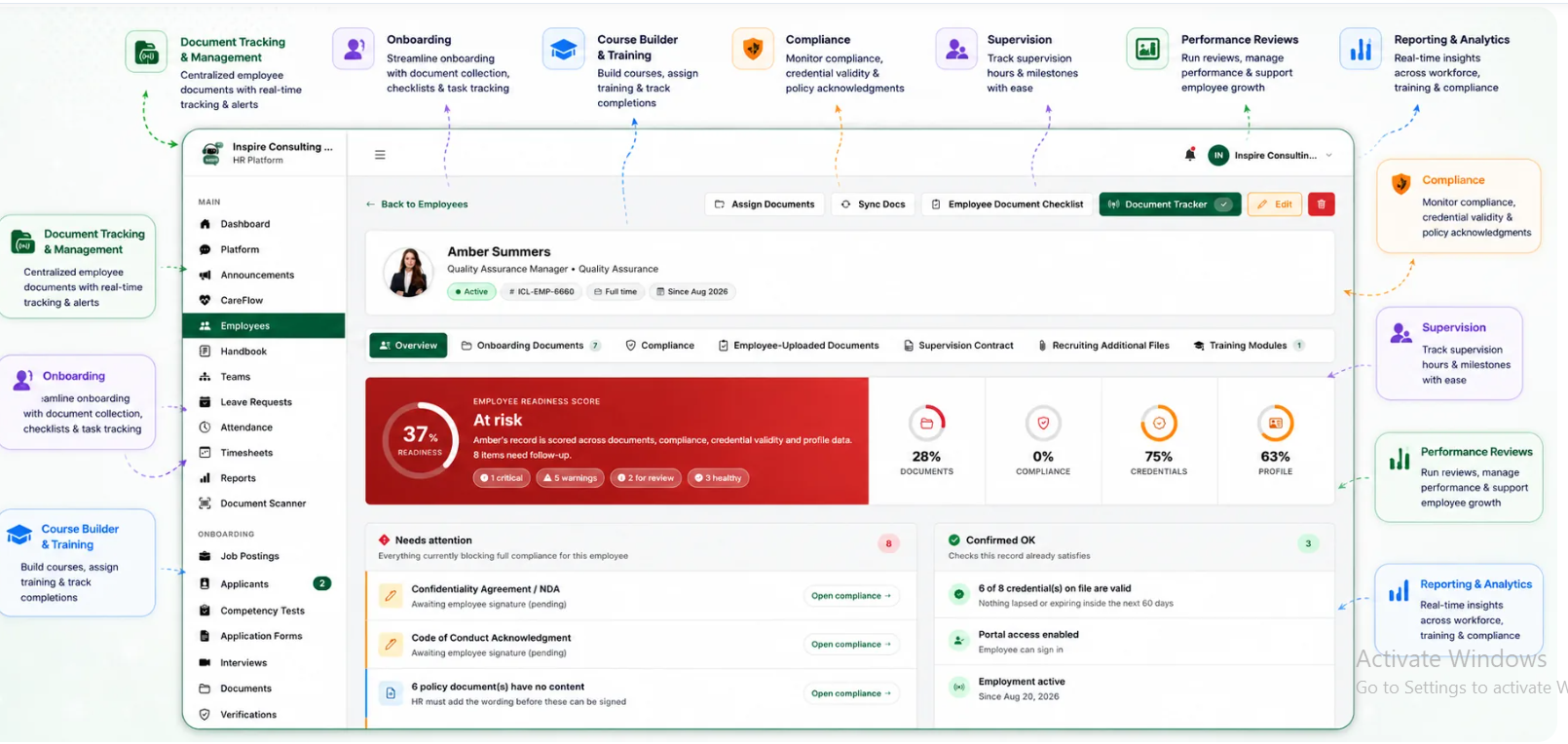
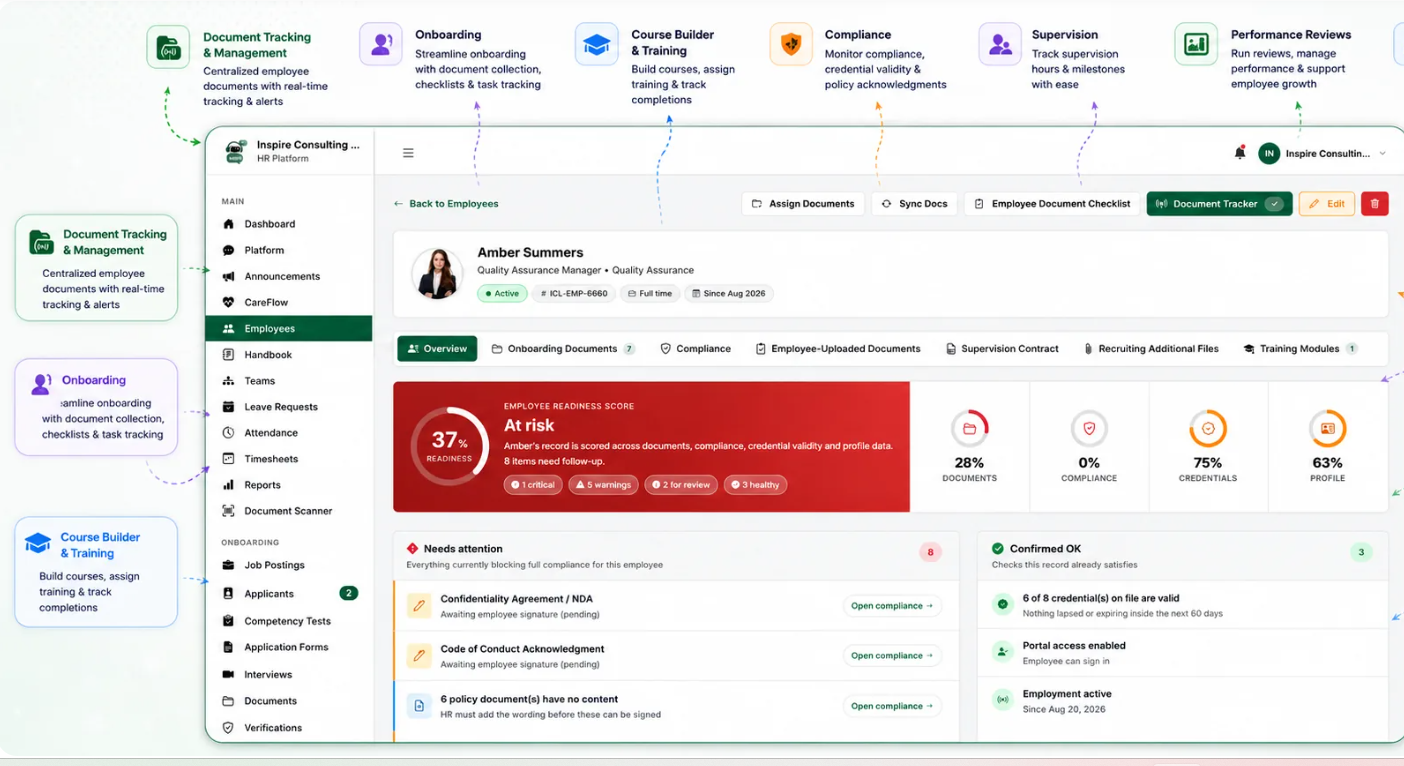
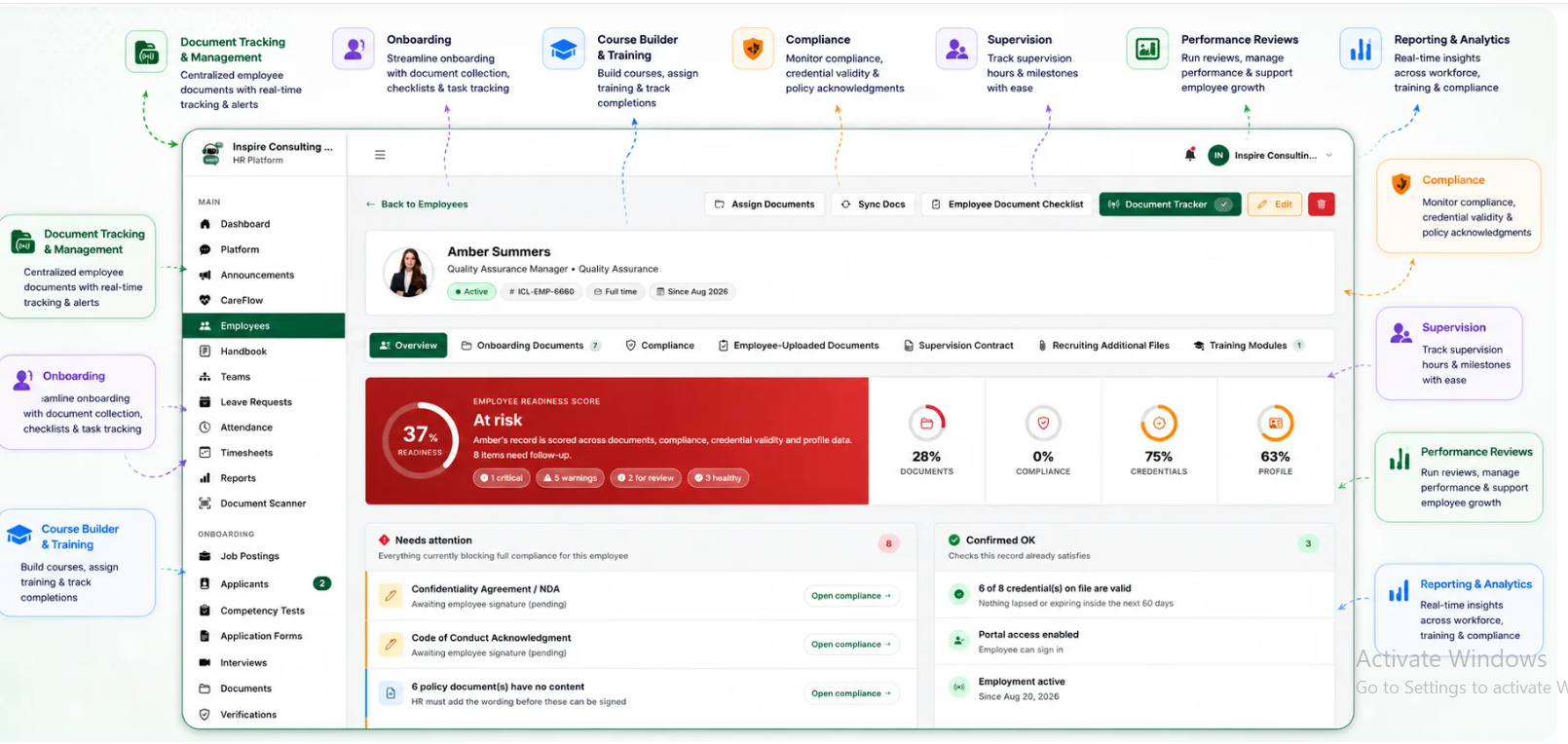
BUAMS HR is designed specifically for behavioral health organizations and combines multiple workforce management functions in one platform.
The platform brings together:
- Employee management
- Employee onboarding
- Document tracking
- Credential monitoring
- Compliance management
- Training
- Clinical supervision
- Performance reviews
- Scheduling and attendance
- Reporting and analytics
- Payroll
This gives behavioral health organizations a centralized platform for managing different parts of the employee lifecycle.
Rather than using separate tools for every workforce process, organizations can use BUAMS HR to connect these functions within one system.
Behavioral Health Workforce Management Checklist
Organizations can use this checklist to evaluate their current workforce management process:
- Are employee records centralized?
- Is onboarding standardized?
- Are credentials tracked?
- Are document expiration dates monitored?
- Are required training courses tracked?
- Are compliance requirements organized?
- Is clinical supervision documented where applicable?
- Are employee schedules managed efficiently?
- Are performance reviews documented?
- Can HR generate workforce reports?
- Can managers quickly identify outstanding employee requirements?
- Can the system support multiple locations?
If many of these processes are managed manually, an integrated workforce management platform may help reduce administrative complexity.
Final Thoughts
Behavioral health workforce management covers the entire employee lifecycle, from onboarding and documentation to training, compliance, scheduling, supervision, and performance management.
As organizations grow, managing each of these processes separately can create unnecessary administrative work and make it harder to maintain a clear view of the workforce.
A centralized workforce management platform can help organizations organize employee information and connect related HR processes.
BUAMS HR brings employee management, onboarding, document tracking, credential monitoring, training, compliance, clinical supervision, scheduling, performance management, and reporting together in a platform built for behavioral health organizations.
For growing behavioral health organizations, centralizing these workforce processes can provide HR teams with a more organized way to manage employees and monitor workforce requirements.