Behavioral health organizations cannot afford to treat supervision capacity as an informal staffing note. When one licensed supervisor changes roles, takes leave, or inherits too many direct reports, the impact can spread across clinical oversight, documentation quality, licensure conditions, and staff confidence. A supervision ratio tracking process gives HR and operations leaders a clearer way to see where capacity is tight before it becomes a compliance problem.
For growing providers, this matters even more. New hires, transfers, provisional license holders, interns, and peer support teams can all change the supervision picture quickly. Instead of reacting after a caseload becomes unbalanced, leaders need one place to review supervisor assignments, capacity thresholds, backup coverage, and supporting records.
Key Takeaways
What is supervision ratio tracking software?
Supervision ratio tracking software is a structured system for monitoring how many employees or supervisees are assigned to each qualified leader, what level of oversight they require, and whether the organization still has enough supervisory capacity to support safe operations. In behavioral health, the answer is rarely as simple as one manager to a set number of staff. Organizations may need to account for license level, program type, service setting, internship status, and whether a clinician requires enhanced or documented supervision.
That means HR needs more than an org chart. Teams need visibility into who is supervising whom, which assignments are primary or temporary, what happens when a supervisor is out, and where pending hires or vacancies could create a bottleneck. When this information is scattered across spreadsheets, emails, and separate personnel files, it becomes harder to make fast staffing decisions with confidence.
Why supervision ratio visibility matters in behavioral health
Behavioral health providers work in a highly regulated environment where workforce structure can directly affect compliance and care continuity. If a supervisor carries too many employees, if a trainee is assigned without the right oversight, or if a program launches before backup coverage is clear, the risk is not just administrative. It can lead to delayed onboarding, incomplete documentation, missed supervision sessions, and weaker audit readiness.
Strong supervision ratio visibility also supports everyday workforce planning. HR can see whether an open role is creating pressure in one program, whether a transfer would overload a clinical leader, or whether a leave of absence requires temporary reassignment before a problem reaches service delivery. This is especially useful for multi-site providers that need to balance growth with standardized oversight.
Common warning signs that ratios are being managed manually
These problems do not always look dramatic at first. They often show up as small delays, duplicate follow-up, or confusion about ownership. Over time, though, those gaps make it much harder to scale responsibly.
What to look for in a better process
A stronger supervision ratio workflow should begin with clear employee records. HR needs role, location, license status, program assignment, supervisor relationship, and any special oversight condition stored in a consistent format. From there, the process should make it easy to review supervisory capacity before hires, transfers, or schedule changes are finalized.
The best approach also supports exception handling. If a supervisor is on leave, the system should show who is covering that responsibility and for how long. If a staff member changes programs, the updated supervision assignment should be recorded alongside the personnel action. If a provider wants to review exposure across several sites, the data should be reportable without rebuilding the roster manually.
Most importantly, the workflow should create evidence. Behavioral health organizations benefit when supervision assignments, approvals, supporting documents, and follow-up actions can all be retrieved quickly during internal reviews, accreditation preparation, or regulator questions.
How BUAMS HR helps behavioral health providers stay ahead
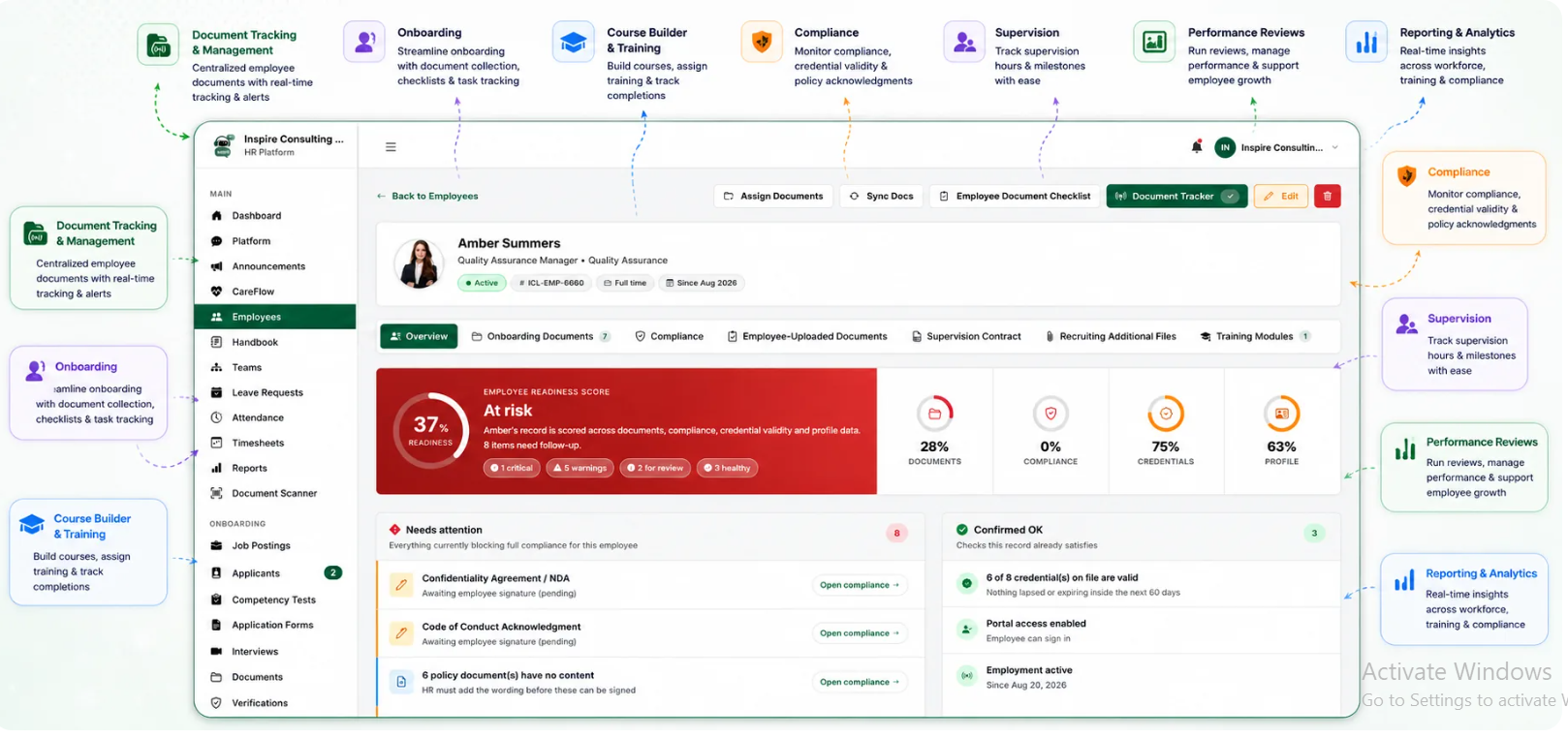
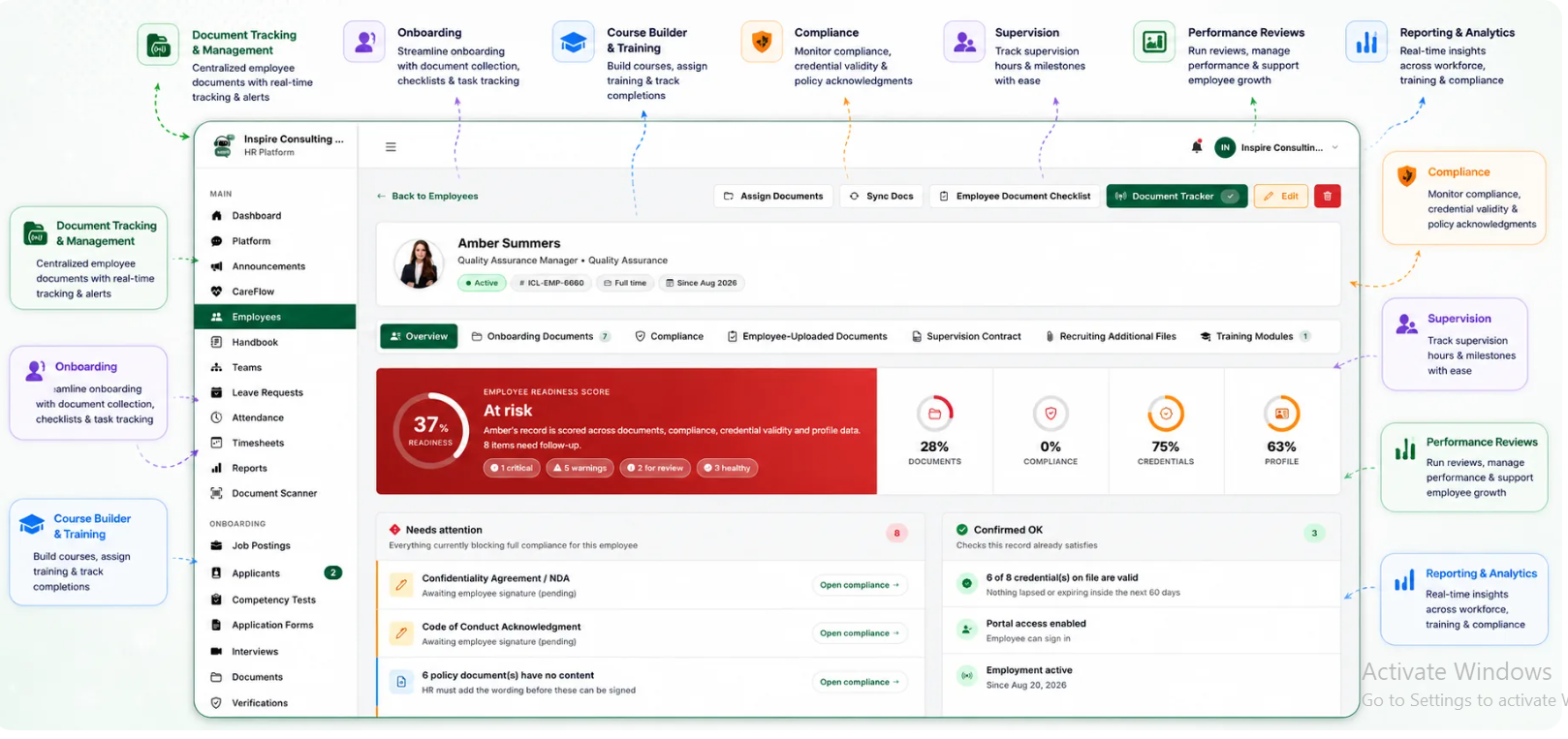
BUAMS HR helps providers centralize the workforce records that supervision ratio tracking depends on. Instead of relying on disconnected notes, teams can keep employee files, role changes, supervisor relationships, compliance documents, and status updates in one platform. That makes it easier to see whether growth, turnover, or leave events are putting too much pressure on a small group of supervisors.
Because BUAMS HR is built for behavioral health operations, organizations can use it to support structured onboarding, cleaner personnel records, and more reliable compliance follow-up. HR leaders can review assignments before a new employee starts, document temporary coverage during vacancies, and maintain a stronger audit trail around who was responsible for oversight at each stage.
For providers working across multiple programs or locations, that centralized visibility reduces guesswork. Leaders can make staffing decisions faster, with better context, and without losing the documentation needed to show that supervision expectations were addressed thoughtfully.
Final thoughts
Supervision capacity should not be managed as an afterthought. In behavioral health, it is closely tied to workforce readiness, documentation quality, and compliance confidence. A more deliberate supervision ratio tracking software process helps providers spot pressure early, plan coverage more effectively, and protect oversight during periods of growth or staffing change.
When HR, operations, and program leadership can review the same accurate information, organizations are better positioned to launch hires on time, support developing staff, and respond cleanly when auditors or accreditors ask how supervision is being managed. That is the kind of operational clarity BUAMS HR is designed to support.