Benefits eligibility can become surprisingly hard to manage in behavioral health organizations. Employees move between part-time and full-time status, shift between programs, return from leave, pick up temporary coverage, and change locations as staffing needs evolve. When HR teams track benefits eligibility through spreadsheets, email reminders, and disconnected notes, small mistakes can turn into delayed enrollments, missed notices, payroll confusion, or employee frustration.
Benefits eligibility tracking software gives behavioral health providers a more reliable way to manage who is eligible, when eligibility begins, what documentation supports the decision, and which follow-up actions still need to happen. Instead of rebuilding the process every time an employee’s status changes, HR can use a structured workflow that keeps milestones, records, and responsibilities easier to see.
That matters in a field where workforce movement is common and administrative teams are already balancing hiring, onboarding, training, supervision, and compliance demands. A cleaner eligibility workflow helps organizations reduce avoidable mistakes while giving employees a more consistent experience.
Key Takeaways
What Is Benefits Eligibility Tracking Software?
Benefits eligibility tracking software is an HR workflow tool that helps organizations determine when employees qualify for specific benefit plans, record the basis for that decision, and monitor the follow-up steps tied to enrollment or status changes. It brings together eligibility dates, employment status, required documentation, internal review notes, and action tracking so HR is not relying on memory or scattered spreadsheets.
For behavioral health providers, this often includes practical questions such as whether a newly hired clinician has completed the waiting period, whether a staff member’s increase in hours changes plan eligibility, whether a leave event affects active coverage administration, or whether a transfer between related entities requires updated records. The right system does not replace benefits expertise, but it does give HR a dependable operational framework for managing the workflow around those decisions.
Why It Matters for Behavioral Health Providers
Behavioral health organizations often operate with a mix of salaried staff, hourly workers, supervisors, direct care team members, part-time clinicians, and multi-site employees. That workforce complexity makes benefits administration harder than it looks on paper. Eligibility is not always a one-time decision at hire. It can change when schedules shift, roles expand, funding sources move, or employees go on leave and return.
Without a clear tracking process, HR may struggle to confirm which employees are approaching eligibility, what documentation is still missing, or whether a status change has already been reviewed. That can create inconsistent communication with employees and extra manual work for HR, payroll, and managers. In some cases, organizations end up reacting only after an employee asks about coverage, which is usually too late for a smooth experience.
Better visibility also supports internal accountability. When eligibility decisions are documented consistently, leaders can review why someone was marked eligible, what date was used, and whether the required steps were completed. That is especially helpful for growing providers that need more control without adding unnecessary administrative burden.
Common Breakdowns in Manual Eligibility Workflows
Manual benefits tracking tends to fail in ordinary moments rather than unusual ones. A new hire reaches the end of a waiting period, but no one notices. A part-time employee becomes full-time, but the update stays in a supervisor email. A return-from-leave date changes, but the employee file and benefits checklist are updated at different times. Each issue may look small on its own, yet the combined effect is a workflow that is difficult to trust.
These gaps create operational drag and can damage employee trust. Benefits questions are personal and time-sensitive. When answers depend on fragmented records, HR spends more time investigating and less time managing the process proactively.
What to Look for in Benefits Eligibility Tracking Software
The best solution should help behavioral health providers manage eligibility as an ongoing workforce process, not as a one-time enrollment event. Strong tools make it easier to connect employee changes with downstream actions and documentation requirements.
Clear status and milestone tracking
HR should be able to see where each employee stands in relation to waiting periods, enrollment windows, status reviews, and follow-up tasks. A shared status view reduces guesswork and makes it easier to prevent deadlines from slipping.
Connection to employee status changes
Eligibility decisions are often triggered by events such as new hire start dates, changes in hours, promotions, leaves, returns, and transfers. Good software helps HR keep those employment updates tied to the eligibility workflow so one record does not drift away from another.
Documentation tied to the employee file
Supporting records should stay easy to retrieve. That may include approvals, employment change forms, internal notes, waiting-period calculations, or communications that explain how a determination was made. Keeping those materials with the employee record improves continuity when questions arise later.
Task ownership and reminders
Benefits administration often breaks down when everyone assumes someone else is handling the next step. A better workflow makes ownership visible by showing which tasks belong to HR, payroll, managers, or the employee and which items are still pending.
Consistency across programs and locations
Multi-site behavioral health providers need a process that works the same way across clinics, programs, and support teams. Standardized workflows reduce the chance that one location handles benefits changes differently from another or that important records stay trapped in local inboxes.
How BUAMS HR Helps Behavioral Health Organizations Stay Organized
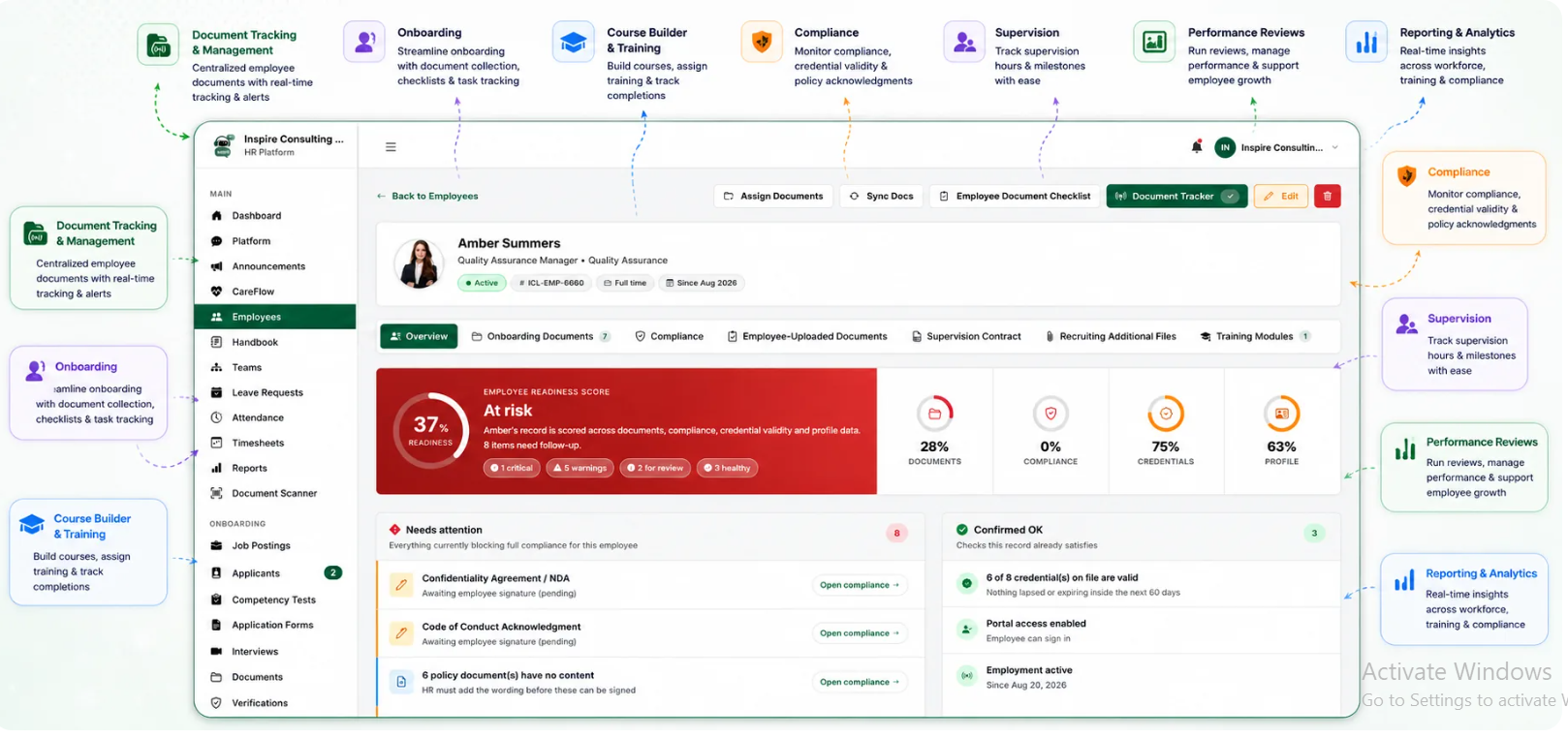
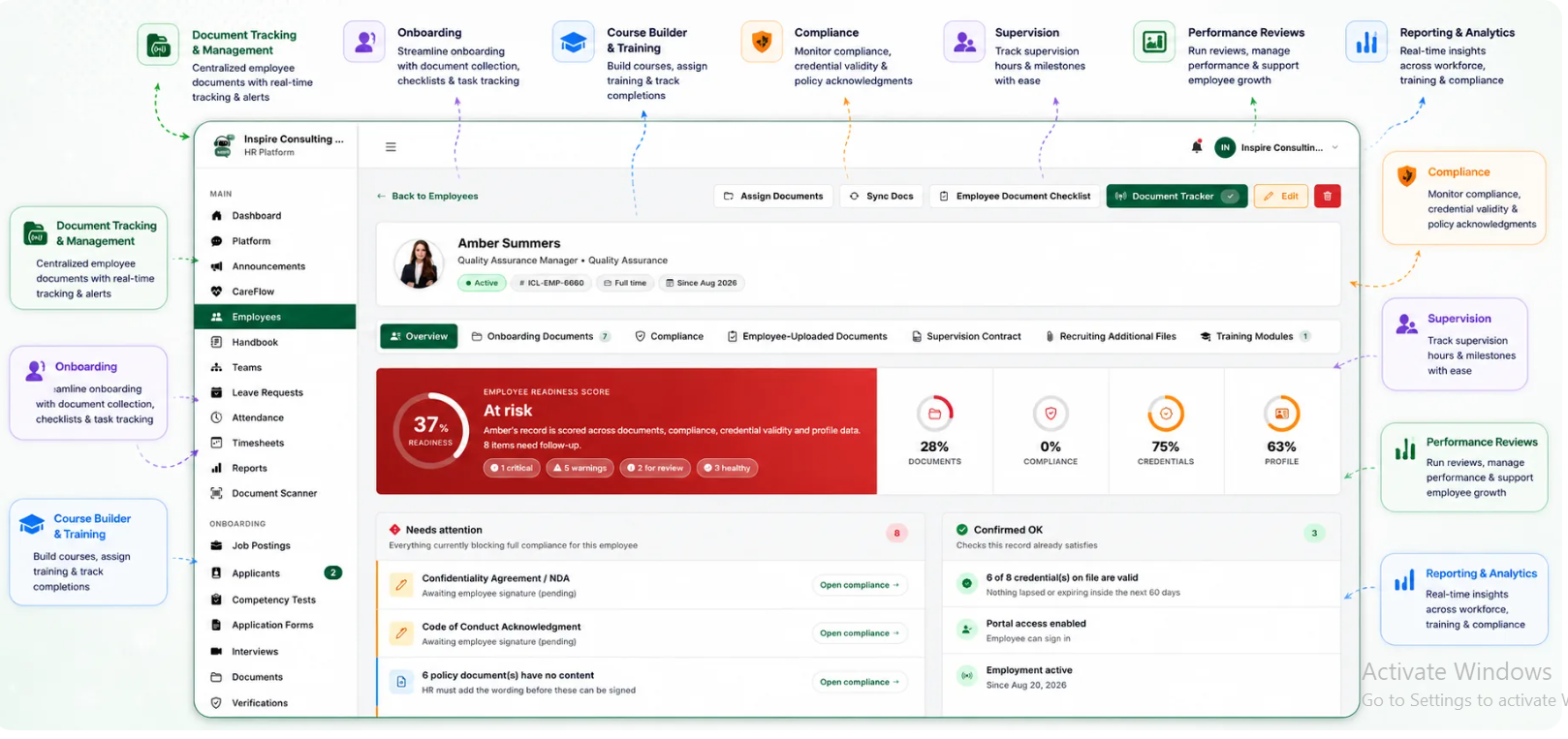
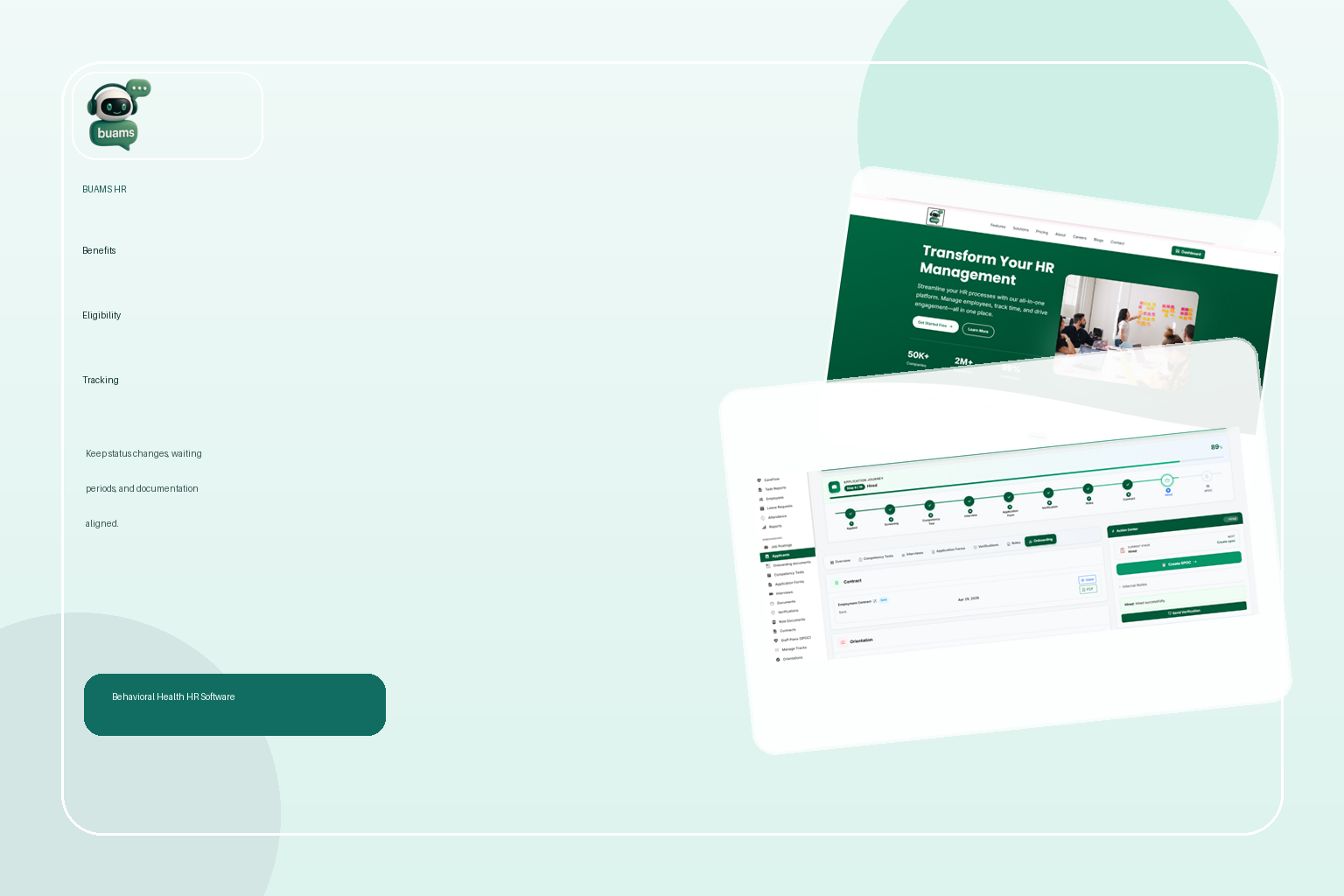
BUAMS HR helps behavioral health providers create more structure around employee records and workforce workflows that often become fragmented over time. For benefits-related processes, that means teams can keep employment changes, supporting documentation, and follow-up activity more closely aligned instead of relying on disconnected tools.
When organizations need to review a status change, confirm what documentation exists, or understand where a workflow stands, centralized records make that work easier. BUAMS HR supports a cleaner operating model by helping teams:
That structure is valuable because benefits eligibility is rarely just a benefits problem. It usually depends on the quality of the underlying HR process. When employee records are organized and status changes are easier to track, the entire workflow becomes more manageable.
Final Thoughts
Benefits eligibility tracking software helps behavioral health providers manage a sensitive administrative process with better visibility, cleaner documentation, and fewer avoidable gaps. When waiting periods, status changes, and enrollment-related follow-up are tracked in a consistent way, HR teams can reduce confusion and support a better employee experience.
For organizations that want a more dependable way to connect employee changes with benefits readiness, BUAMS HR offers a practical foundation. A stronger process does not just help HR stay organized. It helps the whole organization respond with more confidence when workforce details matter.