Behavioral health providers manage much more than hiring. HR teams also have to track onboarding, supervisor changes, credential updates, leave events, role transfers, file maintenance, and offboarding steps that affect compliance and operational continuity. When those moments are handled in separate spreadsheets, email chains, and paper checklists, employee information drifts out of sync and important tasks are easier to miss.
Employee lifecycle management software gives behavioral health organizations a more connected way to manage the full arc of workforce activity. Instead of treating each change as a standalone task, HR can use one structured workflow to keep employee records current from offer acceptance through departure. That matters in mental and behavioral health settings where documentation gaps can affect audits, readiness, coverage planning, and staff experience at the same time.
For providers operating across multiple sites or programs, a lifecycle approach helps HR reduce handoff errors, standardize expectations, and keep compliance-related records aligned as employees move through different stages of work.
Key Takeaways
What Is Employee Lifecycle Management Software?
Employee lifecycle management software is an HR system designed to support the major stages of employment in one place. That includes recruiting handoff, onboarding, active employment changes, compliance tracking, document maintenance, and separation tasks. The point is not just to store records. The point is to keep each workforce event connected so HR does not have to rebuild context every time an employee changes roles, supervisors, locations, or status.
In behavioral health, those transitions happen often. A clinician may transfer programs, a direct care employee may add new training requirements, or a supervisor may need updated documentation after a promotion. If each step is managed in a disconnected way, teams waste time reconciling records and risk leaving critical information incomplete.
Why Behavioral Health Providers Need a Lifecycle Approach
Behavioral health organizations work in a compliance-heavy environment where employee records support licensing, accreditation readiness, training oversight, and operational planning. HR does not just need to know who was hired. The team also needs confidence that each employee file reflects the person’s current role, required documentation, reporting structure, and status.
Without employee lifecycle management software, many organizations end up with fragmented processes. Hiring may be tracked in one tool, onboarding packets in another folder, supervisor updates by email, and offboarding steps on a separate checklist. That fragmentation creates delays and makes it harder to answer basic questions such as whether a transferred employee has the right documentation, whether a departing staff member still has open tasks, or whether a file reflects the most recent role expectations.
A lifecycle model improves continuity. It helps HR move from reactive cleanup to a more stable process where each workforce event updates the broader employee record instead of creating another disconnected trail.
Where Manual Employee Lifecycle Workflows Break Down
Most HR teams do not set out to create messy processes. The problem is that manual workflows multiply as organizations grow, add programs, and respond to changing workforce demands. Common failure points include:
These gaps create extra administrative work, but they also weaken accountability. When no shared system connects the lifecycle, important updates depend too heavily on memory and manual follow-up.
What to Look for in Employee Lifecycle Management Software
The best employee lifecycle management software for behavioral health providers should support both day-to-day HR coordination and long-term compliance discipline. A few capabilities matter most.
One employee record that stays current over time
HR teams should be able to manage onboarding documents, active employment updates, and separation-related records within one employee profile. A connected record reduces duplicate entry and makes it easier to understand the current state of each employee.
Structured workflows for workforce changes
Promotions, transfers, supervisor changes, leave events, and status changes should follow a repeatable process. Software should help HR track what changed, what still needs action, and which documents or approvals belong to that update.
Compliance visibility across lifecycle stages
Behavioral health providers often need to monitor credentials, acknowledgments, file completeness, and training obligations across the course of employment. Lifecycle software should make those requirements easier to review before they become audit problems.
Clear offboarding coordination
Offboarding should be more than a final checklist sitting in someone’s inbox. Strong software supports consistent separation steps, better documentation, and a cleaner record of how the employee relationship closed.
Role-based access and audit support
Because employee information is sensitive, the system should support controlled access while preserving a strong record of updates and file activity. That is especially useful when organizations need to explain who changed what and when.
How BUAMS HR Helps Behavioral Health Teams Manage the Employee Lifecycle
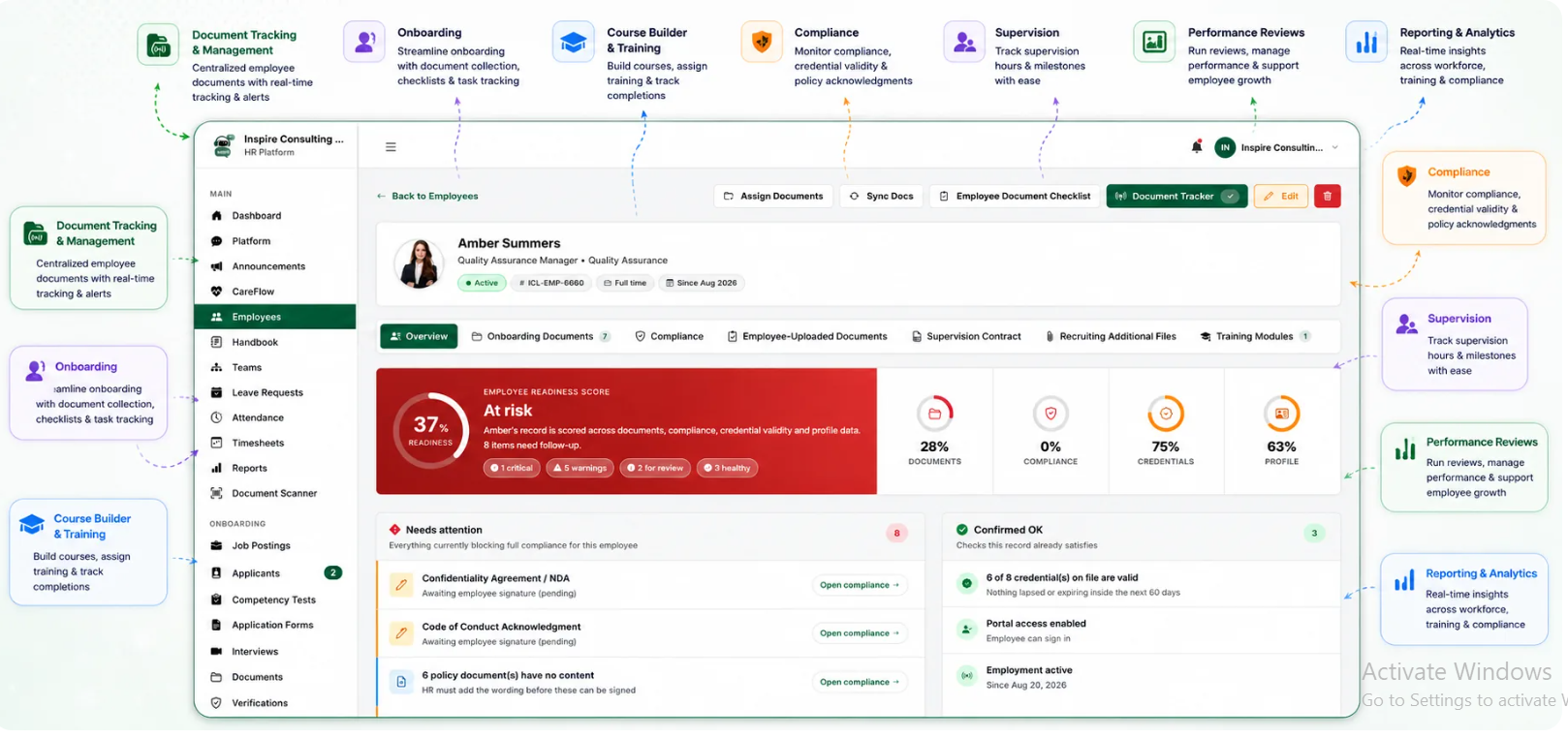
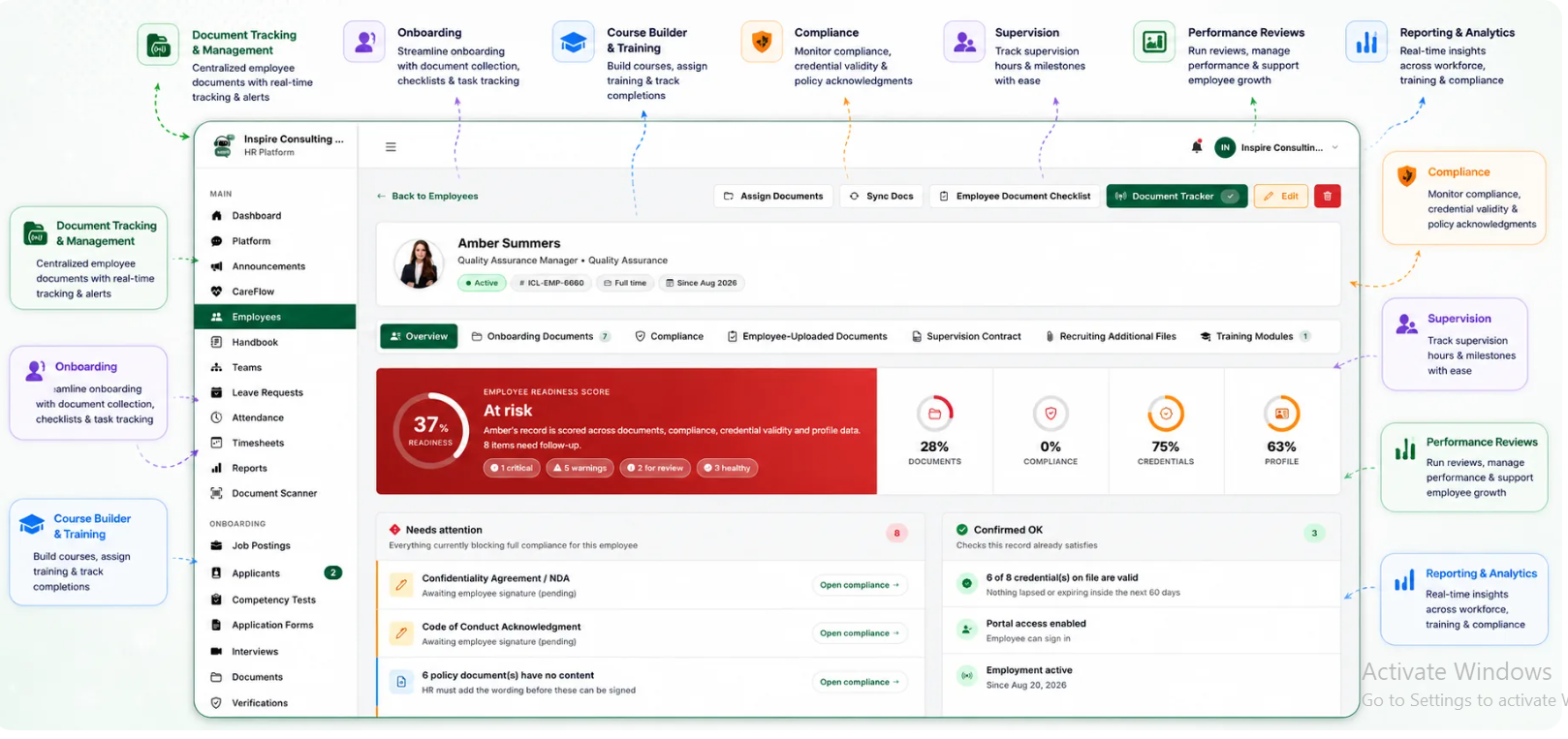
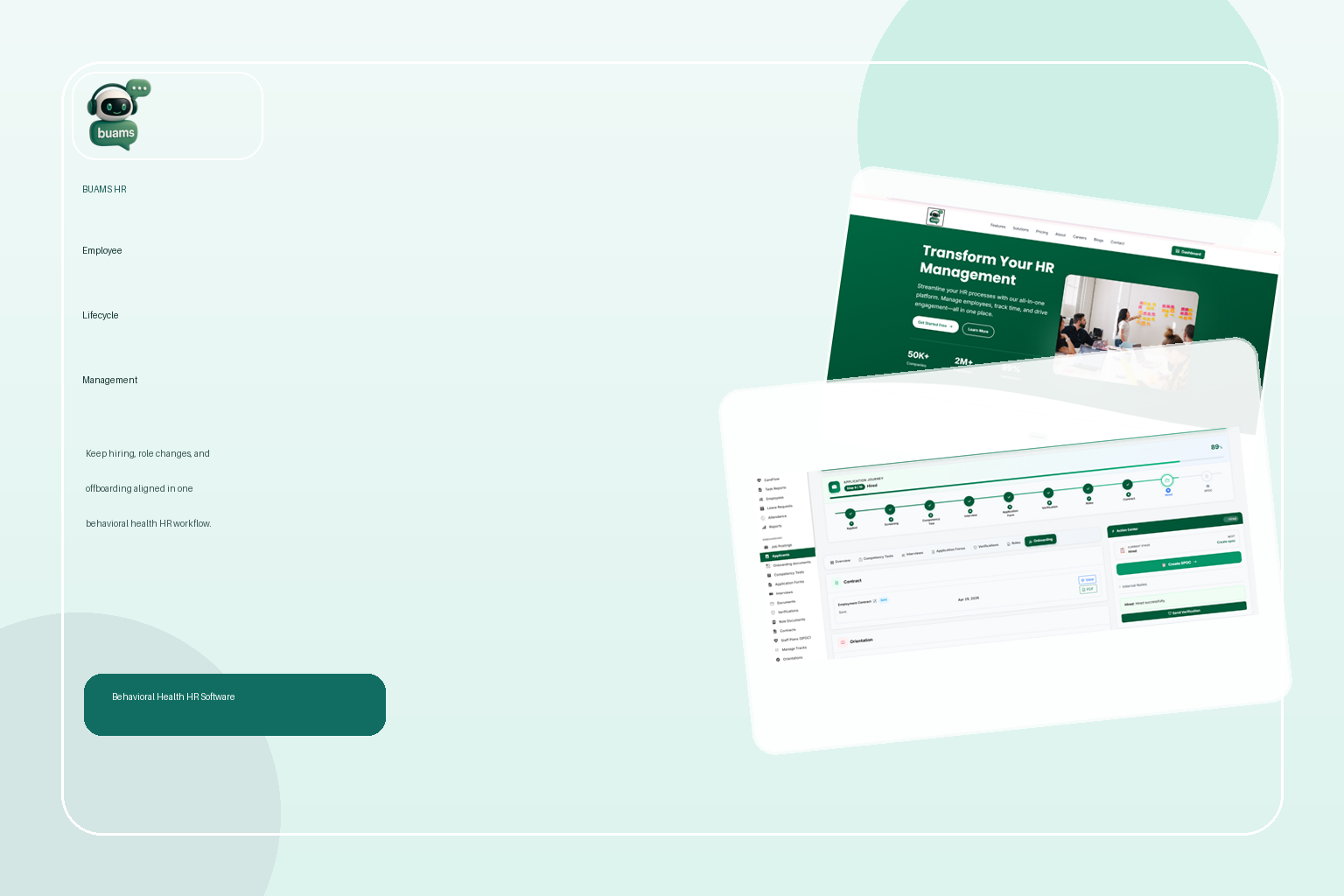
BUAMS HR helps behavioral health organizations bring more structure to workforce management by connecting employee files, HR tasks, and compliance-related documentation in one platform. Instead of managing hiring, employee changes, and offboarding as isolated events, teams can keep those workflows tied to the broader employee record.
That supports a more practical operating model for providers that need to stay organized across multiple programs, roles, and compliance expectations. With a connected system, HR teams can:
For growing behavioral health providers, that kind of visibility helps HR support the full employee journey without losing control of records, timelines, or accountability.
Final Thoughts
Employee lifecycle management software matters because workforce operations do not stop after onboarding. Behavioral health providers need a system that keeps employee records, changes, and compliance steps connected throughout employment. When HR can manage the lifecycle in one workflow, the organization is better prepared for audits, smoother employee transitions, and more consistent day-to-day operations.
For teams that want less fragmentation and a more reliable way to manage workforce changes from hire to exit, BUAMS HR offers a practical path toward a cleaner employee lifecycle process.