Behavioral health hiring often depends on multiple interviewers, fast-moving requisitions, and role-specific concerns that need to be documented clearly. HR may collect feedback from clinical leaders, program managers, supervisors, and operations staff, but if those notes live in separate emails, spreadsheets, or verbal follow-up, hiring decisions become harder to defend and harder to move forward.
Interview feedback tracking software gives behavioral health providers a more structured way to collect evaluations, compare candidate input, document approvals, and maintain a clear record of why a hiring decision was made. That structure is valuable not only for speed, but also for consistency, fairness, and operational accountability.
For organizations hiring across multiple sites or programs, a repeatable feedback process helps reduce delays after interviews, prevents missing reviewer input, and keeps candidate documentation organized when questions come up later.
Key Takeaways
What Is Interview Feedback Tracking Software?
Interview feedback tracking software is a hiring workflow tool that captures interviewer comments, evaluation criteria, scorecards, recommendations, and final decision status in one system. Instead of relying on inbox follow-up or informal conversations, HR teams can use a central process to request feedback, monitor outstanding reviews, and keep the hiring record complete.
In behavioral health settings, this matters because candidate reviews may involve both general employment criteria and role-specific concerns such as clinical communication, documentation habits, scheduling fit, supervision readiness, cultural alignment, or experience with vulnerable populations. When every reviewer uses a different format, it becomes difficult to compare applicants fairly or explain why one candidate moved forward and another did not.
The right process creates a consistent trail from interview completion to final decision. It helps organizations move faster without sacrificing documentation quality.
Why It Matters for Behavioral Health Providers
Behavioral health providers often hire for positions that affect care continuity, compliance exposure, and team stability. A delayed or poorly documented hiring decision can slow service delivery, frustrate candidates, and create avoidable confusion between HR and operational leaders.
Interview teams also tend to be cross-functional. A clinic director may focus on program fit, a supervisor may focus on day-to-day readiness, and HR may focus on process consistency and documentation. If those perspectives are not gathered in a shared workflow, the organization can end up with incomplete feedback, conflicting recommendations, or decisions that sit idle while no one realizes an approval is still missing.
Standardized interview documentation is also helpful when organizations want to improve hiring quality over time. If leadership cannot review patterns in interview ratings, response times, or rejection reasons, it becomes harder to refine recruiting strategy or coach managers on better selection practices.
Common Problems With Manual Interview Feedback Collection
Manual interview feedback processes usually break down after the conversation ends. The interview itself may go well, but the follow-up depends on reminders, personal habits, and whether each reviewer uses the same level of detail.
These gaps create more than inconvenience. They can affect candidate experience, recruiter productivity, and leadership confidence in the hiring process.
What to Look for in Interview Feedback Tracking Software
Behavioral health providers should look for a system that supports both operational speed and disciplined documentation. The goal is not just to save notes, but to make hiring decisions more consistent and easier to move through the organization.
Standard scorecards by role
A useful system should let HR define evaluation criteria by position type so interviewers are reviewing candidates against the same expectations. Clinicians, direct care staff, supervisors, and administrative roles may need different scorecards, but each group should still follow a repeatable structure.
Deadline visibility and reminder workflows
Interview feedback loses value when it arrives days late. Strong tools show which reviewers still owe input, when interviews took place, and what decisions are waiting on final comments or approvals.
Centralized notes and recommendation history
All feedback should stay connected to the candidate record so HR can see ratings, comments, and recommendations in one place. That reduces confusion and gives the organization a documented decision trail instead of scattered fragments.
Controlled access and consistent documentation practices
Candidate information should be visible to the right stakeholders without encouraging side-channel note keeping. A strong workflow supports cleaner records, more consistent reviewer habits, and better protection for sensitive hiring information.
Connection to next-step hiring workflows
Once a candidate is approved, the process should move cleanly into offer preparation, onboarding, and employee setup. That handoff is especially important for behavioral health providers that need to coordinate documentation, credentials, and readiness tasks quickly after a hire is confirmed.
How BUAMS HR Helps
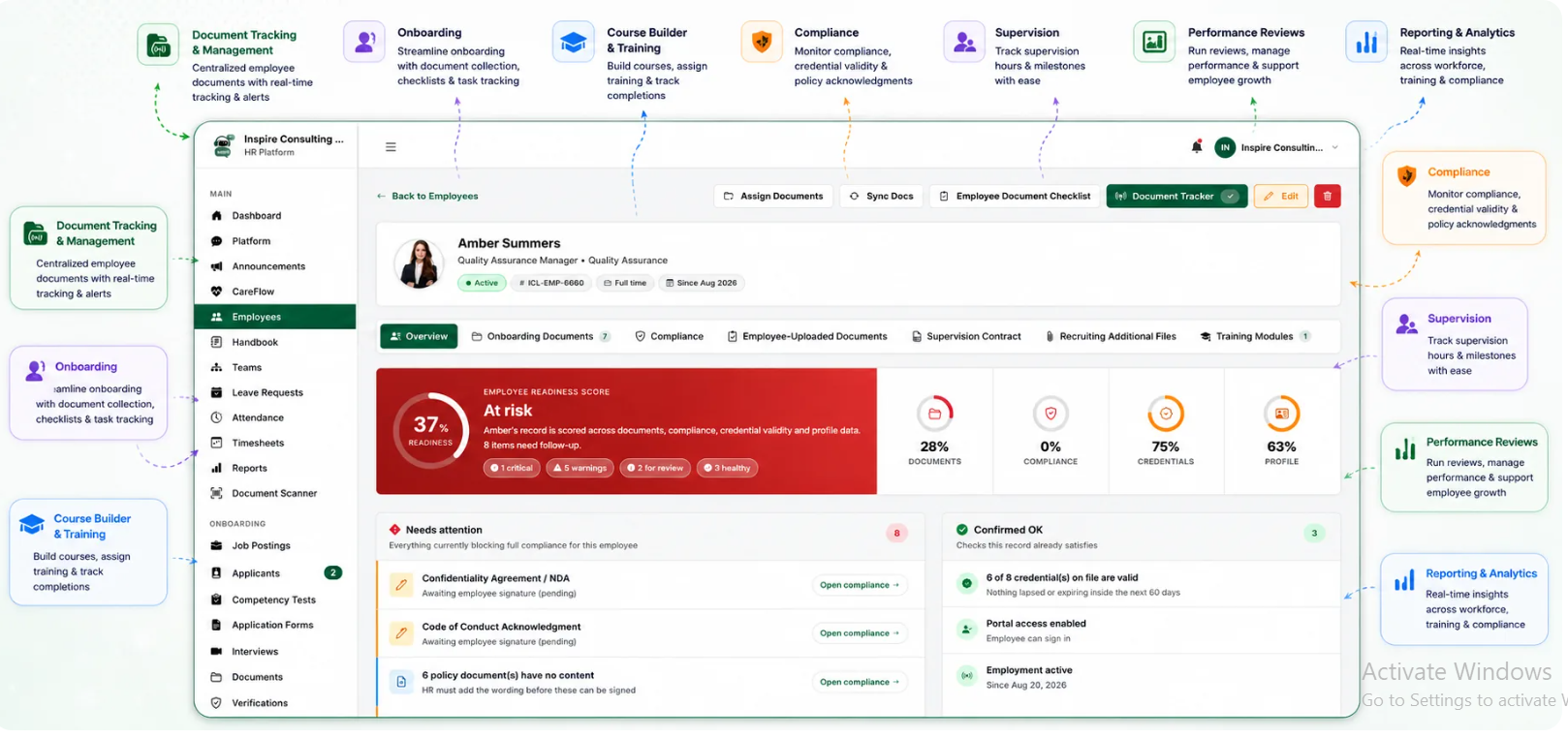
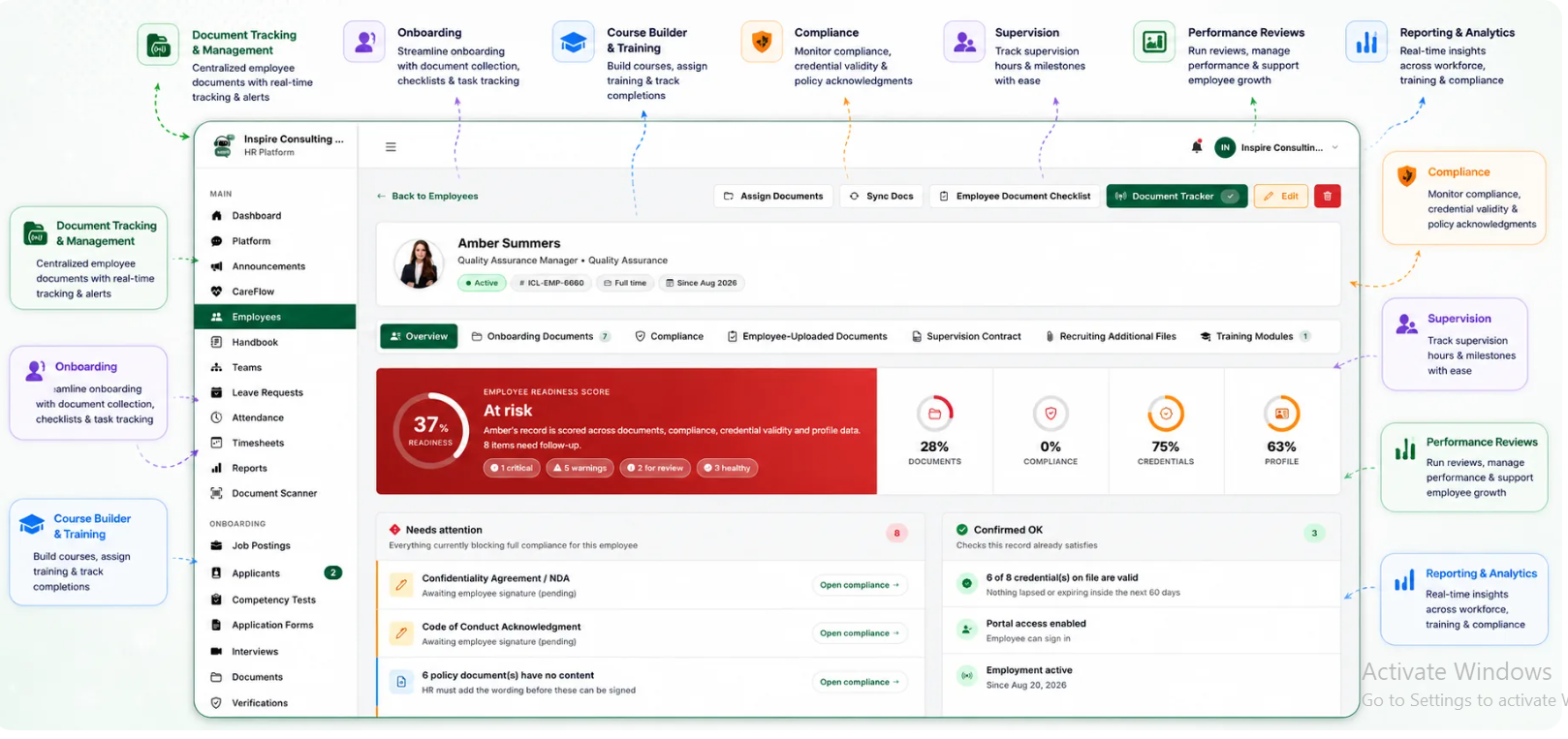
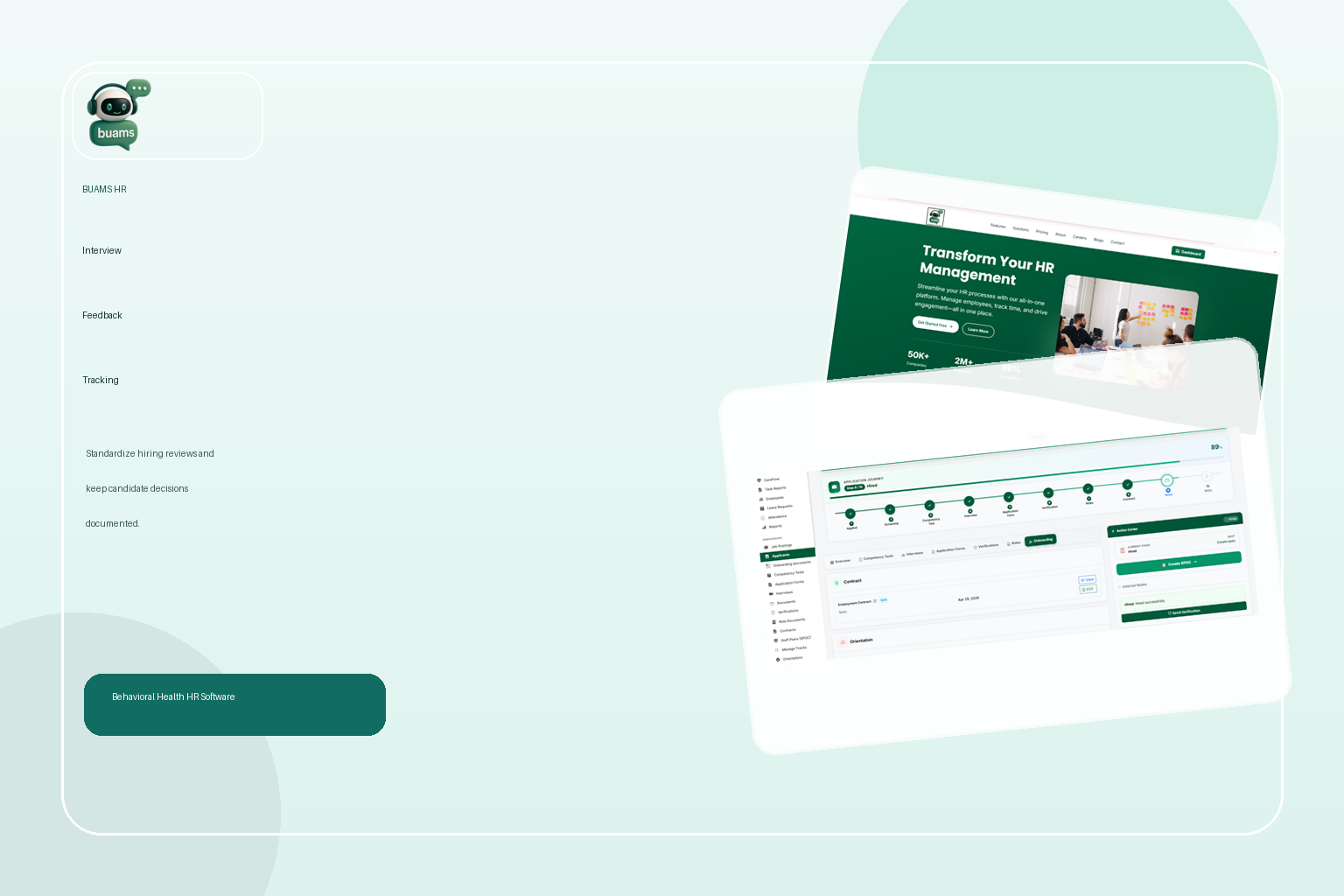
BUAMS HR can help behavioral health organizations bring more structure to hiring workflows that often depend on fragmented follow-up. With a centralized system, teams can keep interview-related documentation connected to the broader employee lifecycle instead of treating hiring decisions as isolated email threads.
That makes it easier for HR to monitor decision progress, keep supporting records organized, and move approved candidates into the next stage without rebuilding the process manually. Interview feedback tracking software becomes more useful when it is part of a connected operational workflow that also supports onboarding, employee files, approvals, and compliance-related readiness steps.
For providers managing multiple programs or locations, that shared visibility can reduce delays between interview completion and hire readiness while preserving a stronger record of who reviewed the candidate, what was recommended, and when the decision moved forward.
Final Thoughts
Interview feedback tracking software helps behavioral health providers turn a messy post-interview process into a repeatable decision workflow. When feedback is structured, timely, and easy to review, HR teams can make faster decisions with better documentation and less manual chasing.
For organizations that want more consistency in hiring, stronger candidate records, and smoother handoffs into onboarding, a centralized feedback process is a practical step forward. It improves the quality of hiring operations while giving leaders better visibility into how decisions are actually made.