Behavioral health providers rely on experienced staff to stabilize teams, protect supervision quality, and support continuity of care. As organizations grow, leaders often want a clearer way to recognize skill development and move employees into higher-responsibility roles. The problem is that advancement decisions are frequently managed through disconnected spreadsheets, manager notes, emails, and policy documents. HR may know a promotion is coming, but not whether required competencies were documented. Supervisors may support the move, but not know whether compensation approvals, training evidence, and role-change paperwork are all aligned. That gap creates risk for both employee trust and compliance readiness.
Clinical ladder software gives behavioral health providers a more structured way to manage role progression. Instead of treating advancement as an informal conversation that later turns into administrative cleanup, organizations can define readiness criteria, track supporting documentation, route approvals, and keep a visible record of why an employee was cleared for the next step. For providers trying to improve retention while keeping workforce decisions well controlled, that structure matters.
Key Takeaways
What Is Clinical Ladder Software?
Clinical ladder software is a workforce management tool used to organize role progression, advancement requirements, and supporting documentation for employees moving from one level to another. In behavioral health, that can apply to clinicians, peer support staff, nurses, case managers, residential staff, supervisors, and other team members whose responsibilities expand over time.
A strong ladder process usually includes defined advancement criteria, evidence of completed training or competencies, supervisor review, compensation or position approval, and an updated employee record once the move is finalized. Clinical ladder software brings those pieces together so HR and operational leaders can see whether an employee is truly ready for the next level rather than relying on memory or informal endorsements.
This is especially important in behavioral health organizations where advancement may affect supervision ratios, service assignments, documentation expectations, or site eligibility. A title change is not just a recognition event. It can also change who a person may supervise, where they may work, what training they need, and what records the organization must maintain.
Why It Matters for Behavioral Health Providers
Retention is a major concern across behavioral health. Employees are more likely to stay when they can see a credible path to growth, but providers also need advancement decisions to be consistent and defensible. If one site handles role progression with discipline while another relies on informal manager judgment, the organization can end up with inequity concerns, uneven readiness standards, and documentation gaps that surface later during audits, grievances, or internal reviews.
Clinical ladder software matters because it turns advancement into a visible process rather than a loosely managed exception. HR can confirm that all required forms are complete. Supervisors can document why the employee met the next-level criteria. Leadership can review whether compensation, staffing, and compliance implications were considered before the change takes effect.
For behavioral health providers, that discipline supports more than fairness. It helps protect client care quality by making sure higher-level responsibilities are assigned intentionally. When progression criteria are clear and documented, organizations can grow internal talent without creating confusion about readiness, scope, or oversight.
Where Manual Advancement Processes Break Down
Many providers want to reward strong employees, but manual promotion and ladder tracking creates predictable operational problems.
These breakdowns are costly. They slow internal promotions, frustrate employees, and create avoidable risk when an organization cannot reconstruct how an advancement decision was made. In a behavioral health setting, poor documentation around role progression can also affect supervision structure, coverage planning, and confidence that staff are assigned appropriately.
What to Look For in Clinical Ladder Software
Configurable advancement criteria
Behavioral health roles do not all progress the same way. A strong system should let organizations define requirements by role family, level, location, or program. That may include competencies, certifications, completed training, tenure milestones, supervisor endorsements, and leadership approvals.
Evidence collection tied to the employee record
Teams should be able to connect signed forms, competency reviews, education records, policy acknowledgments, and other proof directly to the workforce record. That makes it easier to show why an advancement was approved and what evidence supported the decision.
Approval workflows with clear ownership
Advancement decisions often involve supervisors, HR, compliance, finance, and executive leaders. Good software should show who owns each step, what is still pending, and whether the request is waiting on documentation, budget review, or final sign-off.
Role-change visibility after approval
The process should not end with a yes. A useful platform also helps teams complete downstream tasks such as updating the employee title, revising compensation details, adjusting assignment eligibility, and documenting the effective date of the change.
Reporting on readiness and pipeline strength
Leaders should be able to see where employees are in the ladder process, which teams have strong internal promotion pipelines, and where development gaps are slowing advancement. That visibility supports both retention planning and operational stability.
Common Behavioral Health Use Cases
Clinical ladder software can support advancement workflows across several types of behavioral health organizations.
In each case, the value is the same: advancement becomes easier to manage because the organization can see the full readiness story in one place instead of piecing it together after the fact.
How BUAMS HR Helps
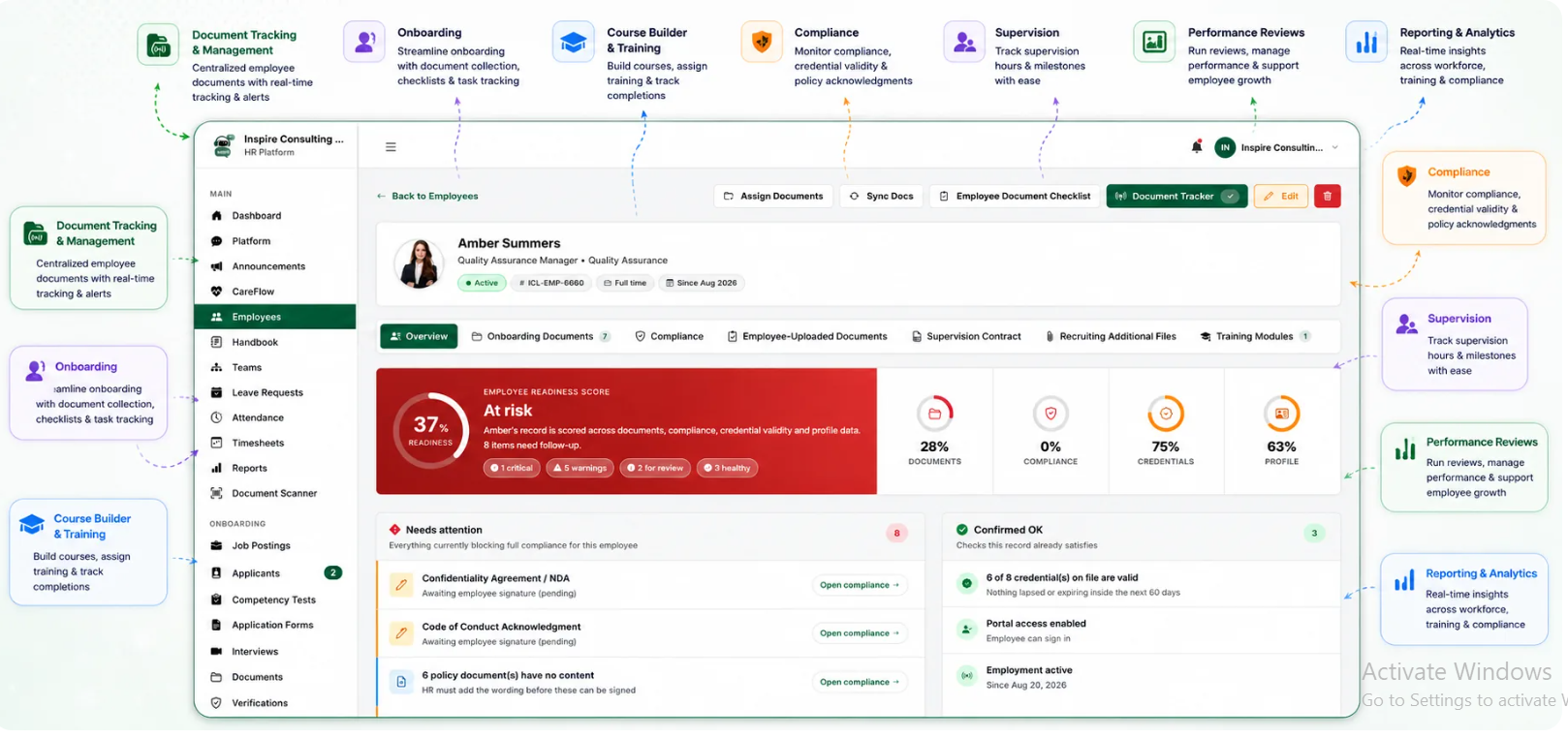
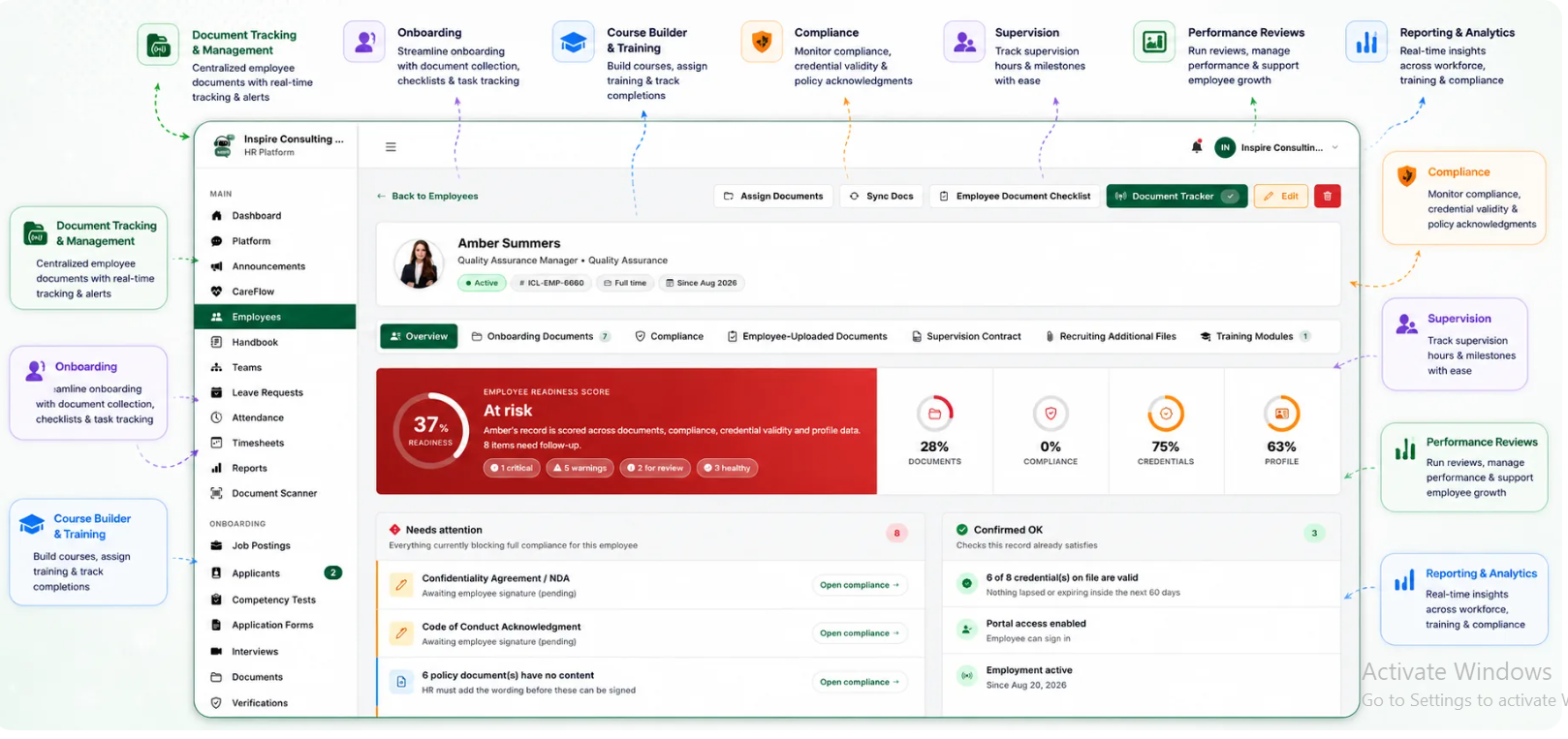
BUAMS HR helps behavioral health providers keep workforce records, role-based requirements, training documentation, and employee status changes better organized. For organizations building a more structured clinical ladder process, that means fewer disconnected handoffs between supervisors, HR, and leadership. The team can maintain a more complete record of what was required, what was completed, and what was approved before a staff member moves into a higher-level role.
With BUAMS HR, providers can reduce the administrative friction around advancement by centralizing documents, tracking readiness items, and tying approvals back to the employee record. That is useful for growing organizations that want to reward internal talent without creating documentation blind spots or inconsistent decision-making across programs.
It also supports a more practical retention strategy. When employees see that advancement expectations are clear and the organization can move qualified people through the process efficiently, growth feels more credible. That helps providers strengthen internal pipelines while staying organized and audit ready.
Best Practices for a Stronger Ladder Process
Final Thoughts
Clinical ladder software helps behavioral health providers solve a common growth problem: how to promote and recognize staff consistently without losing control of documentation, approvals, and operational readiness. Internal advancement should feel encouraging to employees, but it also needs enough structure to protect fairness and organizational discipline.
For providers that want a cleaner way to manage development pathways, BUAMS HR offers a practical foundation for organizing workforce records, readiness evidence, and role-change workflows in one place. That makes it easier to support career growth while keeping advancement decisions visible, consistent, and well documented.