Behavioral health providers often need new hires to observe workflows before they begin independent client-facing work. That shadowing period can include HIPAA review, confidentiality commitments, role-specific orientation, safety procedures, documentation standards, and supervisor oversight. The problem is that many organizations manage shadowing readiness informally. A manager may assume a new employee is cleared because orientation started. HR may assume the supervisor confirmed everything. Operations may schedule the employee to observe in a program before all required records are complete. Clinical shadowing clearance software gives behavioral health organizations a more reliable way to confirm who is ready to shadow, where they are allowed to observe, what documentation is complete, and which approvals are still pending.
That structure matters because shadowing is not a casual step in behavioral health. Even when a new employee is only observing, the organization still has to protect privacy, document expectations, and make sure the right safeguards are in place. A stronger workflow helps teams move faster without creating unnecessary compliance or supervision risk.
Key Takeaways
What Is Clinical Shadowing Clearance Software?
Clinical shadowing clearance software is a workflow system that helps HR and program leaders confirm that a new employee, intern, trainee, contractor, or transferring staff member is ready to observe clinical work before independent responsibilities begin. In behavioral health settings, shadowing may happen during onboarding, cross-training, supervisor development, or role transition. The goal is not only to schedule observation time. It is to document that the employee has completed the right preconditions before being placed in sensitive care environments.
A strong process can include signed confidentiality documents, site-specific orientation, supervisor assignment, policy acknowledgment, background clearance status, training completion, and any restrictions on where or how the person may observe. Good software makes those steps visible so organizations can tell the difference between someone who is fully cleared to shadow and someone who is still missing a critical requirement.
Why Shadowing Readiness Matters in Behavioral Health
Behavioral health organizations work in environments where privacy, safety, and role boundaries matter every day. A new therapist may need to observe intake sessions before carrying a caseload. A peer support specialist may need to shadow community-based visits before independent field work. A supervisor transferring between programs may need to observe workflows at a new site before taking responsibility for staff oversight. In each case, the observation period still touches sensitive information, vulnerable clients, and regulated documentation expectations.
When shadowing readiness is loosely managed, teams can accidentally create avoidable risk. Someone may be scheduled before all forms are signed. A site may not know whether the employee has completed HIPAA training. A supervisor may not realize the employee still needs a restricted observation plan. These breakdowns are usually not caused by bad intent. They happen because the organization lacks one shared system for readiness.
Clinical shadowing clearance software helps behavioral health providers standardize that handoff. Instead of treating shadowing as an informal calendar event, the organization can treat it as a documented workforce step with clear ownership and consistent rules.
Common Problems With Manual Shadowing Processes
These issues become more serious in multi-site organizations or teams with high hiring volume. Even a well-intentioned shadowing plan can become inconsistent when each manager uses a different checklist or communication style. Over time, that inconsistency creates unnecessary friction for HR and reduces confidence in workforce readiness.
What to Look For in Clinical Shadowing Clearance Software
Role-based readiness steps
The software should support different shadowing requirements based on role, program, service setting, and level of access. A clinician, community support worker, intern, and supervisor may each need a different sequence of approvals before observation begins.
Documented approval status
Teams should be able to see whether each person is pending, approved, restricted, or not yet eligible for shadowing. That visibility helps managers make safer staffing decisions and avoids guesswork at the site level.
Linked employee files and onboarding tasks
Shadowing readiness should not live in a silo. It should connect to the employee record, required forms, training assignments, and supervisor ownership so teams can review one complete picture of readiness.
Site and supervisor visibility
Program leaders need to know who is arriving, what the employee is approved to observe, and who is responsible for oversight. Clear visibility reduces last-minute confusion and improves accountability.
Audit trail and follow-up history
Behavioral health providers should be able to show when readiness was confirmed, who approved the observation step, and what follow-up occurred if the plan changed. That history matters during internal reviews, quality oversight, and accreditation preparation.
Best Practices for a Stronger Shadowing Workflow
These practices help organizations protect clients and staff while also reducing unnecessary delays. The point is not to add bureaucracy. It is to make readiness easier to verify before the employee enters a sensitive care setting.
How BUAMS HR Helps
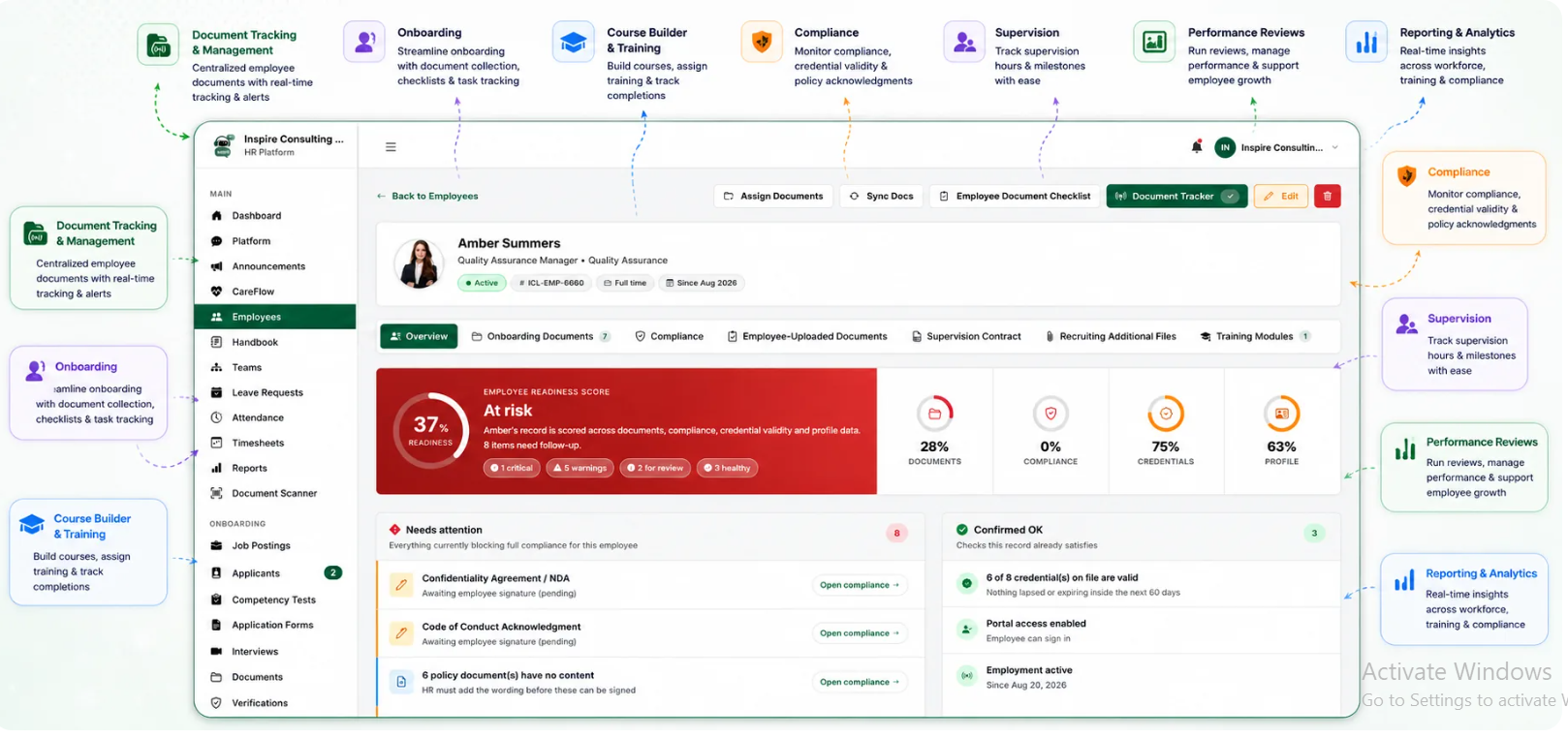
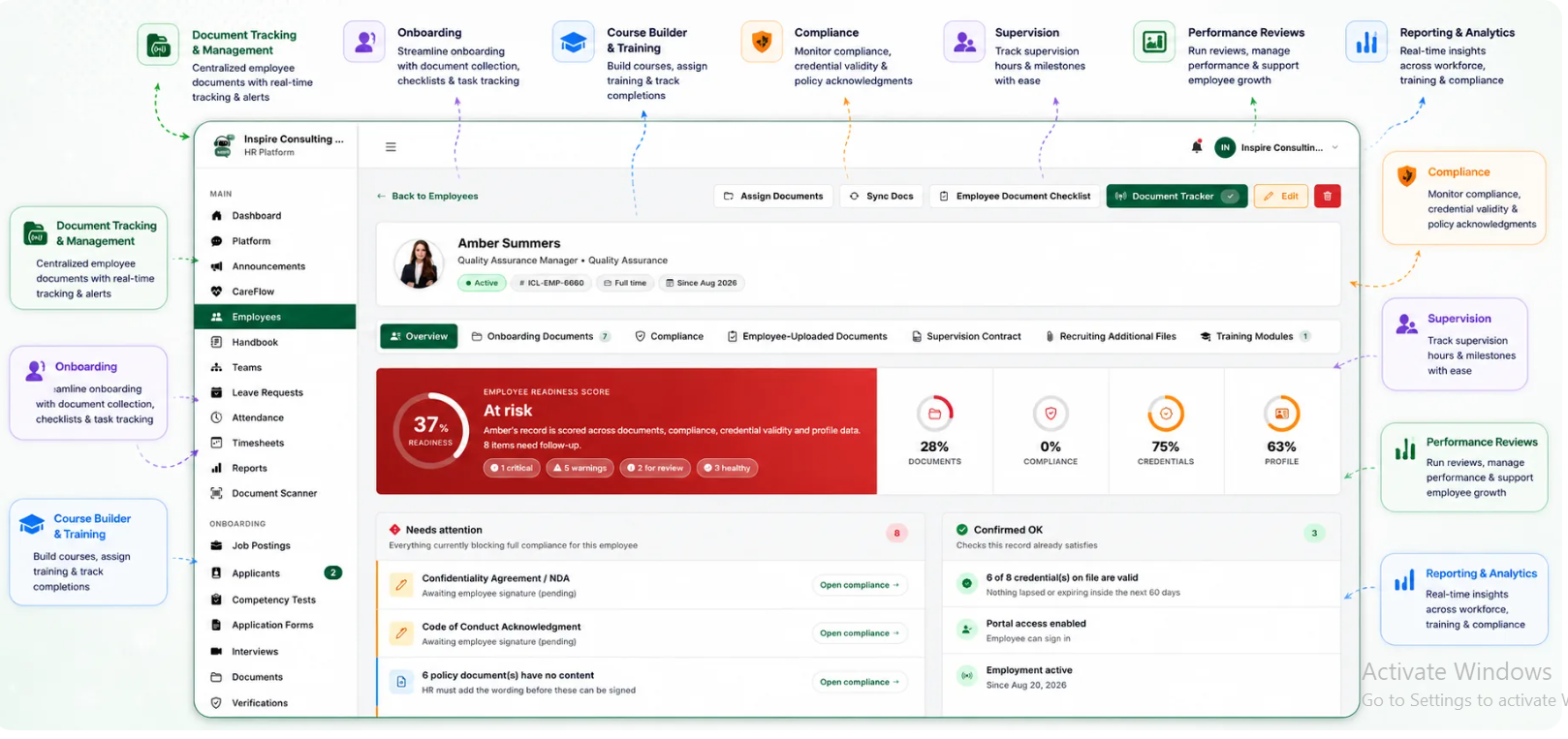
BUAMS HR helps behavioral health providers organize the workforce steps that lead to safe, documented shadowing readiness. Instead of tracking employee forms, training tasks, policy acknowledgments, and supervisor follow-up across multiple systems, teams can manage those records in one place with better visibility.
That matters when HR is coordinating with site leaders, clinical supervisors, and operations managers at the same time. BUAMS HR supports a more consistent process by keeping onboarding documentation, employee files, and readiness-related tasks aligned. Leaders can review whether required records are complete, confirm who owns the next step, and reduce the chance that a new hire arrives for shadowing with unresolved gaps.
For organizations serving multiple programs or locations, BUAMS HR also makes standardization easier. Teams can apply a repeatable workflow for shadowing preparation while still accounting for role-specific or site-specific requirements. That creates a cleaner handoff from hiring to supervised observation and then to full job readiness.
Final Thoughts
Clinical shadowing clearance software gives behavioral health providers a practical way to make observation periods safer, clearer, and easier to manage. When readiness is documented instead of assumed, organizations can support faster onboarding without losing control of privacy, supervision, or workforce accountability.
For HR teams trying to reduce start-date confusion while protecting compliance-aware operations, a stronger shadowing workflow is a smart investment. It turns a fragile manual process into a repeatable system that holds up as the organization grows.