Behavioral health hiring rarely ends when a candidate says yes. In many organizations, the real work starts after the offer is accepted and before the employee can safely begin work. HR teams still need to confirm background checks, verify licenses, collect health records, route signed documents, and make sure each required condition is complete before the start date arrives.
When those steps are tracked in inboxes, spreadsheets, and handwritten notes, contingent offers become hard to manage. One missing item can delay onboarding, frustrate supervisors, and create compliance risk if a staff member is scheduled before all conditions are cleared. Contingent offer tracking software gives behavioral health providers a more reliable way to manage the period between offer acceptance and workforce readiness.
Key Takeaways
What Is Contingent Offer Tracking Software?
Contingent offer tracking software is a system for managing the requirements that must be completed after an offer is extended but before the employee is fully cleared to start. In behavioral health settings, those conditions may include licensure verification, background screening, health documentation, policy acknowledgments, orientation tasks, supervisor assignments, or site-specific approvals.
The goal is to make each condition visible and actionable. Instead of relying on memory or scattered follow-up messages, HR can see what is outstanding, who owns the next step, what evidence has been collected, and whether the employee is truly ready for assignment.
Why Contingent Offer Tracking Matters in Behavioral Health
Behavioral health providers often hire into roles that affect client safety, billing compliance, and service continuity. A candidate may be a strong fit, but that does not mean they should be placed on the schedule before every required condition is complete. If the organization cannot prove that hiring conditions were reviewed and cleared, it may face preventable audit questions, operational disruption, or supervisor confusion.
The problem gets worse when multiple teams are involved. HR may collect documents, compliance may review licenses, operations may assign orientation, and program leaders may expect a confirmed start date. Without a shared system, one team may assume another team finished the task. The result is last-minute scrambling or a staff member who arrives on day one with unresolved requirements.
A clean contingent offer workflow helps organizations move faster without cutting corners. It creates a simple way to show which conditions are complete, which remain open, and what must happen before the hire is considered ready.
What to Track Before a New Hire Starts
Strong contingent offer tracking software should support more than a checklist with generic status labels. Behavioral health organizations need enough detail to manage complex hiring conditions across multiple programs and sites.
Best Practices for Managing Contingent Offers
Separate accepted offers from cleared starts
An accepted offer should not automatically mean the employee is ready to work. HR teams need a visible distinction between a candidate who plans to join and a candidate who has met every hiring condition. That separation prevents scheduling errors and keeps readiness decisions defensible.
Standardize condition types by role
Different roles require different documentation. A clinician may need license review and supervision alignment, while a non-clinical employee may need fewer approval steps. Standard role-based templates help HR launch the right checklist without rebuilding the process from scratch for every hire.
Flag blockers early
Some missing items are routine. Others put the entire start date at risk. The workflow should make it easy to spot overdue conditions, pending approvals, and documents that still need review so HR can escalate before the first day is affected.
Keep proof attached to the hiring record
If evidence lives outside the hiring workflow, teams lose time searching for it later. Storing clearances and supporting records with the contingent offer makes audits, internal reviews, and supervisor questions much easier to handle.
How BUAMS HR Helps
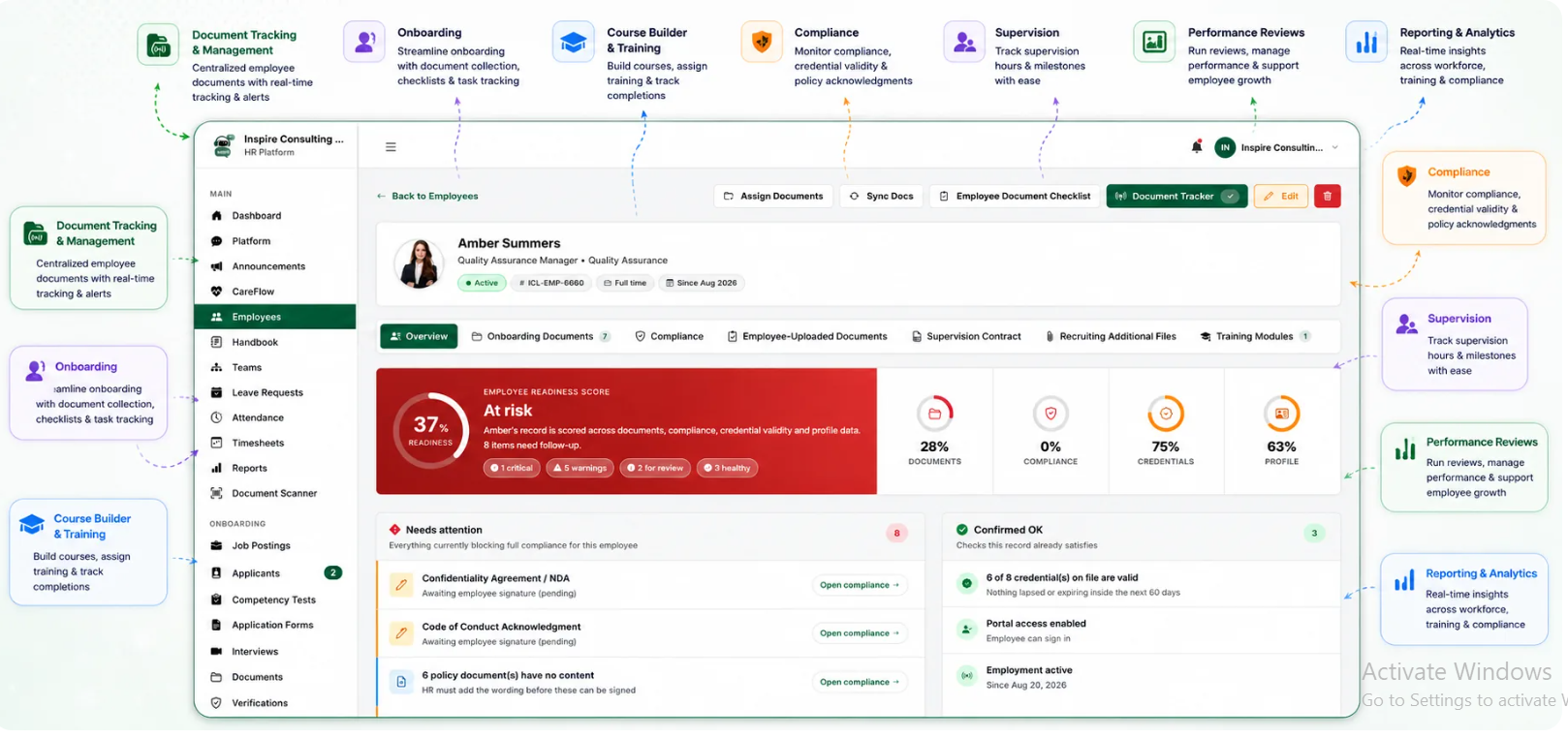
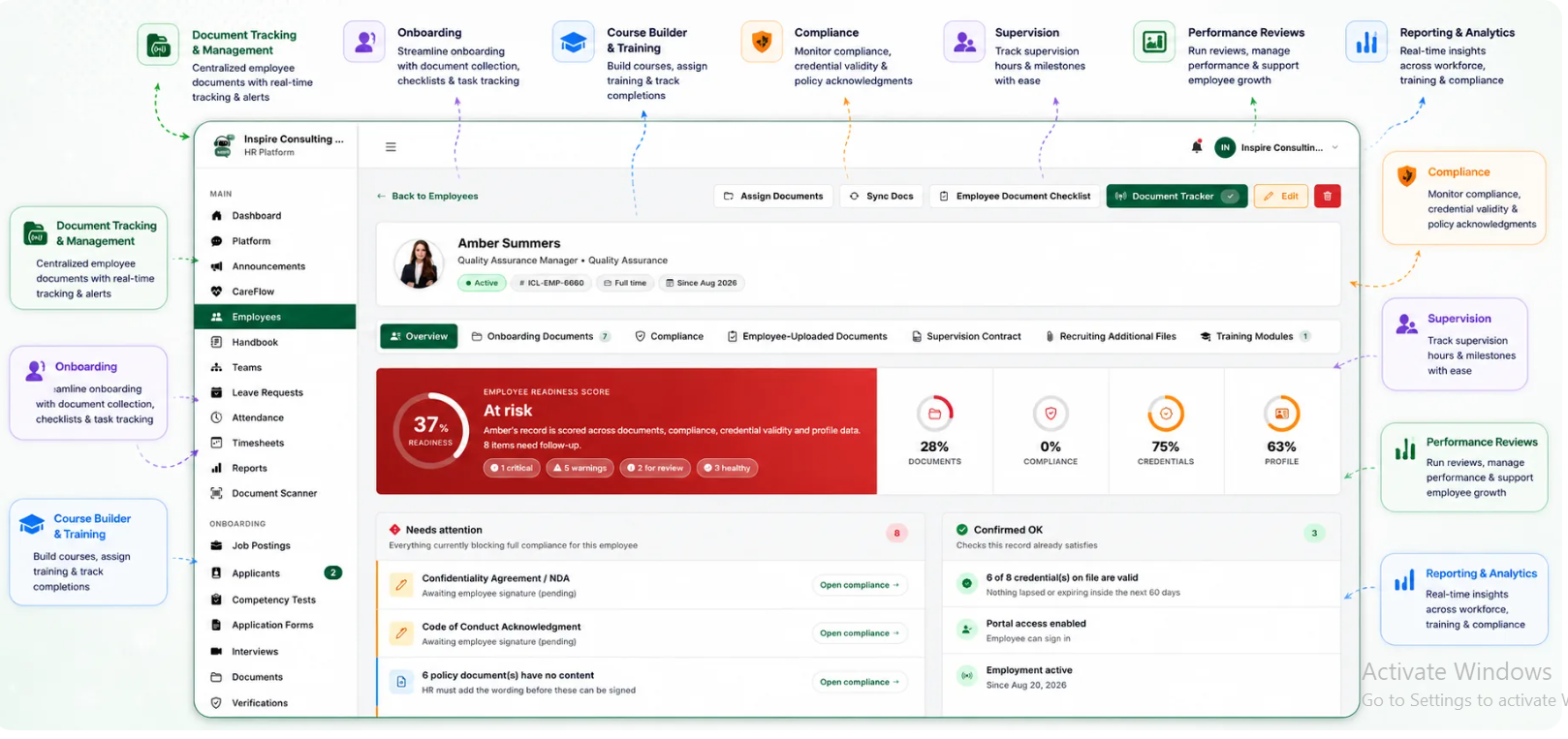
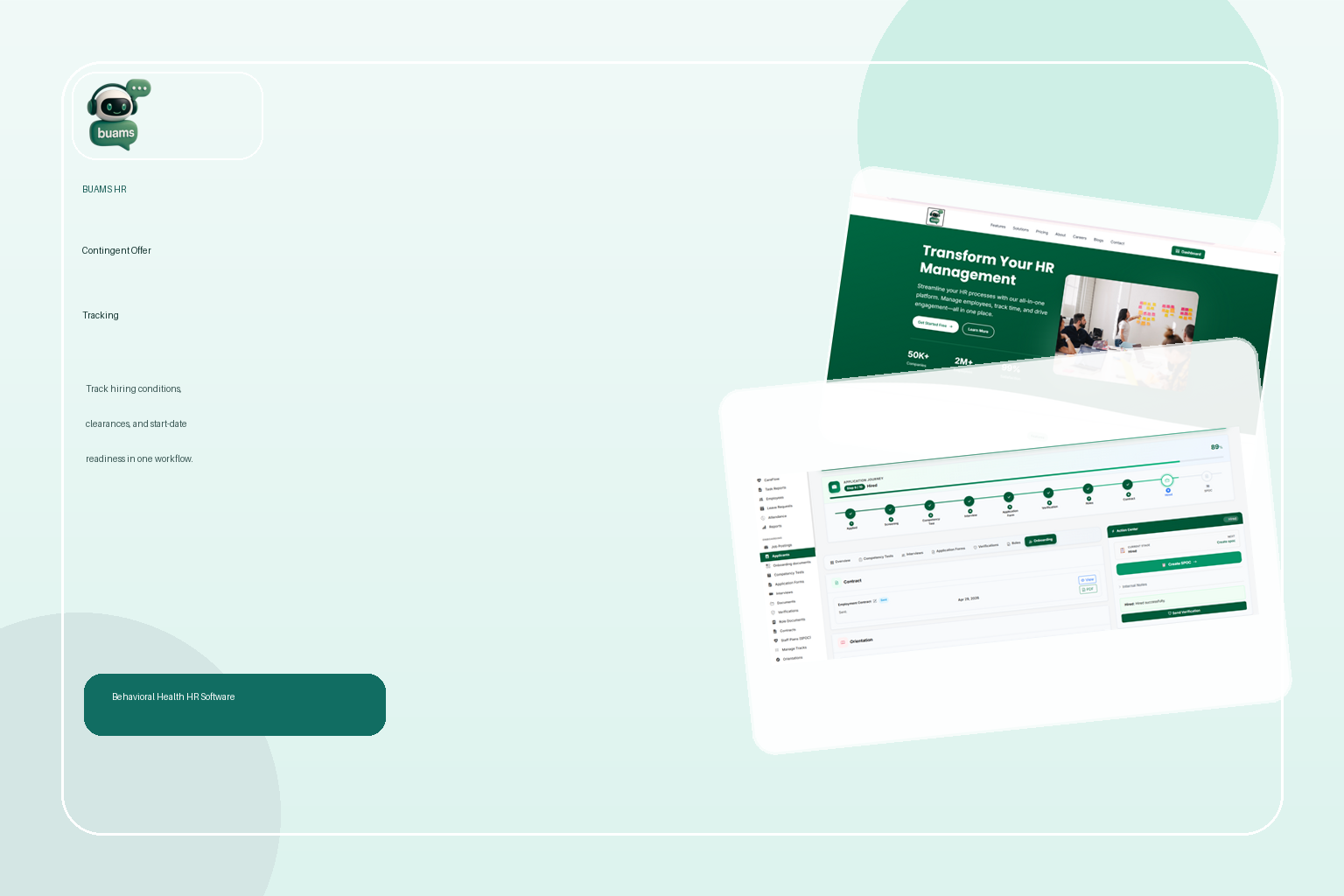
BUAMS HR helps behavioral health organizations bring contingent offer tasks into one organized system. HR teams can connect employee records, compliance-related documents, and onboarding follow-up so that critical hiring conditions are easier to track from offer through readiness.
That structure matters when several people touch the same hire. Instead of passing updates through disconnected messages, BUAMS HR supports a more centralized view of outstanding requirements, completed documentation, and the current status of the employee record. Teams can spend less time reconciling conflicting updates and more time moving qualified hires forward.
For growing providers, BUAMS HR also helps create a repeatable process. Standardized tracking makes it easier to compare hires across locations, respond to questions about missing items, and confirm that a start date was backed by complete documentation rather than assumptions.
Final Thoughts
Contingent offers are where hiring speed and compliance discipline meet. Behavioral health providers need a way to keep momentum without losing sight of the conditions that protect staff readiness and organizational risk.
Contingent offer tracking software gives HR teams a practical system for managing that balance. When conditions, documents, ownership, and readiness decisions are all visible in one place, organizations can reduce avoidable delays and launch new hires with more confidence.