Behavioral health providers are under growing pressure to serve clients across state lines, expand telehealth programs, and deploy clinicians where demand changes fastest. That flexibility can create a hidden HR challenge: keeping track of which staff members are actually eligible to practice under an interstate compact, what documentation supports that status, and whether role assignments still match current authorization. When that information is spread across email threads, spreadsheets, and separate credential files, even well-run organizations can lose confidence in who is cleared to do what.
License compact tracking software gives HR and compliance teams a more reliable way to monitor multi-state practice eligibility, collect supporting records, manage renewal milestones, and keep assignment decisions aligned with current staff status. For behavioral health organizations, that matters because a licensing or compact oversight issue is not just a paperwork problem. It can affect scheduling, supervision, reimbursement readiness, and organizational risk.
Key Takeaways
What is license compact tracking software?
License compact tracking software is a system for managing employees whose authority to practice may depend on interstate compact participation, state-specific approvals, or related documentation that affects where and how they can work. It helps organizations record eligibility status, store supporting evidence, track important dates, and maintain a clear audit trail of changes over time.
In behavioral health, this can be especially important for organizations operating telehealth programs, regional service models, or teams that support clients in more than one jurisdiction. Even when the clinical leadership team understands the service need, HR still needs a dependable way to confirm that the employee file, credential status, and work assignment remain aligned.
Why it matters for behavioral health providers
Behavioral health organizations often grow by adding programs, expanding catchment areas, and supporting hybrid service delivery models. That growth can make workforce oversight more complicated. A clinician may be fully qualified in one state, newly eligible under a compact framework in another setting, or subject to documentation and renewal steps that need active follow-up. If those details are not visible to HR and operations, assignment decisions can outpace recordkeeping.
Maryland and DC providers may feel this pressure when managing staff across nearby jurisdictions, partnering with remote clinicians, or scaling telehealth services that depend on clear licensure and workforce documentation. It is not enough to know that a person is a strong clinician. The organization also needs confidence that the person is authorized for the setting, location, and service model in which they are being placed.
License compact tracking software helps reduce that uncertainty by turning a scattered compliance responsibility into a repeatable process. Instead of relying on memory or one expert who knows the details, teams can create a shared operational view of what is current, what is pending, and what needs review before assignments are made.
Common gaps in manual compact tracking
Many organizations start by adding a note to a spreadsheet or by saving supporting records in a shared folder. That approach may work for a small number of employees, but it breaks down as the workforce grows and assignment complexity increases. Manual tracking usually misses the operational context that HR and leadership need.
What to look for in license compact tracking software
Centralized eligibility records
The system should keep compact status, state-specific notes, supporting documentation, and relevant dates tied directly to the employee record. That makes it easier for HR to answer questions quickly and keep documentation ready for internal or external review.
Status visibility that supports assignment decisions
A useful workflow should show more than a simple active or inactive flag. Teams need visibility into whether an employee is approved, pending, limited to certain jurisdictions, awaiting documentation, or nearing a milestone that could affect coverage. That kind of detail supports better staffing decisions.
Documented reminders and follow-up
Software should help HR track when outreach happened, what records were received, and whether missing items were escalated. A compact-related requirement can become risky when follow-up depends on personal inbox habits rather than a shared process.
Operational filtering by role, site, or service model
Behavioral health providers need to understand not just who is eligible, but where that eligibility matters most. Filtering by location, program, supervisor, or telehealth assignment can help leadership identify coverage risks before they disrupt care delivery.
Audit-ready change history
Compact status can change over time, and organizations should be able to show what changed, when it changed, and what documentation supported the update. That history strengthens internal confidence and reduces the scramble that often happens during audits or compliance reviews.
Best practices for implementation
Technology works best when the organization defines ownership and review points clearly. Behavioral health providers can build a stronger compact tracking process by making it part of normal workforce operations instead of treating it as an exception.
How BUAMS HR helps
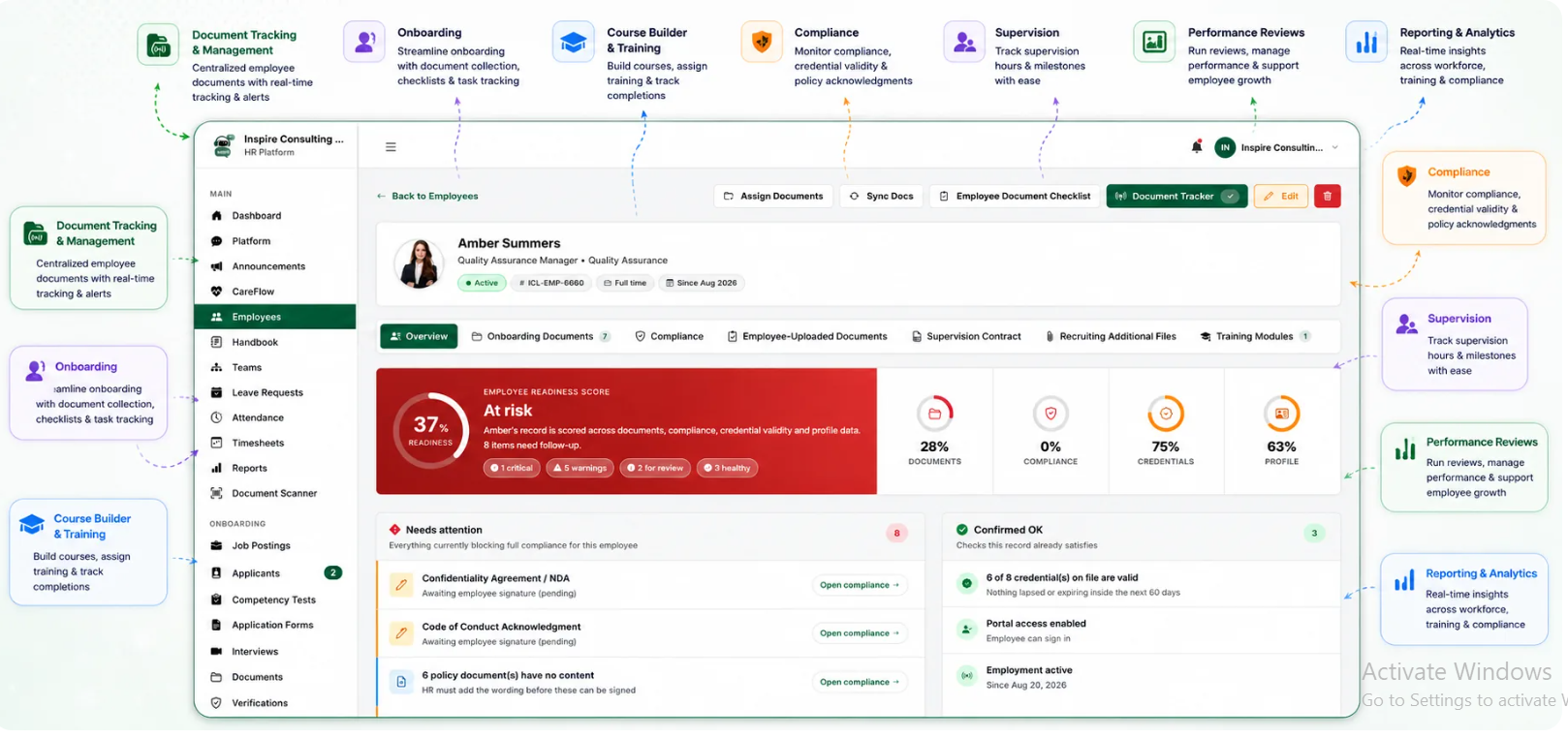
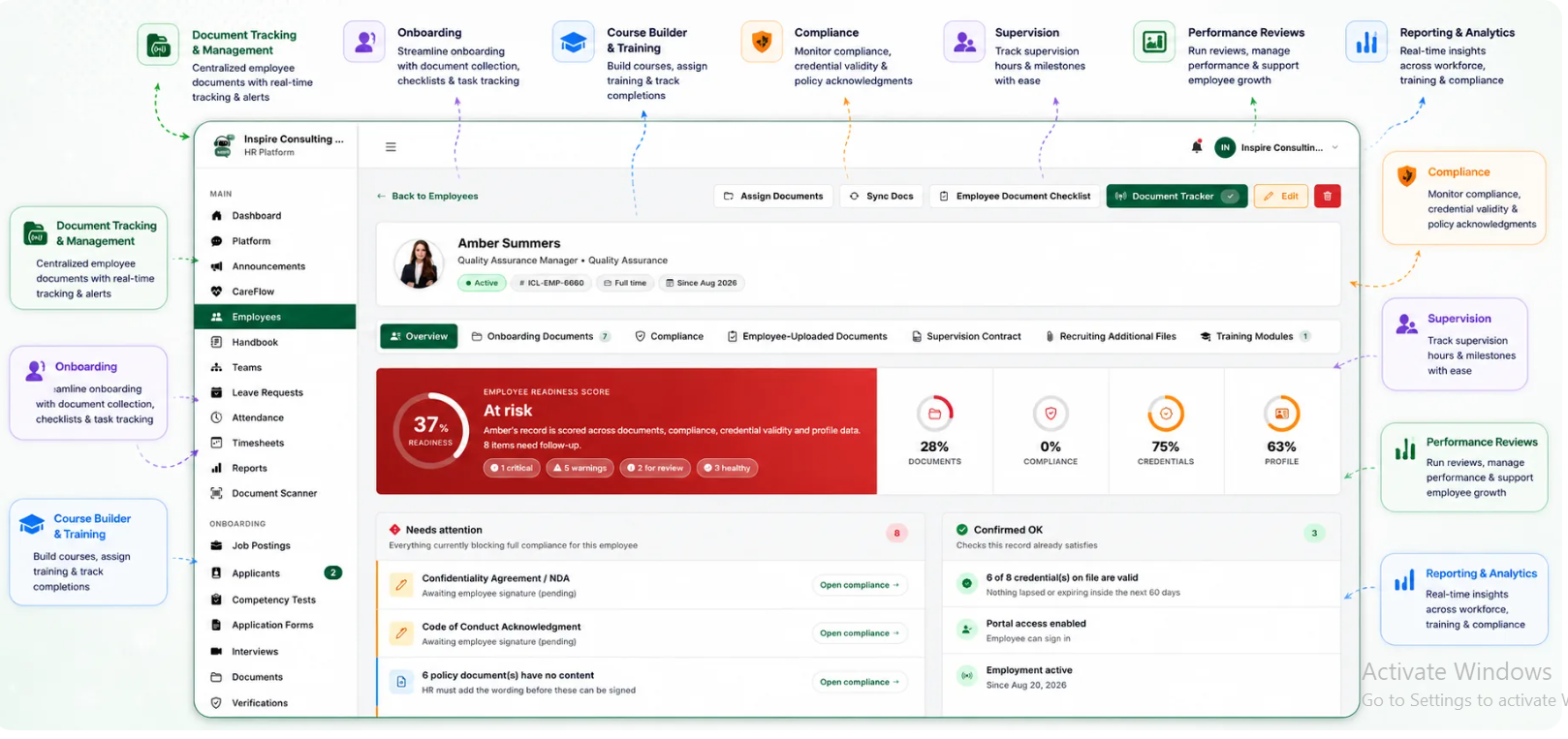
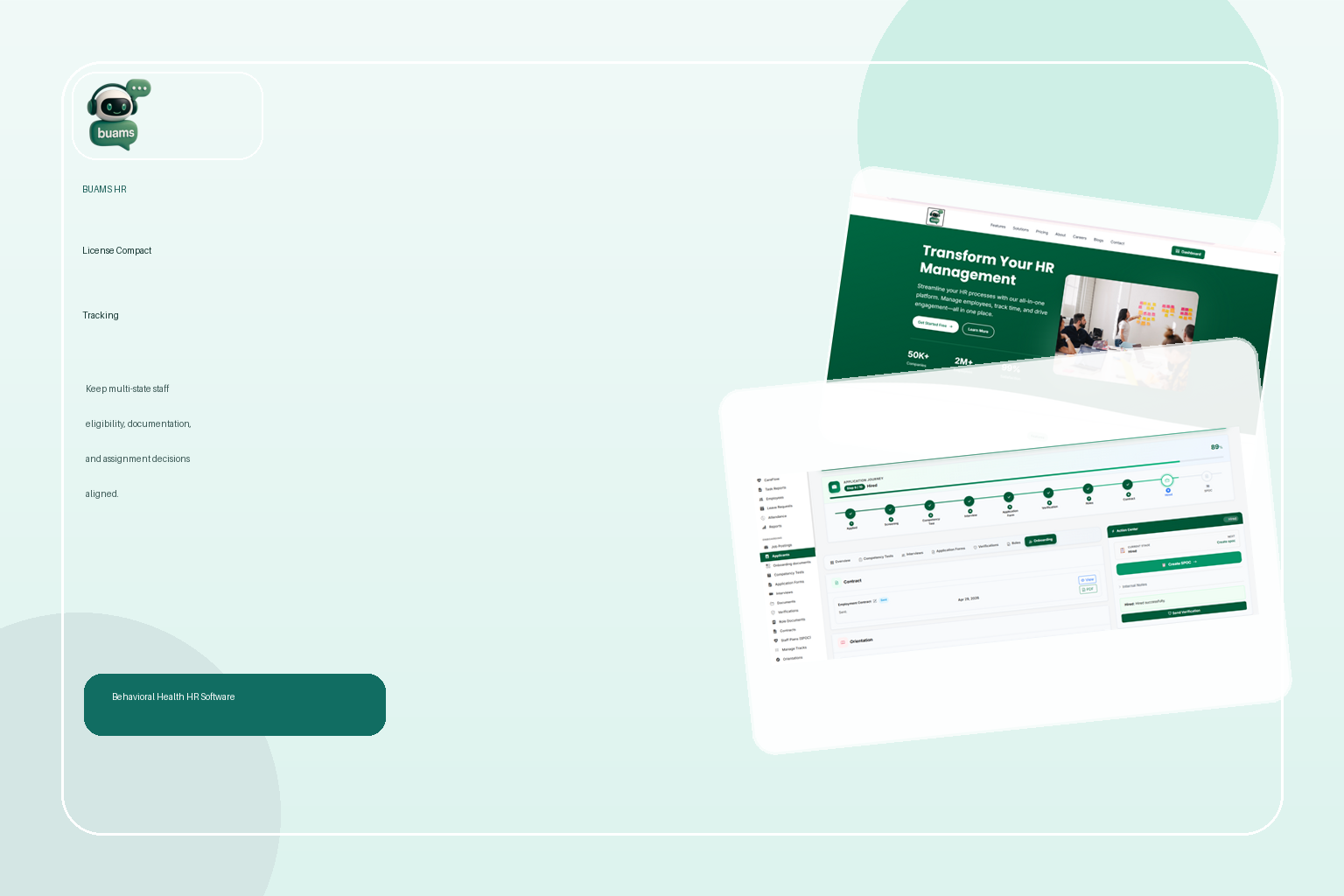
BUAMS HR helps behavioral health providers bring license compact tracking into the same system used for employee records, workforce compliance, and document management. Instead of keeping compact-related notes in a side spreadsheet, teams can organize status details, supporting files, reminders, and follow-up activity in one structured workflow.
That visibility helps HR confirm who is ready for multi-state work, which files still need attention, and where assignment risk may exist before a scheduling or service issue appears. It also supports stronger coordination across HR, compliance, supervisors, and program leadership because everyone is working from the same record base.
For growing providers that need to balance workforce flexibility with strong documentation discipline, BUAMS HR supports a cleaner and more scalable approach to compact oversight.
Final thoughts
Expanding care access should not require behavioral health organizations to accept avoidable workforce compliance blind spots. When compact-related eligibility is tracked manually, even strong teams can miss deadlines, lose documentation context, or place staff in assignments that deserve closer review.
License compact tracking software gives providers a practical way to centralize eligibility status, document follow-up, and align workforce decisions with current records. With a clearer process in place, HR teams can support multi-state growth while protecting compliance confidence.