Mandated reporter obligations are easy to underestimate in behavioral health organizations. Requirements can vary by role, state, and program, yet HR teams are often expected to prove that each employee completed the right training on time and that documentation is available the moment a surveyor, funder, or internal leader asks for it. When that work lives across spreadsheets, inboxes, shared drives, and paper acknowledgments, small gaps can turn into major compliance risk.
Mandated reporter training tracking software gives behavioral health providers a more reliable way to manage this process. Instead of chasing reminders manually and hoping each location follows the same rules, HR can centralize deadlines, completion records, follow-up tasks, and supporting documentation in one workflow that is easier to monitor year round.
Key Takeaways
What is mandated reporter training tracking software?
Mandated reporter training tracking software is a structured system for assigning, monitoring, and documenting required abuse and neglect reporting education for employees who work in behavioral health settings. It helps HR teams connect the training requirement to the employee record, the employee role, the due date, and the proof that training was completed.
For many providers, the issue is not whether the training exists. The issue is whether the organization can show that the right people completed the right version at the right time and whether that proof can be retrieved quickly. A good system replaces scattered recordkeeping with consistent visibility across onboarding, annual refresh cycles, transfers, and internal reviews.
Why it matters for behavioral health providers
Behavioral health organizations operate in environments where staff may work with vulnerable populations across outpatient programs, residential services, school-based services, community support, crisis response, and telehealth. That complexity makes training oversight harder. A single missed assignment or missing certificate can create unnecessary exposure during an audit or investigation.
Maryland and DC providers may also need to account for program-specific expectations, workforce changes, and multiple supervisors across sites. If HR cannot quickly confirm who has completed training and who is overdue, leaders are left making decisions with incomplete information. That slows onboarding, complicates internal reviews, and creates avoidable last-minute scrambling before compliance checks.
Strong tracking also supports operations, not just compliance. When required training is clearly assigned and visible, supervisors know what their teams still owe, HR knows where to intervene, and employees are less likely to miss deadlines because reminders arrive too late or not at all.
Common gaps in manual tracking
Many agencies start with a spreadsheet and a shared folder. That can work for a small team, but it becomes fragile as headcount grows or programs diversify. Version control issues, inconsistent naming, and manual follow-up create risk even when staff are trying to stay organized.
What to look for in mandated reporter training tracking software
Role-based assignment logic
The software should make it easy to assign training based on job title, program, site, or worker type. Behavioral health providers often have different requirements for clinicians, direct care staff, supervisors, support staff, interns, and contractors. A one-size-fits-all assignment model usually creates over-assignment for some teams and missed requirements for others.
Deadline and renewal visibility
HR should be able to see upcoming due dates, overdue items, and completed assignments without building separate reminder systems. Dashboards, filtered lists, and automated alerts help teams focus on the records that need attention before they become exceptions.
Proof tied to the employee file
Completion certificates, attestations, or uploaded documentation should live alongside the employee record rather than in disconnected folders. That matters when an accreditor, investigator, or internal reviewer asks for evidence tied to a specific person or date range.
Support for transfers and status changes
Training oversight should continue when an employee changes location, program, role, or supervisor. If the system cannot adapt to workforce movement, HR ends up carrying that logic manually and risks leaving employees on the wrong training path.
Audit-friendly reporting
A strong system should help the organization answer practical questions quickly: Who is overdue right now? Which programs have the highest completion risk? Which employees are missing documentation? Can we prove completion for a targeted review window? Fast answers reduce stress and improve accountability.
Best practices for implementation
Software alone does not fix a weak process. Providers get better results when they pair the platform with simple governance rules that define ownership, timing, and documentation standards.
How BUAMS HR helps
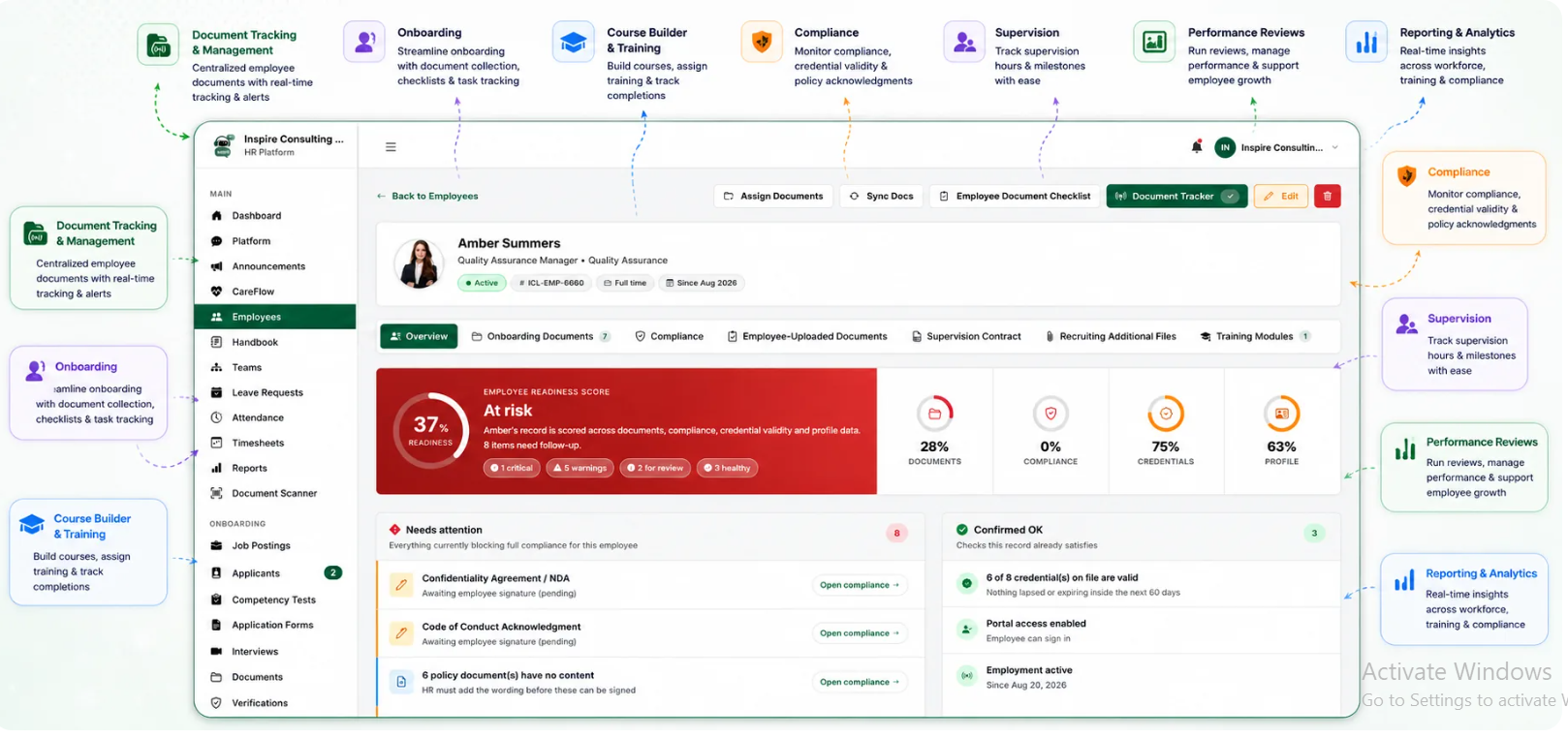
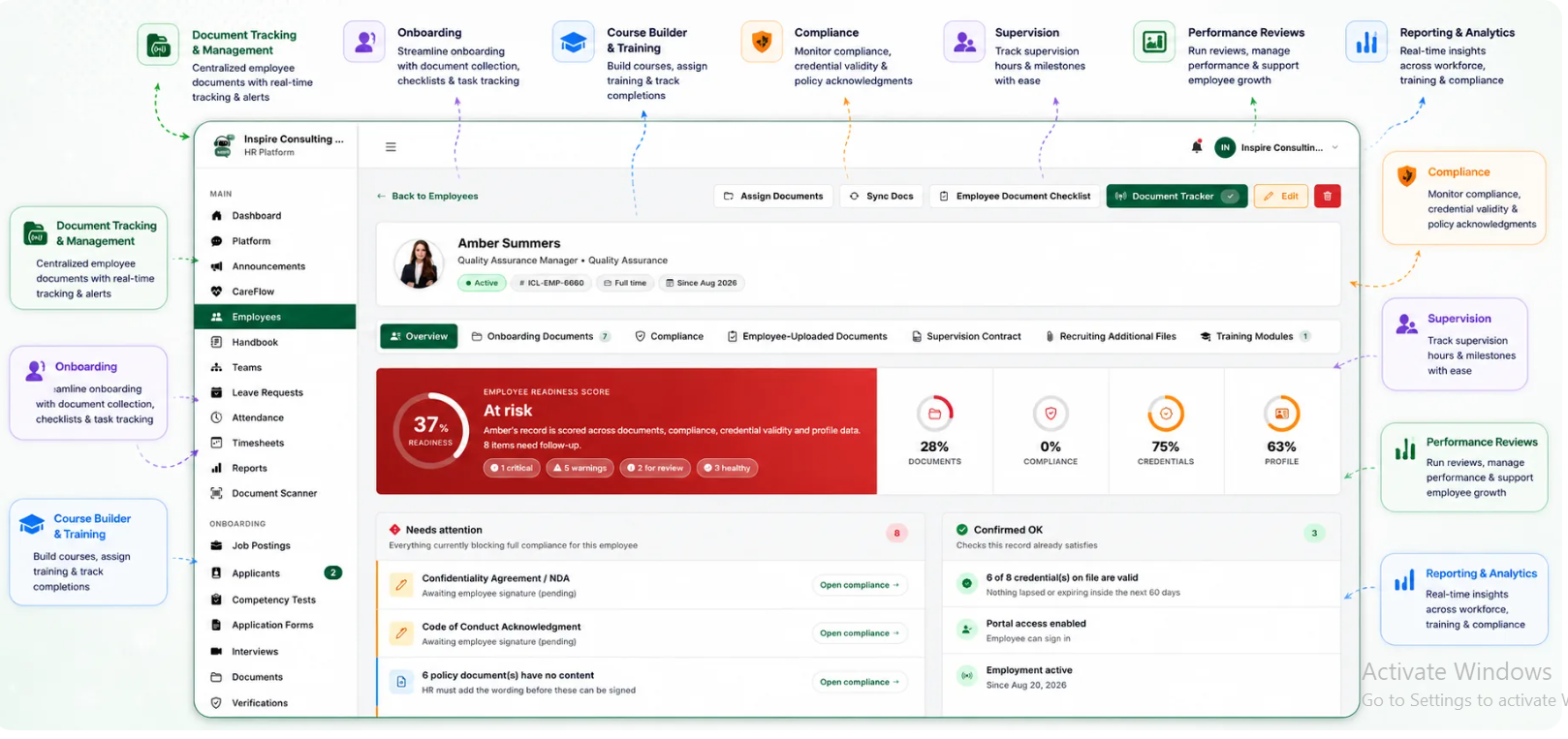
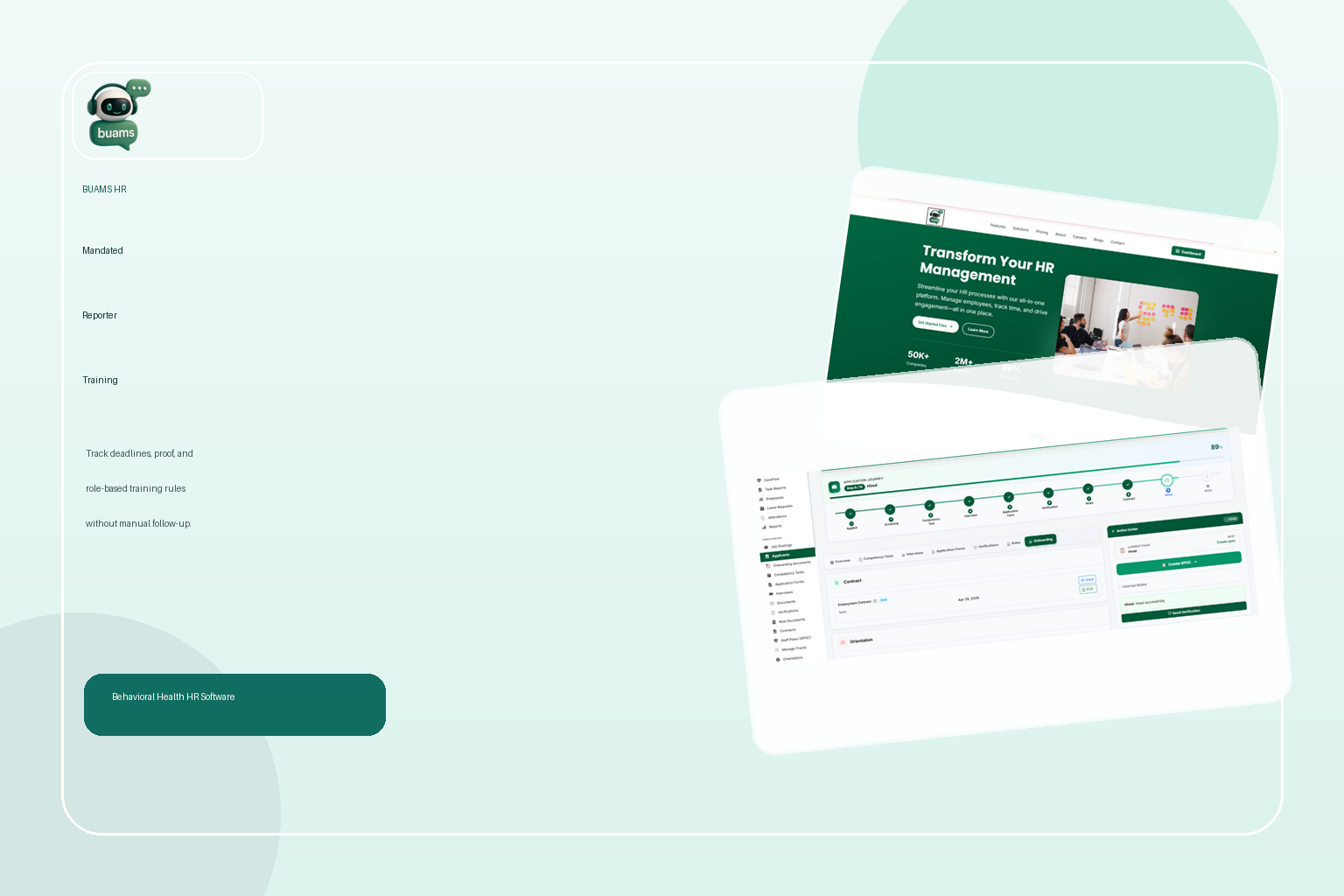
BUAMS HR helps behavioral health providers bring mandated reporter training oversight into the same system they already use for workforce compliance and employee records. HR teams can organize required training alongside onboarding tasks, document collection, file reviews, and other compliance checkpoints instead of maintaining separate trackers for each process.
With BUAMS HR, organizations can keep employee documentation in one place, monitor who is complete or overdue, and support a more consistent process across sites and programs. That makes it easier to prepare for audits, respond to questions from leadership, and reduce the administrative burden that comes from manual reminders and fragmented storage.
For Maryland and DC behavioral health providers, that centralized structure is especially useful when organizations need to manage multiple service lines, staff movement, and recurring compliance reviews without losing visibility into training evidence.
Final thoughts
Mandated reporter training is too important to manage as a loose collection of reminders and attachments. Behavioral health providers need a system that connects the requirement, the employee, the deadline, and the proof of completion in a way that stays visible over time.
Mandated reporter training tracking software helps HR teams replace manual follow-up with a more dependable workflow. When the process is standardized, organizations can protect compliance, support supervisors, and keep documentation ready before an audit or investigation makes every missing record urgent.