Employee name changes are common in growing behavioral health organizations, but the operational follow-up is rarely simple. A single update may affect personnel files, offer documents, payroll handoffs, credentials, training records, badge lists, directory access, supervision records, and external documentation that still needs to match the employee’s legal identity. When those updates are handled through scattered emails and sticky-note reminders, organizations can easily end up with conflicting records across HR, compliance, and operations.
Employee name change tracking software gives behavioral health providers a more reliable way to coordinate those updates from one controlled workflow. Instead of treating a name change like a one-time form, the organization can track what changed, what documents support the update, which systems still need action, and when the record is fully reconciled. That helps HR teams protect privacy, reduce confusion, and keep downstream workforce records accurate.
Key Takeaways
What Is Employee Name Change Tracking Software?
Employee name change tracking software is a structured workflow for managing identity-related record updates after an employee changes their legal or preferred name. In behavioral health, that process often reaches further than one HR form. The organization may need to update the personnel file, signed acknowledgments, licensing documentation, training records, supervision assignments, badge rosters, internal directories, and access-related records that support safe operations.
The goal is not just to store a new name. It is to create a defensible process that shows when the change was requested, what supporting documentation was received, what fields were updated, what related systems need follow-up, and whether the update is complete. That matters in behavioral health environments where employee identity details can affect compliance records, staff assignments, and the ability to prove that the right person completed the right requirement.
Why Name Change Workflows Matter in Behavioral Health
Behavioral health providers operate across programs, sites, and documentation systems. If one record still shows an old name while another reflects the new one, teams can run into avoidable confusion. Supervisors may not realize a credential record belongs to the same employee. HR may struggle to reconcile signed training records. Operations may issue access under an outdated name. During audits or internal reviews, the organization may need extra time to prove continuity between older documents and the current employee record.
The issue is especially important when providers manage clinical licenses, background documentation, role-based training, and employee file access across multiple teams. A weak update process can create privacy problems for the employee and accuracy problems for the organization. A stronger workflow helps HR apply changes carefully, document the reason for each update, and confirm that related records stay aligned instead of drifting apart over time.
Common Records Affected by a Name Change
Without a tracked process, each team may assume someone else handled the update. That is how duplicate employee profiles, incomplete records, and inconsistent documentation start to build.
What to Look for in Employee Name Change Tracking Software
Documented Request and Approval History
The workflow should capture when the request was submitted, who reviewed it, and what documentation supports the change. That creates a clear record for HR while reducing the risk of informal updates that are hard to explain later.
One Source of Truth for the Employee Record
Behavioral health providers need a central employee profile where the current name is maintained and linked to the rest of the workforce record. A fragmented process creates duplicate entries, conflicting spellings, and confusion over which version is current.
Visibility Into Downstream Follow-Up
Some systems may update immediately, while others require manual review. Good software should make those open follow-up tasks visible so HR can see whether directory updates, badge changes, supervisor notifications, or related record checks are still pending.
Support for Historical Record Continuity
Organizations often need to preserve a trail that connects historical documents to the current employee identity. That is important when older training proofs, signed forms, or license records were created under a previous name but still belong in the same workforce history.
Role-Based Access to Sensitive Information
Name changes can involve sensitive personal details. The right system should let HR control who sees supporting documents while still allowing managers or operations staff to view only the practical information they need for scheduling, supervision, or access updates.
Best Practices for a Stronger Update Process
Start with a standard checklist instead of a free-form request. HR should know exactly which records require review, which ones need direct updates, and which teams should be notified. That prevents important follow-up tasks from depending on memory alone.
Next, separate identity verification from operational distribution. HR may need the full supporting documentation, but supervisors and site leaders usually need only the approved outcome and any changes that affect local workflows. A structured process protects privacy without slowing execution.
It also helps to build reconciliation into the workflow. After the new name is entered, someone should confirm that related records still align across training, credentials, supervision, access, and file indexing. That extra check is often what prevents the organization from carrying two versions of the same employee identity for months.
Finally, treat name changes as a cross-functional data quality event, not just an administrative edit. When identity fields are accurate and consistent, providers can respond faster to audits, investigations, roster questions, and employee support requests.
How BUAMS HR Helps
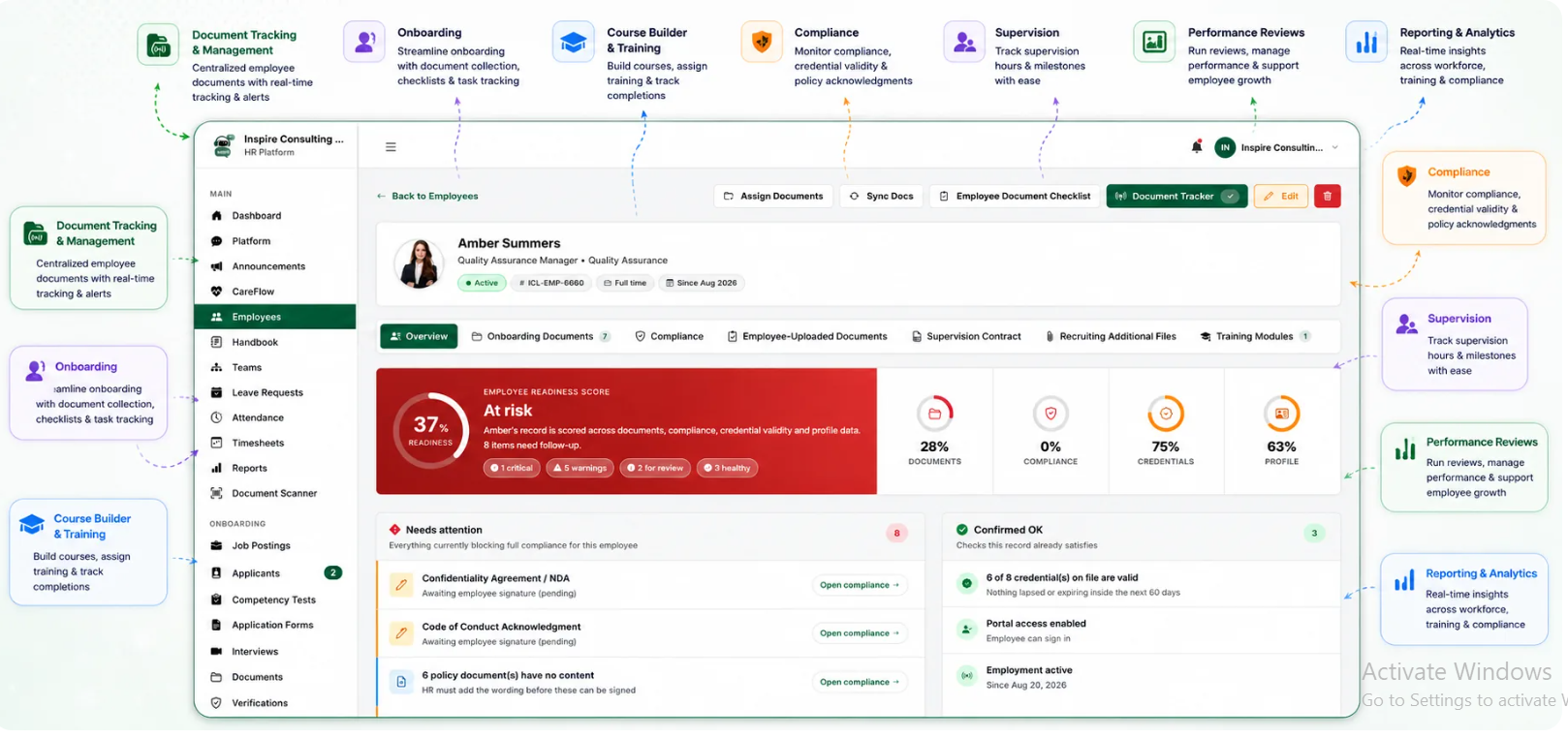
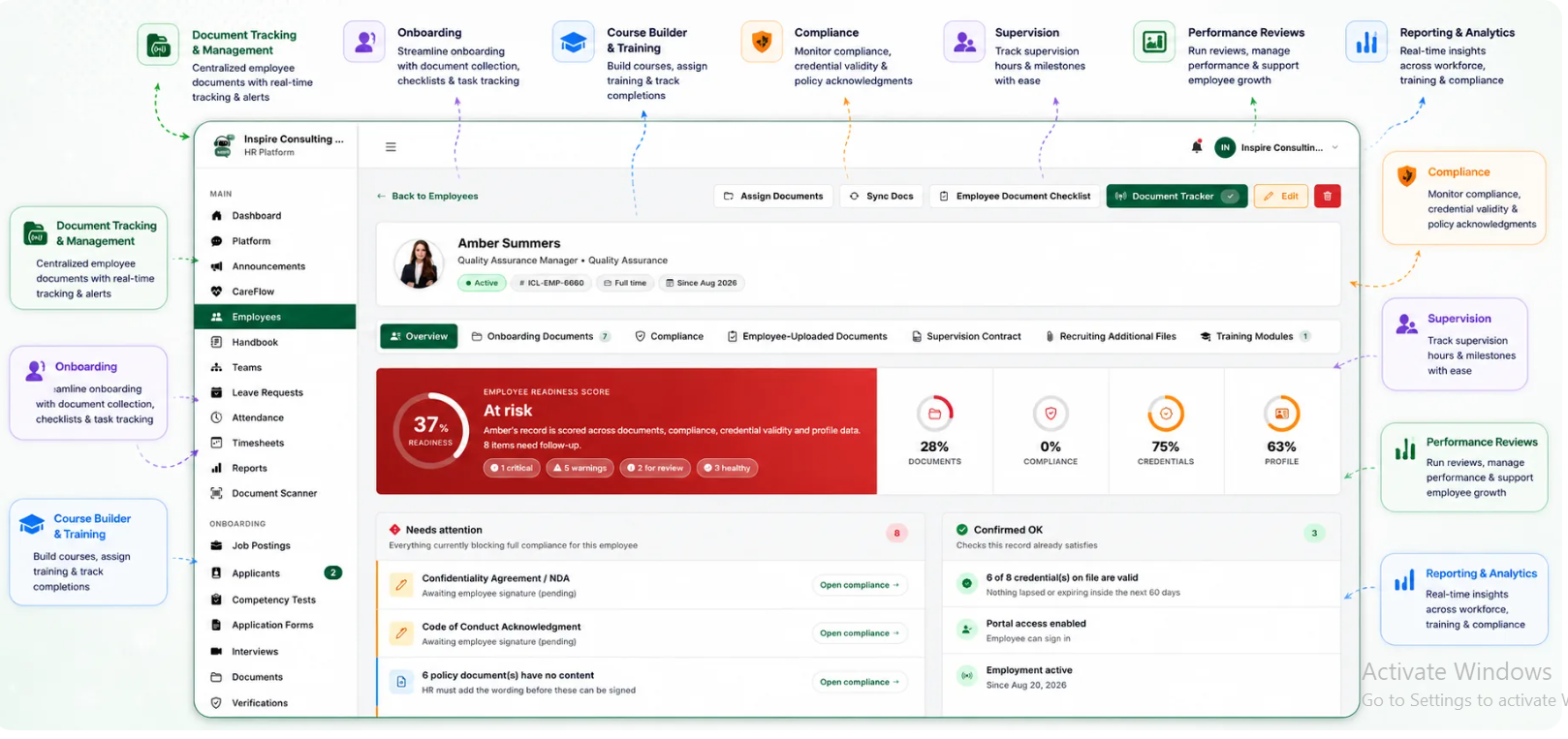
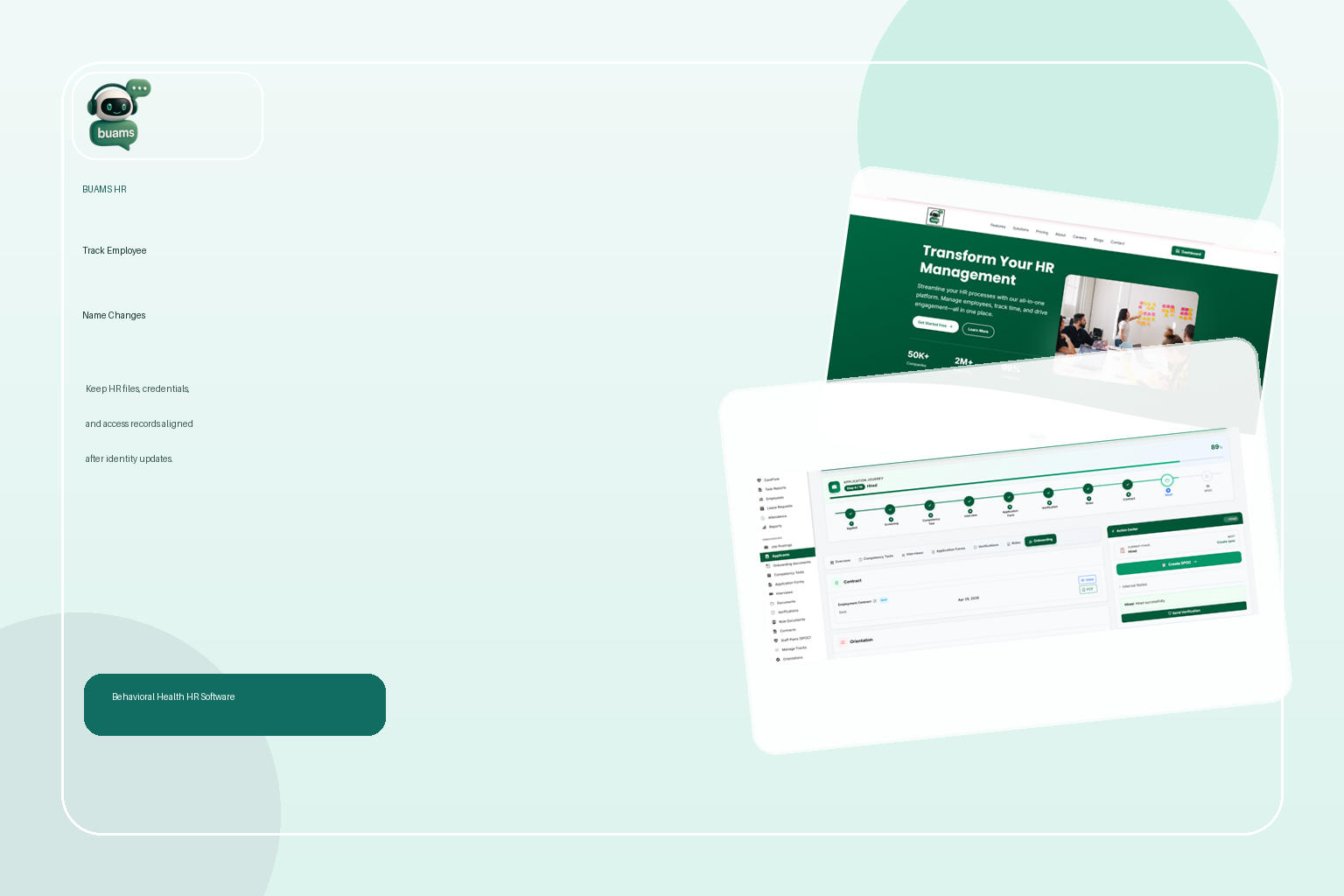
BUAMS HR helps behavioral health providers keep employee files, supporting documents, and workforce records organized in one system. That central structure gives HR teams a stronger foundation for managing sensitive updates like name changes while keeping documentation, approvals, and record history easier to review.
For multi-site and compliance-sensitive providers, centralized employee records reduce the risk that identity updates are handled differently by each program or supervisor. BUAMS HR supports cleaner recordkeeping, better workflow visibility, and more consistent follow-up when HR changes affect access, documentation, and workforce readiness.
By keeping employee information more organized and easier to reconcile, BUAMS HR helps providers complete name change workflows with less confusion and stronger documentation control.
Final Thoughts
Employee name change tracking software gives behavioral health providers a more dependable way to manage identity updates across HR, compliance, and operations. When requests, documents, follow-up tasks, and related records are handled through one structured process, organizations can reduce mismatches and protect both privacy and accuracy.
For providers that want cleaner employee records and fewer downstream errors, BUAMS HR offers a practical foundation for keeping name change workflows organized, consistent, and easier to complete from start to finish.