Behavioral health providers need a dependable way to handle employee concerns before they turn into larger workforce, compliance, or leadership problems. When grievances are reported through hallway conversations, inbox threads, or disconnected notes, HR can lose track of what was raised, who responded, and whether follow-up was completed. That creates risk for fairness, documentation quality, and organizational trust.
Employee grievance tracking software gives HR teams a more structured way to receive workplace concerns, document review steps, preserve supporting records, and monitor resolution timelines. For behavioral health organizations managing multiple programs, supervisors, and high-pressure care environments, that structure helps reduce inconsistency while protecting confidentiality and follow-through.
Key Takeaways
What Is Employee Grievance Tracking Software?
Employee grievance tracking software is a structured system for logging workplace concerns, routing them to the right reviewers, preserving documentation, and tracking each case from intake through resolution. A grievance may involve supervisor conduct, workplace conflict, policy concerns, scheduling disputes, fairness complaints, retaliation concerns, or other employee relations issues that require careful review.
Instead of treating each concern like a one-off conversation, the software creates a controlled process. HR can record the intake date, summarize the issue, identify involved parties, assign the next step, attach supporting notes or files, and document what resolution actions were taken. That matters because the value of a grievance process is not only hearing the concern. It is being able to show that the organization responded in a timely, consistent, and well-documented way.
Why It Matters for Behavioral Health Providers
Behavioral health organizations operate in settings where employee concerns can affect workforce stability, supervisor credibility, and service continuity. A complaint about workload, schedule fairness, supervision quality, or workplace conduct may initially look like a routine employee relations issue, but if it is handled informally, the impact can spread. Staff may lose confidence in leadership, managers may respond inconsistently, and HR may struggle to reconstruct what happened when questions arise later.
The operational complexity is also real. Multi-site providers may have different supervisors involved, different witnesses, and different follow-up expectations depending on the setting. Some concerns need quick fact-finding, while others require a longer internal review with careful documentation controls. Without one reliable workflow, details get fragmented across interviews, emails, shared drives, and verbal updates.
Employee grievance tracking software helps organizations stay organized under that pressure. It gives HR a clearer view of open cases, overdue steps, repeated themes, and documentation completeness so leaders can respond more consistently and with less manual chasing.
Common Problems With Manual Grievance Handling
These gaps create avoidable risk because the organization may believe it addressed the issue, but the documentation trail is weak. In sensitive employee relations matters, a weak record can be almost as damaging as a delayed response.
What to Look for in Employee Grievance Tracking Software
Centralized case intake
The system should make it easy to open a grievance record with standard fields for date, concern type, involved parties, reporting channel, and immediate risk notes. Standard intake improves consistency and reduces the chance that important facts are left out.
Confidential access controls
Employee grievance records often contain sensitive information. The software should support controlled visibility so only authorized HR leaders and designated reviewers can access case details, while still allowing appropriate operational coordination when needed.
Task and timeline management
A strong workflow should show who owns the next action, when it is due, and whether the case is still open. Intake without deadline visibility is one of the main reasons follow-up becomes inconsistent.
Investigation documentation
HR teams need a place to store interview notes, attachments, policy references, witness statements, and resolution summaries in a way that stays linked to the case. That structure makes later review much easier than rebuilding the timeline from multiple sources.
Trend reporting
Leadership should be able to identify recurring themes such as repeated complaints in one program, concerns tied to one policy area, or patterns that suggest a training or supervision problem. Reporting turns individual case handling into a broader workforce improvement tool.
Best Practices for a Fair and Defensible Process
Start by defining what counts as a grievance and where employees should raise concerns. If staff do not know how to report an issue, they will use whatever path feels easiest in the moment, which often creates a poor documentation trail. Clear intake options and basic response expectations help HR capture concerns earlier and more consistently.
Next, separate intake from conclusion. A grievance record should begin with the employee's stated concern, but the final outcome should only be documented after review steps are completed. That distinction helps avoid premature assumptions and gives HR a cleaner record of facts, findings, and response actions.
It also helps to standardize case milestones such as initial acknowledgment, fact-finding, leadership review, resolution decision, and follow-up check. When those milestones are visible, HR can manage employee relations work with less ambiguity and fewer stalled cases.
Finally, review grievance data over time. If the same issue appears across sites or supervisors, the right response may involve training, policy clarification, or workflow redesign rather than handling each concern as an isolated event. Good software supports both case resolution and organizational learning.
How BUAMS HR Helps
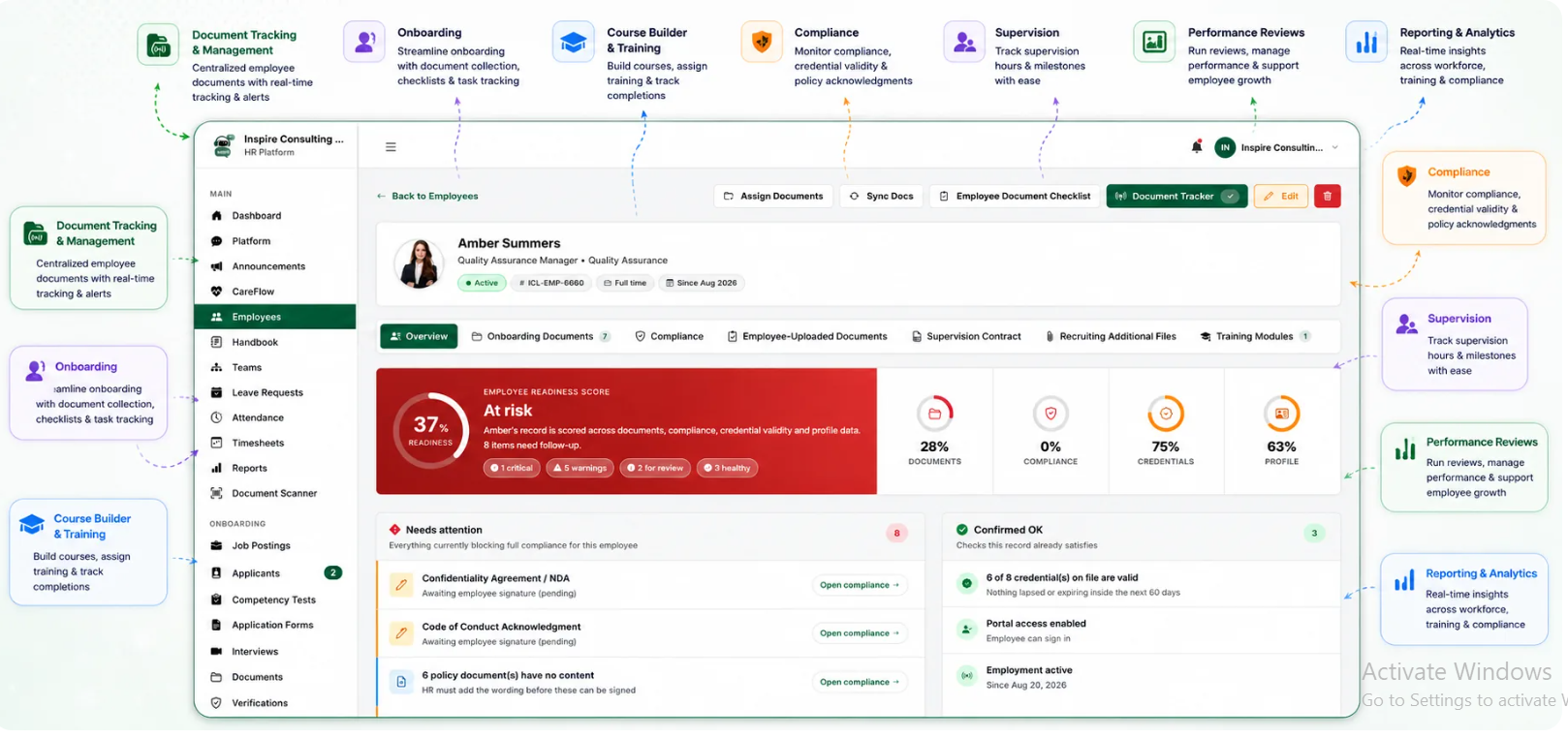
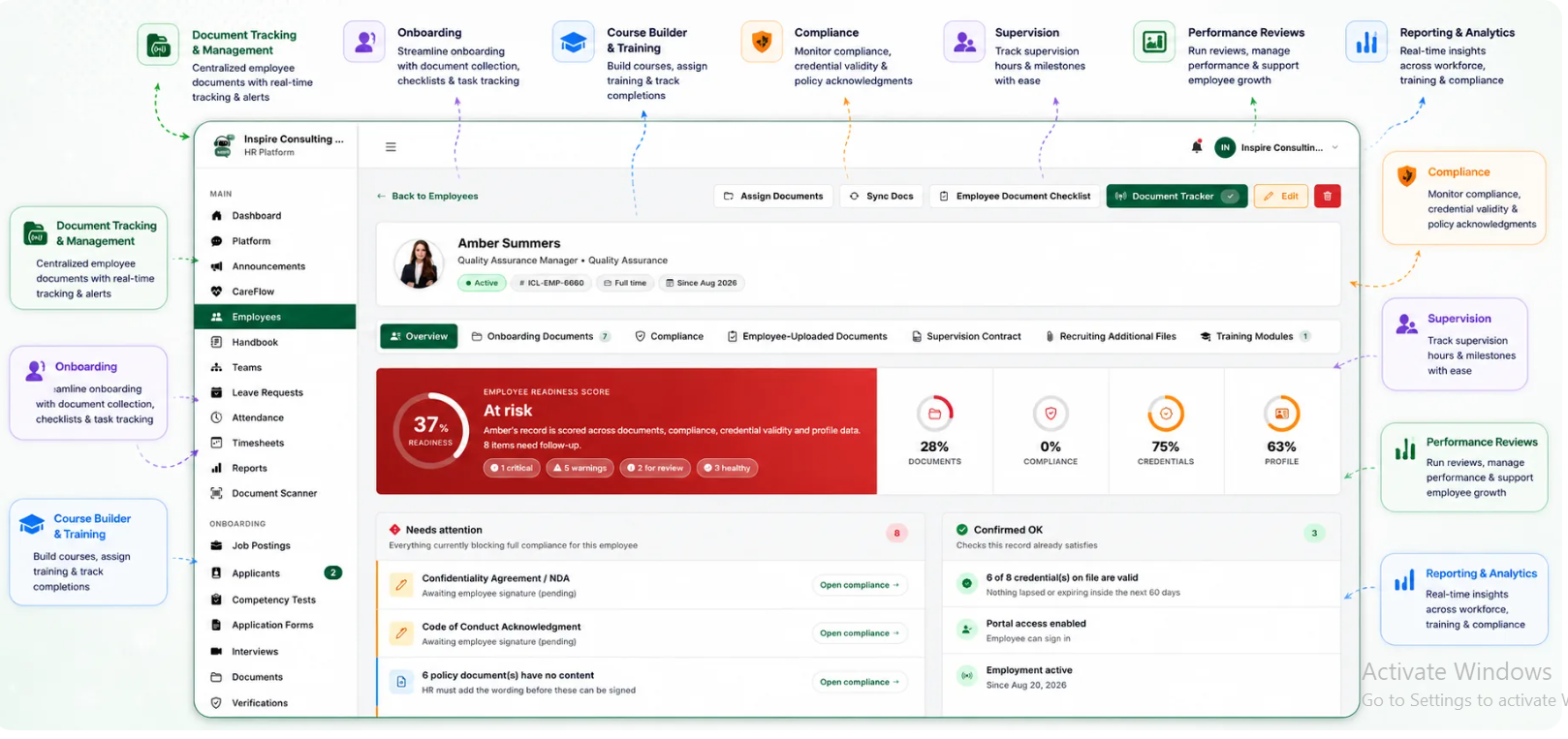
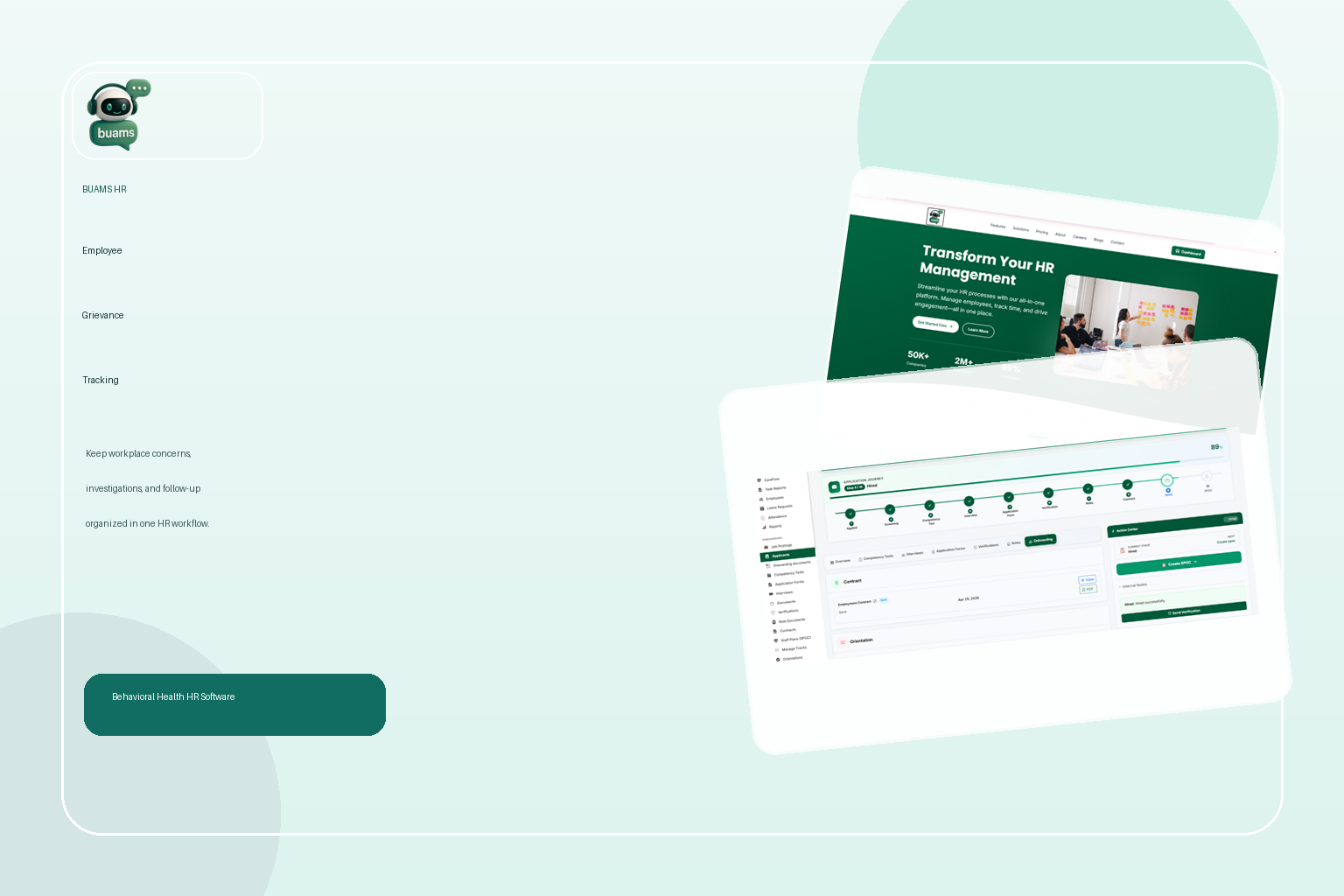
BUAMS HR helps behavioral health providers organize employee records, HR documentation, and workflow visibility in one system. That foundation makes it easier to manage grievance-related information alongside supervisor relationships, policy acknowledgments, employee files, and other documentation that may matter during a review.
With a centralized HR platform, organizations can reduce the fragmentation that often slows employee relations work. HR teams can keep case-related notes and supporting files more organized, maintain clearer visibility into open follow-up items, and support more consistent documentation practices across programs and locations.
For providers that want stronger workforce oversight without adding another disconnected process, BUAMS HR offers a practical way to bring structure to sensitive employee concerns while preserving a cleaner record of what happened and what the organization did next.
Final Thoughts
Employee grievance tracking software helps behavioral health providers move from informal issue handling to a more reliable, review-ready process. When intake, documentation, deadlines, and follow-up stay organized in one workflow, HR can respond faster, protect confidentiality more effectively, and support more consistent leadership decisions.
For organizations that want a better way to document workplace concerns, investigations, and resolution steps, BUAMS HR provides a stronger operational foundation than scattered spreadsheets and inbox-based follow-up.