Behavioral health providers often hire clinicians, counselors, and support staff whose role eligibility depends on provisional, graduate, associate, or otherwise time-bound professional licenses. Those employees can be ready to contribute quickly, but they also require closer tracking around supervision assignments, renewal dates, documentation updates, and role restrictions. When that information lives across spreadsheets, inboxes, and disconnected personnel files, HR teams are left reacting to issues instead of preventing them.
Provisional license tracking software gives behavioral health organizations a more reliable way to monitor these moving pieces in one workflow. Instead of discovering a problem when a renewal is late or a supervisor assignment is unclear, HR can see upcoming deadlines, missing documents, and open follow-up tasks before they affect staffing decisions. For organizations operating across multiple programs or sites, that visibility helps protect both compliance and day-to-day workforce readiness.
Key Takeaways
What Is Provisional License Tracking Software?
Provisional license tracking software is a structured system for managing credentials that carry added conditions, limited terms, or supervision requirements before a staff member reaches full licensure. In behavioral health, those credentials may include associate, graduate, resident, trainee, or provisional licenses depending on the profession and jurisdiction. The software helps HR and operations teams record key dates, attach supporting documentation, confirm oversight arrangements, and track required follow-up before deadlines are missed.
This matters because provisional credentials are not just another date field in an employee record. They often affect what services a person may provide, which supervisor must be assigned, what documentation must stay current, and whether the employee can remain in a given role without interruption. Better tracking makes those rules visible before they turn into staffing or compliance problems.
Why It Matters for Behavioral Health Providers
Behavioral health organizations regularly balance hiring urgency with credential discipline. A provider may need to bring on associate-level clinicians quickly to support caseload growth, school-based services, community programs, or expanding outpatient demand. But once those hires start, the organization still needs to monitor supervision structures, application milestones, renewal windows, and any role limitations tied to the provisional credential.
If that process is weak, the impact spreads fast. A supervisor assignment may not be documented clearly. A renewal deadline may sit in one spreadsheet while the employee file stays outdated somewhere else. A program leader may assume the employee is fully cleared for duties that still depend on active oversight or updated proof. Provisional license tracking software helps behavioral health providers reduce those risks by creating a cleaner source of truth.
The need is even greater for multi-site organizations and providers working across Maryland, DC, or neighboring jurisdictions where credential rules may vary by role and discipline. HR teams need a way to keep staff readiness organized without rebuilding the process for every employee or license type.
Common Problems With Manual Tracking
These issues create avoidable rework because the organization may technically have the information, but not in a format that is timely, centralized, or easy to review. During audits, internal reviews, or staffing escalations, that fragmentation becomes hard to defend.
What to Look for in Provisional License Tracking Software
Credential Expiration and Renewal Visibility
The software should make it easy to record initial issue dates, expiration dates, renewal deadlines, and other milestone dates tied to a provisional credential. HR should be able to identify what is coming due soon, what is overdue, and what has already been updated.
Supervision Assignment Tracking
Many provisional credentials depend on documented supervisory oversight. A strong system should show who is assigned to supervise the employee, when that assignment was updated, and whether any required supporting information has been collected. That visibility matters when supervisors change roles, leave the organization, or take on too many reports at once.
Employee File Integration
Credential tracking works better when it stays connected to the employee record. HR should not need to search one folder for a license, another spreadsheet for dates, and a separate email thread for status notes. Centralized records reduce confusion and make follow-up easier to complete.
Document Collection and Status Notes
Provisional license workflows often involve more than one file. Organizations may need copies of the credential, supervision agreements, updated applications, role approvals, or milestone confirmations. The software should support organized storage and clear notes so the current status is easy to understand.
Alerts and Ownership
A good process requires more than passive recordkeeping. The system should make follow-up visible to the right people, whether that means HR, a clinical leader, or an assigned supervisor. When ownership is unclear, deadlines slip even when everyone assumes the work is being handled.
Reporting Across Roles and Programs
Leadership should be able to review provisional-license risk across teams, locations, or disciplines. If one service line has several upcoming renewals or a cluster of staff waiting on supervision documentation, that should be visible before it affects coverage.
Best Practices for a Stronger Workflow
Start by separating provisional-license tracking from general credential storage. While both belong in the broader employee record, provisional credentials usually need additional milestone management. Treating them as a higher-attention workflow helps HR prioritize the cases that are most likely to cause preventable disruption.
Next, define exactly what must be present for each employee to be considered ready. That may include the active provisional credential, a documented supervisor assignment, role-specific approvals, and any jurisdiction-specific supporting records. Clear readiness standards reduce the chance that different managers make different assumptions about who is fully cleared.
It is also smart to review supervisor changes as part of the workflow. If a clinician with a provisional credential changes sites or reporting lines, the organization should confirm that the supervision arrangement is still appropriate and still documented. Software helps by keeping those dependencies visible instead of relying on memory.
Finally, review trends over time. If provisional renewals are frequently late or supervision documents are often incomplete, the organization may need earlier reminders, more defined ownership, or stronger intake steps during hiring and onboarding. The right software supports prevention as much as recordkeeping.
How BUAMS HR Helps
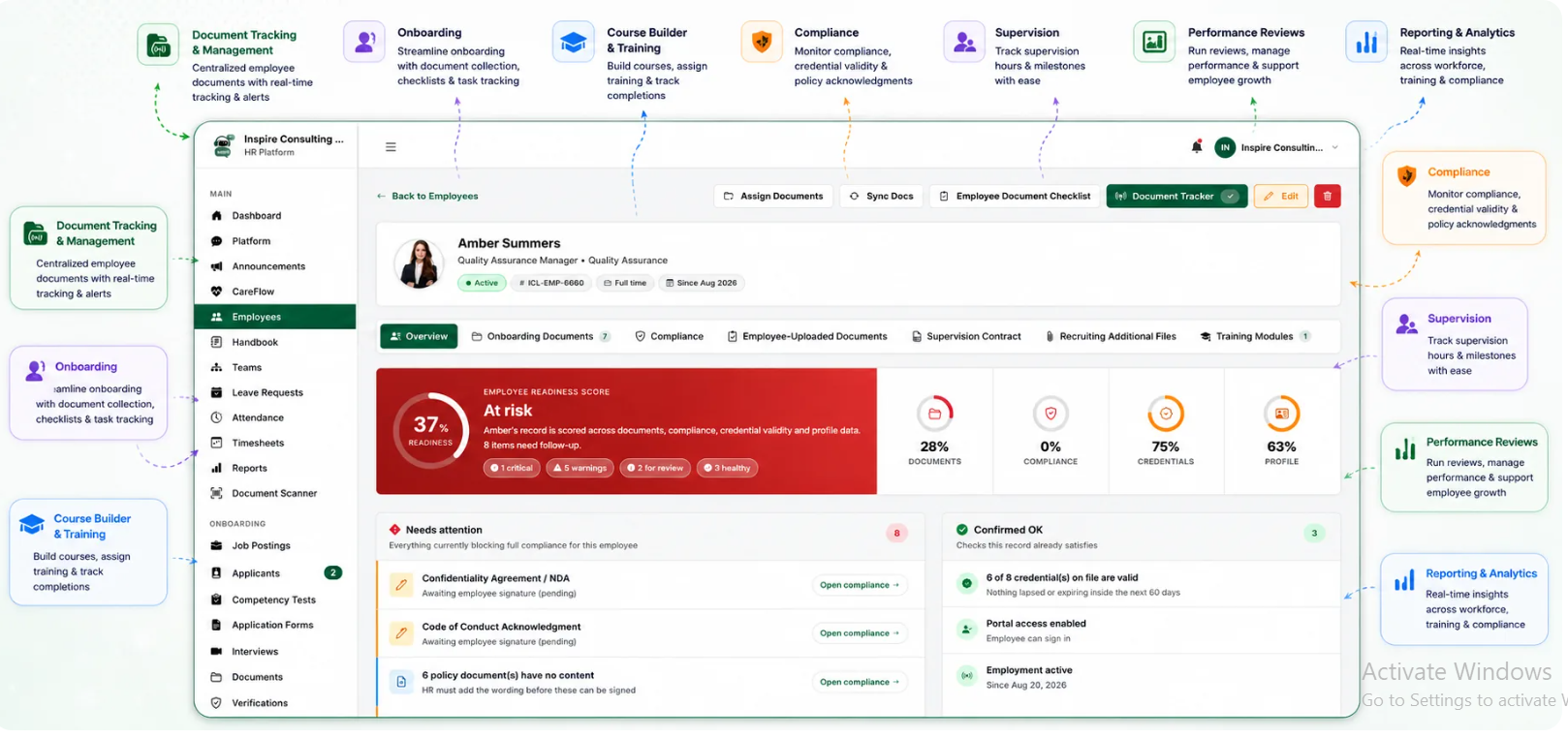
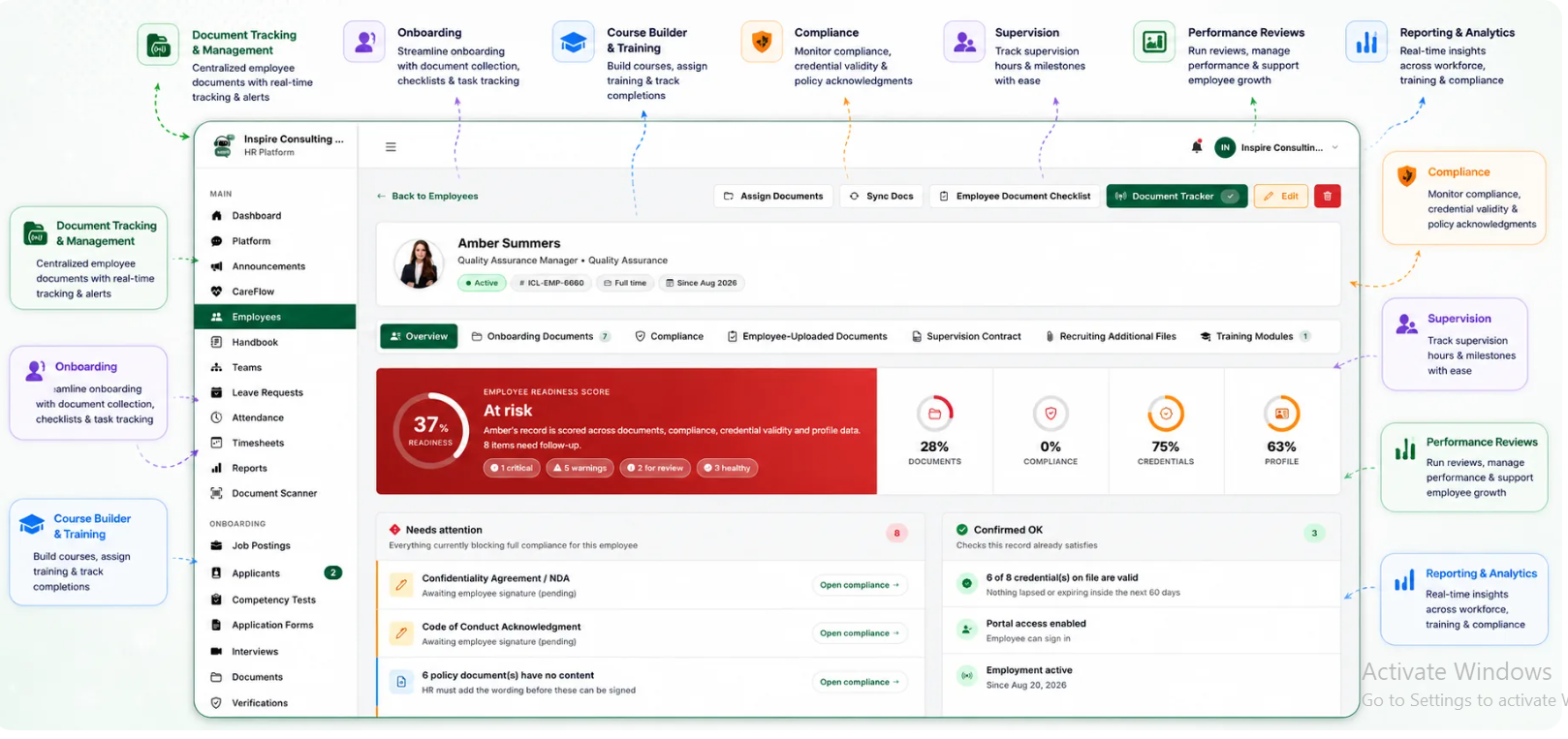
BUAMS HR helps behavioral health providers keep employee records, HR documentation, and compliance-sensitive follow-up organized in one system. That structure makes it easier to track provisional credentials alongside related documents, supervisor assignments, and workforce status details without depending on disconnected tools.
For organizations managing multiple sites, growing clinical teams, or varied role requirements, centralized visibility matters. BUAMS HR supports a more consistent process for monitoring deadlines, preserving documentation, and reducing the chance that provisional-license follow-up is lost during staffing changes or day-to-day administrative pressure.
By keeping employee information and supporting files connected, BUAMS HR helps providers handle provisional-license oversight with better control and less manual chasing.
Final Thoughts
Provisional license tracking software gives behavioral health providers a practical way to stay ahead of supervision requirements, renewal dates, and role eligibility questions before they create operational stress. When HR teams can see the full picture in one workflow, they are better positioned to support hiring speed without sacrificing documentation quality.
For providers that want clearer credential oversight and stronger workforce readiness, BUAMS HR offers a more organized foundation for managing provisional-license follow-up across programs, supervisors, and employee records.