Employee File Management Software for Behavioral Health Providers: How to Keep HR Records Organized, Secure, and Audit-Ready
Behavioral health organizations depend on accurate employee records to support hiring, compliance, credential management, performance tracking, and day-to-day workforce operations. As organizations grow across multiple clinics, residential programs, outpatient services, and community-based locations, managing employee files manually becomes increasingly difficult. Documents end up scattered across filing cabinets, shared folders, email attachments, and personal desktops, making it harder to locate important information when it is needed.
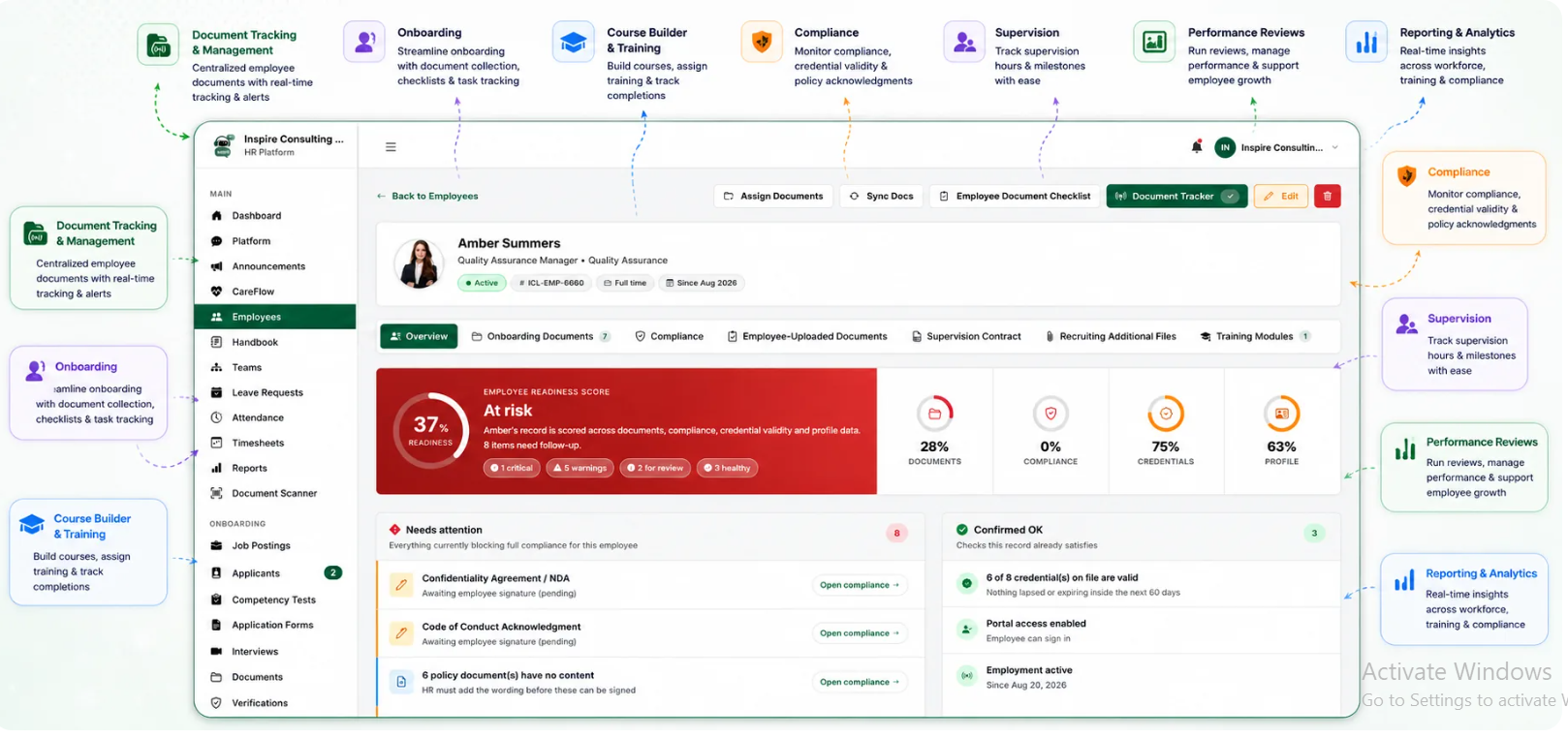
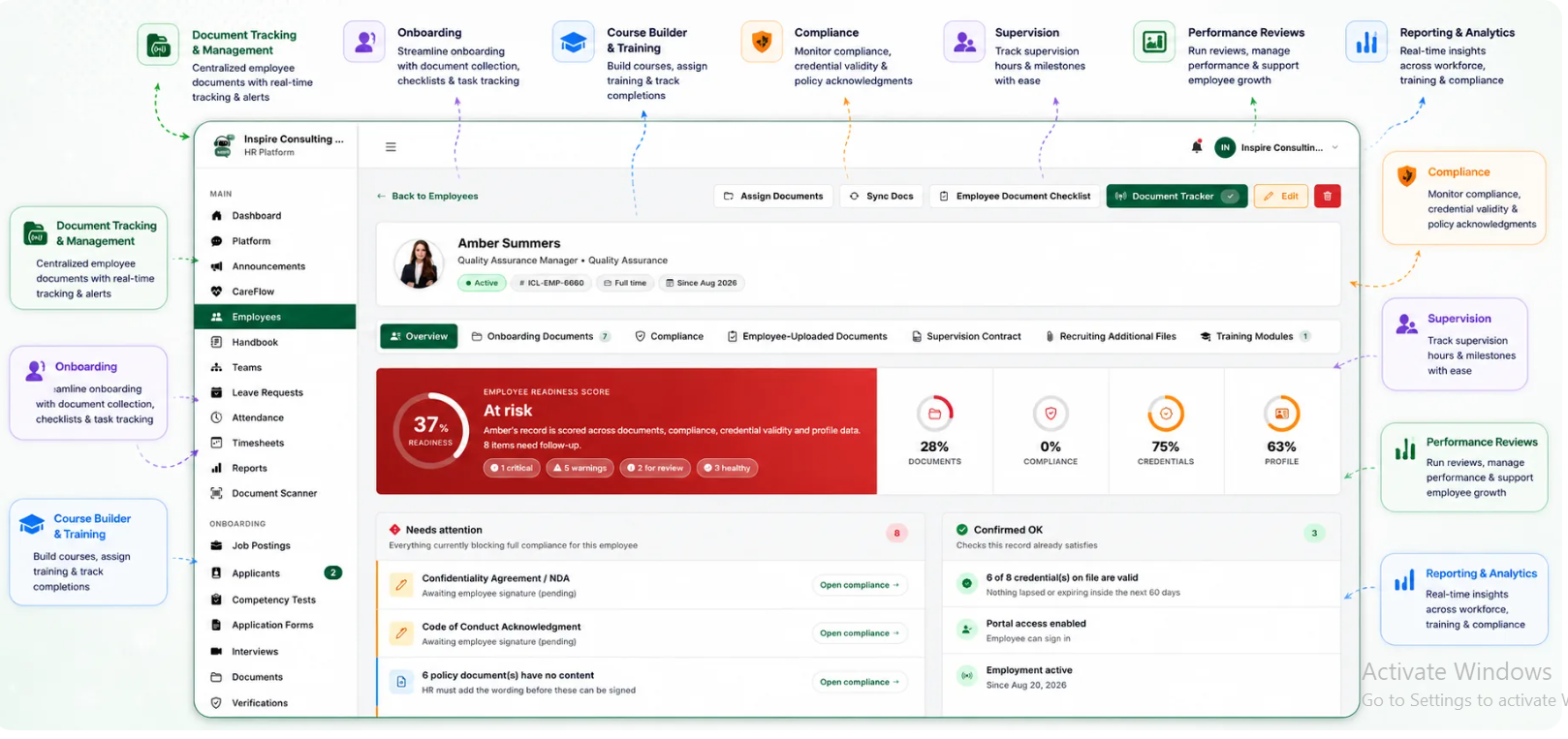
Employee file management software provides a centralized way to organize HR records throughout the employee lifecycle. Instead of relying on disconnected storage methods, organizations can securely maintain employment documents, certifications, acknowledgments, evaluations, policy forms, and other workforce records in one place.
For behavioral health providers, where documentation accuracy directly supports compliance and operational readiness, having a structured employee file system helps reduce administrative burden while improving confidence in HR processes.
Key Takeaways
- Centralize employee documents in one secure location.
- Reduce time spent searching for HR records.
- Improve compliance with organized documentation.
- Support audits with complete employee file histories.
- Keep certifications, licenses, and employment documents easily accessible.
- Improve collaboration between HR, supervisors, and leadership while protecting sensitive information.
- Eliminate dependence on paper files and scattered email attachments.
What Is Employee File Management Software?
Employee file management software is a digital system that stores, organizes, and manages workforce documentation throughout an employee's employment. Rather than maintaining separate folders across physical cabinets and computer drives, HR teams can keep all employee-related records connected within a centralized platform.
Typical employee records include:
- Employment applications
- Offer letters
- Job descriptions
- Identification documents
- Licenses and certifications
- Performance evaluations
- Training records
- Signed policy acknowledgments
- Disciplinary documentation
- Promotion records
- Compensation change documentation
- Separation paperwork
Instead of searching multiple systems, HR professionals can quickly locate complete employee records whenever information is required.
Why Employee File Management Matters in Behavioral Health
Behavioral health organizations often employ clinicians, therapists, counselors, case managers, administrative staff, nurses, billing specialists, and support personnel across multiple service locations. Every employee generates documentation throughout their employment.
When files are incomplete or difficult to locate, organizations may experience delays in:
- Employment verification
- Internal audits
- Compliance reviews
- Supervisor transitions
- Performance evaluations
- Credential verification
- Employee transfers
- HR investigations
Missing documentation also creates unnecessary stress during regulatory reviews because HR teams spend valuable time reconstructing employee histories instead of simply retrieving organized records.
Employee file management software creates consistency by ensuring every document has a designated location, making employee information easier to maintain over time.
Common Challenges With Manual Employee File Management
Many behavioral health providers still rely on a combination of paper files, shared network folders, and email attachments to store employee documentation. While these methods may work initially, they become increasingly difficult to manage as organizations expand.
Common challenges include:
- Documents stored across multiple locations.
- Duplicate versions of the same file.
- Missing signatures.
- Difficulty locating historical records.
- Limited visibility into incomplete employee files.
- Manual tracking of certifications and licenses.
- Time-consuming audit preparation.
- Security concerns related to unauthorized document access.
- Lost paperwork during employee transfers.
- Inconsistent filing practices between departments.
These challenges often result from outdated processes rather than a lack of effort.
Features to Look for in Employee File Management Software
Centralized Digital Employee Files
Every employee should have a single digital profile where HR documents remain organized throughout their employment. This eliminates the need to search through multiple folders or storage systems.
Secure Document Storage
Employee records contain sensitive information that requires appropriate protection. Secure storage helps organizations maintain confidentiality while ensuring authorized personnel can access documents when needed.
Document Categories
Organizing files into categories makes records easier to locate. Examples include:
- Hiring Documents
- Compliance Forms
- Certifications
- Performance Reviews
- Payroll Documents
- Training Records
- Separation Documentation
Consistent organization improves both efficiency and record accuracy.
Version History
Policies, agreements, and employee documents often change over time. Maintaining version history allows HR teams to understand which document was active during a specific period while preserving historical records.
Search and Filtering
Searching by employee name, department, supervisor, document type, or location saves significant administrative time compared to manually reviewing folders.
Permission-Based Access
Not every user should have access to every document.
Role-based permissions help organizations limit document visibility while allowing supervisors, HR staff, and leadership to access only the information appropriate for their responsibilities.
Audit History
Employee file management software should record when documents are uploaded, updated, viewed, or replaced. This provides transparency and strengthens documentation integrity during compliance reviews.
Best Practices for Managing Employee Files
Standardize Document Requirements
Determine which documents are required for every employee and ensure they are collected consistently during onboarding and throughout employment.
Use Consistent Naming Conventions
Standard document names reduce confusion and make records easier to locate in the future.
Keep Files Updated
Employee records should reflect promotions, transfers, certifications, supervisor changes, policy acknowledgments, and other workforce updates as they occur.
Perform Regular File Reviews
Periodic reviews help HR identify missing documentation before audits or compliance inspections.
Limit Document Access
Sensitive employee information should only be available to authorized personnel based on organizational responsibilities.
Retain Historical Records
Organizations should preserve important employment documentation according to internal policies and applicable retention requirements.
Benefits for Behavioral Health Providers
A structured employee file management process helps behavioral health providers:
- Improve HR efficiency.
- Reduce administrative workload.
- Strengthen documentation consistency.
- Support regulatory readiness.
- Simplify employee record retrieval.
- Improve collaboration between departments.
- Reduce paper storage.
- Protect confidential employee information.
- Create more reliable workforce records.
- Support long-term organizational growth.
Instead of spending time searching for paperwork, HR teams can focus more on supporting employees and organizational operations.
How BUAMS HR Helps
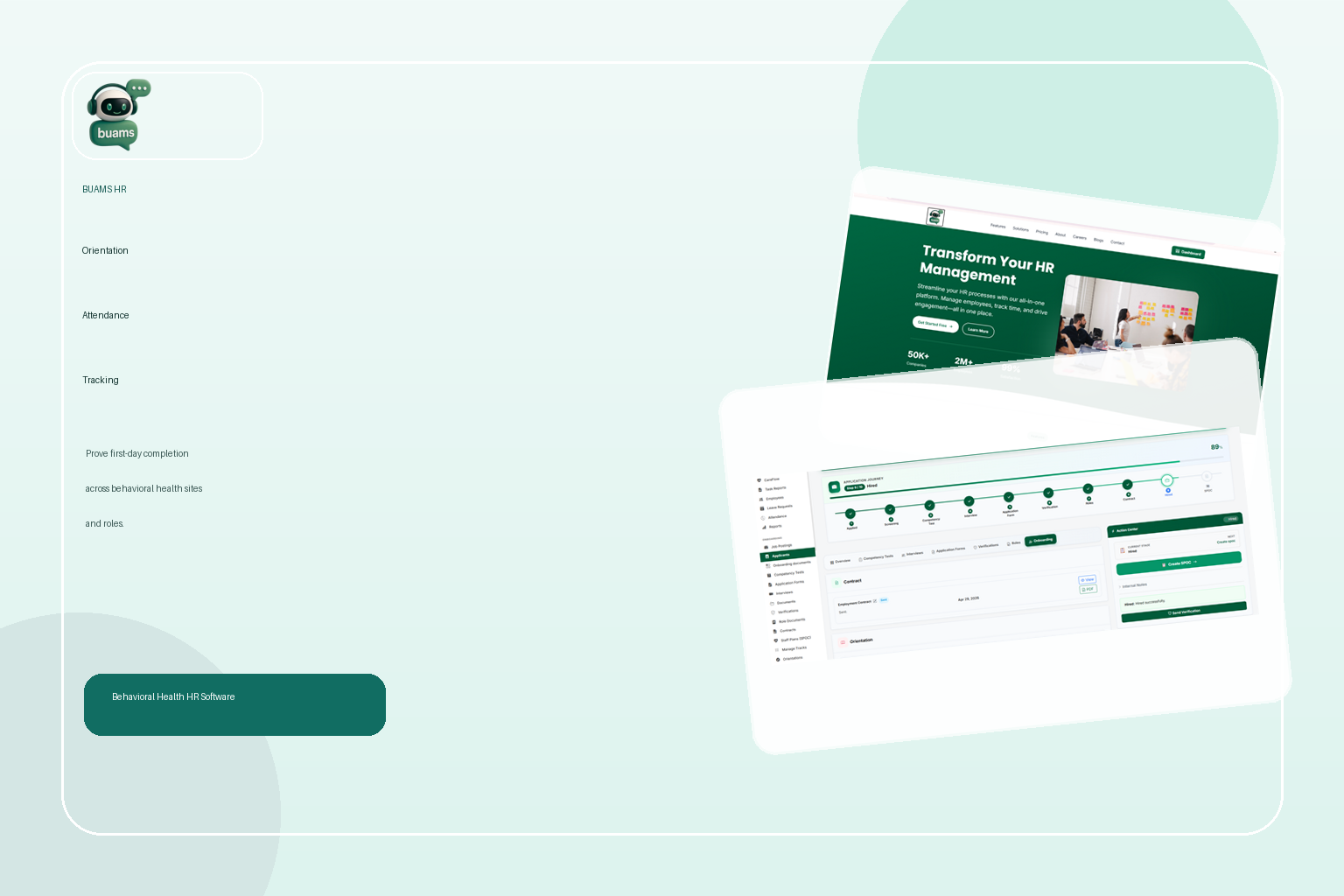
BUAMS HR helps behavioral health providers organize employee records within a centralized HR platform that supports documentation throughout the employee lifecycle.
By keeping employment documents, compliance records, acknowledgments, certifications, and workforce information connected in one system, organizations gain better visibility into employee records while reducing reliance on paper files and disconnected storage methods.
Whether managing employees across one location or multiple behavioral health programs, BUAMS HR helps HR teams maintain organized documentation that supports everyday operations and long-term compliance readiness.
Final Thoughts
Employee file management software helps behavioral health providers build a more organized, efficient, and reliable approach to maintaining workforce documentation. Centralized records reduce administrative effort, improve document accessibility, and help organizations stay prepared for audits, compliance reviews, and everyday HR operations.
As behavioral health organizations continue to grow, investing in structured employee file management creates stronger operational consistency while making it easier to support employees throughout every stage of their employment.
Organizations looking to simplify document management and maintain accurate employee records can benefit from a centralized solution like BUAMS HR that supports secure, organized, and efficient HR file management.