In behavioral health hiring, role readiness depends on more than filling a vacancy quickly. Providers need confidence that each employee or contractor meets the education expectations tied to the role, payer rules, internal job standards, and supervision model. When degree verification, transcript review, and qualification checks are handled through email threads or scattered file folders, the process becomes harder to track and easier to delay.
That is where employee education verification software becomes valuable. Instead of treating degree confirmation as a one-time hiring chore, organizations can build a repeatable workflow for collecting proof, reviewing completeness, documenting exceptions, and keeping qualification records connected to the employee file. This helps HR teams move faster without losing the documentation discipline that behavioral health operations require.
Key Takeaways
What Is Employee Education Verification Software?
Employee education verification software is a system for collecting, reviewing, and documenting the academic qualifications tied to hiring and workforce readiness. In behavioral health, that may include degree confirmation, transcript receipt, specialty coursework, internship evidence, or other education-related documents that support role eligibility.
The goal is not just to store a diploma image somewhere in the employee file. The stronger approach is to create a process that shows what was required, what was received, who reviewed it, whether anything is still pending, and how the verification status affects hiring or assignment decisions.
For organizations with multiple programs or several role types, this structure matters. Education requirements may differ between licensed clinicians, support staff, interns, supervisors, case management roles, and program-specific positions. Software helps turn those requirements into a documented workflow rather than a memory-based task.
Why Education Verification Can Slow Behavioral Health Hiring
Many hiring teams do not run into trouble because they ignore qualifications. They run into trouble because the proof is incomplete, arrives in stages, or gets separated from the rest of the employee record. A resume may indicate the right degree, but the transcript has not been received. A hiring manager may approve a candidate, but HR still needs documentation before final clearance. A program leader may assume a qualification standard was met, while the file tells a more complicated story.
Behavioral health providers also face pressure to hire quickly when caseloads rise or open positions affect service capacity. Under that pressure, manual qualification review can create bottlenecks. Teams chase schools for records, request replacement documents from candidates, and search inboxes to confirm whether someone already verified the file. The work is important, but the process is often fragmented.
When education verification is inconsistent, the consequences can spread beyond hiring speed. Providers may struggle to explain file completeness during internal review, discover missing documentation after onboarding, or lose time rechecking qualifications during role changes and audits.
Common Risks in a Manual Education Verification Process
A manual process can look manageable until volume increases or responsibilities are split across several people. Common problems include.
These gaps create rework and uncertainty. Even when the final documentation is available, teams lose time reconstructing the verification history instead of moving the hire or assignment forward confidently.
What to Look for in Employee Education Verification Software
Role-Based Qualification Requirements
The software should help organizations define what education proof is required for each role or program. That may include degree level, transcript requirements, specialization evidence, internship documentation, or internal approval steps for exceptions.
Status Visibility for Pending and Completed Reviews
HR teams need to know whether the education check is complete, pending documents, pending review, approved with an exception, or blocked. Clear status visibility keeps qualification review from disappearing inside the broader onboarding workload.
Centralized Document Storage
Verification works better when transcripts, diplomas, and related notes stay connected to the employee record. That reduces duplicate requests and makes later reviews easier during audits, role changes, and supervisor handoffs.
Documented Review History
Behavioral health organizations benefit from a system that records when documents were received, who reviewed them, what decision was made, and whether additional follow-up was required. That history matters when a file is questioned later.
Connection to Hiring and Readiness Workflows
Education verification should not sit in isolation. It should connect to onboarding, credential review, file completeness checks, and final employee readiness steps so teams can see whether missing academic proof is the reason a hire is still not cleared.
Best Practices for Stronger Qualification Verification
Start by identifying which roles truly require formal education review and what evidence is acceptable for each one. A standardized matrix helps prevent one program from over-documenting while another under-documents. It also gives recruiters and hiring managers a clearer explanation of what candidates need to provide before clearance.
Next, separate collection from approval. Receiving a transcript is not the same as verifying that it satisfies the role requirement. A stronger workflow makes that distinction visible so incomplete review does not look complete just because a file contains attachments.
It is also smart to define how exceptions should be handled. Some hires may begin with provisional documentation, pending transcripts, or approved substitutions. If that happens, the file should clearly show who approved the exception, what remains outstanding, and when the follow-up must occur.
Finally, revisit education verification during internal moves and program expansion. As organizations grow, employees may step into roles with different qualification standards. A connected system helps teams reuse the documentation already on file while still confirming whether the new role requires anything additional.
How BUAMS HR Helps
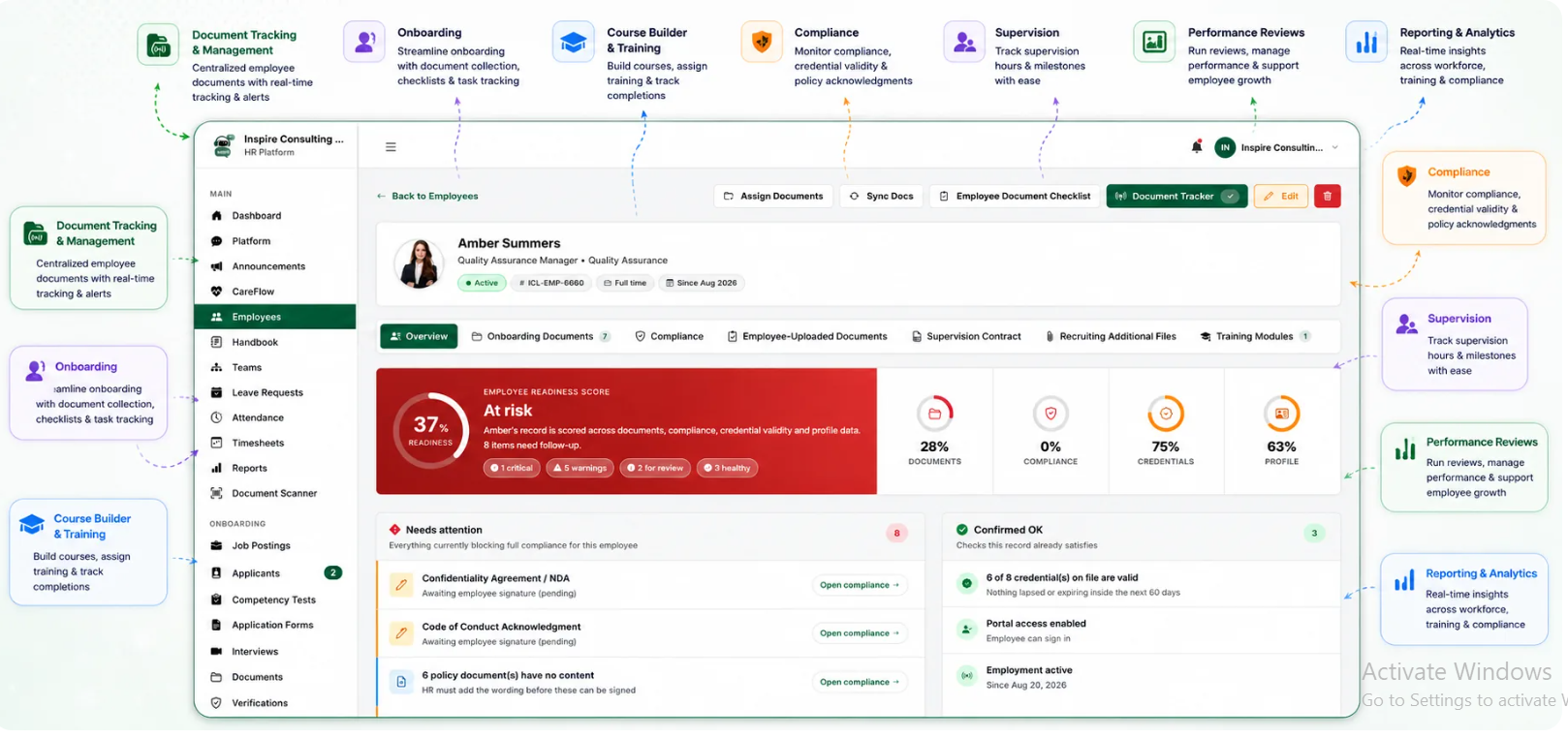
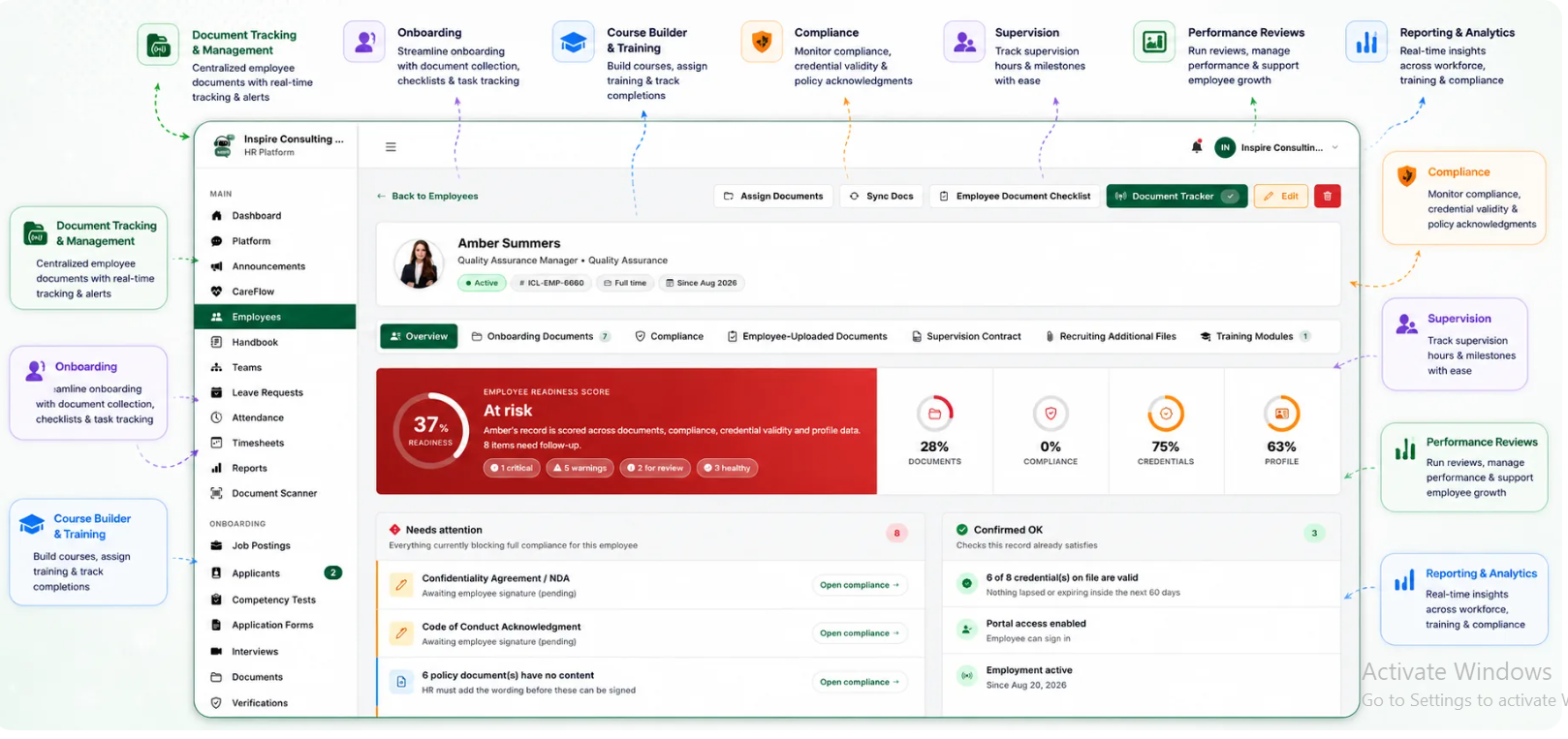
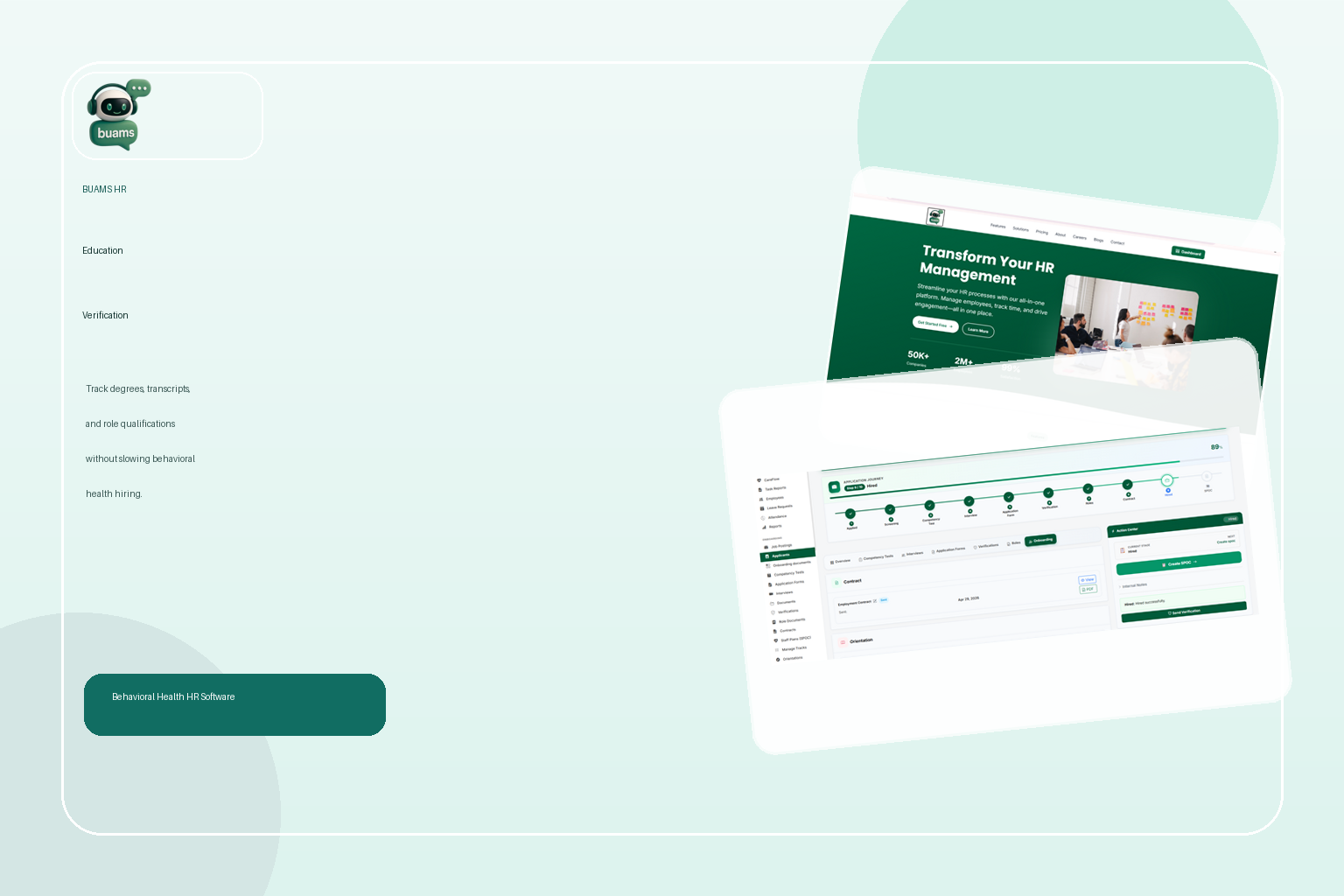
BUAMS HR helps behavioral health providers centralize the workforce records that support cleaner qualification review. Instead of treating education verification as a disconnected inbox task, organizations can keep employee files, supporting documents, onboarding progress, and compliance-related follow-up in one place.
That structure makes it easier for HR teams to see which hires are still pending documents, which files have already been reviewed, and where additional action is needed before role clearance. It also helps reduce duplicate requests and gives leaders a more reliable picture of workforce readiness across programs.
For providers that need both speed and documentation discipline, BUAMS HR supports a more consistent approach to education-related file review without adding unnecessary administrative friction.
Final Thoughts
Employee education verification software gives behavioral health providers a more dependable way to confirm academic qualifications, document review decisions, and keep hiring workflows moving. When records are centralized and status is visible, teams spend less time reconstructing what happened and more time clearing qualified people into the right roles.
For organizations that want stronger hiring controls without turning qualification review into a bottleneck, BUAMS HR offers a practical foundation for managing education verification alongside the rest of the employee lifecycle.