Behavioral health providers often put real effort into new-hire orientation, but many still struggle to prove exactly who attended, which sessions were completed, and whether each employee finished the required onboarding steps before working independently. A calendar invite or sign-in sheet may show that orientation was planned, but it rarely gives HR a reliable record that the right person completed the right orientation at the right time.
That gap becomes more serious when organizations hire across multiple programs, shift schedules, or service locations. Orientation attendance tracking software gives HR teams a structured way to document participation, connect attendance with employee records, and confirm that first-day readiness is more than a verbal assumption.
Key Takeaways
What Is Orientation Attendance Tracking Software?
Orientation attendance tracking software is a system used to record participation in new-hire orientation sessions and keep that proof tied to the employee’s HR record. Instead of relying on paper sign-in sheets, scattered spreadsheets, or separate emails from trainers, the software creates a clearer record of who attended, which sessions were completed, and what still needs follow-up.
In behavioral health settings, orientation often includes more than a generic welcome meeting. Employees may need policy review, safety training, documentation instruction, role-specific supervision guidance, and program-level onboarding before they are fully ready. Tracking attendance across those pieces is what turns orientation from a loose event into a defensible workflow.
Why Attendance Proof Matters in Behavioral Health
Behavioral health organizations operate in environments where new employees can affect client safety, documentation quality, supervision coverage, and compliance readiness almost immediately. If HR cannot confirm that orientation was actually completed, it becomes harder to show that the employee was properly prepared before being placed into active work.
The risk is not only regulatory. Missed or undocumented orientation can also create operational confusion. A supervisor may assume HR already covered confidentiality expectations. HR may assume a trainer reviewed documentation standards. A site leader may believe a new hire completed safety content when the employee only attended the general welcome portion. When attendance records are fragmented, these handoff errors are easy to miss.
Reliable attendance tracking helps providers answer practical questions quickly: Did the employee attend the required session? Was the session completed before the start date? What make-up training is still open? Which site or program handled the orientation? Those answers matter when staffing moves quickly and leadership needs confidence in workforce readiness.
Common Problems Manual Tracking Creates
These issues usually do not look dramatic at first. They show up as repeated clarifying emails, inconsistent start-date decisions, and last-minute searches for proof that should have been easy to find all along.
What to Look for in Orientation Attendance Tracking Software
Employee-Level Attendance Records
The system should tie each orientation session back to the individual employee record, not just to a class roster. HR should be able to open a file and see what the employee completed, what date it happened, and what still remains open.
Role and Site-Specific Requirements
Behavioral health orientation is rarely identical across every position. Good software should support different requirements by role, program, or location so staff are not marked complete based on a one-size-fits-all checklist.
Missed Session Follow-Up
Attendance tracking is most useful when it shows exceptions clearly. If an employee misses a session, arrives late, or needs a make-up module, the workflow should keep that item visible until it is resolved.
Connected Documentation
Attendance data is stronger when it can live alongside related onboarding records such as policy acknowledgments, file documents, and supervisor readiness steps. That connection gives HR a fuller picture of whether orientation completion actually supports start-date readiness.
Reporting for Readiness Reviews
Leaders should be able to review who is orientation-complete, which sessions have lower completion rates, and where unresolved onboarding gaps are concentrated. That visibility helps organizations improve the process instead of only reacting when something is missing.
Best Practices for Using Orientation Attendance Tracking Software
Start by defining which orientation sessions are mandatory for each employee group. Separate enterprise-wide topics from site-level or role-specific topics so completion standards are clear from the beginning. When requirements are vague, attendance records become less meaningful because nobody agrees on what “complete” actually means.
Next, standardize how attendance is captured. Whether orientation happens in person, virtually, or in a blended format, the organization should use one repeatable method for marking attendance, noting partial completion, and documenting make-up sessions. Consistency matters more than the format itself.
It is also smart to treat attendance proof as part of start-date control, not just training history. If required orientation is incomplete, that status should remain visible to HR and supervisors so work assignments are not made on the assumption that all onboarding content is done.
Finally, review attendance trends over time. If the same sessions are frequently missed, delayed, or documented late, the issue may be with scheduling design, trainer capacity, or unclear ownership. Better software helps organizations find those patterns before they turn into recurring readiness problems.
How BUAMS HR Helps
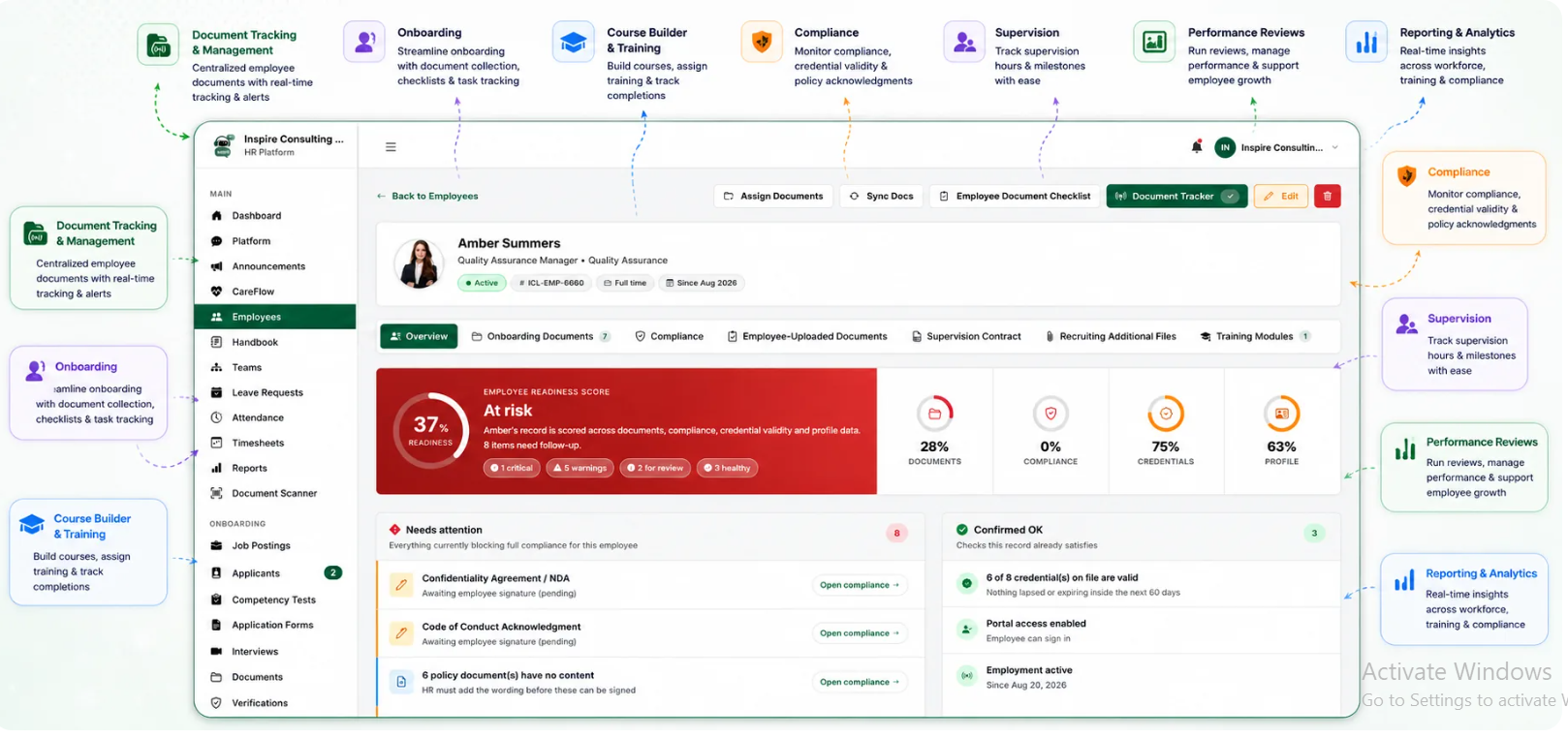
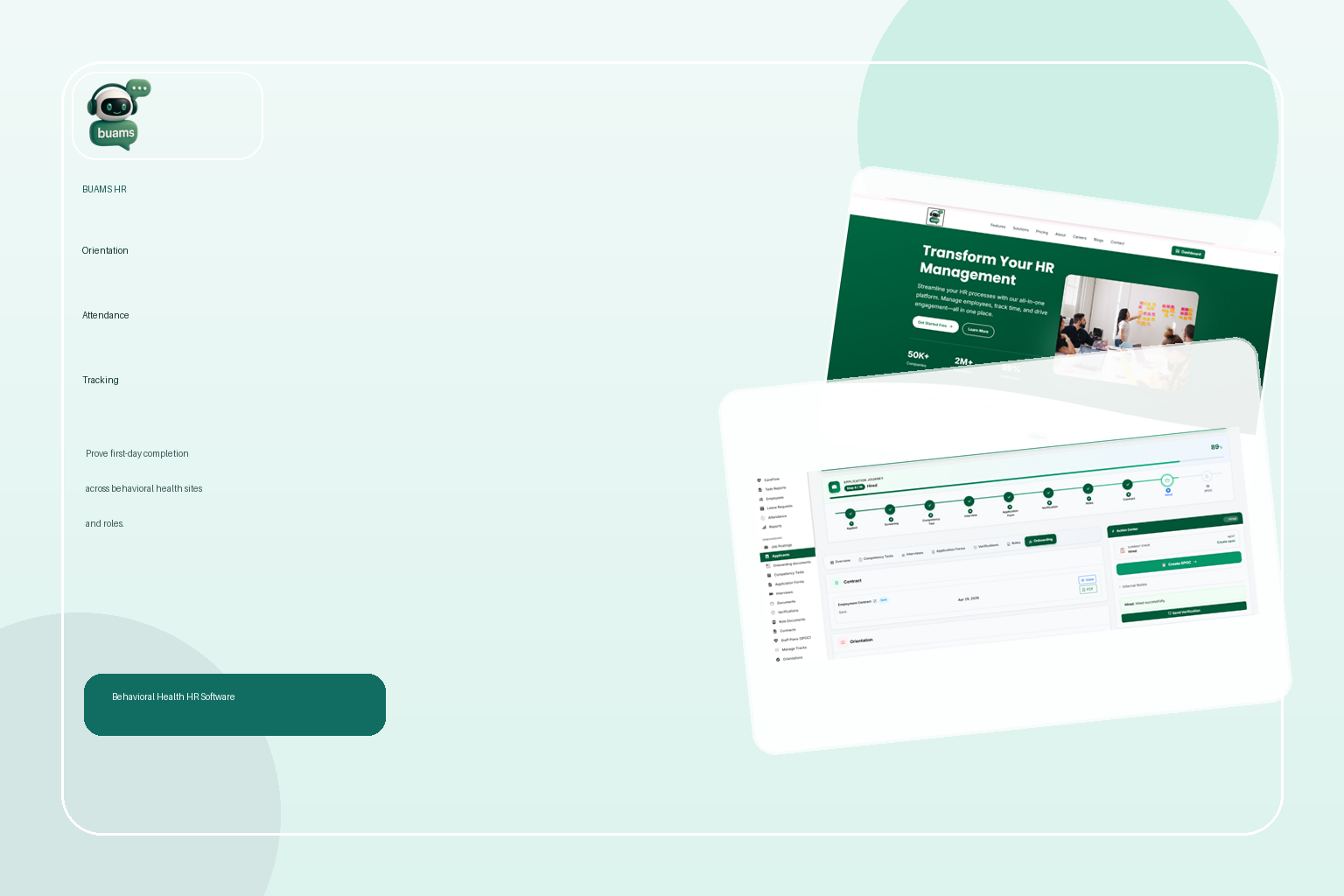
BUAMS HR helps behavioral health providers keep onboarding and employee record workflows more centralized, which makes orientation attendance easier to document and review. Instead of scattering proof across email threads, shared drives, and separate trackers, teams can maintain clearer visibility into what each employee has completed and which follow-up steps are still open.
That structure is especially useful for organizations managing multiple sites, programs, and supervisors. HR can support a more consistent orientation process, leadership can see readiness gaps faster, and employee files are easier to defend when completion evidence is stored in an organized system.
By connecting attendance proof with broader onboarding and documentation workflows, BUAMS HR helps providers reduce ambiguity around first-day readiness and improve confidence in the records behind new-hire preparation.
Final Thoughts
Orientation attendance tracking software gives behavioral health providers a better way to prove that new employees completed the sessions required before they begin work across sites and roles. With a more structured process, HR teams can reduce guesswork, improve follow-up, and keep orientation evidence tied to the employee record where it belongs.
For organizations that want cleaner onboarding documentation and stronger visibility into workforce readiness, BUAMS HR offers a practical foundation for managing orientation attendance with more consistency and less administrative friction.