Behavioral health providers regularly face situations where an employee needs to return to work after a medical leave, workers’ compensation issue, extended illness, injury, or temporary restriction. The return itself may seem straightforward, but the administrative work behind it is not. HR teams often need to collect documentation, confirm restrictions, align with supervisors, adjust schedules, and make sure the employee is placed back into work safely and appropriately.
When those steps are managed through scattered emails, paper notes, and verbal updates, delays and compliance gaps are common. Return-to-work clearance software gives behavioral health organizations a more structured way to manage those transitions. Instead of guessing whether everything is complete, teams can track the documentation, approvals, restrictions, and readiness tasks that must be closed before the employee is fully cleared.
Key Takeaways
What Is Return-to-Work Clearance Software?
Return-to-work clearance software is a system that helps organizations manage the steps required before an employee comes back to active duty after an absence tied to health, injury, restrictions, or formal leave. The purpose is not just to document that a person is back. The purpose is to confirm that the return is properly reviewed, supported, and recorded.
In behavioral health settings, this process often touches more than HR. Supervisors may need to understand work restrictions. Operations may need to confirm shift coverage and placement. Compliance-sensitive roles may require current training, valid credentials, or specific file documents before the employee resumes normal duties. Return-to-work clearance software keeps those tasks visible so the employee’s return does not move forward based on assumptions alone.
Why Return-to-Work Processes Need More Structure in Behavioral Health
Behavioral health organizations operate in environments where staffing decisions directly affect service continuity, supervision, and employee safety. If an employee returns before documentation is complete, before restrictions are understood, or before supervisors are aligned, the organization can create avoidable operational and HR problems.
For example, a clinician may be medically cleared to work but only under temporary limits that affect scheduling or assignments. A direct care employee may return to a program where physical demands differ from the employee’s prior setup. A supervisor may believe the employee is ready for a full workload while HR is still waiting on paperwork. These situations are not rare, and they become harder to manage when each team is working from a different version of the truth.
More structure matters because return-to-work cases involve timing, documentation, confidentiality, and operational coordination all at once. A formal workflow helps organizations move faster while still protecting employee records, documenting decisions, and reducing the risk of miscommunication.
Common Problems Return-to-Work Clearance Software Can Solve
Many providers try to manage employee returns manually until they start seeing the same problems over and over.
These breakdowns create unnecessary stress for HR teams and frontline leaders. They also make it harder to support employees fairly because the process becomes dependent on who remembers which step instead of following a consistent system.
What to Look for in Return-to-Work Clearance Software
Centralized Documentation Tracking
The system should make it easy to collect and store return-to-work forms, provider notes, internal approvals, and related file items in one place. HR should not need to search inboxes or shared folders to figure out whether required documentation is complete.
Restriction and Duty Visibility
Good software should help authorized teams understand whether an employee is returning with temporary limitations, modified duties, or other conditions that affect assignment planning. That visibility supports better scheduling and clearer supervisor follow-up.
Workflow Status That Shows What Is Still Open
A request to return is not the same as a completed clearance. Strong return-to-work clearance software should show whether the case is waiting on documentation, supervisor acknowledgment, scheduling coordination, file review, or final approval.
Role and Program Context
Behavioral health roles are not interchangeable. A system should help teams evaluate the employee’s return in the context of the actual position, site, or program involved so the process reflects real job demands rather than generic assumptions.
Audit-Ready Recordkeeping
When questions arise later, organizations need a clean record of what was received, what decisions were made, and when the employee was cleared to resume work. Software should support that history without forcing HR to reconstruct the timeline after the fact.
Best Practices for Managing Return-to-Work Clearance
Start by defining the events that should trigger a formal return-to-work workflow. This may include medical leave, workers’ compensation absences, extended sick leave, or any case where documentation or restrictions affect the employee’s ability to resume duties. A clear trigger keeps teams from treating some cases casually while over-managing others.
Next, standardize the minimum information required before a return is treated as complete. That often includes the intended return date, the documents received, any restrictions in place, the supervisor responsible for the employee, and confirmation that the employee’s assignment is appropriate for the return conditions. When those elements are defined upfront, the workflow becomes more predictable and easier to audit.
It is also important to separate administrative readiness from operational readiness. HR may have the needed paperwork, but the employee may still need a schedule adjustment, a supervisor conversation, or a temporary change in duties before the return works in practice. A useful process brings both sides together instead of closing the case too early.
Finally, review return-to-work cases over time. If the same departments experience repeated delays, missing paperwork, or last-minute scheduling confusion, those patterns may point to a bigger workflow issue. The right software supports individual cases while also helping leadership improve the process as a whole.
How BUAMS HR Helps
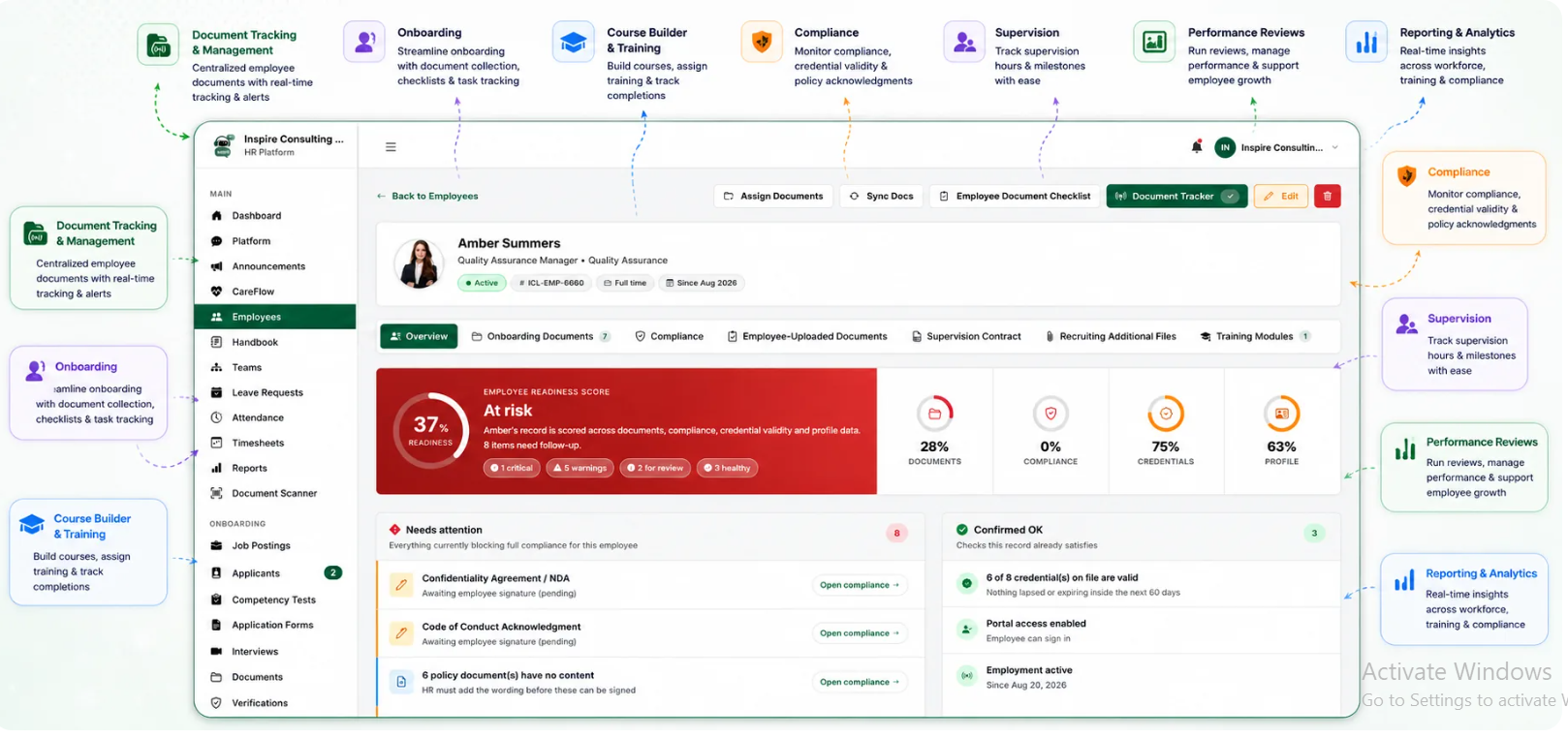
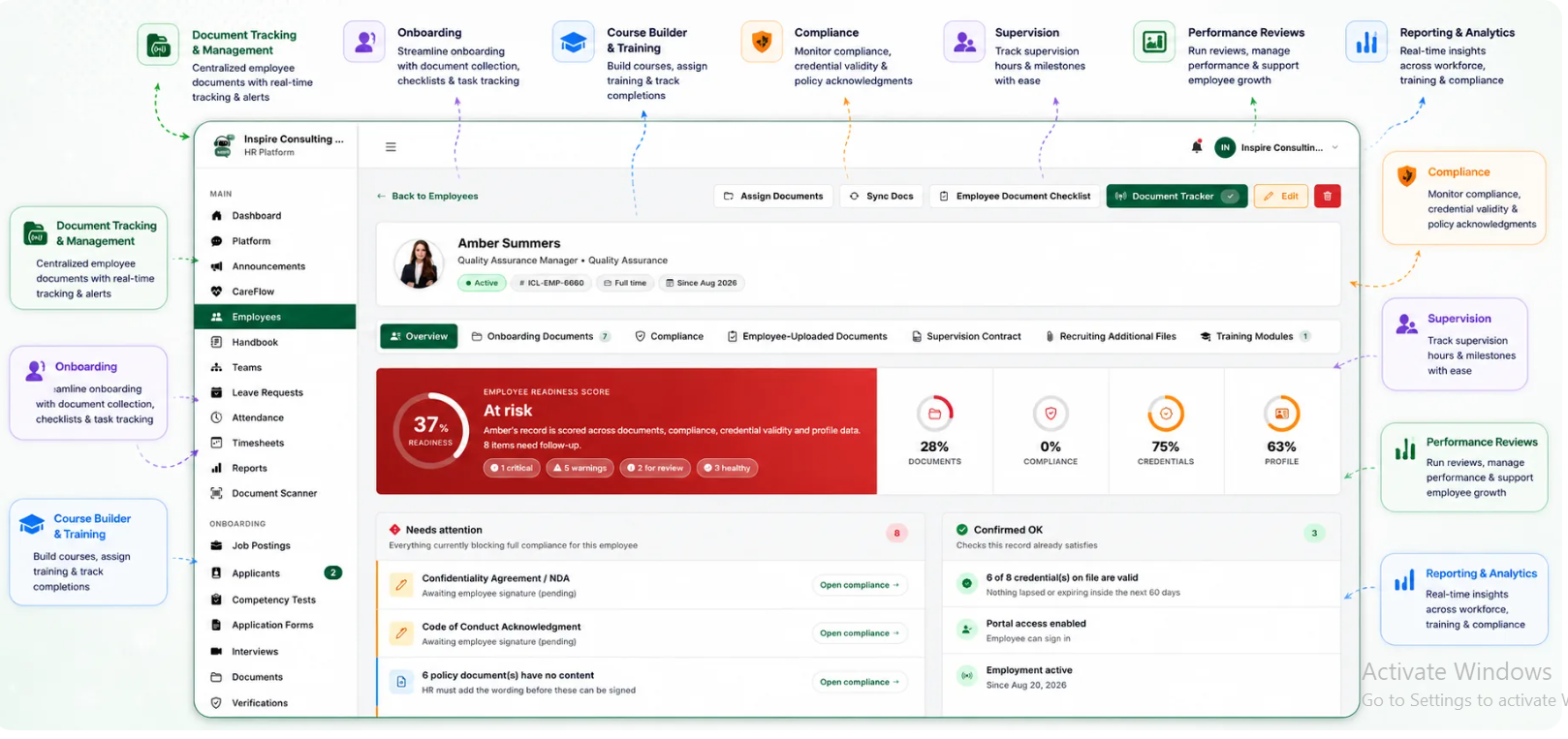
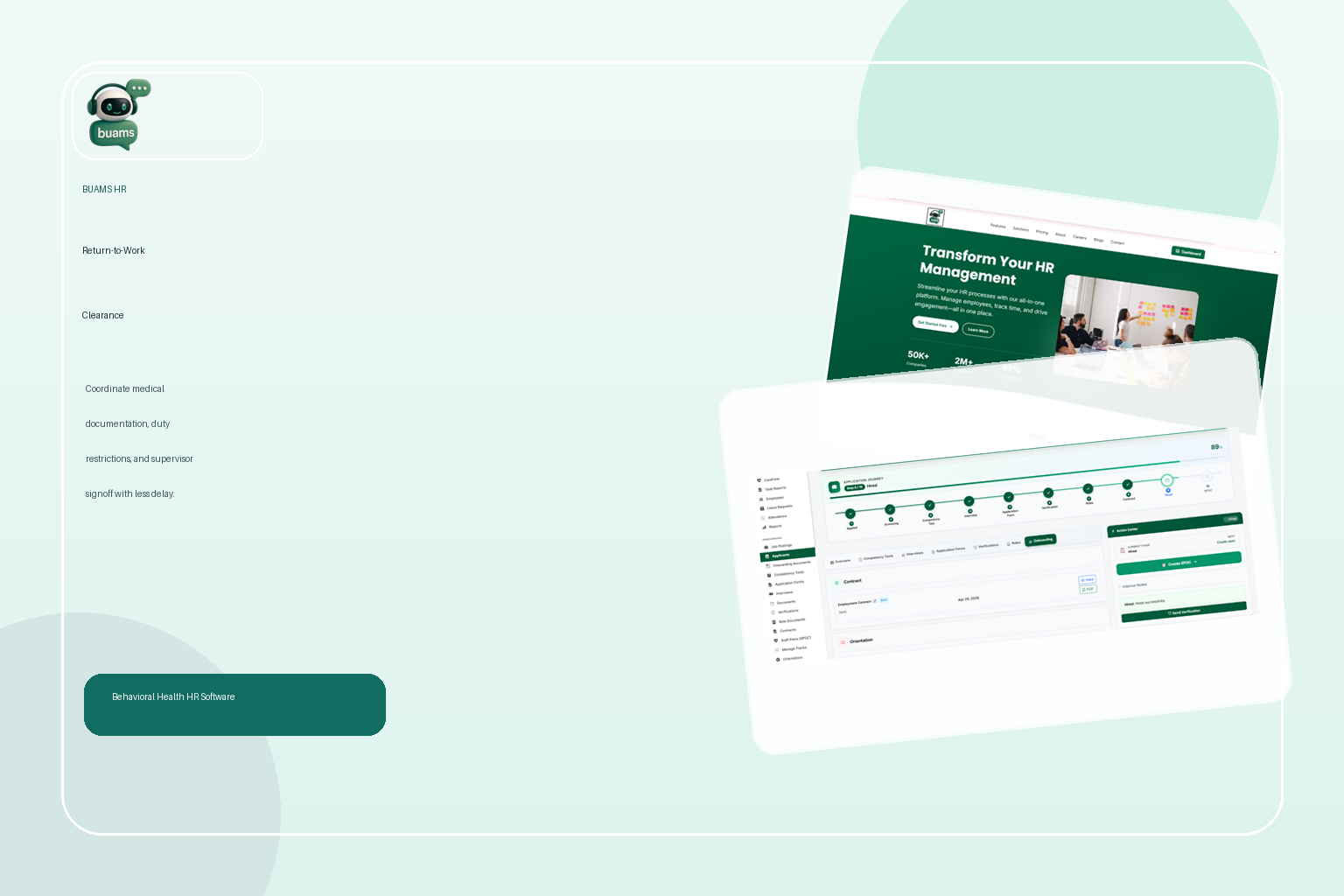
BUAMS HR helps behavioral health providers manage employee records and workflow visibility in a way that supports more organized return-to-work coordination. Instead of relying on disconnected files, emails, and side conversations, teams can keep clearance-related documentation and status updates in a central system.
That structure makes it easier to see whether return steps are still open, which records are already in the employee file, and where HR, supervisors, or operations may need to follow through before the employee resumes normal work. For organizations managing multiple programs, locations, or supervisors, that visibility reduces the chance that a return is handled inconsistently from one case to the next.
BUAMS HR also supports a more disciplined approach to workforce documentation. When employee returns are managed through a repeatable process, providers can improve communication, reduce avoidable delays, and maintain stronger confidence in the records behind each staffing decision.
Final Thoughts
Return-to-work clearance software gives behavioral health providers a better way to manage the sensitive period between an employee’s absence and full return to duty. With the right workflow, teams can coordinate documentation, restrictions, supervisor communication, and scheduling with less confusion and more accountability.
For organizations that want to bring employees back efficiently while protecting documentation quality and operational readiness, BUAMS HR offers a practical foundation for managing return-to-work clearance in a more consistent and compliant way.