Behavioral health providers depend on accurate workforce records to keep programs staffed, supervisors informed, and compliance evidence ready when questions come up. The problem is that employee data often changes in small pieces. A supervisor update may happen in one place, a location change may be noted in an email, a role adjustment may be communicated verbally, and a credential requirement may be tracked in a separate workflow. Over time, those small disconnects can create a roster that looks correct at a glance but does not fully match reality.
Workforce roster reconciliation software helps organizations compare what should be true about the workforce with what is actually documented across HR records, assignments, and compliance data. Instead of assuming the roster is accurate, teams can systematically review mismatches involving supervisors, sites, roles, start dates, status changes, and required documentation. That gives behavioral health organizations a cleaner way to catch workforce issues before they affect scheduling, audits, onboarding follow-through, or day-to-day oversight.
Key Takeaways
What Is Workforce Roster Reconciliation Software?
Workforce roster reconciliation software is a system used to review and confirm that roster data matches the organization’s real operating state. In practice, that means comparing the active workforce list against the details that support it, including role assignments, supervisor relationships, locations, employment status, credential requirements, file completeness, and other HR records tied to readiness.
In behavioral health, reconciliation is especially important because one employee record often affects several operational areas at once. A clinician may appear on a program roster, report to a specific supervisor, hold site-based responsibilities, and need certain training or license documentation to remain fully ready. If one of those elements is outdated, the organization may not notice until a manager reviews a staffing gap, a surveyor asks for proof, or HR discovers a mismatch during a file audit.
Why Roster Reconciliation Matters in Behavioral Health
Behavioral health providers operate in environments where staffing accuracy is not just an administrative preference. It affects service delivery, supervision, compliance, and organizational credibility. When workforce records do not line up, leaders can make decisions based on incomplete information. A site may believe a position is covered when the assigned employee has already moved. A supervisor may be listed incorrectly, creating confusion about oversight responsibility. A staff member may appear active on a roster even though required documents are still missing.
These errors are easy to create because workforce information changes constantly. New hires start, employees transfer, supervisors change, leaves begin, permissions shift, and credentials expire. Without a reconciliation process, organizations tend to discover problems reactively. By then, the issue may already be affecting payroll coordination, compliance response, scheduling confidence, or manager accountability.
Reconciliation software gives teams a way to review workforce accuracy deliberately rather than waiting for a problem to surface. That is especially useful for multi-site behavioral health organizations that need one clear view of who is active, where they belong, who oversees them, and whether their records support that assignment.
Common Workforce Mismatches Teams Need to Catch
Behavioral health HR teams frequently run into a predictable set of roster problems when records are maintained across emails, spreadsheets, and disconnected systems.
Each mismatch may look minor on its own. Together, they create a less reliable operating picture and make it harder to answer basic questions with confidence. Reconciliation helps organizations reduce that drift.
What to Look for in Workforce Roster Reconciliation Software
Centralized Workforce Records
The system should make it easier to compare employee details without pulling information from too many disconnected sources. When roster data, supervisor assignments, file status, and compliance information are easier to review together, HR teams can move from guesswork to evidence-based cleanup.
Exception Visibility
Strong reconciliation software should highlight what does not match, not just store what was entered. Teams need a practical way to identify exceptions such as missing supervisors, conflicting locations, outdated role data, incomplete records, or employees who appear active without meeting readiness expectations.
Site and Program Filtering
Behavioral health organizations often need to reconcile rosters by program, location, service line, or management structure. Useful software should help teams narrow the review so they can work through issues in manageable segments instead of treating the entire workforce as one giant list.
Ownership and Follow-Up Tracking
Finding a mismatch is only the first step. The organization also needs to know who is responsible for fixing it. Good software should support clear follow-up so supervisors, HR, and operations leaders can resolve discrepancies and confirm when the roster is accurate again.
Audit-Ready Documentation Support
Roster reconciliation should connect back to documentation quality. If a correction requires a file update, acknowledgment, approval, or status change record, the software should help teams keep that evidence attached to the employee record instead of scattered across inboxes.
Best Practices for Keeping Workforce Rosters Accurate
Start by defining the roster fields that matter most to your organization. For many behavioral health providers, that includes active status, location, program, role, supervisor, employment type, effective dates, and core compliance indicators. Teams cannot reconcile what they have never defined clearly.
Next, set a recurring review rhythm. A roster does not stay accurate just because it was correct last month. High-change organizations should review workforce exceptions regularly so issues are caught before they become embedded in downstream reports or staffing assumptions.
It also helps to treat roster reconciliation as a cross-functional process. HR may own the employee file, but site leaders and supervisors often know first when assignments or reporting relationships have changed. Bringing those stakeholders into the review process improves both speed and accuracy.
Finally, use reconciliation results to improve upstream workflows. If the same mismatch appears repeatedly, the issue may not be the roster itself. It may be a weak transfer process, inconsistent supervisor change documentation, or poor handoff between hiring and operations. The best reconciliation process does more than clean up records. It shows where the organization needs better process control.
How BUAMS HR Helps
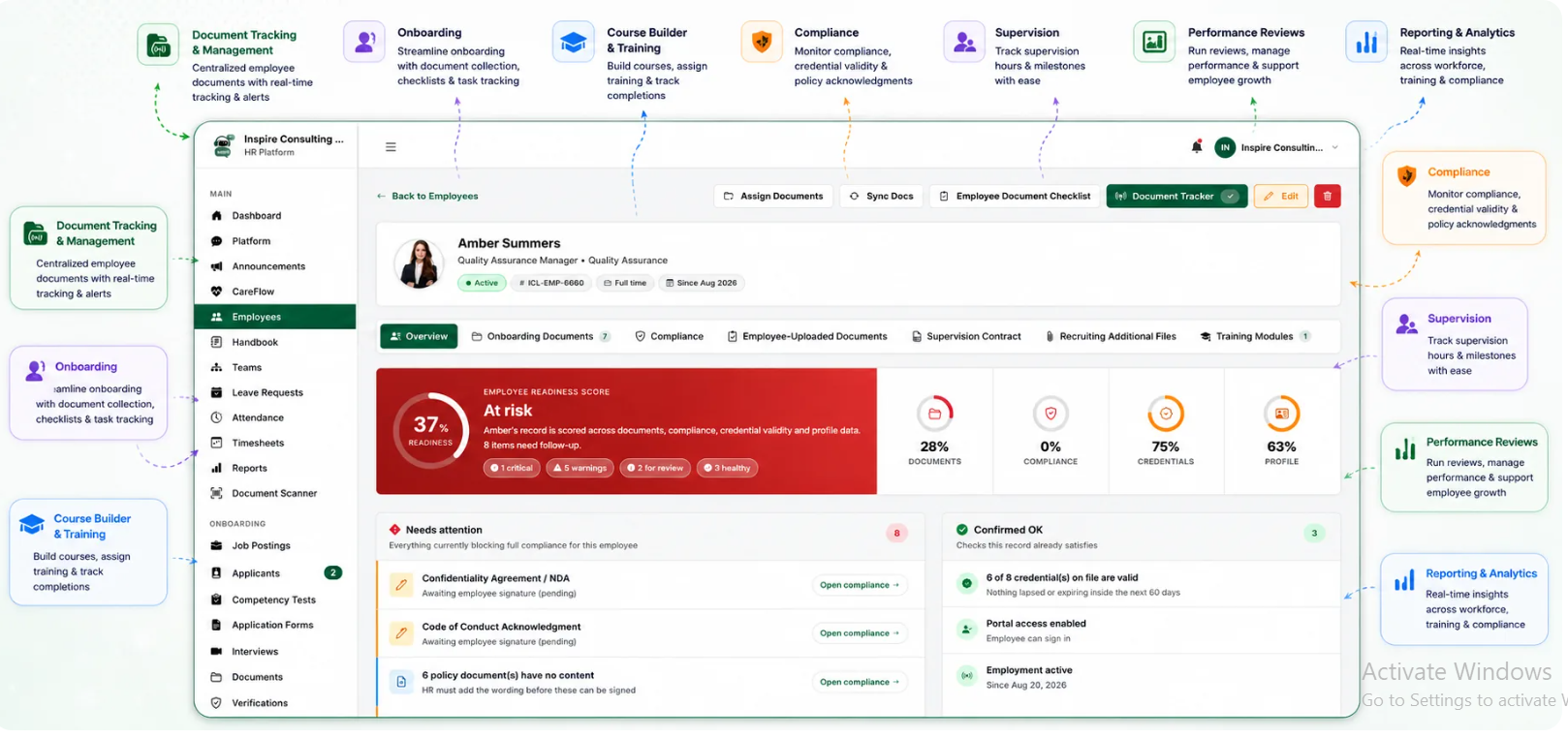
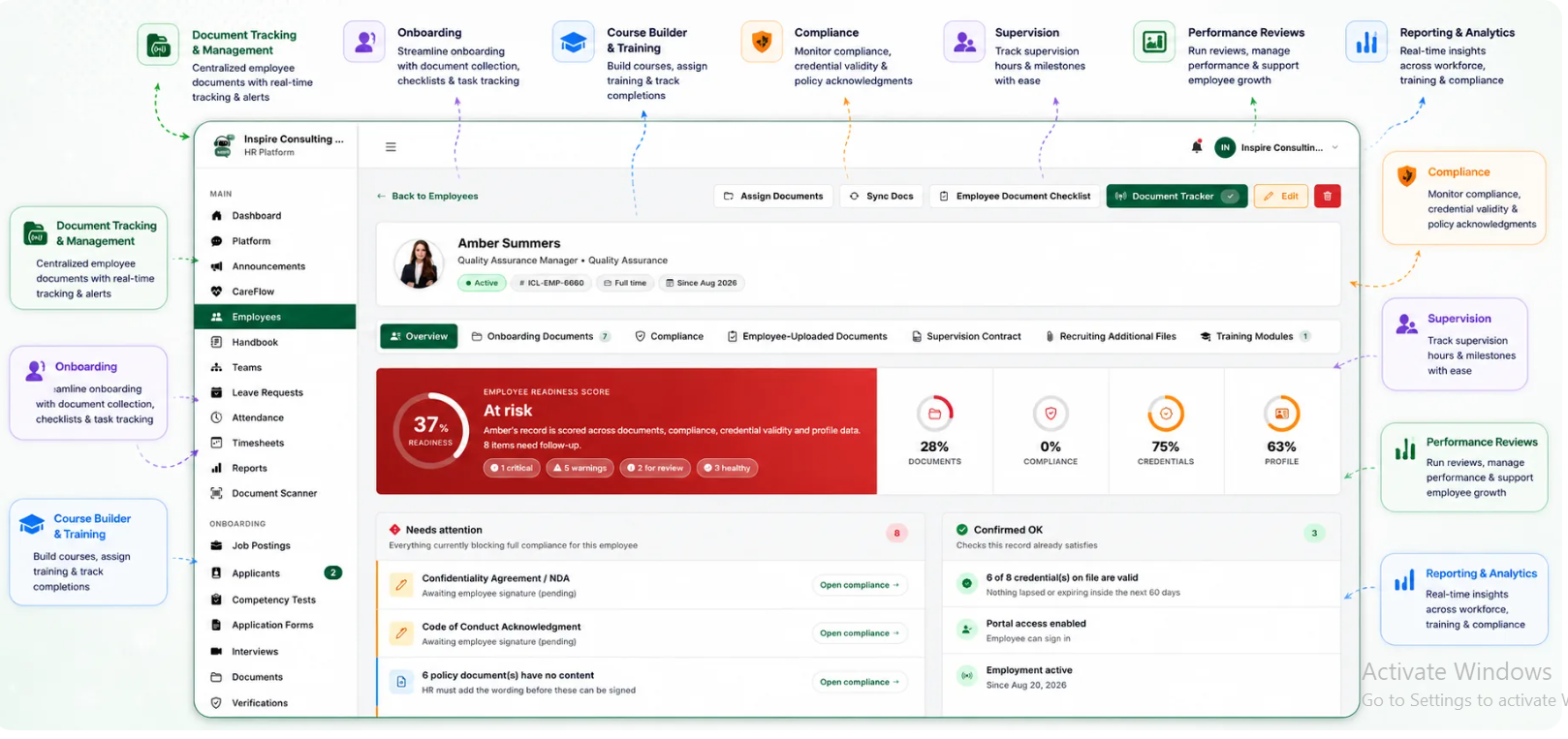
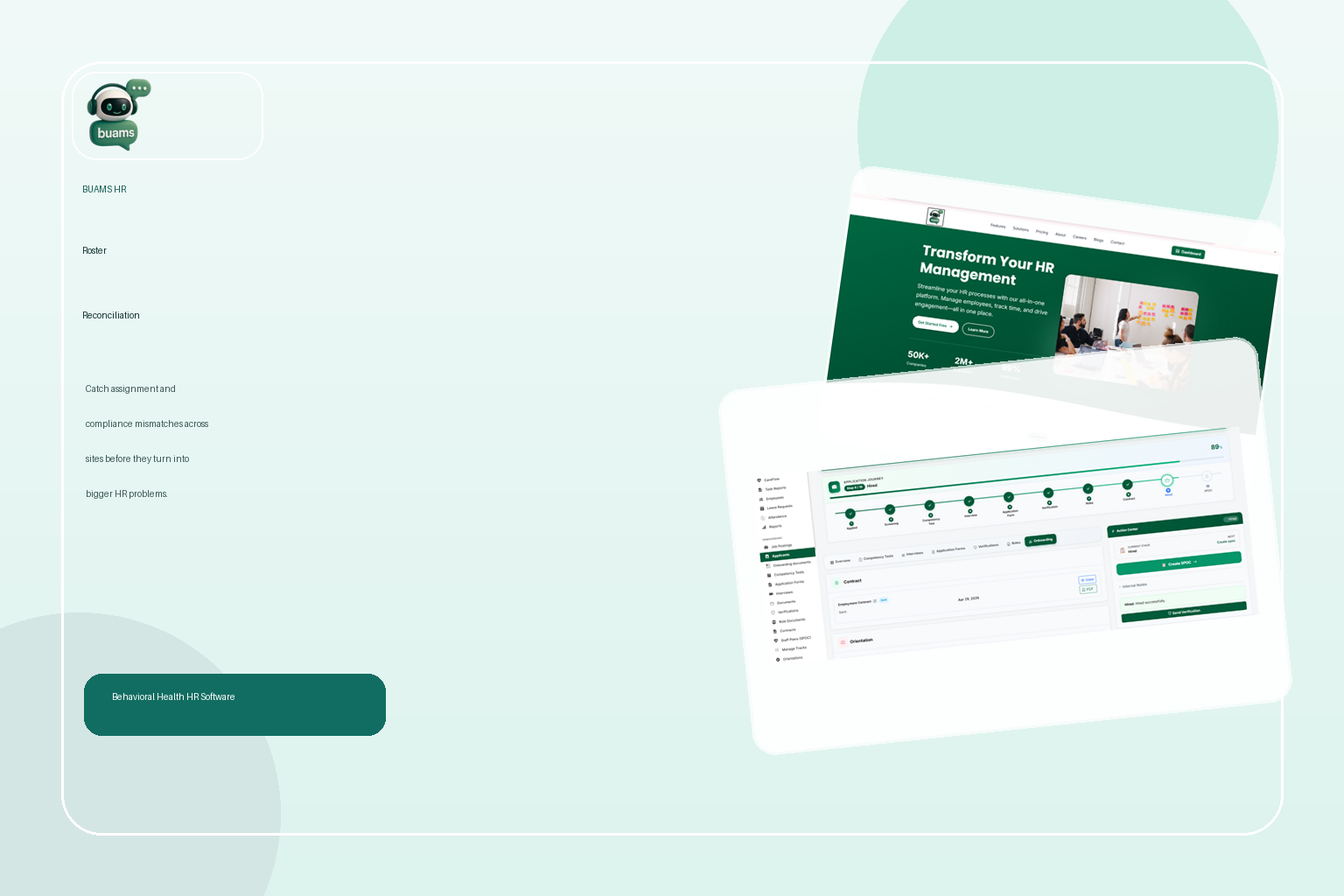
BUAMS HR helps behavioral health providers organize workforce data in one place so roster reviews are easier to complete and trust. When employee records, assignments, documentation status, and oversight details are more centralized, teams can spot discrepancies faster and reduce the back-and-forth that usually comes with manual reconciliation.
That visibility is especially useful for organizations managing multiple sites, frequent workforce movement, or layered supervisor structures. BUAMS HR supports a more consistent way to review whether roster information matches employee reality, whether records are complete, and whether unresolved issues still need follow-up before they create broader operational confusion.
By making workforce information easier to review and maintain, BUAMS HR helps providers strengthen day-to-day HR accuracy while supporting audit readiness and cleaner management oversight.
Final Thoughts
Workforce roster reconciliation software gives behavioral health providers a practical way to confirm that active workforce records match the people, assignments, and compliance expectations behind them. That matters because staffing decisions become riskier when rosters drift away from reality.
For organizations that want fewer surprises, cleaner employee records, and more confidence in their workforce data, BUAMS HR offers a strong foundation for keeping roster information aligned across programs, supervisors, and HR workflows.