Behavioral health organizations often move staff between programs, sites, service lines, and supervisor structures as needs change. A clinician may transfer to a new location, a case manager may shift into a different program, or a support employee may take on duties that require different documentation, training, or access. On paper, an internal move can look simple because the person is already employed. In practice, those transitions can create risk when HR, operations, and supervisors do not complete every required step in the right order.
Employee transfer clearance software gives behavioral health providers a more structured way to manage those moves. Instead of relying on email chains, memory, and scattered checklists, teams can track the approvals, file updates, training requirements, supervisor changes, and compliance tasks tied to each transfer. That helps organizations move employees faster while reducing the chance that a site change creates documentation gaps or readiness problems.
Key Takeaways
What Is Employee Transfer Clearance Software?
Employee transfer clearance software is a system that helps organizations coordinate the steps required when an existing employee moves into a different role, location, program, or reporting structure. The goal is not only to record the change. The goal is to confirm that the employee is fully cleared for the new assignment and that every supporting task has been completed.
In behavioral health, a transfer may affect more than a job title. The employee may need a new supervisor, different documentation standards, location-specific onboarding, updated credential review, revised schedules, refreshed policy acknowledgments, or changes to system access. Transfer clearance software helps HR teams define those steps, assign responsibility, and see what is still open before the employee begins working under the new setup.
Why Internal Transfers Need More Control in Behavioral Health
Behavioral health providers often reassign staff to meet service demand, support new programs, fill gaps, or improve retention. Those moves can be beneficial for both the organization and the employee. The risk appears when everyone assumes an internal transfer is less important than a new hire because the person is already in the system.
That assumption can lead to missed details. A transferred employee may arrive at a new site before access is updated. A supervisor change may happen without corresponding documentation. Training that was appropriate in one program may not be sufficient in another. A role change may require a different license review, job description acknowledgment, or credential check. Even small errors can create downstream issues during audits, incident reviews, or internal compliance checks.
More control matters because internal transfers touch multiple operational areas at once. HR needs accurate records. Supervisors need clarity on oversight. Operations needs confidence that staffing coverage is real, not assumed. Compliance leaders need assurance that the employee meets the requirements of the new assignment. Software helps connect those moving parts into one visible process.
Common Problems Transfer Clearance Software Can Solve
Many organizations handle transfers through good intentions and manual follow-up. Over time, that approach usually creates familiar problems.
These breakdowns create unnecessary friction. They also make internal mobility harder to scale across multi-site behavioral health organizations where one transfer can affect coverage, compliance, supervision, and employee records at the same time.
What to Look for in Employee Transfer Clearance Software
Transfer Workflows That Match Real HR Operations
The system should support a repeatable internal transfer workflow instead of forcing teams to improvise every move from scratch. That means capturing the effective date, old and new assignment details, approvers, required documents, and open tasks in one place.
Role, Program, and Site-Specific Requirements
Behavioral health transfers often depend on where the employee is going and what responsibilities they will assume. Good software should help teams apply the right checklist based on program, site, role, or employment type so the process reflects real operating conditions.
Supervisor and Oversight Visibility
When an employee changes reporting structure, the organization needs a clear record of who is responsible for supervision, follow-up, and compliance going forward. A useful system should make that handoff visible and easy to confirm.
File and Documentation Control
Transfer decisions often trigger updates to job descriptions, acknowledgment forms, training proof, and other employee records. The right software should help HR keep those materials complete and attached to the employee file rather than scattered across inboxes and shared drives.
Completion Tracking, Not Just Request Tracking
Some tools record that a transfer was requested but do not show whether the employee was actually cleared. Strong transfer clearance software tracks the process through completion so teams know which moves are still waiting on approvals, documents, training, or record updates.
Best Practices for Managing Internal Staff Moves
Start by defining what counts as an employee transfer in your organization. A move to a new site, a program reassignment, a supervisor change, a status change tied to duties, or a role shift with different documentation requirements may all need structured review. When teams share the same definition, it becomes easier to trigger the correct workflow every time.
Next, standardize the minimum information required before a transfer can move forward. That should usually include the current and future assignment, effective date, reason for the change, supervisor details, role requirements, and any documentation or training dependencies. Without that baseline, HR ends up filling gaps after the fact.
It is also important to treat transfer readiness as more than a single approval. The move should not be considered complete until the employee file is updated, required documents are collected, access changes are coordinated, and the receiving team confirms readiness. This helps organizations avoid situations where the employee is operationally present but administratively incomplete.
Finally, review transfer activity over time. Repeated moves between sites, frequent reassignment patterns, or recurring delays in one part of the process can highlight broader workforce issues. The best systems do not just help complete individual transfers. They also show leaders where operational strain is creating preventable HR work.
How BUAMS HR Helps
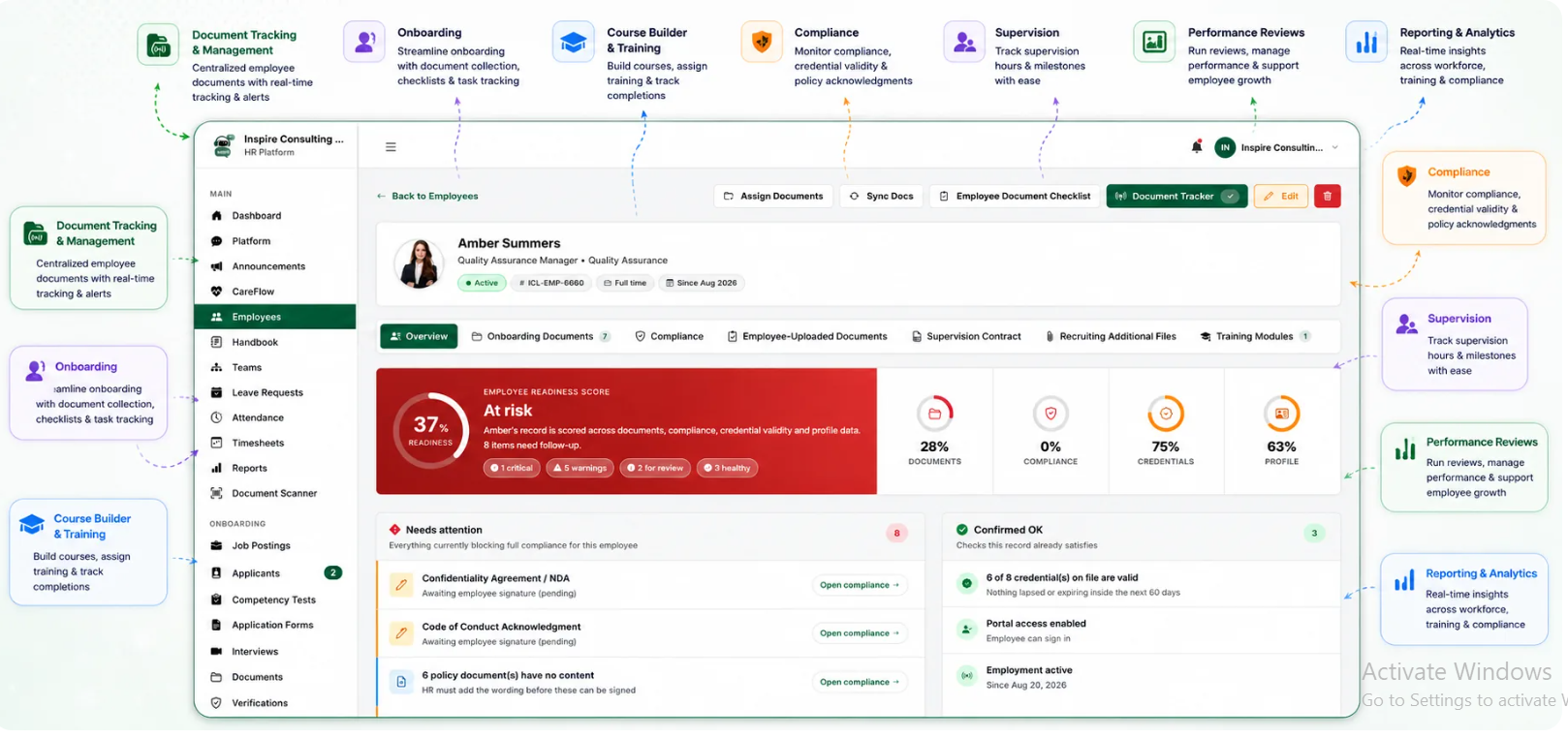
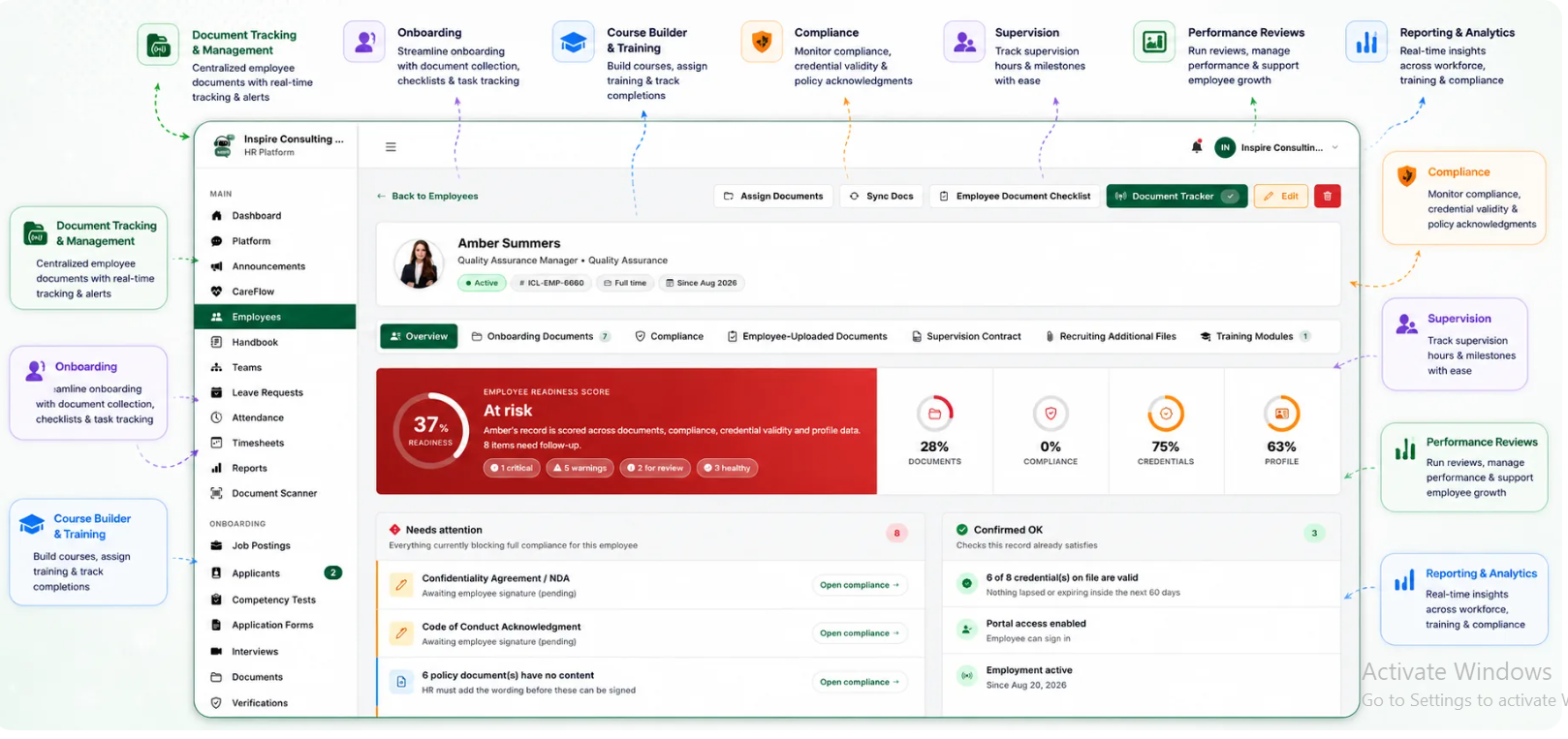
BUAMS HR helps behavioral health providers organize the employee records, workflow steps, and compliance context that internal transfers depend on. Instead of managing a move through disconnected emails and spreadsheets, teams can work from a centralized system that keeps assignment changes, documentation needs, and employee file updates more visible.
That structure makes it easier to confirm who approved the move, what requirements apply to the new assignment, what records still need attention, and whether the transfer is truly ready to close. For organizations managing multiple programs or locations, that visibility supports smoother coordination across HR, operations, and supervisors.
BUAMS HR also helps reduce the hidden risk that comes from treating internal staff moves as informal changes. With a more organized transfer process, providers can support employee mobility while protecting documentation quality, oversight clarity, and compliance readiness.
Final Thoughts
Employee transfer clearance software helps behavioral health organizations move staff across programs and sites with more consistency and less guesswork. When internal transfers follow a structured process, teams can protect coverage, maintain accurate records, and avoid compliance issues that often emerge after the move has already happened.
For providers that want a more reliable way to coordinate assignment changes, supervisor updates, documentation tasks, and readiness checks, BUAMS HR offers a practical foundation for managing internal transfers with confidence.