Behavioral health HR teams rarely struggle because they have no employee documents at all. The problem is usually that the file looks complete until someone actually has to rely on it. A license copy is present, but the supervisor assignment is missing. The offer letter is signed, but the job description is outdated. Training records exist, but one required acknowledgment was never collected. When those gaps stay hidden across paper packets, shared drives, and inbox follow-up, the organization loses time exactly when it needs confidence.
That is where employee file completeness software becomes valuable. Instead of treating file review as a manual scavenger hunt, behavioral health providers can use a structured system to define required documents by role, flag missing items early, route follow-up to the right owners, and maintain a more defensible employee record. The goal is not just tidier storage. The goal is to reduce start-date delays, improve audit readiness, and make workforce records easier to trust every day.
Key Takeaways
What Is Employee File Completeness Software?
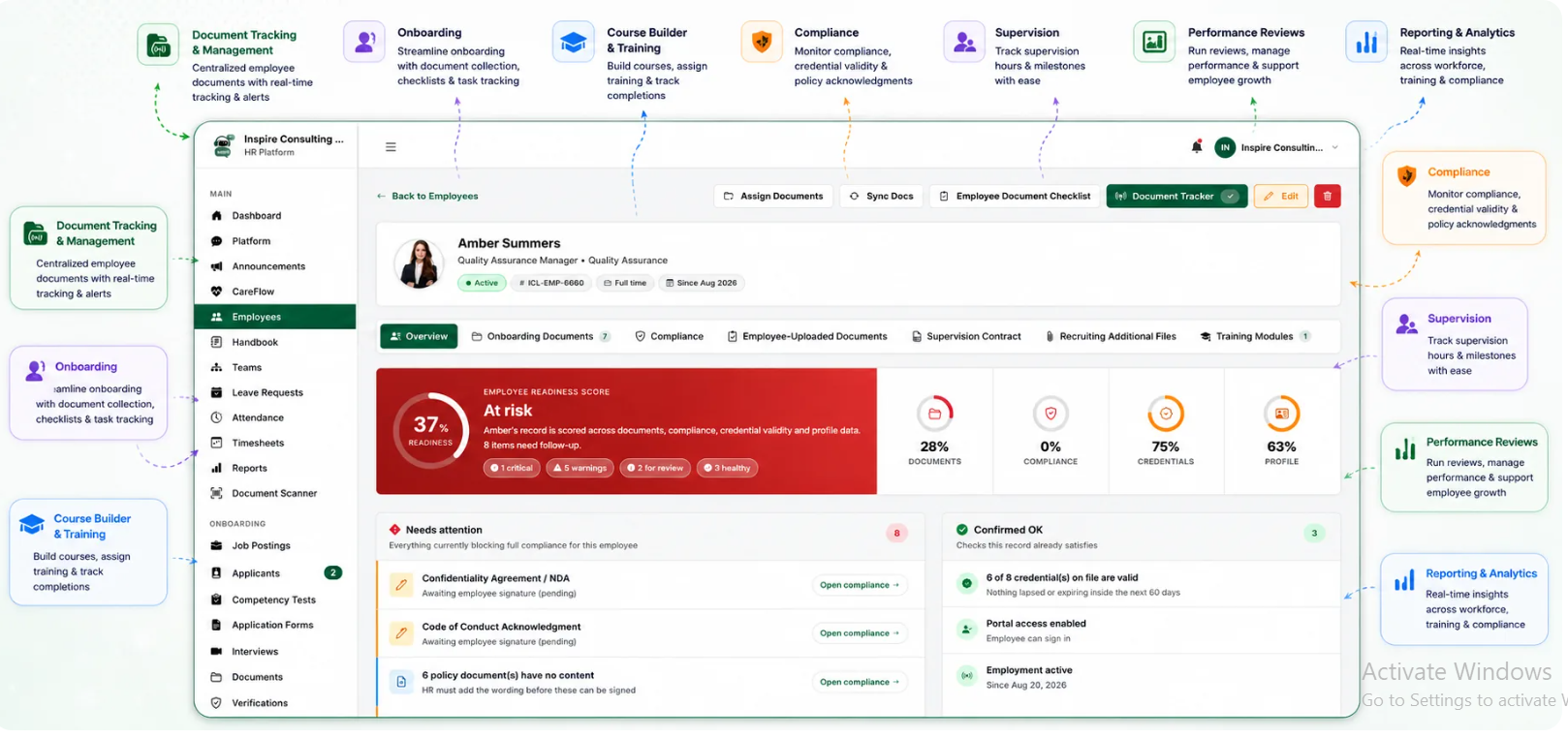
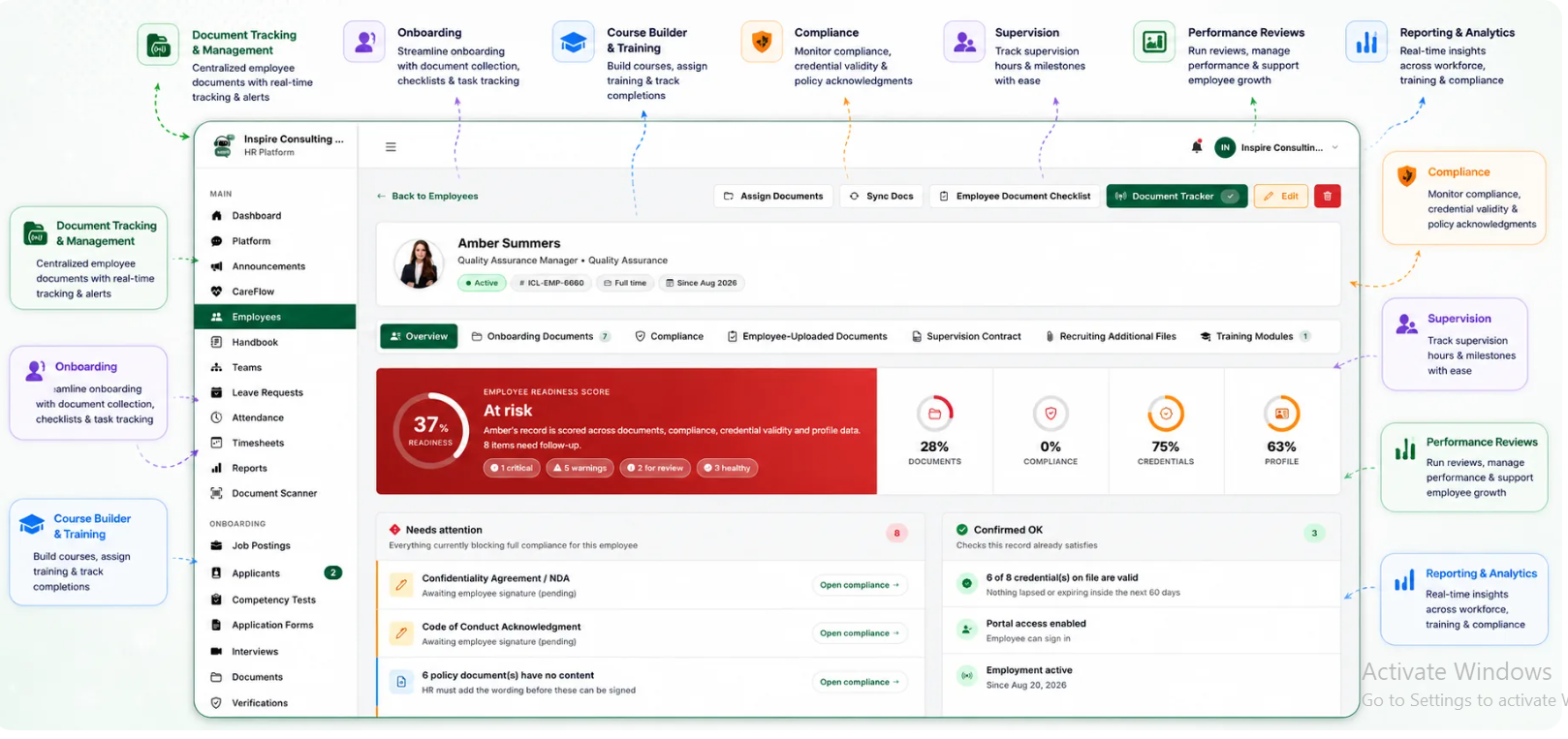
Employee file completeness software is a system for tracking whether each workforce record includes the documents, acknowledgments, and supporting information required for that employee's role and status. Rather than storing files passively, the software applies a structure to what should be present, what is still missing, who is responsible for follow-up, and whether the record is ready for use in onboarding, supervision, compliance review, or internal audit.
In behavioral health, file completeness often depends on more than a generic personnel checklist. Requirements can vary by clinician type, program, location, supervisor arrangement, employment status, contract type, and payer expectations. One employee may need license documentation, health clearances, policy sign-offs, and supervisor linkage, while another may also need training proof, credentialing items, role-specific attestations, or site-based documentation. Without a system that reflects those differences, teams may assume the file is complete when it is only partially assembled.
Why Incomplete Employee Files Create Risk in Behavioral Health
Incomplete files create problems because workforce records support real operational decisions. HR needs them to confirm hiring readiness. Supervisors may rely on them when assigning staff or reviewing oversight responsibilities. Compliance teams need them when preparing for audits, accreditation activity, or internal spot checks. Operations leaders need confidence that the people supporting services have the right documentation behind them.
When a file is missing key items, the consequences are rarely limited to paperwork. A missing clearance document can delay a start date. An unsigned policy acknowledgment can weaken compliance evidence. A missing training record can create uncertainty during a site review. An outdated role document can confuse who is allowed to do what. Even if those gaps are eventually fixed, the cleanup work usually happens under pressure and pulls HR away from higher-value tasks.
Behavioral health providers also work in environments where staffing changes quickly. New hires, internal moves, contractor transitions, credential renewals, and supervisor changes all affect what a complete file should contain. If file completeness is only checked at the time of hire and never monitored again, the record can drift out of alignment with the employee's actual role.
Common Gaps That Slow Audits and Start Dates
Most incomplete employee files do not fail in dramatic ways. They fail through small missing pieces that add up over time. These gaps matter because they are easy to miss until someone asks a direct question. Is this employee cleared to begin? Can we prove the required acknowledgment was signed? Do we have the right document version on file? Is the file complete enough for an auditor to review without follow-up? Software that surfaces those questions earlier helps teams resolve them before they turn into urgent problems.
What to Look for in Employee File Completeness Software
Role-Based Document Rules
The best systems do not treat every employee file the same. Behavioral health providers need the ability to define required items based on role, employment type, location, supervisor structure, or program. That makes completeness more meaningful than a one-size-fits-all checklist.
Visible Missing Item Tracking
Good software should clearly show which documents are present, pending, expired, waived, or missing. HR teams should not have to open every folder or email trail to understand whether a record is complete.
Workflow Ownership and Follow-Up
Some missing items belong to HR, some to supervisors, and some to the employee. A strong workflow should make ownership visible so unresolved gaps do not sit in limbo. Reminders and status tracking help reduce silent delays.
Support for Exceptions and Notes
Not every missing item means the same thing. Sometimes a requirement is waived, pending external review, or temporarily delayed with approval. Software should capture that context so teams can distinguish a true gap from an actively managed exception.
Audit-Ready History
Behavioral health organizations benefit from knowing when a document was added, replaced, reviewed, or marked complete. A usable audit trail helps explain the record later and supports internal accountability when questions come up.
Best Practices for Maintaining Complete Employee Files
Start by defining what complete actually means for each major workforce category. Full-time clinicians, part-time staff, supervisors, contractors, interns, and support roles may all require different file components. Once those expectations are documented, align them to a workflow instead of relying on memory.
Next, review completeness at more than one point in the employee lifecycle. Hire-date review is essential, but it is not enough. Organizations should also reassess file completeness during role changes, supervisor changes, renewals, rehires, and recurring compliance cycles. That approach helps prevent the record from becoming outdated while the employee remains active.
It also helps to separate missing documents from unresolved decisions. If a file lacks a required item because a leader has not yet approved an exception or clarified the employee's role, that should be visible in the workflow. Otherwise, teams can waste time chasing paperwork when the real issue is an unmade decision.
Finally, keep completeness connected to the broader HR system. The file should not live in isolation from onboarding, training, credential tracking, or employee status changes. When those workflows are disconnected, teams are more likely to duplicate work and less likely to trust the completeness signal.
How BUAMS HR Helps
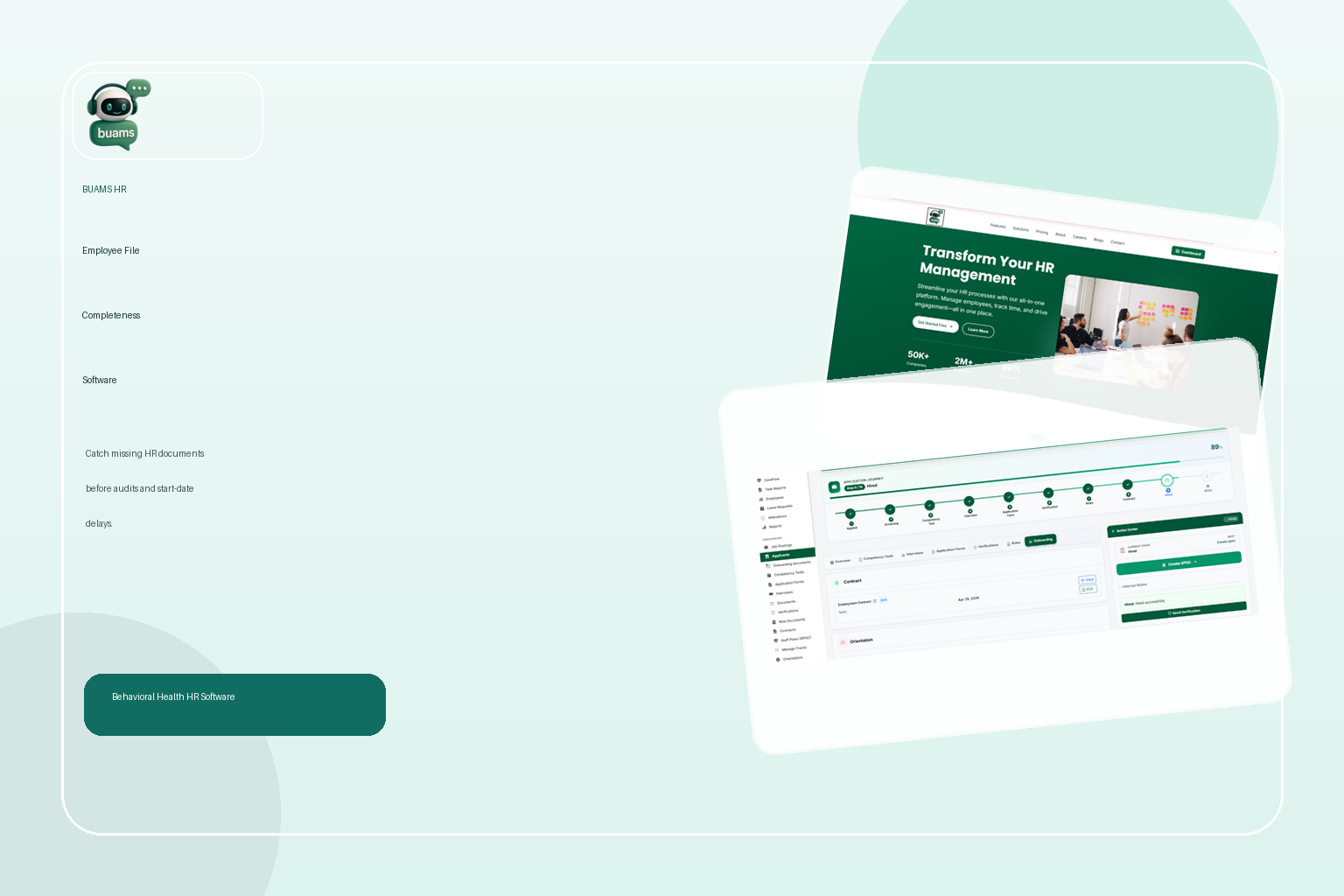
BUAMS HR gives behavioral health providers a more organized way to manage employee records and the requirements behind them. Teams can centralize workforce files, define document expectations, and keep visibility into missing or pending items without piecing the story together from shared drives, paper folders, and individual inboxes.
With BUAMS HR, organizations can support a more repeatable file review process across onboarding, ongoing compliance activity, and employee changes over time. That makes it easier to follow up on gaps, retain supporting documentation, and keep workforce records aligned with operational reality.
For growing providers, that structure matters. A system that shows which files are truly complete and which ones still need attention helps reduce preventable delays, strengthens audit readiness, and gives HR teams better control over record quality.
Final Thoughts
Employee file completeness software helps behavioral health providers move beyond passive document storage and toward active record control. When employee files support hiring, supervision, compliance, and day-to-day workforce decisions, missing items are more than an admin inconvenience. They are a source of avoidable risk.
For organizations that want a cleaner way to spot missing HR documents before audits, site reviews, and start dates are affected, BUAMS HR offers a practical approach built for the needs of behavioral health workforce operations.