Behavioral health HR teams are constantly asked to update employee information that changed after hire. A staff member moves to a new address, changes an emergency contact, updates a license number, gets a new supervisor, changes work location, or needs a new document added to the file. None of these updates feel dramatic on their own, but when they are handled through paper forms, email threads, and disconnected spreadsheets, the result is predictable: outdated records, duplicate follow-up, and avoidable compliance risk.
That is where employee profile update software becomes valuable. Instead of treating record changes like one-off admin work, behavioral health providers can manage them through a structured workflow with clear ownership, required fields, supporting documentation, and approval history. The goal is not just convenience. The goal is to keep workforce records accurate enough for day-to-day operations, audits, onboarding transitions, and supervisory oversight.
Key Takeaways
What Is Employee Profile Update Software?
Employee profile update software is a system for managing changes to workforce information after the initial hire record is created. Instead of asking HR to manually edit records based on email requests or handwritten forms, the software provides a repeatable process for submitting, reviewing, approving, and storing updates. That process can cover basic details such as phone numbers and addresses, as well as role-related changes such as supervisor assignments, worksite moves, credential details, or emergency contacts.
For behavioral health providers, this matters because employee data often supports more than a directory entry. The same record may influence onboarding status, training assignments, file completeness, access provisioning, payroll coordination, benefit eligibility, compliance reporting, and supervisor visibility. When one change is made in one place but not reflected across the broader HR workflow, downstream confusion follows quickly.
Why Accurate Employee Records Matter in Behavioral Health
Behavioral health organizations often operate across multiple programs, clinics, community sites, and service models. Staff may transfer between teams, split time across locations, move into supervisory roles, or update personal information while carrying active training and compliance requirements. If employee records are not current, HR teams can run into problems that seem small at first but grow more serious over time.
An outdated address can affect time-sensitive notices and tax coordination. An old emergency contact can create risk during a workplace incident. An incorrect supervisor assignment can delay approvals or performance follow-up. A stale location record can misalign readiness reporting for a site review. Even something as simple as a name change can cause confusion if documents, acknowledgments, and compliance records no longer match the employee profile.
In regulated environments, record accuracy is part of operational reliability. Clean workforce data helps organizations respond faster to internal questions, support managers with trustworthy information, and show auditors or accreditors that workforce records are not being maintained casually.
Common Update Requests That Need Better Control
Most HR teams already handle a steady stream of post-hire changes. The problem is that many organizations still process them informally. Employee profile update software gives structure to changes such as:
Without a defined workflow, requests can sit in inboxes, be completed partially, or get changed in one record while remaining outdated in another. A controlled system makes those updates visible and easier to verify.
What to Look for in Employee Profile Update Software
Structured Request Forms
The best systems do not rely on free-text emails that force HR to guess what changed. Structured forms help employees or managers submit specific updates with the right fields completed the first time. That improves consistency and cuts down on rework.
Approval Paths for Sensitive Changes
Not every update should be accepted automatically. Changes to department, location, supervisor, employment status, or credentials may need review before becoming part of the official record. Approval workflows help organizations apply the right level of control without slowing every minor update.
Support for Attachments and Evidence
Some changes require more than a checkbox. Name changes may need documentation. Credential updates may need a renewed certificate or license copy. A good workflow should attach evidence directly to the request and retain it with the employee record when appropriate.
Audit Trail and Effective Dates
Behavioral health providers benefit from knowing what changed, who approved it, and when it became effective. That history matters when questions come up later about reporting, employee status, or whether a file was accurate during a specific review period.
Role-Aware Visibility
Employees, supervisors, HR staff, and compliance leads do not all need the same access. Strong software should make it easy to route updates to the right people while still protecting sensitive information inside the employee record.
Best Practices for Cleaner Record Changes
Software works best when providers define a few simple operating rules. First, decide which profile fields employees can update directly and which ones require supervisor or HR review. Second, standardize what documentation is required for common changes. Third, make sure every update has a clear owner so requests do not stall between departments.
It also helps to separate convenience updates from higher-risk changes. A phone number change may only need confirmation, while a site transfer could affect reporting lines, training assignments, badge access, and compliance requirements. When the workflow reflects that difference, organizations avoid both overprocessing and under-controlling changes.
Finally, use profile updates as a signal for broader workflow checks. If a staff member changes role, for example, the organization may also need to review required training, supervisory assignments, document requirements, or location-specific readiness items. A better update process can trigger those follow-up steps before they are missed.
How BUAMS HR Helps
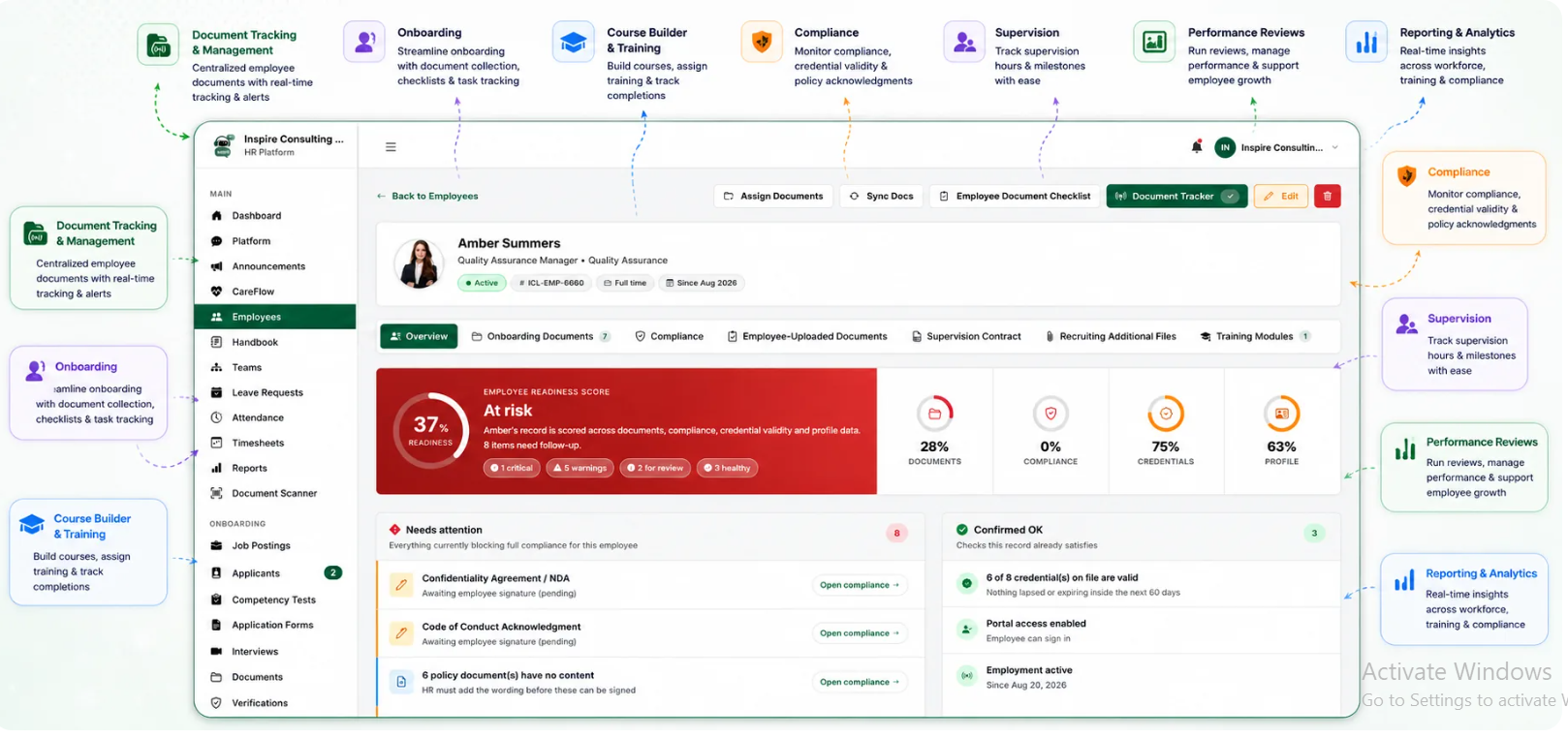
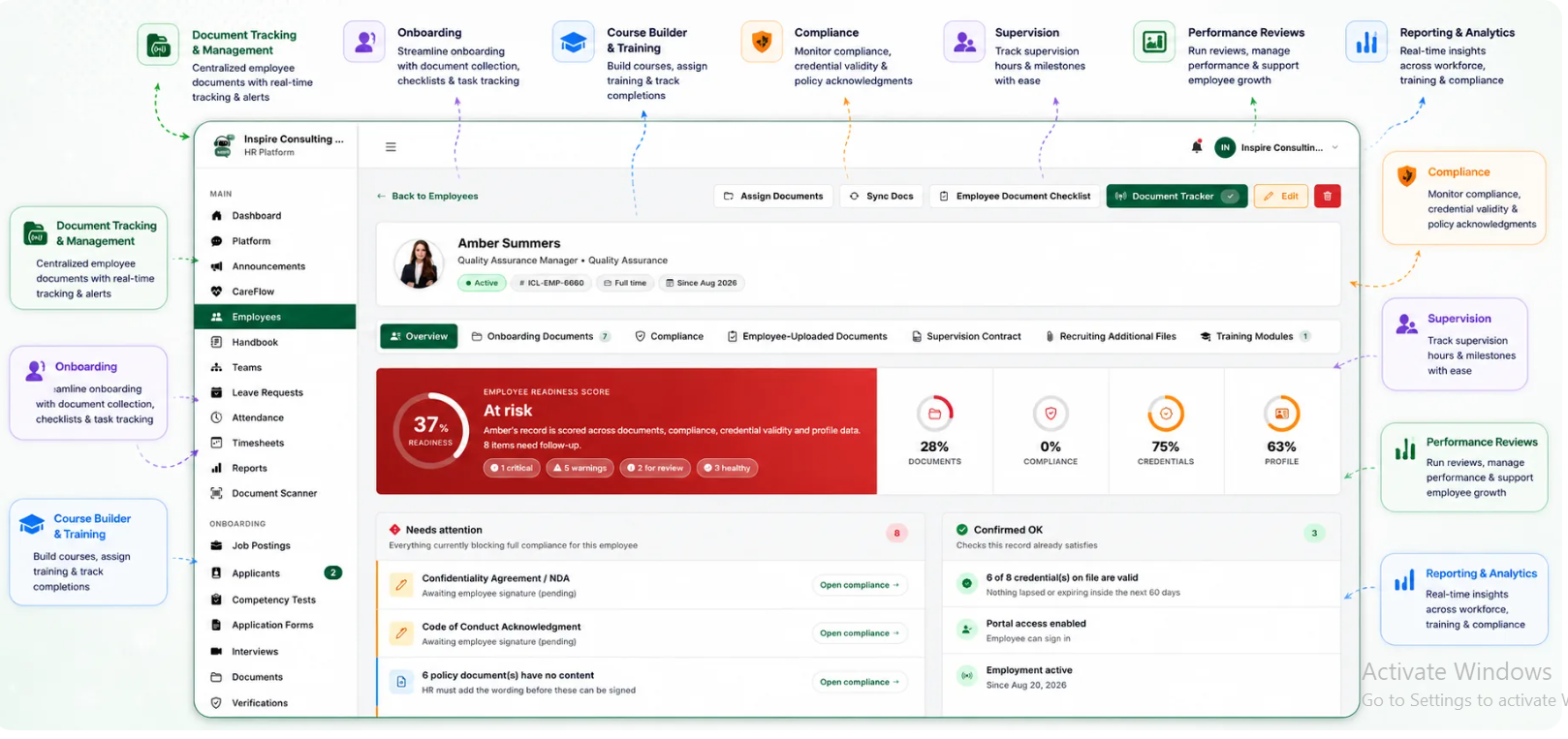
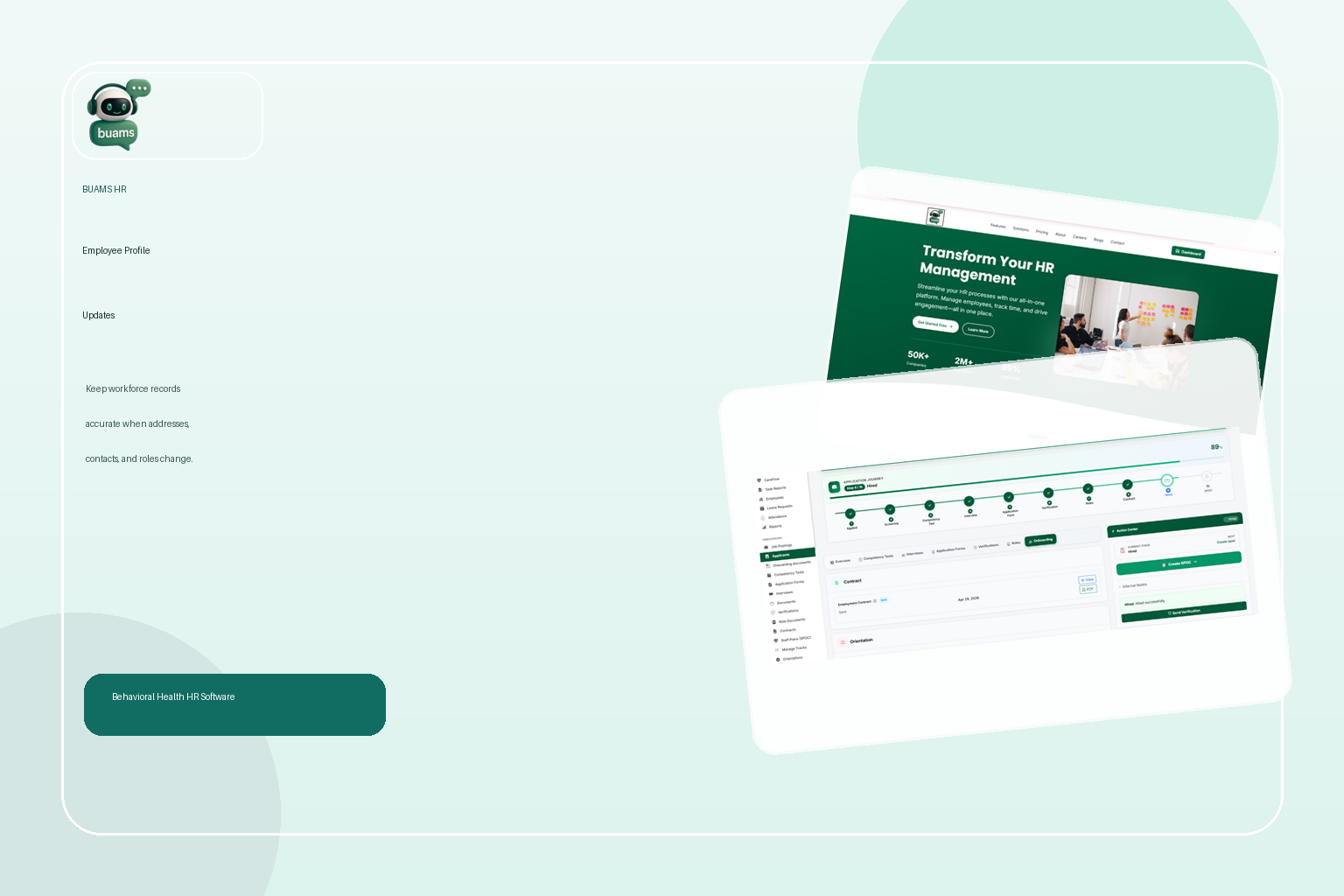
BUAMS HR gives behavioral health providers a practical way to keep employee records more accurate without depending on scattered paper forms or inbox reminders. Organizations can centralize workforce information, collect supporting documents, and manage profile-related changes through a more traceable HR workflow.
With BUAMS HR, teams can keep employee files organized while improving visibility into updates that affect role readiness, supervision, compliance documentation, and location-specific records. Instead of relying on one HR coordinator to remember every downstream step, organizations can create a process that makes changes easier to review, document, and confirm.
That is especially useful for growing providers that manage multiple programs or sites and need cleaner workforce data across the employee lifecycle. Accurate profile information supports better reporting, faster follow-up, and more confidence that the employee record reflects the reality of the workforce.
Final Thoughts
Employee profile update software may sound like a small administrative upgrade, but for behavioral health providers it solves a very real operational problem. When staff information changes frequently and records support compliance, supervision, and workforce planning, informal update methods are not enough. A structured process helps organizations reduce errors, protect file quality, and respond faster when records are reviewed.
For providers that want a better way to manage employee record changes without adding more manual chasing, BUAMS HR offers a centralized approach designed for the day-to-day realities of behavioral health HR operations.