Behavioral health organizations often rely on volunteers to support outreach events, peer programs, reception coverage, family engagement, transportation coordination, and community-based services. The problem is that volunteer onboarding can become a patchwork of email threads, paper forms, and informal checklists that leave HR teams guessing whether every required item is complete before someone starts. Volunteer onboarding software gives providers a more consistent way to organize intake steps, collect documentation, confirm training, and document readiness.
For behavioral health providers, the stakes are higher than simple administrative convenience. Volunteers may interact with vulnerable populations, enter clinical environments, handle confidential information, or represent the organization in the community. That means onboarding must be structured, traceable, and role-aware. A strong process helps reduce risk while making it easier to welcome volunteers quickly.
Key Takeaways
What Is Volunteer Onboarding Software?
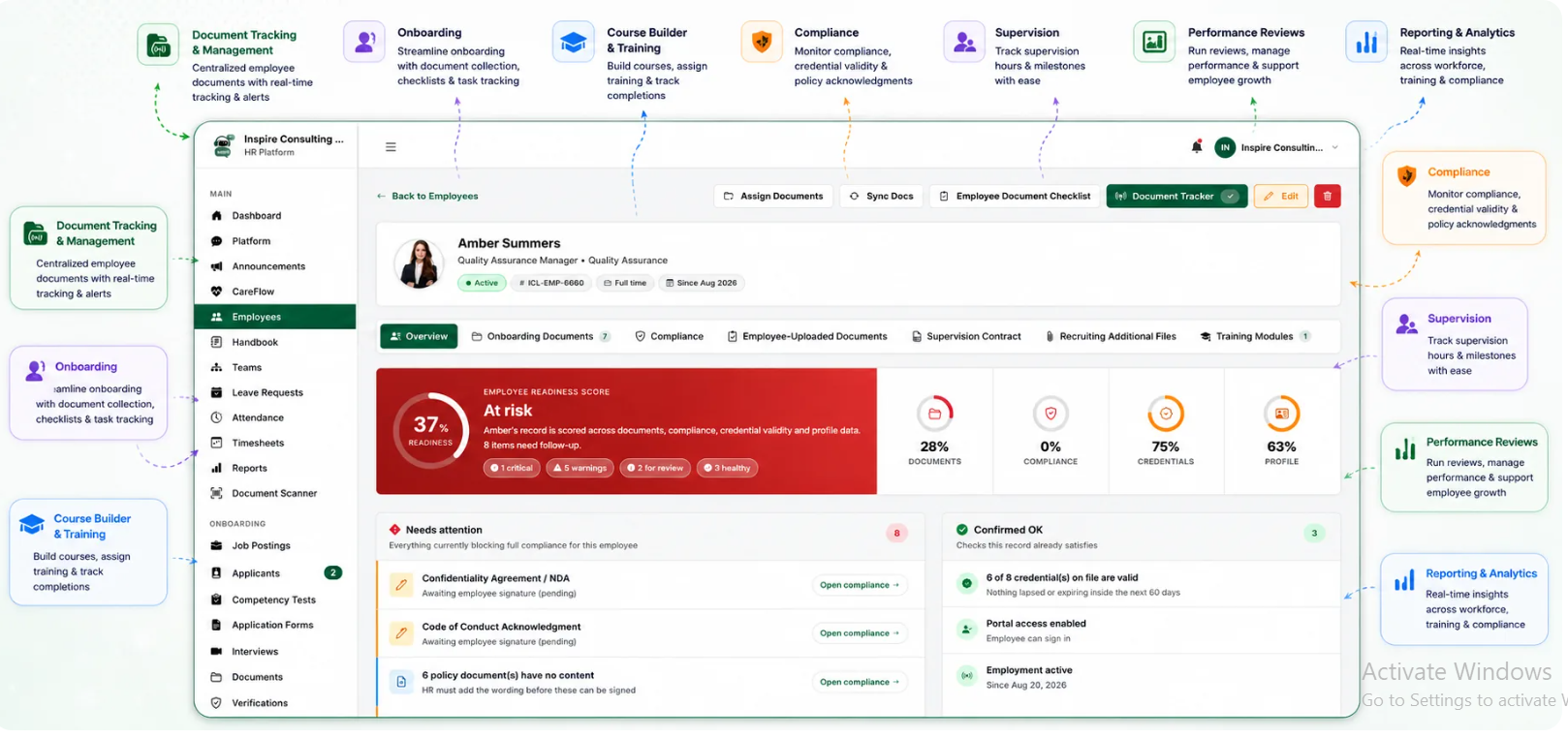
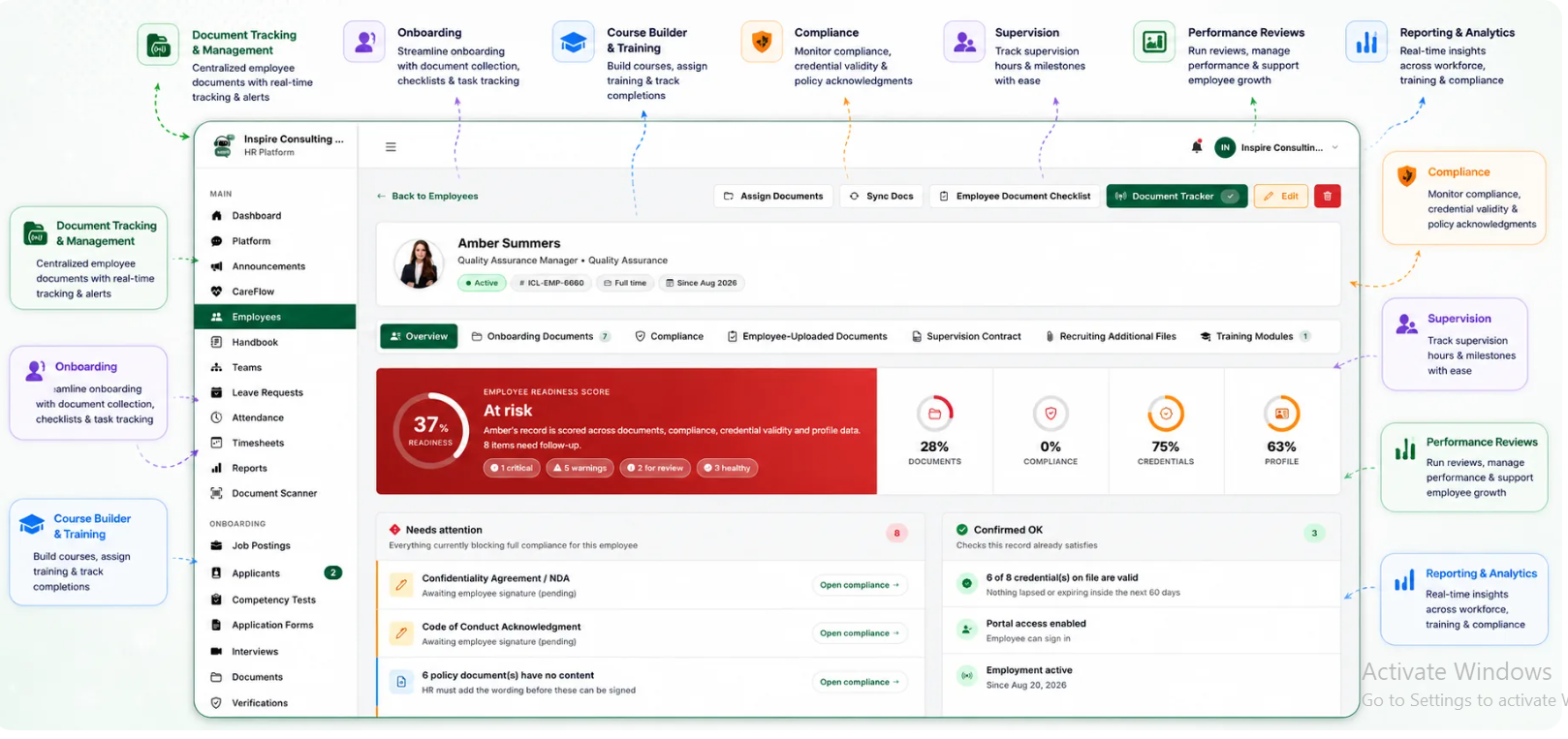
Volunteer onboarding software is a structured system for managing the steps that happen between volunteer acceptance and day-one readiness. Instead of relying on spreadsheets or disconnected folders, HR teams can use one workflow to track forms, acknowledgments, orientation tasks, training completion, required screenings, supervisor assignments, and final approval.
In behavioral health settings, volunteer onboarding software should support more than basic contact collection. It should help teams separate role-specific requirements, capture time-stamped proof of completion, and provide a clear status view for everyone involved in the launch process. That is especially useful when providers work across multiple sites, programs, or service lines.
Why It Matters for Behavioral Health Providers
Volunteer programs can create real operational value, but they also introduce oversight challenges. Some volunteers need confidentiality training. Others may need badge setup, safety orientation, tuberculosis documentation, background checks, policy acknowledgments, or supervisor confirmation before they can begin. When those requirements are tracked manually, organizations can lose visibility quickly. A documented process matters for several reasons:
Volunteer onboarding software also improves the volunteer experience. People who want to help your mission should not have to navigate a confusing intake process. A more organized workflow makes the organization feel responsive, prepared, and professional from the start.
What to Look for in Volunteer Onboarding Software
Role-Based Checklists
Not every volunteer position carries the same requirements. A good system should let HR create different onboarding paths based on assignment, location, or level of client interaction. That helps avoid both over-collecting and under-collecting documentation.
Centralized Document Collection
Volunteer agreements, emergency contact details, confidentiality forms, training proof, screening documents, and signed policies should live in one organized record. Centralized files reduce the risk of missing paperwork when staff members change or when volunteers transfer between programs.
Status Visibility
HR, program leads, and supervisors need an easy way to see what is complete, what is overdue, and what is still waiting for review. Volunteer onboarding software should make readiness visible without requiring manual status meetings.
Training and Policy Tracking
Behavioral health organizations often require orientation topics such as privacy, boundaries, incident reporting, mandated reporting, de-escalation awareness, or workplace safety. The system should help teams document which items were assigned, completed, and acknowledged.
Approval and Start-Ready Controls
A volunteer should not be treated as ready based on assumptions. Look for a workflow that supports final approval after the required pieces are complete, so supervisors are not bringing people in before documentation is actually in place.
Common Process Gaps This Solves
Many providers do not notice weaknesses in volunteer onboarding until they try to answer a simple question: “Can this person start yet?” Without a reliable system, the answer may depend on who is available to search through inboxes or shared drives. Volunteer onboarding software helps address common gaps such as:
These issues may seem small in isolation, but together they create unnecessary delays and avoidable compliance risk. A stronger workflow reduces friction for HR while giving operational leaders more confidence in volunteer readiness.
How BUAMS HR Helps
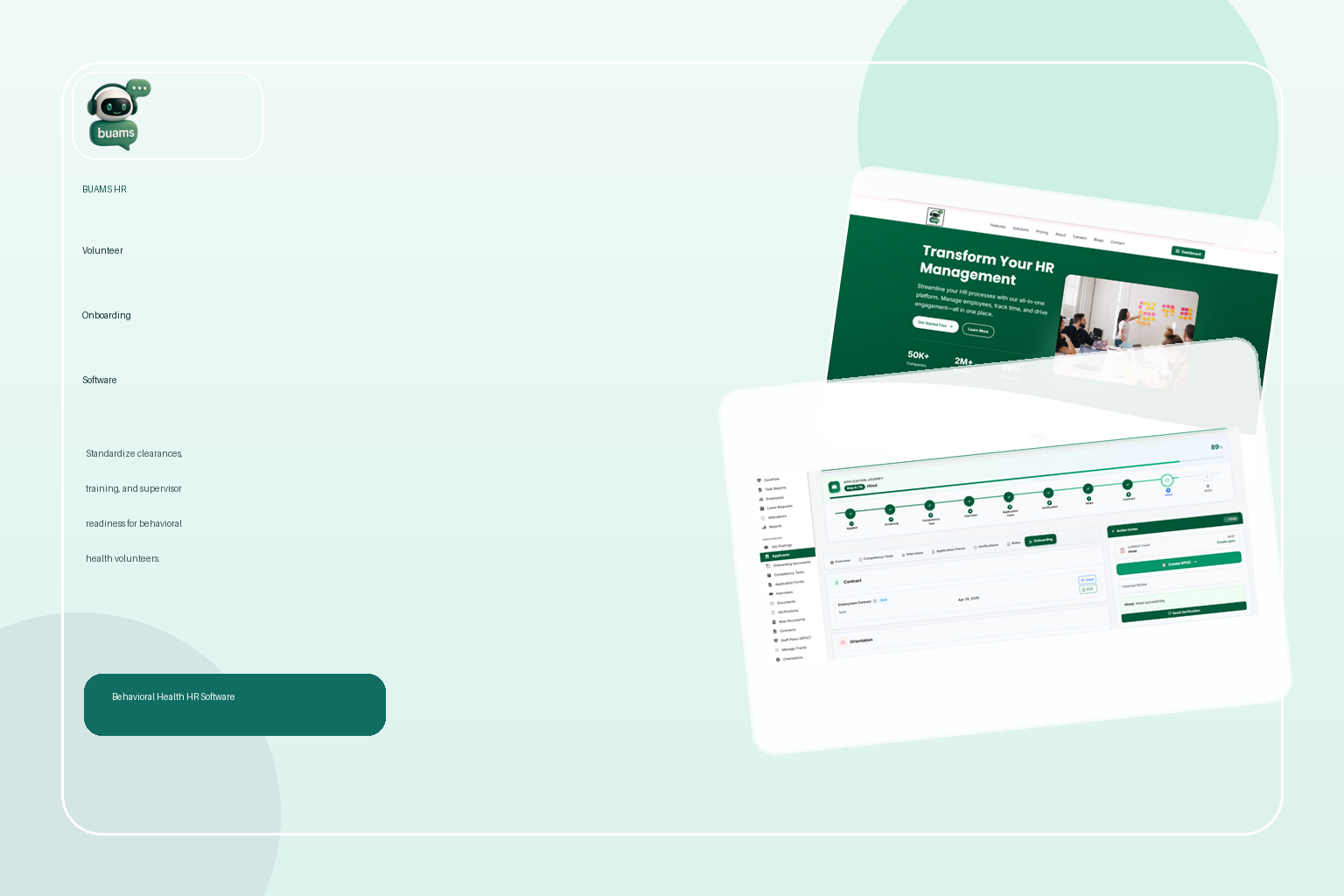
BUAMS HR gives behavioral health providers a cleaner way to manage workforce readiness processes, including volunteer intake workflows that require documentation, training, approvals, and centralized records. Instead of piecing together the process across forms, spreadsheets, and email, teams can manage volunteer onboarding in one system with clearer accountability. With BUAMS HR, organizations can:
This is especially valuable for providers that operate across multiple sites or programs and need a repeatable process that does not depend on one coordinator remembering every step manually. BUAMS HR helps turn volunteer onboarding into a documented, scalable workflow.
Final Thoughts
Volunteer programs can extend the reach of behavioral health organizations, but only when onboarding is organized, safe, and consistent. Volunteer onboarding software helps providers standardize the process from intake to readiness, reduce missing documentation, and support a better experience for both HR teams and volunteers.
For organizations that want stronger oversight without adding more administrative burden, BUAMS HR offers a practical way to manage volunteer onboarding with structured workflows, centralized records, and clearer compliance visibility.