Behavioral health HR teams rarely struggle because they do not care about compliance. They struggle because compliance work is spread across too many places at once. License renewals may sit in one spreadsheet, training deadlines in another, missing file items in email, and site-specific follow-up in separate folders or personal reminders. By the time leadership asks which locations are exposed, the team often has to rebuild the answer manually.
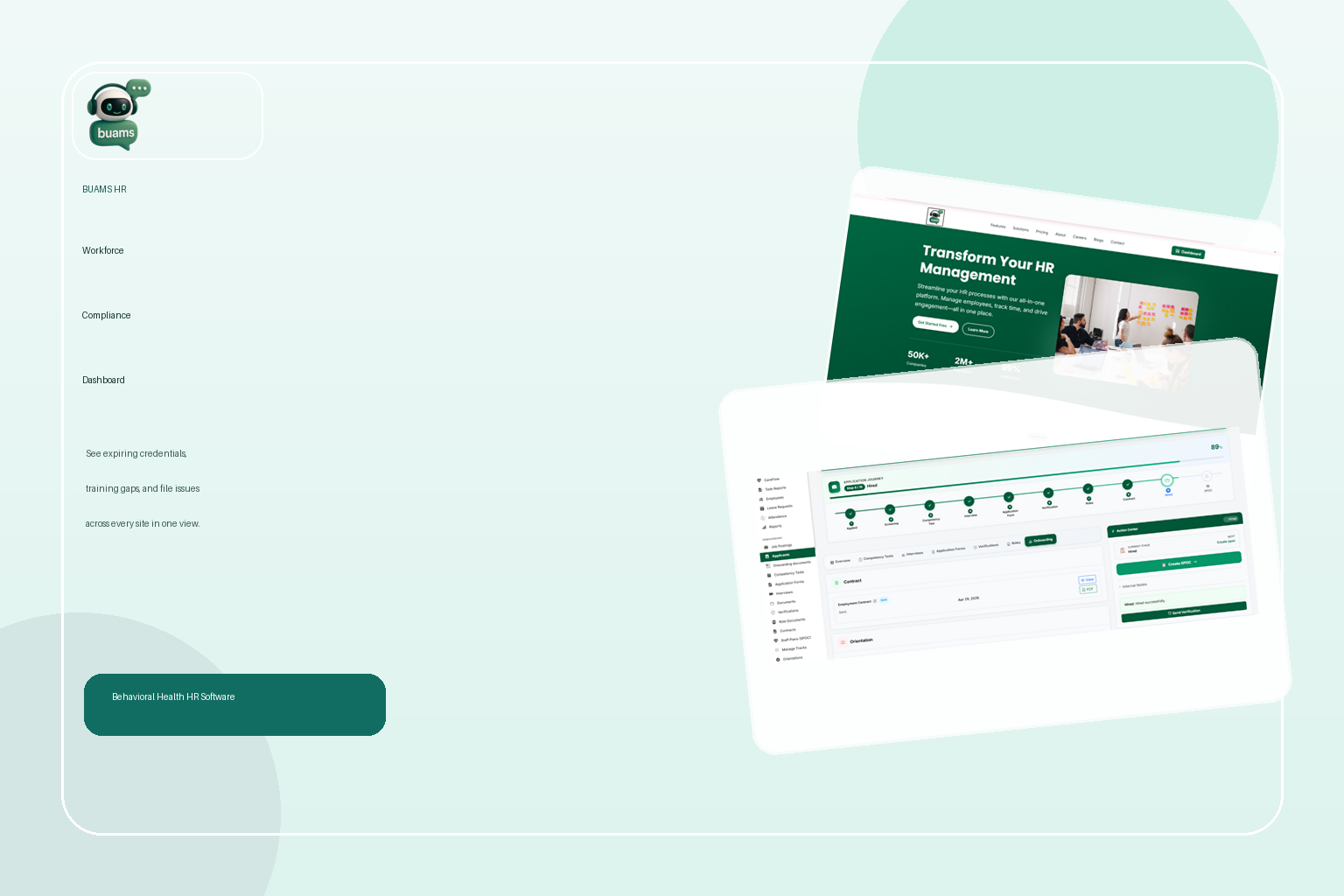
Workforce compliance dashboard software gives providers a clearer operating view. Instead of checking disconnected lists one by one, HR teams can monitor expiring requirements, overdue tasks, missing documents, and role-based gaps from one place. For behavioral health organizations with multiple programs, supervisors, and service sites, that visibility can reduce surprises and make compliance work easier to act on before risk grows.
Key Takeaways
What Is Workforce Compliance Dashboard Software?
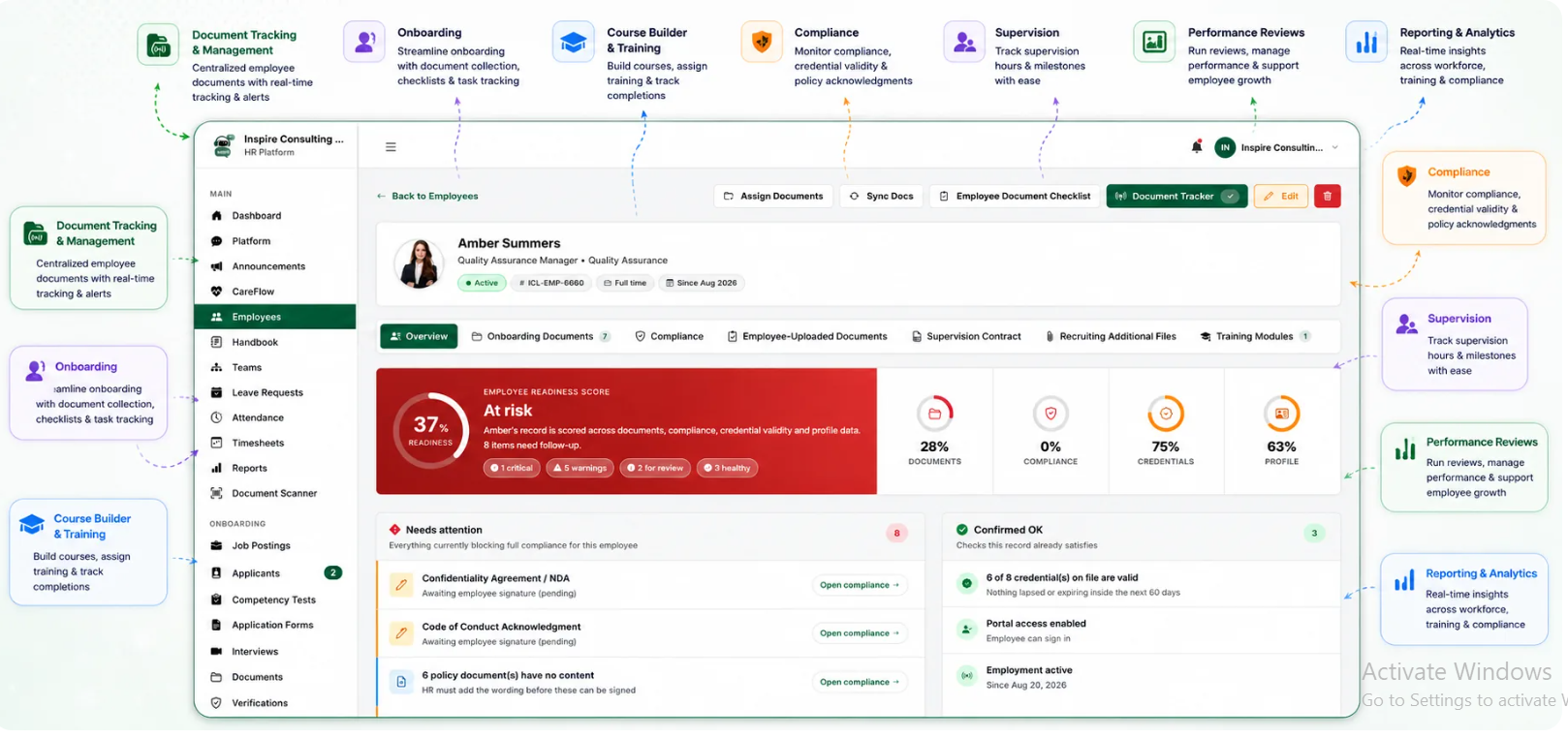
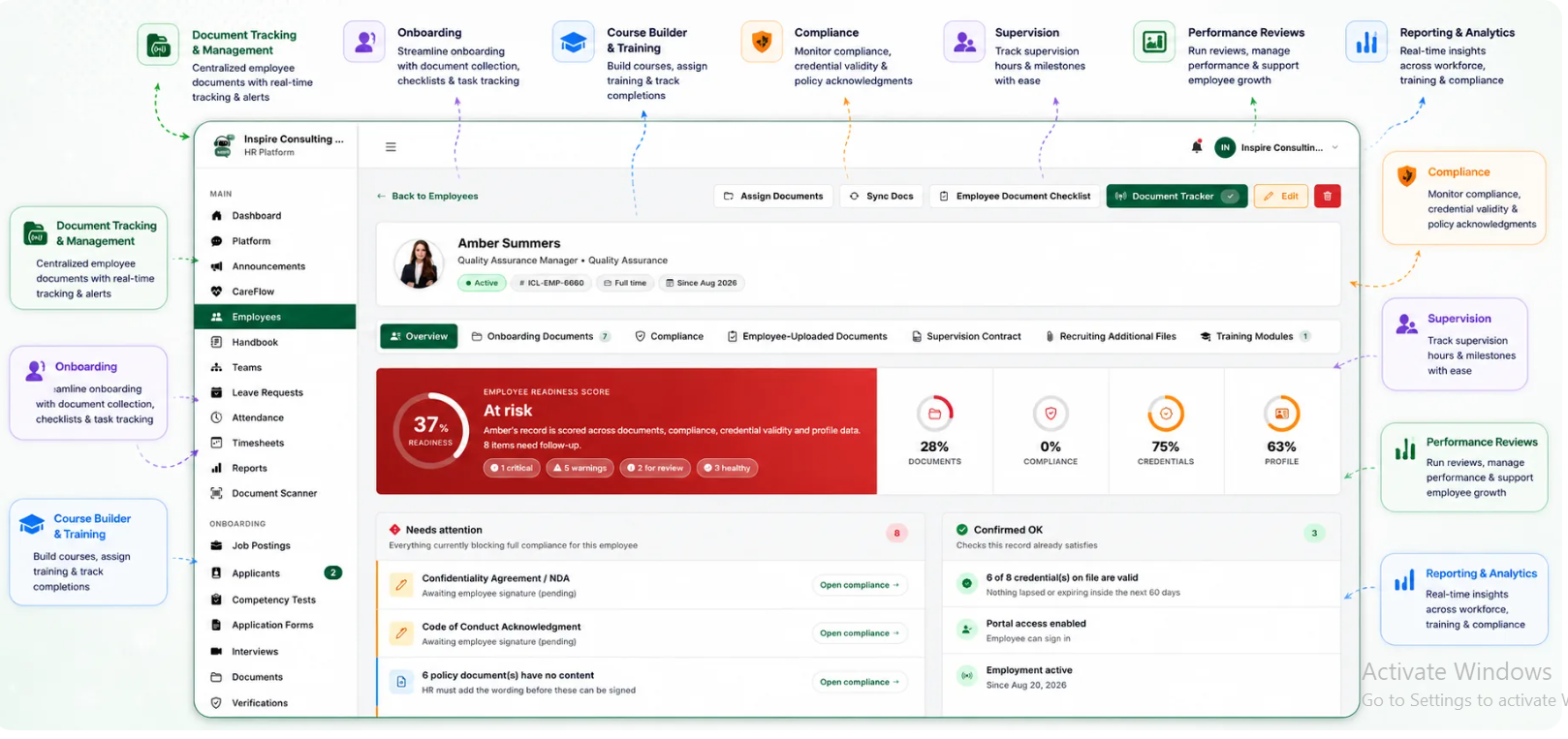
Workforce compliance dashboard software is a reporting and workflow visibility layer that helps HR and compliance leaders understand the current state of staff requirements across the organization. The dashboard should do more than display numbers. It should show which employees, programs, or sites need attention, what requirement is at risk, who owns the next step, and how soon action is needed.
In behavioral health settings, that often includes licenses, certifications, training completions, supervision-related documentation, onboarding items, policy acknowledgments, exclusion checks, and employee file requirements. A practical dashboard makes these obligations easier to review at the employee level and at the operational level, so teams can identify patterns instead of reacting to isolated problems.
Why It Matters for Behavioral Health Providers
Behavioral health providers often operate with a mix of clinicians, direct care staff, supervisors, support roles, contractors, and multi-site programs. Requirements do not expire on the same day or follow the same rules. Some vary by role, payer expectation, accreditation standard, or jurisdiction. That complexity makes manual tracking fragile, especially when several people share responsibility for HR readiness.
Without a usable dashboard, organizations tend to discover problems too late. A site leader notices a missing document right before an audit. A supervisor realizes a required training item is overdue after scheduling is already set. HR spends hours pulling lists from different systems just to answer a simple question about which locations have the most expiring requirements this month.
Workforce compliance dashboard software helps providers move from scattered follow-up to prioritized oversight. Teams can see where the backlog is building, which deadlines are closest, and whether one location or department needs extra support before a small issue turns into a larger operational risk.
What to Look For in Workforce Compliance Dashboard Software
Behavioral health organizations should look for dashboard software that supports action, not just visibility. A colorful screen is not enough if teams still need to leave the dashboard and rebuild the work manually. The best systems help users identify risk quickly and move directly into follow-up.
It is also helpful when the dashboard reflects live workflow status instead of stale snapshots. Behavioral health providers need a system that shows whether a problem is already being resolved, still unassigned, or waiting on employee action.
How BUAMS HR Helps
BUAMS HR helps behavioral health providers centralize the information that powers better compliance visibility. When employee files, requirement tracking, and follow-up workflows live in one system, HR teams do not have to piece together a dashboard from multiple disconnected tools. They can review what is missing, what is expiring, and what has already been completed with more confidence.
For organizations managing multiple locations, BUAMS HR supports a more structured way to monitor workforce readiness across sites and roles. HR leaders can keep documentation tied to the employee record, organize compliance tasks around real deadlines, and reduce the manual effort needed to answer location-level readiness questions. That makes it easier to focus on exceptions, not just data gathering.
BUAMS HR also supports the operational side of dashboard management. Instead of using reports only for observation, teams can use the underlying records and workflows to follow up, store proof, and keep requirements aligned as employees move through onboarding, renewals, or role changes. That connection between visibility and action is what makes a dashboard genuinely useful.
Final Thoughts
Behavioral health providers need more than reminders and static reports to stay ahead of workforce compliance risk. They need a reliable way to see which requirements are coming due, where problems are concentrated, and what actions are still open across sites and programs. Workforce compliance dashboard software gives HR teams that operational clarity.
For providers that want to reduce manual reporting and respond faster to expiring requirements, BUAMS HR offers a practical foundation. When dashboards connect directly to employee files, deadlines, and follow-up workflows, compliance oversight becomes easier to maintain and far less reactive.