Behavioral health providers depend on consistent, well-documented supervision to support staff development, protect care quality, and satisfy payer, accreditor, and licensing expectations. But many organizations still track supervision hours with disconnected spreadsheets, calendar invites, email chains, and paper notes. That makes it harder to confirm whether sessions happened on time, whether required topics were covered, and whether proof is available when someone asks for it.
Supervision hours tracking software gives HR and operations teams a more reliable way to organize supervisory requirements, monitor completion, and keep documentation tied to the right employee record. For behavioral health organizations managing licensed clinicians, trainees, direct care staff, and multi-site teams, that structure can reduce risk while saving time.
Key Takeaways
What Is Supervision Hours Tracking Software?
Supervision hours tracking software is a system for managing the operational side of staff supervision. Instead of relying on separate tools for scheduling, reminders, sign-off, and document storage, the software creates one place to record who needs supervision, how often it must happen, which supervisor is responsible, and what evidence should be retained.
In behavioral health settings, that matters because supervision is rarely one-size-fits-all. A trainee may need weekly documented oversight. A licensed clinician may need periodic case review. A program manager may need visibility into whether supervisory expectations are being met across multiple programs. The right workflow helps organizations keep those requirements visible and consistent.
Why It Matters for Behavioral Health Providers
Supervision is more than a calendar event. It often supports licensure pathways, payer expectations, quality assurance, and internal risk management. When the recordkeeping around supervision is weak, organizations can face avoidable problems such as missing documentation, unclear accountability, delayed file reviews, or difficulty proving oversight happened when required.
Behavioral health providers also deal with workforce complexity. Staff may split time across locations, programs, and supervisors. Requirements may differ by role, license type, or employment status. Without a structured system, HR teams are forced to chase updates manually and piece together evidence from multiple sources.
That is why supervision hours tracking software is especially useful in environments where compliance and care readiness are tightly linked. A strong process helps agencies protect continuity while making expectations easier to manage.
Common Problems With Spreadsheet-Based Supervision Tracking
Many organizations start with spreadsheets because they are familiar. Over time, those spreadsheets become difficult to maintain. Version control slips, reminders are manual, and notes are stored in too many places. When turnover happens, institutional knowledge goes with it.
Those gaps do not always show up on a normal day. They show up when an employee changes roles, a license renewal is due, an auditor requests proof, or a supervisor leaves and someone else has to reconstruct the history.
What to Look for in Supervision Hours Tracking Software
Not every tracking tool fits behavioral health workflows. Providers should look for software that supports both operational follow-through and compliance documentation.
Role-Based Requirements
The system should allow organizations to assign different supervision expectations based on job title, licensure path, program, or location. That prevents blanket workflows that ignore the realities of clinical operations.
Centralized Documentation
Completed sessions, notes, acknowledgments, and attachments should live in one accessible place. A complete record matters when HR, compliance, or leadership needs to confirm what happened without sorting through inboxes.
Alerts for Overdue Activity
Automated reminders help teams catch missed sessions early. Instead of waiting for a file review to uncover gaps, the organization can respond before a small issue turns into a compliance problem.
Supervisor Accountability
The workflow should clearly show which supervisor owns the next step. That reduces confusion when staff report to different leaders or when supervisory assignments change.
Connection to Employee Records
Supervision documentation is more useful when it sits alongside employee files, credentials, onboarding tasks, and role history. Connected records make audits, renewals, and internal reviews faster and more accurate.
How BUAMS HR Helps Teams Stay Organized
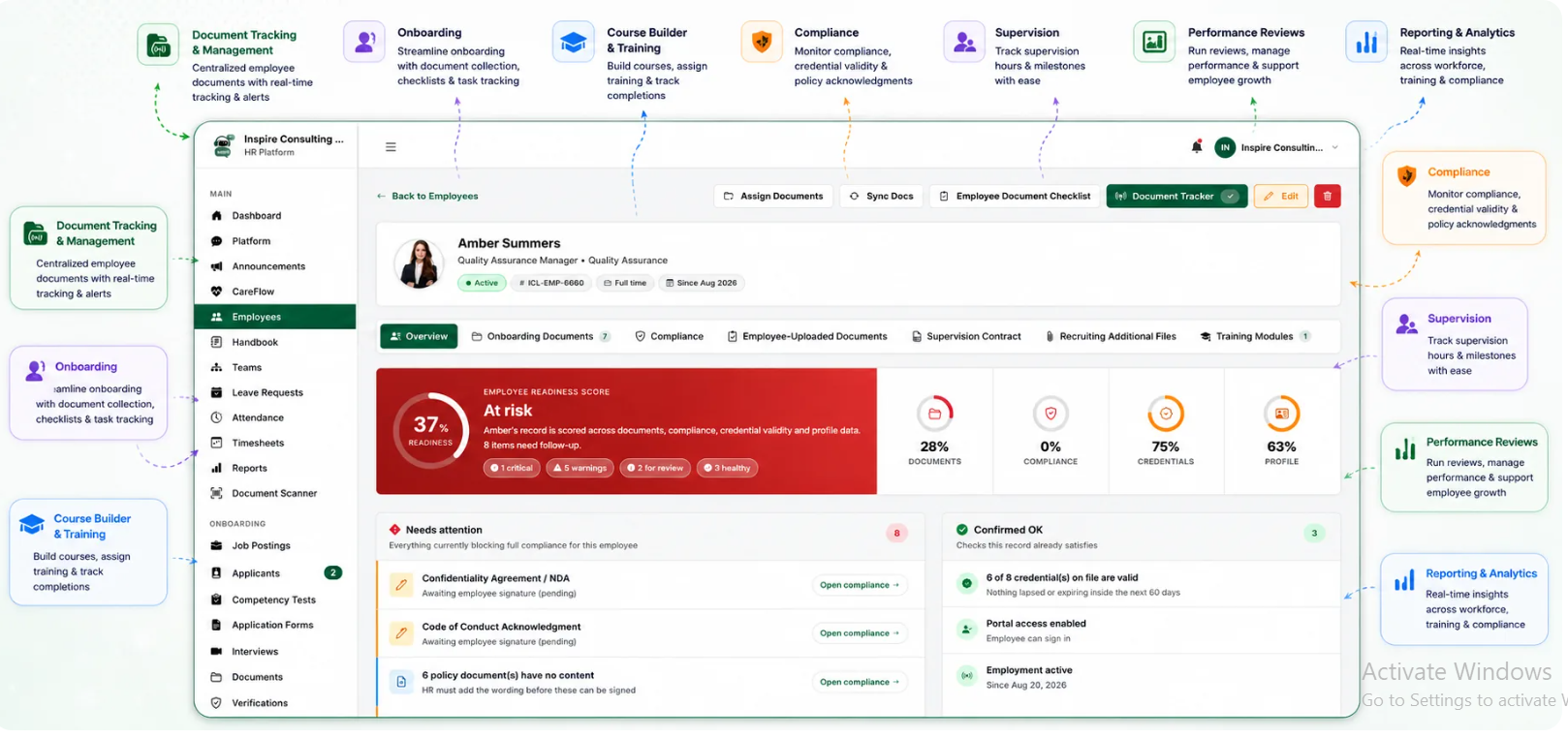
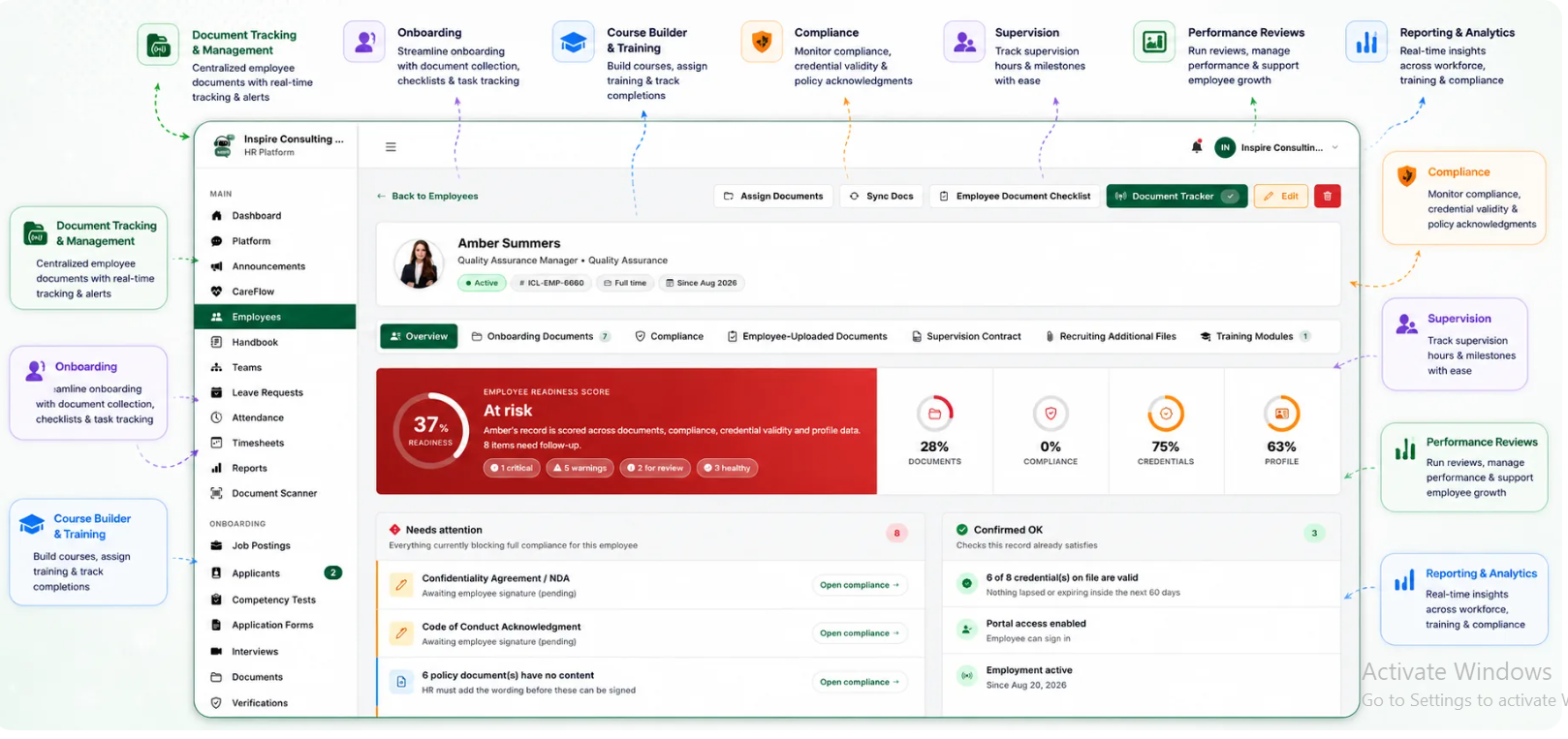
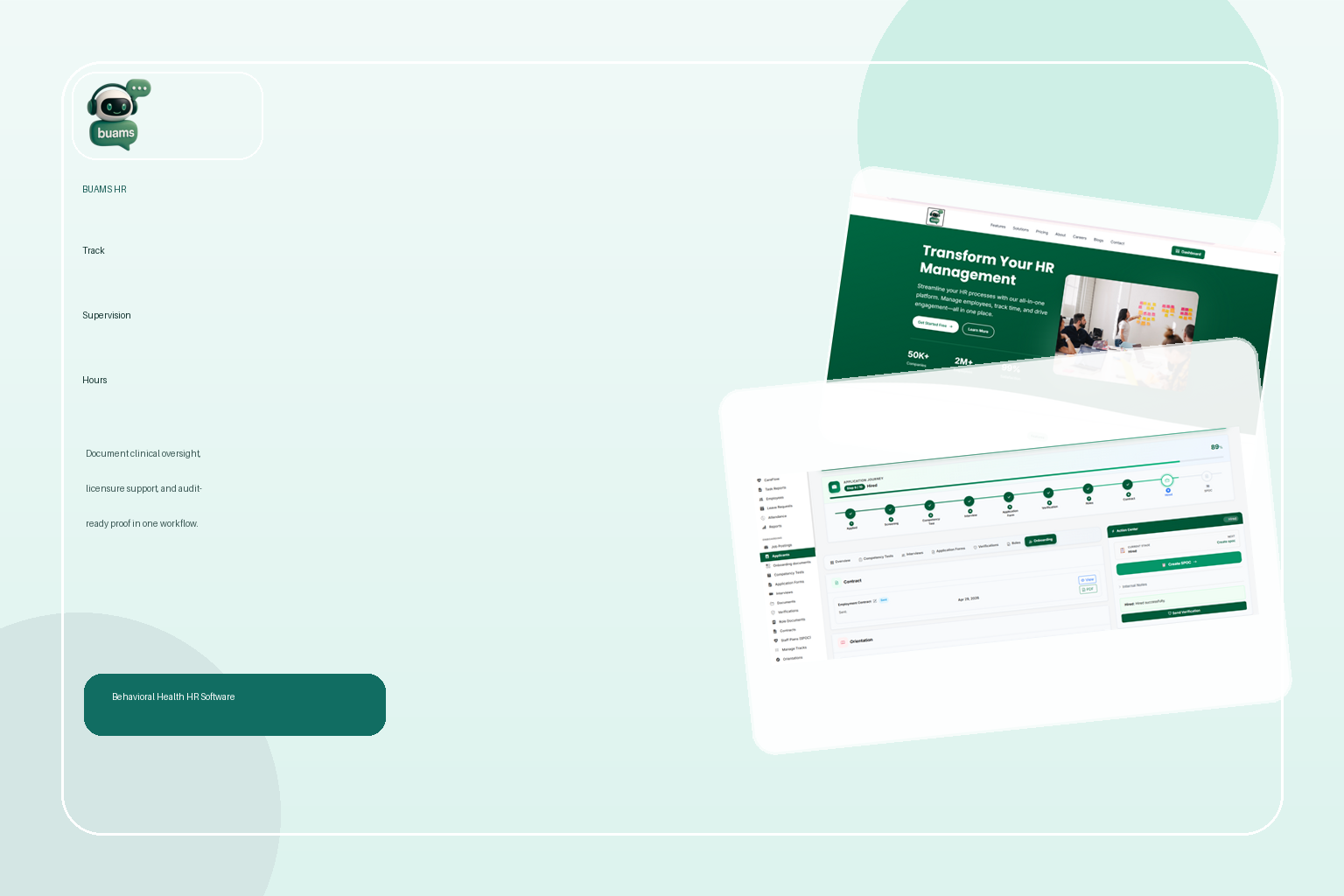
BUAMS HR is built for behavioral health workforce operations, which makes it a practical fit for organizations that need more than a generic note-taking tool. Teams can use BUAMS HR to centralize employee records, organize compliance documentation, and create more consistent workforce workflows across programs and sites.
For supervision-related processes, that means HR and operations leaders can keep required documentation closer to the rest of the employee compliance file. When role changes happen, when staff move across locations, or when a reviewer needs proof of oversight, the organization is not starting from scratch.
Instead of treating supervision as a separate administrative burden, BUAMS HR helps bring it into a broader system for workforce readiness. That is especially valuable for agencies that need to keep onboarding, credential tracking, policy documentation, and employee files aligned.
Best Practices for Implementation
Software alone does not solve inconsistent supervision. Providers get better results when they pair the tool with clear expectations and standard processes.
These steps help the organization move from reactive cleanup to a more reliable year-round supervision process.
Final Thoughts
Supervision hours tracking software gives behavioral health providers a more dependable way to manage one of the most important parts of workforce oversight. When documentation is timely, centralized, and connected to the employee record, agencies can reduce administrative friction while strengthening compliance readiness.
For organizations that want a cleaner way to manage employee files, compliance workflows, and supervision-related documentation together, BUAMS HR offers a practical path forward.