Behavioral health providers cannot afford to treat exclusion screening as a one-time hiring task. OIG and SAM checks often need to be completed at hire, documented clearly, and repeated on a defined schedule so organizations can prove they are not employing or contracting with excluded individuals. When screening steps live in spreadsheets, inboxes, or paper files, HR teams end up chasing dates, hunting for proof, and reacting late when auditors or leadership ask for evidence.
Exclusion screening tracking software gives providers a more reliable way to manage this work. Instead of relying on scattered reminders, teams can assign screening tasks, track due dates, store documentation, and keep employee records tied to a repeatable compliance workflow. For behavioral health organizations managing multiple roles, locations, and credentialed staff, that structure can reduce risk without adding more manual admin.
Key Takeaways
What Is Exclusion Screening Tracking Software?
Exclusion screening tracking software is a system for managing the operational side of workforce screening against exclusion lists such as the OIG List of Excluded Individuals and Entities and SAM.gov results. The software is not just a place to note that a check happened. It should also help HR teams define when checks are required, who is responsible, what proof must be retained, and how overdue items are escalated.
In behavioral health settings, this matters because screening does not only affect new hires. Providers may need recurring checks for employees, contractors, interns, or other workers whose roles touch billing, patient care, documentation, supervision, or regulated operations. A strong process makes screening part of normal HR operations rather than a separate compliance fire drill.
Why It Matters for Behavioral Health Providers
Behavioral health organizations often operate across multiple programs, funding streams, and service models. That means one missed or undocumented screening can create outsized operational risk. Even when teams are diligent, manual systems break down when responsibilities are split across recruiters, HR coordinators, compliance staff, and program leaders.
Common problems include due dates tracked on personal calendars, screenshots saved in inconsistent folders, and no simple way to show whether a recurring screening was completed on time. If an employee changes roles, transfers sites, or returns after a leave, the screening history can become even harder to follow. The result is extra effort for HR and less confidence for leadership.
Exclusion screening tracking software improves consistency by turning a fragile process into a controlled workflow. It helps organizations know which staff members require screening, when each check is due, what documentation is missing, and where to find the final proof during an audit or internal review.
What to Look For in Exclusion Screening Tracking Software
Behavioral health providers should look for software that supports both compliance control and day-to-day usability. The goal is not to create another isolated checklist. The goal is to make screening easier to complete, easier to verify, and easier to maintain as the workforce changes.
It is also helpful when the platform fits naturally with related processes such as onboarding, employee file management, credential tracking, and policy acknowledgments. That reduces duplicate entry and makes the compliance picture easier to understand.
How BUAMS HR Helps
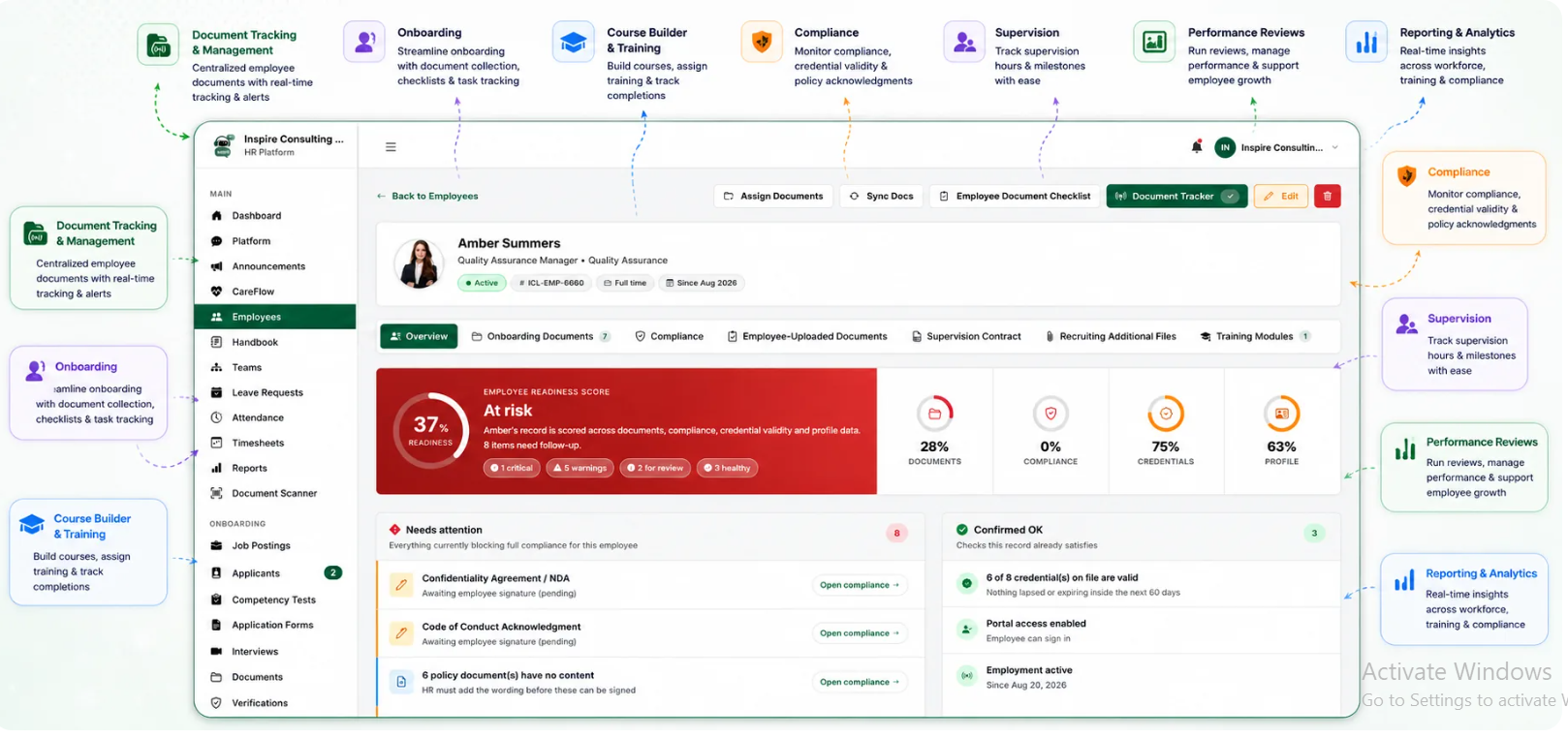
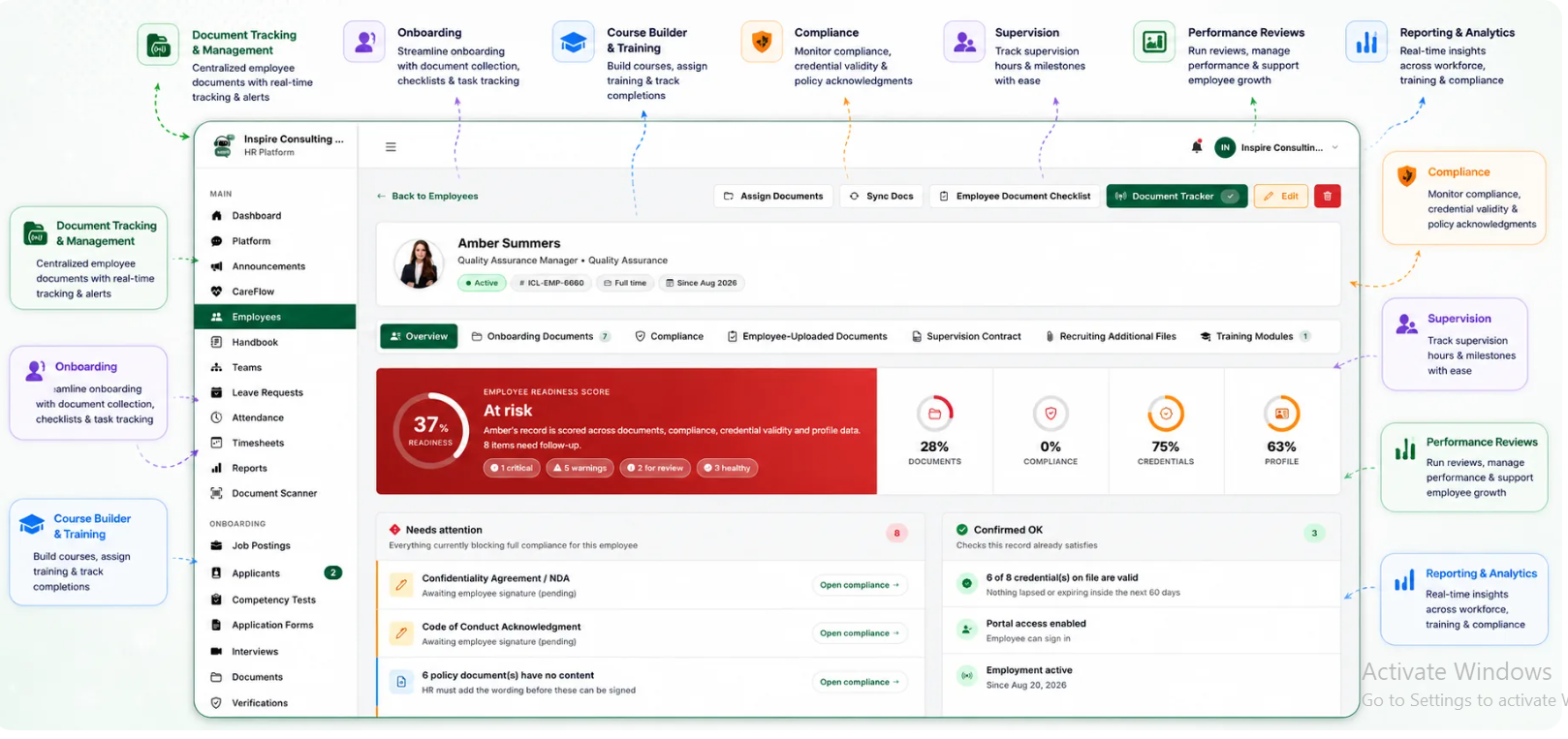
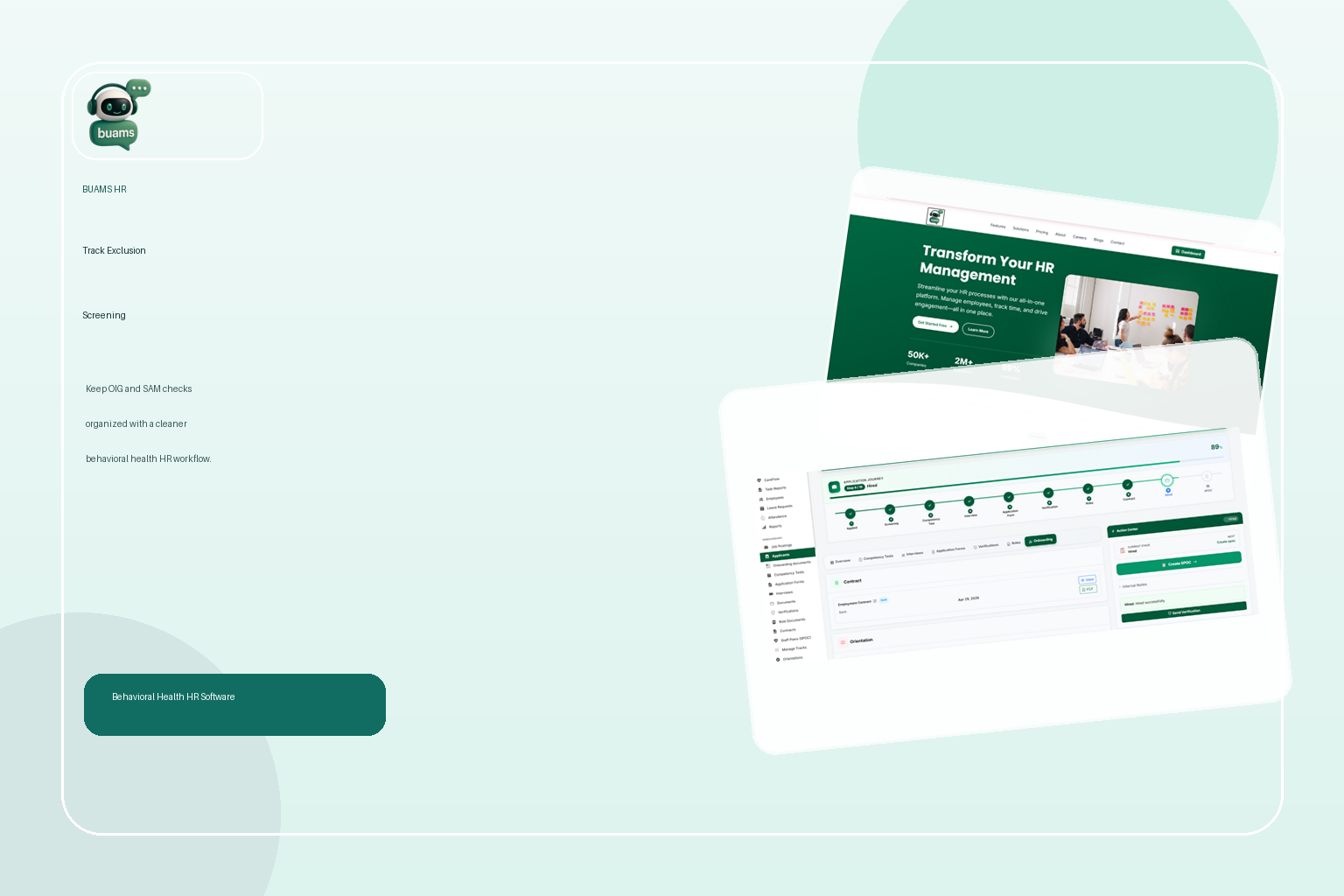
BUAMS HR gives behavioral health providers a practical way to manage exclusion screening as part of a broader workforce compliance workflow. Instead of storing screening evidence in disconnected folders, teams can keep tasks, dates, and supporting records aligned with the employee file.
For example, HR can use BUAMS HR to standardize new-hire screening steps, assign responsibility, and keep documentation attached to the right record from the start. As staff members move through onboarding or change roles, the organization has a clearer view of what has been completed and what still needs attention.
BUAMS HR also supports the larger operational need behind exclusion screening: keeping HR documentation organized, searchable, and review ready. That matters when a provider is preparing for an audit, answering a leadership question, or checking whether a recurring compliance task was completed on time. With a more centralized system, teams spend less time chasing proof and more time keeping workforce operations on track.
Final Thoughts
Exclusion screening is too important to manage with scattered reminders and inconsistent file storage. Behavioral health providers need a process that is repeatable, documented, and easy to review across employees, contractors, and programs. Exclusion screening tracking software helps reduce manual follow-up while strengthening audit readiness and workforce oversight.
For organizations that want a cleaner way to connect screening steps with onboarding, employee files, and ongoing compliance tasks, BUAMS HR offers a more structured foundation. That kind of operational control can make a meaningful difference long before the next audit request arrives.