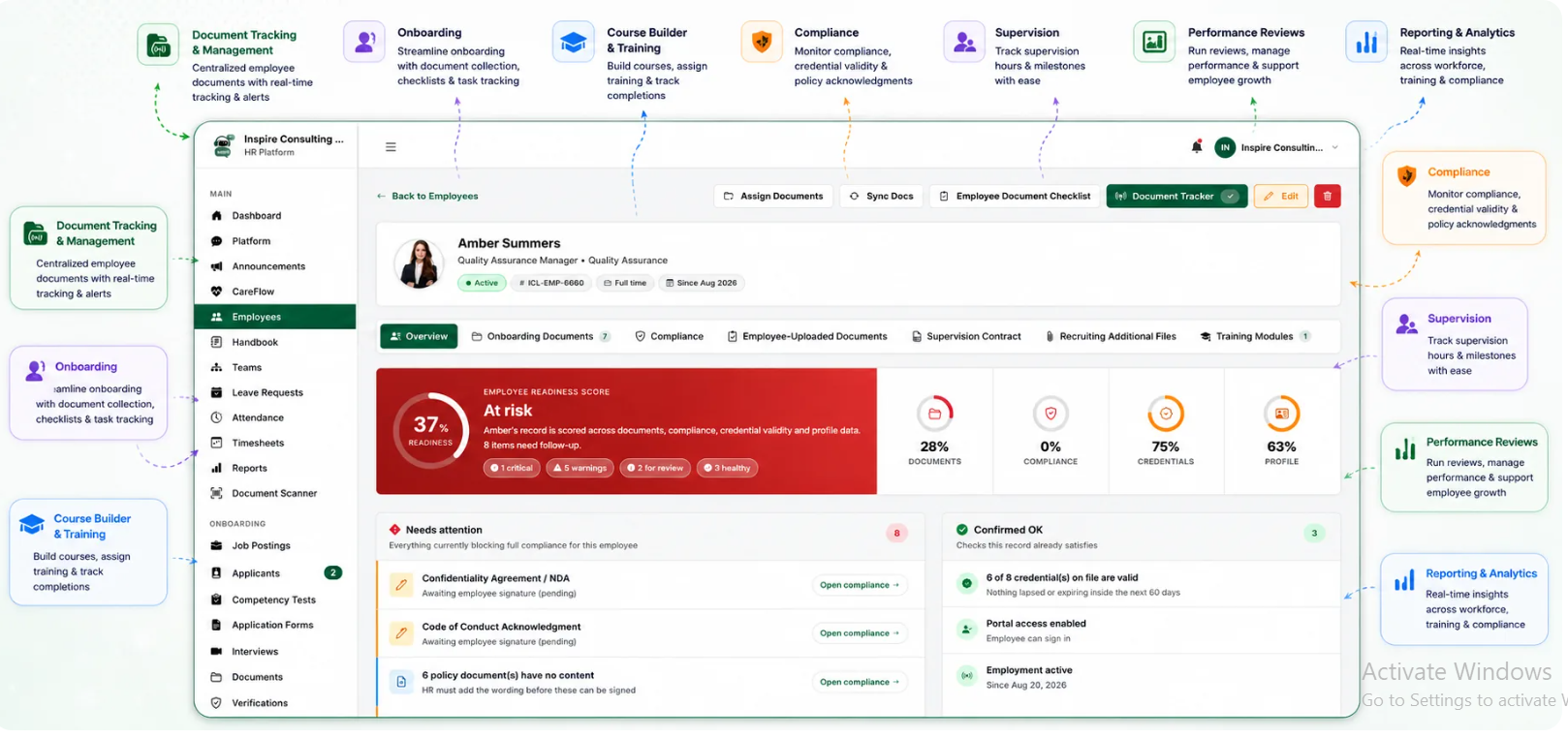
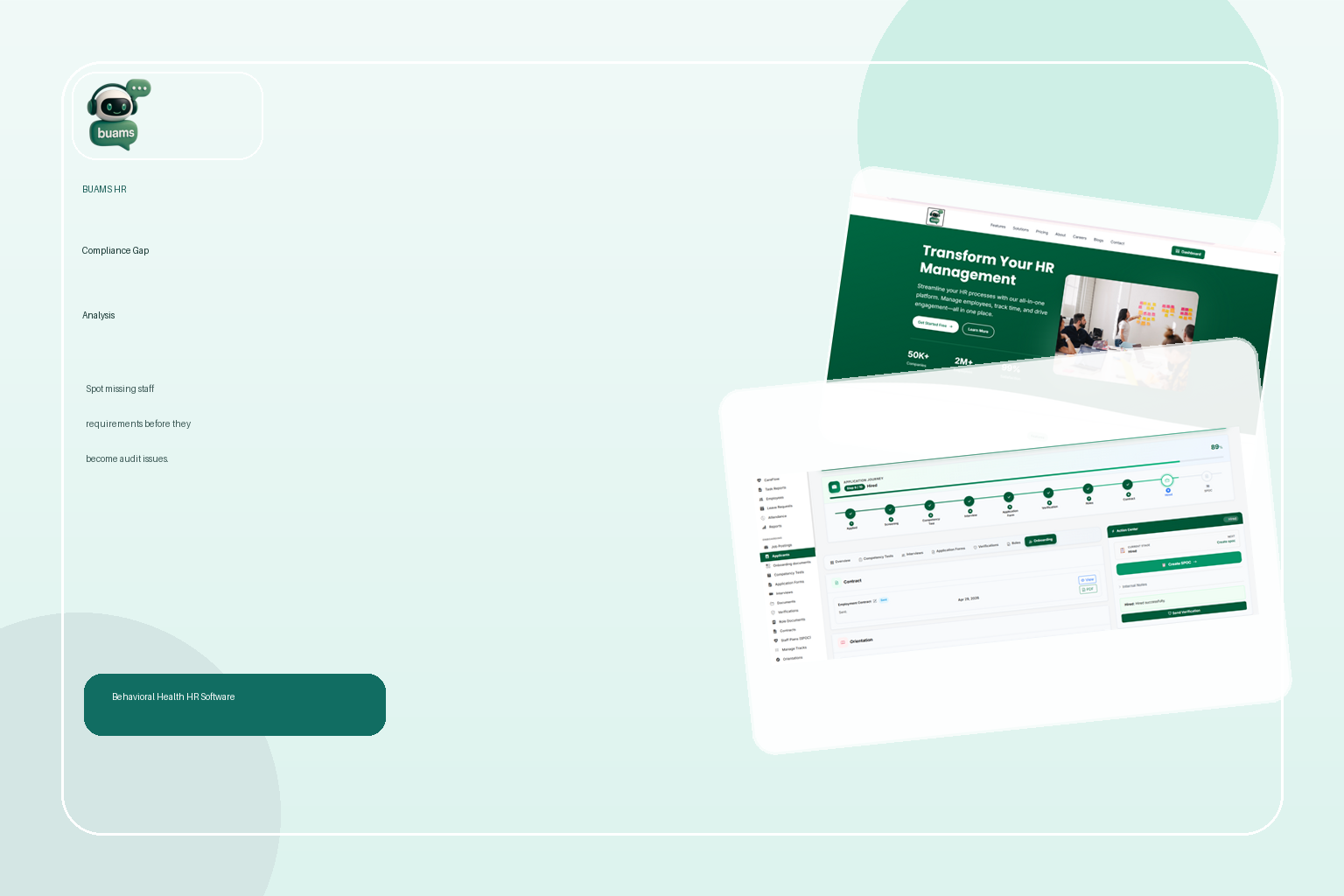
Behavioral health providers rarely have just one compliance requirement to monitor for each employee. A single staff record may need a professional license, background check, training completions, supervisor assignment, policy acknowledgments, health documentation, job description sign-off, and role-based onboarding evidence. When those requirements are tracked in separate spreadsheets, inboxes, paper folders, or disconnected systems, gaps stay hidden until an audit, accreditation review, or start-date problem forces someone to investigate. Compliance gap analysis software gives HR teams a structured way to identify missing workforce requirements early, prioritize follow-up, and reduce last-minute scrambling.
Key Takeaways
What Is Compliance Gap Analysis Software?
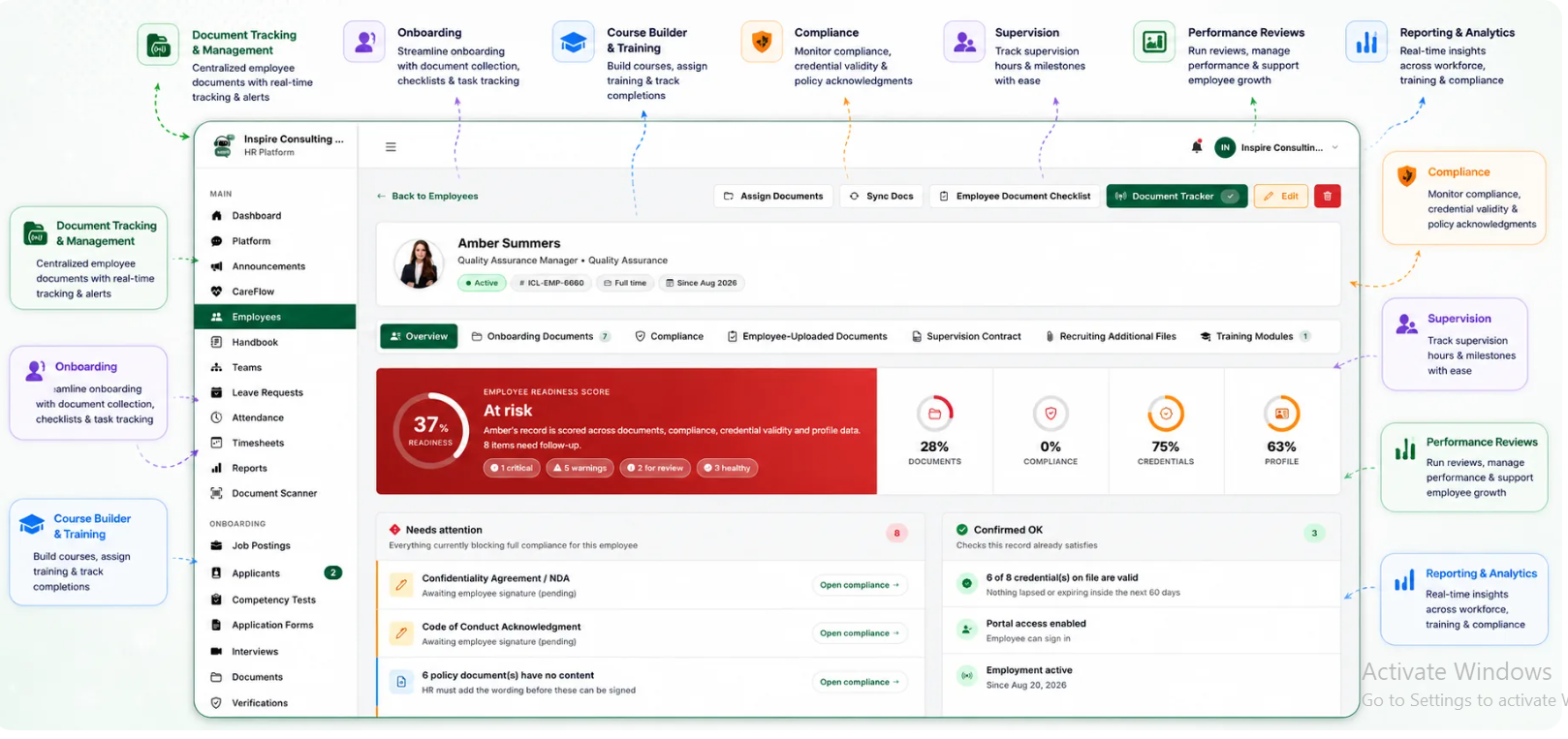
Compliance gap analysis software is a tool that shows the difference between what documentation or workforce requirements should be complete and what is actually complete today. Instead of asking HR teams to manually review employee files one by one, the software highlights missing, expired, overdue, or inconsistent items across the workforce. That can include credentials, onboarding tasks, annual training, signed policies, health requirements, job-specific attestations, and supervisor approvals.
For behavioral health providers, this kind of visibility matters because compliance problems are rarely isolated. A missing training certificate may also affect a supervisor review. An expired license may impact scheduling and service coverage. A partially completed employee file may create audit risk even if the employee has already started work. Compliance gap analysis software helps teams detect these problems systematically rather than discovering them through emergency follow-up.
Why It Matters for Behavioral Health HR Teams
Behavioral health organizations often manage multiple sites, programs, and service models with different staffing requirements. Outpatient therapists, community-based staff, supervisors, direct support roles, intake teams, and administrative employees may all have different compliance obligations. Even when each requirement is reasonable on its own, the combined workload becomes difficult to manage without a clear operating system.
That complexity creates blind spots. One location may be diligent about annual attestations but slow on role-based training updates. Another may keep licenses current but struggle with employee health records or policy sign-offs. HR leaders may know there are gaps somewhere without knowing which ones are urgent, how widespread they are, or which managers need to act first. Compliance gap analysis software helps convert that uncertainty into a visible list of actionable issues.
This also supports better workforce readiness. A staff member who appears fully onboarded may still be missing one critical requirement that prevents them from being truly ready for independent work. When HR can see those exceptions early, the organization can protect start dates, supervision plans, and audit preparedness at the same time.
Common Workforce Gaps That Stay Hidden Too Long
Many behavioral health providers run into the same recurring problems when compliance reviews depend on manual checking:
None of these issues are unusual. The bigger problem is that they tend to surface at the worst possible time: right before a survey, during a file review, or after a staffing decision has already been made.
What to Look For in Compliance Gap Analysis Software
Requirement mapping by role and program
The software should let HR define what is required for each job type, employment status, location, or service line. Without that structure, gap analysis becomes too generic to be useful.
Exception-based dashboards
Good systems show what is missing or at risk instead of forcing teams to read through every completed item. HR leaders should be able to sort gaps by urgency, due date, site, manager, or requirement type.
Evidence linked to the employee record
A useful alert is only the first step. Teams also need the supporting documentation tied directly to the employee file so they can confirm whether the gap is real, corrected, or awaiting approval.
Deadline and expiration visibility
Behavioral health compliance work is ongoing, not one-time. Strong compliance gap analysis software helps teams see both current deficiencies and upcoming risks before they become overdue.
Manager accountability
Some gaps can only be resolved by supervisors, clinical leaders, or local coordinators. The right system makes ownership clear so follow-up is not trapped inside HR email threads.
Best Practices for Stronger Gap Analysis
How BUAMS HR Helps
BUAMS HR helps behavioral health providers bring compliance gap analysis into day-to-day workforce operations. Instead of treating employee files, onboarding tasks, credentials, and acknowledgments as separate administrative chores, teams can manage them in one connected environment. That makes it easier to identify what is missing, verify what has already been completed, and direct follow-up to the right people before an issue grows.
For HR leaders, that means clearer visibility into workforce readiness across programs and locations. For supervisors, it means fewer surprises when an employee is missing a requirement tied to a role change, start date, or annual review. For compliance and accreditation preparation, it means faster access to evidence that supports the organization’s process. BUAMS HR gives behavioral health providers a more practical way to monitor requirements continuously instead of relying on last-minute file checks.
Final Thoughts
Compliance gap analysis software helps behavioral health providers move from reactive cleanup to proactive workforce oversight. When HR teams can see missing requirements early, they can reduce audit stress, protect staffing timelines, and improve confidence in employee records across the organization. For providers that want a cleaner, more accountable way to manage workforce compliance, BUAMS HR offers a strong foundation for spotting gaps before they become bigger operational problems.