Behavioral health providers collect a steady flow of forms throughout the employee lifecycle. Hiring packets, direct deposit forms, tax documents, handbook acknowledgments, training attestations, benefit elections, supervisor updates, and role-change paperwork all need to be completed accurately and stored where HR can find them later. When organizations rely on email attachments, paper checklists, and shared folders, missing forms become a recurring problem. Employee form collection software gives behavioral health HR teams a more dependable way to request, receive, track, and organize required forms without slowing hiring or creating documentation gaps.
Key Takeaways
What Is Employee Form Collection Software?
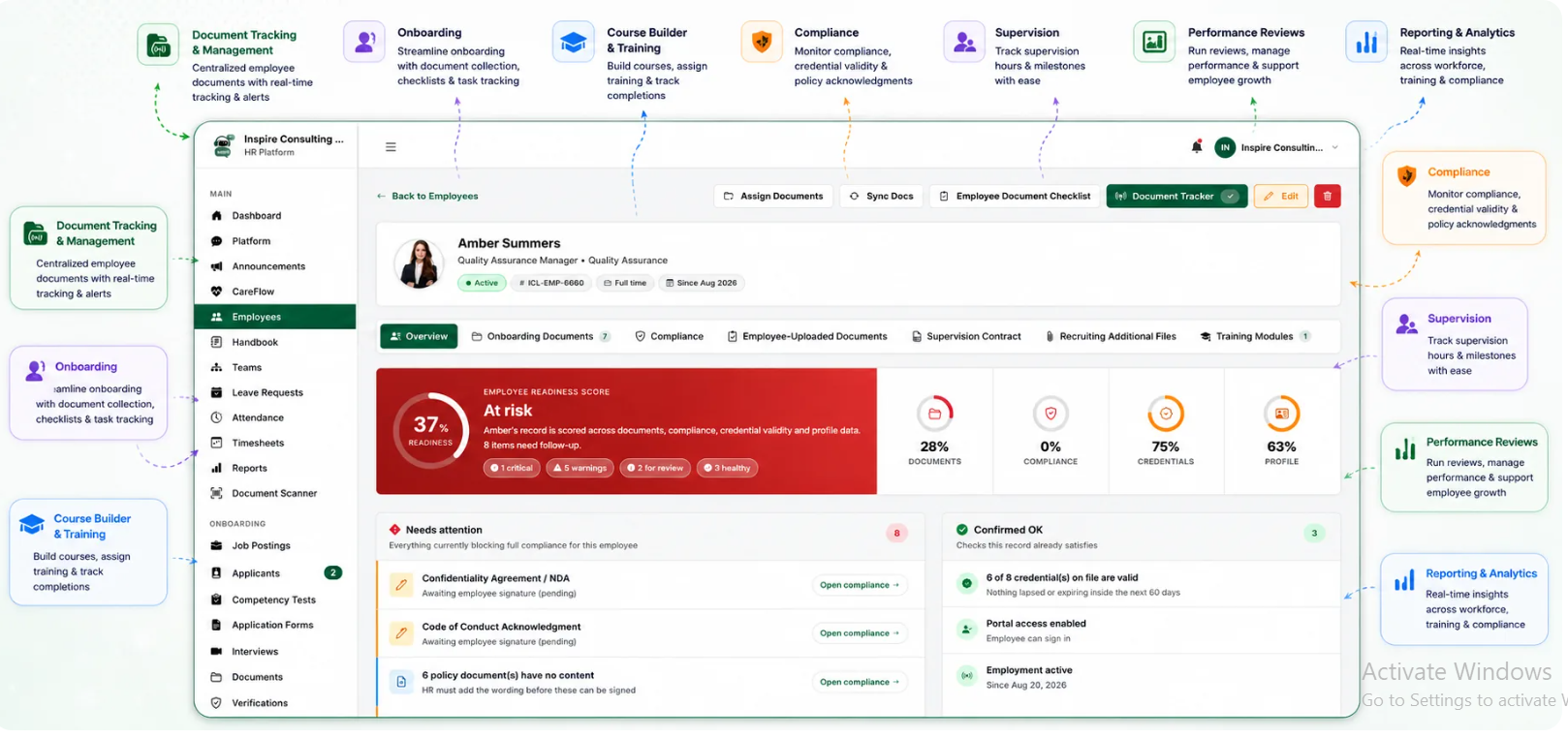
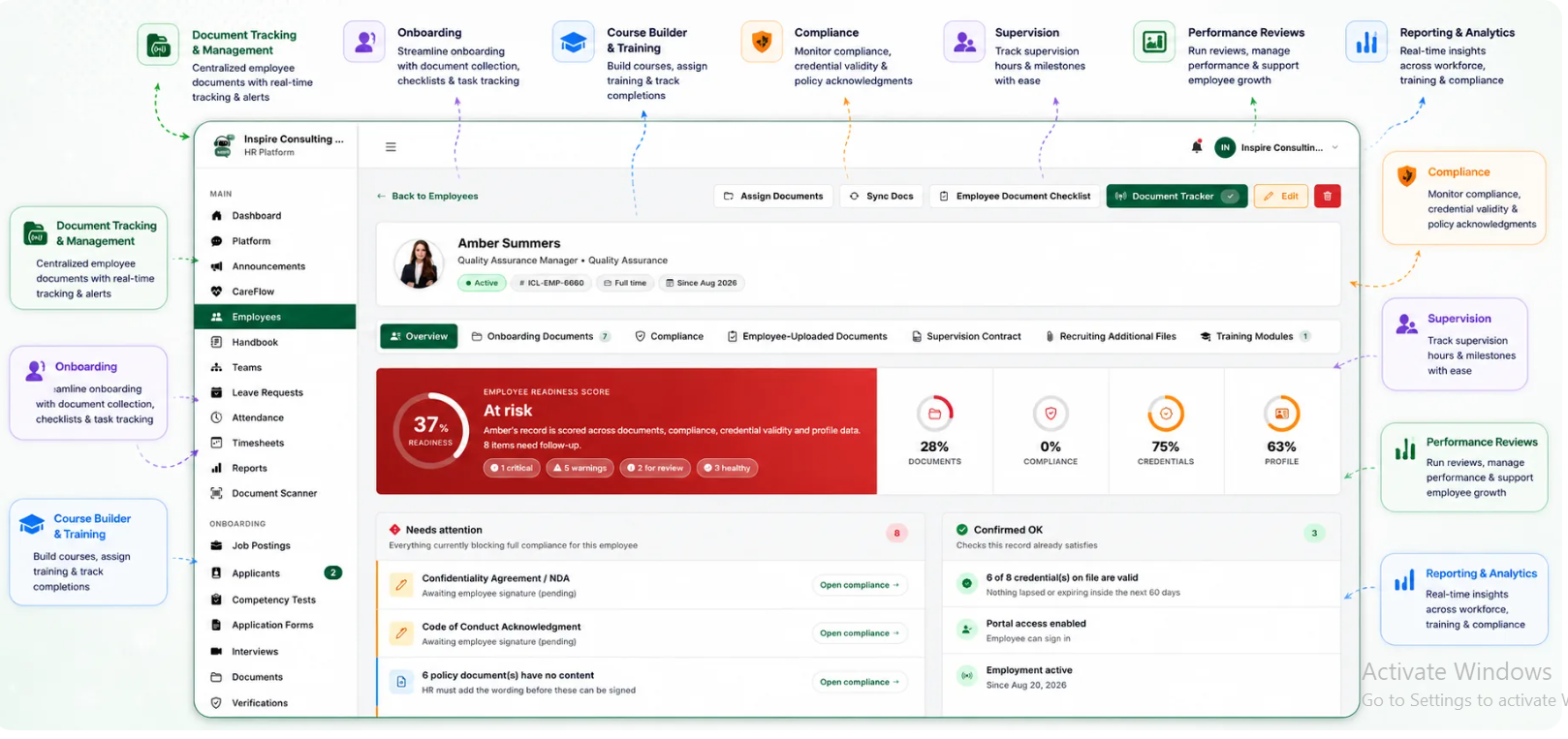
Employee form collection software is a system for gathering and managing workforce documents in a structured way. Instead of depending on separate emails, PDFs, paper packets, or spreadsheet trackers, HR teams can assign required forms, monitor completion status, and store the resulting records in one place. The software helps organizations standardize what needs to be collected for each employee, role, location, or employment event.
In behavioral health, this matters because form collection is tied directly to workforce readiness. A candidate cannot start on time if critical documents are missing. An employee file is not truly complete if policy sign-offs or role-specific acknowledgments are buried in inboxes. A manager request can stall if HR has to chase down a revised form or verify whether the latest version was ever submitted. Employee form collection software gives teams a cleaner process for handling these recurring requirements.
Why It Matters for Behavioral Health Providers
Behavioral health organizations often operate across multiple programs, service settings, and staff types. Full-time clinicians, part-time counselors, supervisors, support staff, interns, and contract workers may all need slightly different forms. That complexity creates risk when form collection depends on memory or manual follow-up. One site may use an outdated document, another may skip a required acknowledgment, and HR may not realize anything is missing until payroll, a supervisor, or an auditor asks for proof.
Delays in form collection affect more than administrative neatness. They can push back start dates, slow benefits setup, create inconsistent personnel files, and make compliance reviews harder than they should be. Behavioral health providers also face added pressure because workforce documentation often intersects with credentialing, training, access control, and accreditation expectations. A structured collection process helps teams move faster while keeping documentation complete and review ready.
What to Look For in Employee Form Collection Software
Role-based form assignments
The best tools let HR assign different forms based on job title, program, site, employment type, or workflow stage. That prevents over-collecting unnecessary paperwork while making sure role-specific requirements are not missed.
Required fields and signatures
Good software should support required completion steps so forms cannot be submitted half-finished. Digital signatures, date fields, acknowledgments, and document uploads help reduce avoidable back-and-forth.
Completion tracking
HR and supervisors need clear visibility into what is complete, what is still outstanding, and what is blocked by missing information. Progress tracking is especially helpful during onboarding when many tasks are moving at once.
Version control
Policy forms and internal documents change over time. Strong employee form collection software makes it easier to confirm staff completed the current version instead of an outdated attachment that someone forwarded months ago.
Connection to the employee record
Collected forms should not live in a disconnected repository. HR teams need the submitted documents tied to the employee file so they can be reviewed later during audits, investigations, supervisor changes, or status updates.
Common Breakdowns in Manual Form Collection
Many behavioral health HR teams still manage forms with email attachments, printed packets, or separate shared drives. That leads to predictable problems:
These issues are expensive because they consume HR time and create uncertainty for leadership. If the organization cannot quickly tell whether required forms are complete, every hire, role change, and compliance check takes longer than it should.
Best Practices for Stronger Form Collection
How BUAMS HR Helps
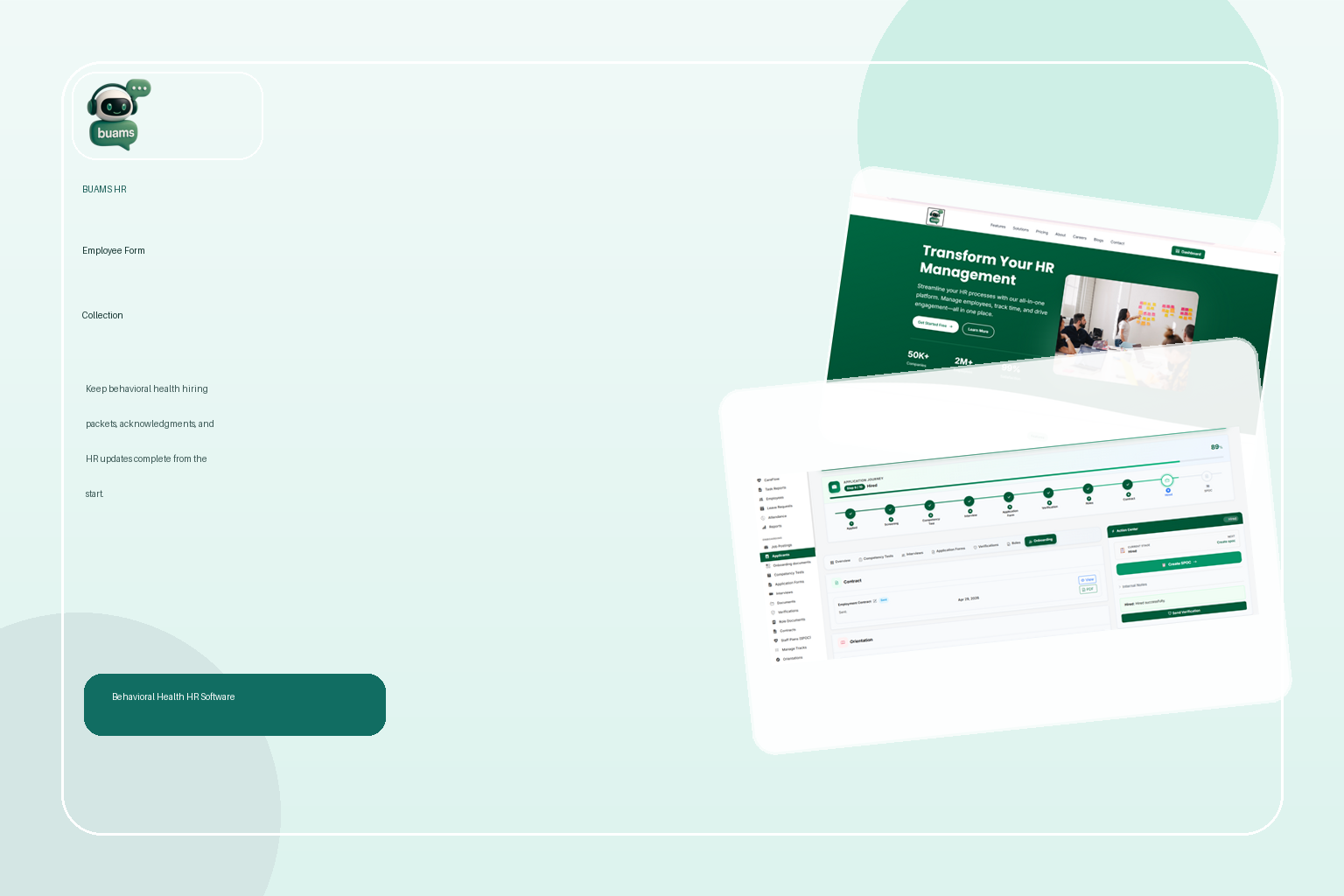
BUAMS HR helps behavioral health providers bring employee form collection into the same operational environment as onboarding, employee records, approvals, and compliance tracking. Instead of treating forms as isolated attachments, teams can manage required documents as part of the larger HR workflow. That makes it easier to see which forms are still missing, which documents belong to a particular employee, and which follow-up actions are still open.
For growing organizations, that visibility matters. HR leaders need confidence that personnel files are complete, supervisors need a reliable way to support workforce changes, and compliance teams need documentation they can retrieve quickly. BUAMS HR supports a more organized process where form collection is structured, trackable, and connected to the rest of the employee lifecycle.
Final Thoughts
Employee form collection software helps behavioral health providers reduce avoidable delays and build more consistent workforce documentation. When hiring packets, acknowledgments, and HR updates are collected through a clear process, teams spend less time chasing paperwork and more time moving staff forward with confidence. For organizations that want cleaner files, stronger accountability, and less manual follow-up, BUAMS HR offers a practical foundation for managing employee forms at scale.