Behavioral health organizations cannot afford to discover an expired professional license after a clinician has already been scheduled, a supervisor has signed off on readiness, or an audit request is already underway. Yet many HR teams still manage renewal deadlines through personal calendars, spreadsheet columns, sticky-note reminders, and scattered emails between HR, compliance, and program leadership. Employee licensure renewal software gives providers a more dependable way to track renewal dates, collect supporting documents, document follow-up, and keep employee records current before deadlines turn into operational risk.
Key Takeaways
What Is Employee Licensure Renewal Software?
Employee licensure renewal software is a system for managing the recurring work required to keep professional licenses active and well documented. It does more than store an expiration date. The right workflow helps HR track upcoming renewals, request updated license copies, confirm renewal status, capture supervisor or compliance review when needed, and maintain a searchable history inside the employee record.
For behavioral health providers, that process can involve licensed clinicians, supervisors, nurses, program leaders, and other regulated roles across multiple sites or programs. Each renewal may have different timing, documentation needs, and follow-up owners. Without a consistent system, organizations often rely on individual memory and reactive cleanup. Software creates a repeatable process that is easier to monitor and defend.
Why It Matters for Behavioral Health Providers
Licensure affects more than compliance paperwork. It directly influences staffing readiness, reimbursement confidence, supervision planning, and service continuity. If a therapist, counselor, or clinical leader reaches an expiration date without complete renewal documentation, the organization may need to pause assignments, rework coverage, or explain gaps during a review. Even when a renewal is eventually completed, the scramble creates unnecessary stress and operational drag.
Behavioral health providers also deal with real-world complexity that simple spreadsheets handle poorly. Employees may work across different programs, hold multiple credentials, transfer between roles, or need updated supervisory documentation alongside the renewal itself. A deadline may be known, but the follow-up steps are often scattered. Employee licensure renewal software helps bring those steps into one visible workflow so HR can act early instead of reacting late.
Where Manual Renewal Tracking Breaks Down
None of these issues are unusual. The problem is that they tend to appear at the worst possible time, when an employee is about to start, a surveyor requests evidence, or a program leader needs fast staffing answers.
What to Look For in Employee Licensure Renewal Software
Deadline visibility across the workforce
HR should be able to see renewals that are upcoming, due soon, overdue, or still awaiting documentation. One employee-level view is helpful, but leaders also need a broader dashboard by location, manager, or role.
Document collection tied to the employee record
Renewal tracking works best when updated documents, approval notes, and prior history stay connected to the employee file. That reduces duplicate storage and makes future review easier.
Clear ownership for follow-up
Some renewal steps belong to the employee, others to HR, and some may require supervisor or compliance review. Good software makes ownership visible so tasks do not stall between departments.
Searchable audit history
Teams should be able to show when reminders were sent, when documents were received, who verified them, and when the record was marked complete. That history matters when questions arise later.
Support for role and program complexity
Behavioral health providers often have different renewal expectations depending on credential type, job responsibility, and service setting. The workflow should support that variation without forcing everyone into a one-size-fits-all process.
Best Practices for Stronger Renewal Management
How BUAMS HR Helps
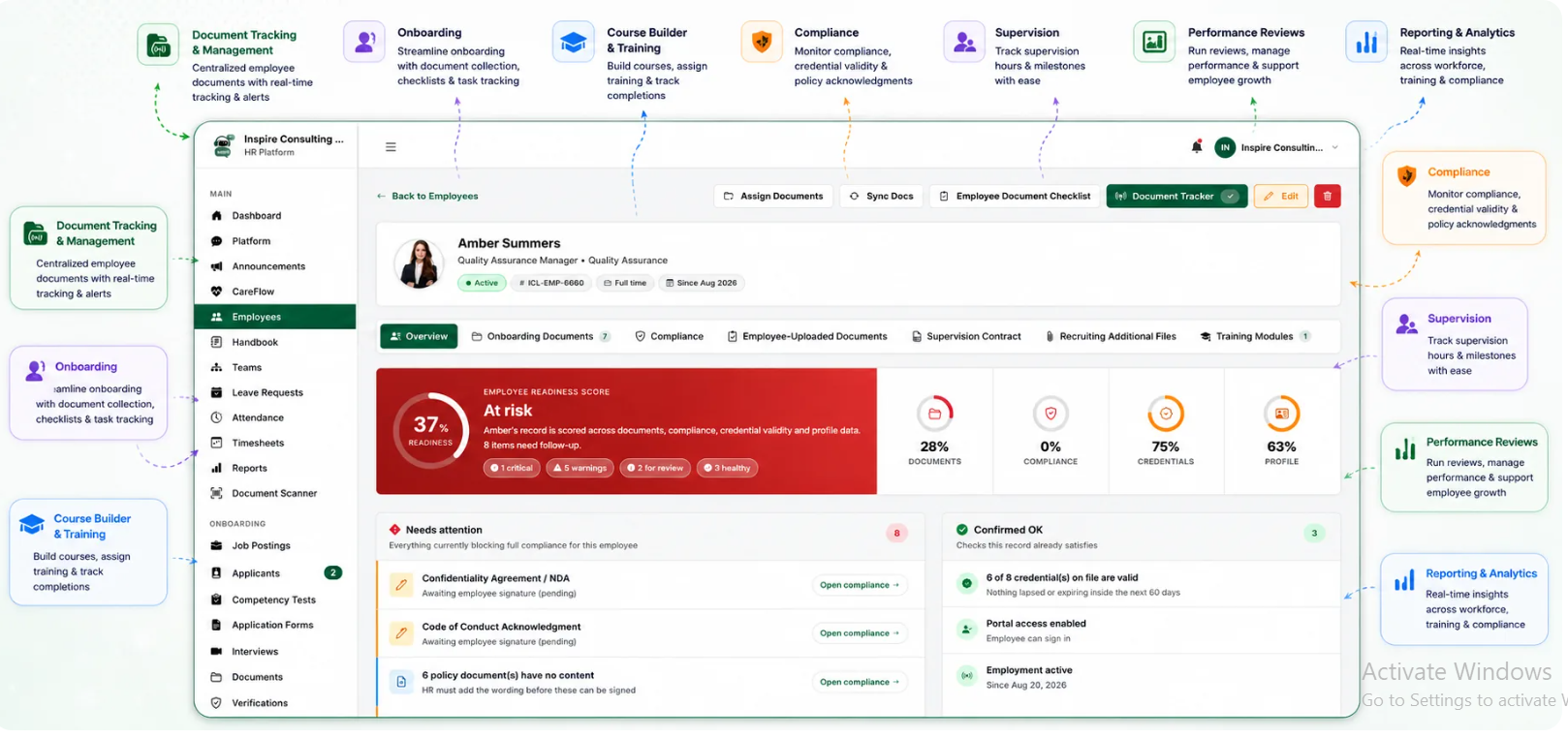
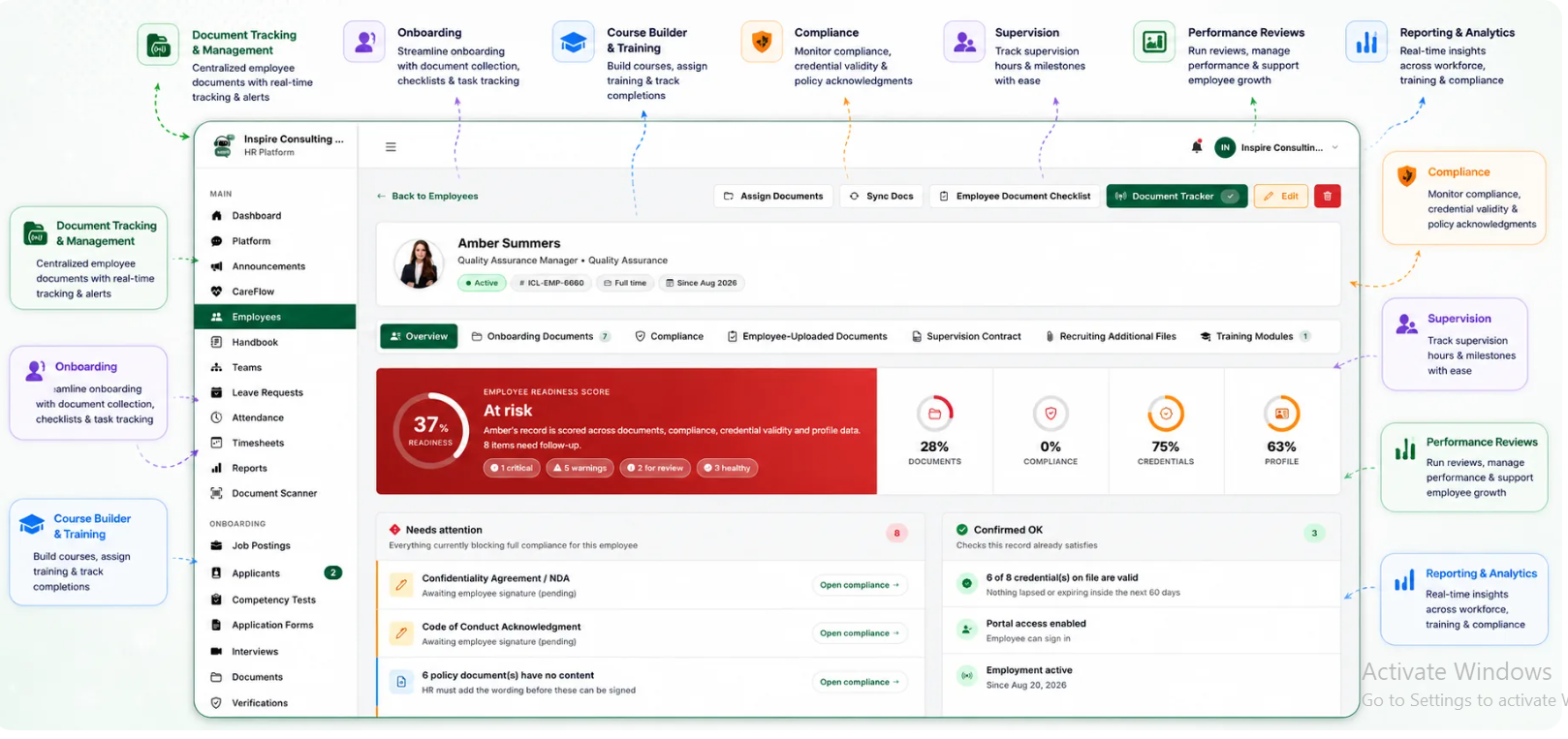
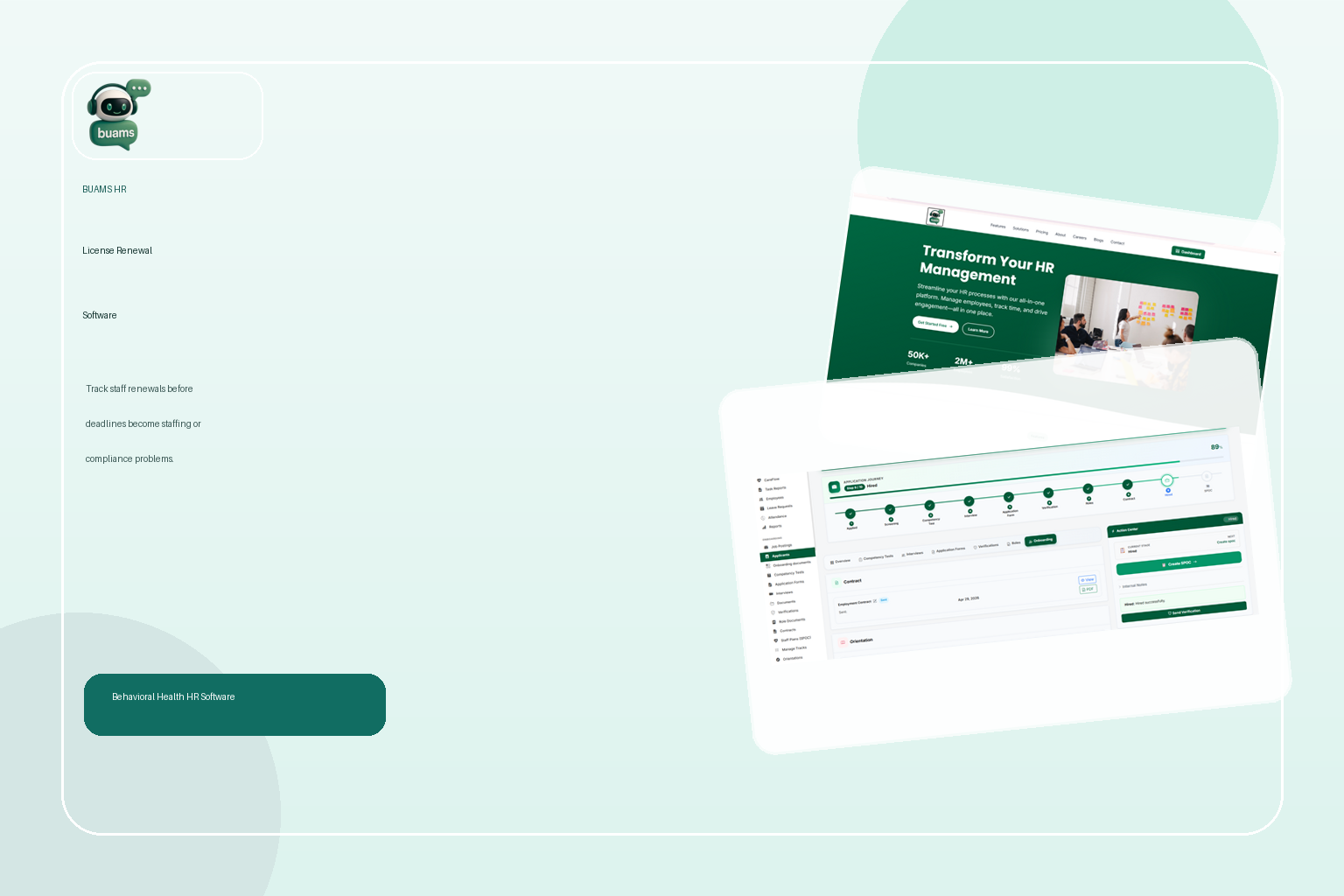
BUAMS HR helps behavioral health organizations manage recurring workforce requirements in a more organized and accountable way. Instead of treating license renewals as isolated reminders, teams can connect due dates, employee documentation, compliance follow-up, and supporting records within a single HR workflow. That gives HR better visibility into which renewals are approaching, which items still need action, and where final evidence lives once the process is complete.
For growing providers, that visibility is especially useful across multiple programs and locations. HR can reduce manual calendar chasing, supervisors can stay aligned on readiness expectations, and leadership can respond more confidently when asked for proof of licensure monitoring. BUAMS HR supports a cleaner process for keeping renewal records current year round, not just during the week a deadline is about to hit.
Final Thoughts
Employee licensure renewal software helps behavioral health providers turn a repetitive compliance headache into a manageable operating process. With the right system, teams can see upcoming deadlines earlier, document follow-up more clearly, reduce last-minute staffing disruption, and keep employee records ready for review. For organizations that want steadier control over licensure renewals and workforce compliance, BUAMS HR offers a practical foundation for keeping that work organized.