Behavioral health providers often depend on flexible staffing models, part-time clinicians, supervisors with responsibilities across programs, and employees who may also work for another employer. That reality is common, but it creates risk when outside employment is handled informally. If HR teams are relying on email disclosures, manager memory, or scattered forms, they can miss policy acknowledgments, scheduling conflicts, supervision concerns, or documentation gaps that matter during audits and employee reviews.
Dual employment tracking software gives organizations a more reliable way to document outside work disclosures, route approvals, keep supporting records together, and revisit those arrangements over time. Instead of treating secondary employment as a one-time conversation, behavioral health providers can manage it as an ongoing workforce compliance process. That helps leaders protect coverage, reduce conflict-of-interest concerns, and show that HR has a consistent review method in place.
Key Takeaways
What Is Dual Employment Tracking Software?
Dual employment tracking software is a system used to manage employee disclosures about outside jobs, consulting roles, contract work, or other professional commitments that may affect their role with your organization. The goal is not to ban outside work automatically. The goal is to make sure the organization has a clear, repeatable way to collect disclosures, review them, document decisions, and keep relevant records available when questions come up later.
In behavioral health, that process matters because staffing decisions often intersect with client care, supervision requirements, confidentiality expectations, work hour limits, and role-specific qualifications. A clinician working evenings elsewhere may still be fully compliant, but HR and leadership may need to confirm that the arrangement does not create fatigue concerns, schedule conflicts, or documentation problems. Dual employment tracking software gives the organization a place to manage that review instead of leaving it buried in inboxes.
Why Outside Employment Requires Better HR Oversight in Behavioral Health
Behavioral health organizations operate in settings where continuity, readiness, and documentation quality matter every day. Employees may work across residential, outpatient, community-based, or crisis programs, and the stakes are higher when a staffing problem affects care coverage or supervision. Secondary employment is not inherently a problem, but it can create blind spots if HR does not know where else a team member is working, how that schedule overlaps, or whether the arrangement raises policy issues.
For example, an employee may accept additional shifts with another provider and then struggle with availability, punctuality, or fatigue in their main role. A supervisor may not realize that an outside position changes the employee’s work hours or creates a boundary issue with referral partners or competing organizations. HR may also need proof that the employee disclosed the arrangement and that the organization reviewed it under policy. Without a structured process, those facts become difficult to confirm later.
That is why dual employment tracking software is useful. It helps organizations move from informal awareness to documented oversight. Instead of asking whether someone mentioned outside work once, leaders can review the disclosure, the policy acknowledgment, any approval notes, and whether a re-review is still needed.
Common Risks Dual Employment Tracking Software Should Help Manage
Behavioral health providers usually need more than a simple yes-or-no disclosure form. The real value comes from organizing the downstream review around specific workforce risks:
Not every case will involve every risk, but HR teams need a practical way to evaluate the arrangement and document what was reviewed. That is much harder to do consistently when the process lives in email chains and local folders.
What to Look for in Dual Employment Tracking Software
Structured Disclosure Collection
The system should make it easy to collect consistent information from employees, including the type of outside work, employer or organization name when required by policy, expected hours, schedule details, start date, and any known overlap with current responsibilities. Standardized intake reduces ambiguity and gives reviewers enough context to assess the arrangement fairly.
Policy Acknowledgment and Approval Records
Good software should support documented sign-off that the employee has read the organization’s outside employment policy and understands any restrictions. It should also preserve manager or HR decisions, notes, and effective dates so the organization can show what was approved, what conditions applied, and who reviewed the request.
Follow-Up Reminders and Re-Review Dates
Outside employment arrangements can change over time. A software tool should help teams revisit disclosures periodically, especially if schedules shift, job duties change, or a role moves into a more sensitive area. Recurring reminders are useful for annual attestations, probationary follow-up, or re-review after a transfer or promotion.
Connection to Employee Records
Dual employment reviews are more useful when they are tied to the employee record instead of sitting in a separate spreadsheet. HR teams should be able to see disclosures alongside policy acknowledgments, role information, supervisor assignments, and related documentation that may affect the review.
Audit Trail and Document Retention Support
Behavioral health providers benefit from keeping a clear record of when a disclosure was submitted, who reviewed it, what decision was made, and whether supporting files were attached. An audit-friendly history helps the organization respond to internal questions, compliance reviews, or employee relations concerns with less reconstruction work.
Best Practices for Rolling Out a Secondary Employment Review Process
Start with a clear policy and plain-language criteria. Employees and managers should understand when disclosure is required, what kinds of outside work may need additional review, and what happens after a request is submitted. If the policy is vague, software alone will not create consistency.
Next, define who owns each step. In some organizations, HR collects the disclosure, the supervisor reviews scheduling impact, and leadership weighs conflict-of-interest concerns for sensitive roles. Clarifying ownership prevents requests from sitting unresolved and helps employees get timely answers.
It is also smart to use the process for existing employees, not just new hires. Secondary employment often develops after onboarding, especially in behavioral health environments where clinicians take on contract work, evening programs, or per diem assignments elsewhere. A recurring attestation process helps the organization catch changes that would otherwise stay invisible.
Finally, use documentation standards that match the level of risk. Not every outside job needs a long review memo, but every disclosure should show that the organization received the information, applied policy, and recorded the outcome. That balance keeps the process practical while still protecting the organization.
How BUAMS HR Helps
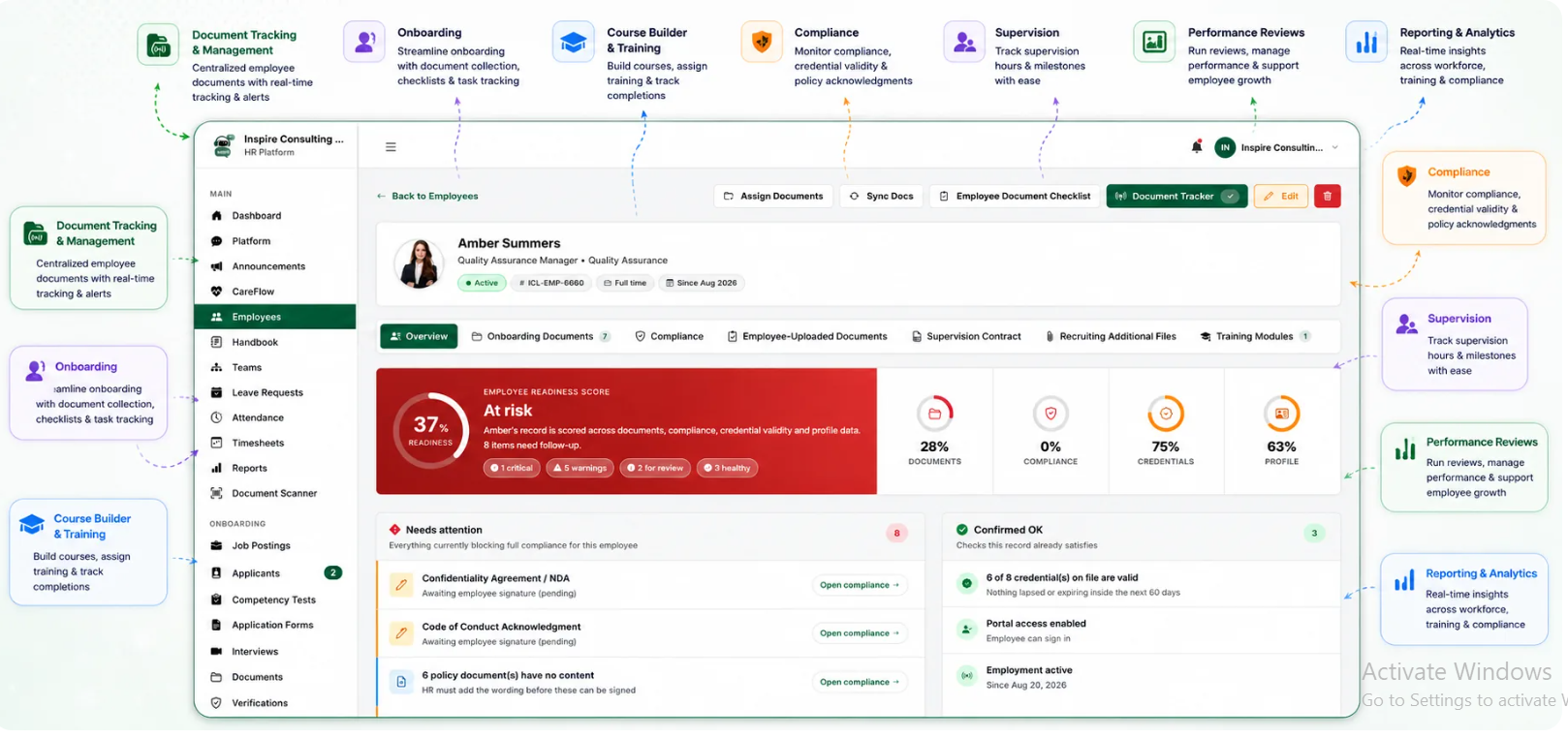
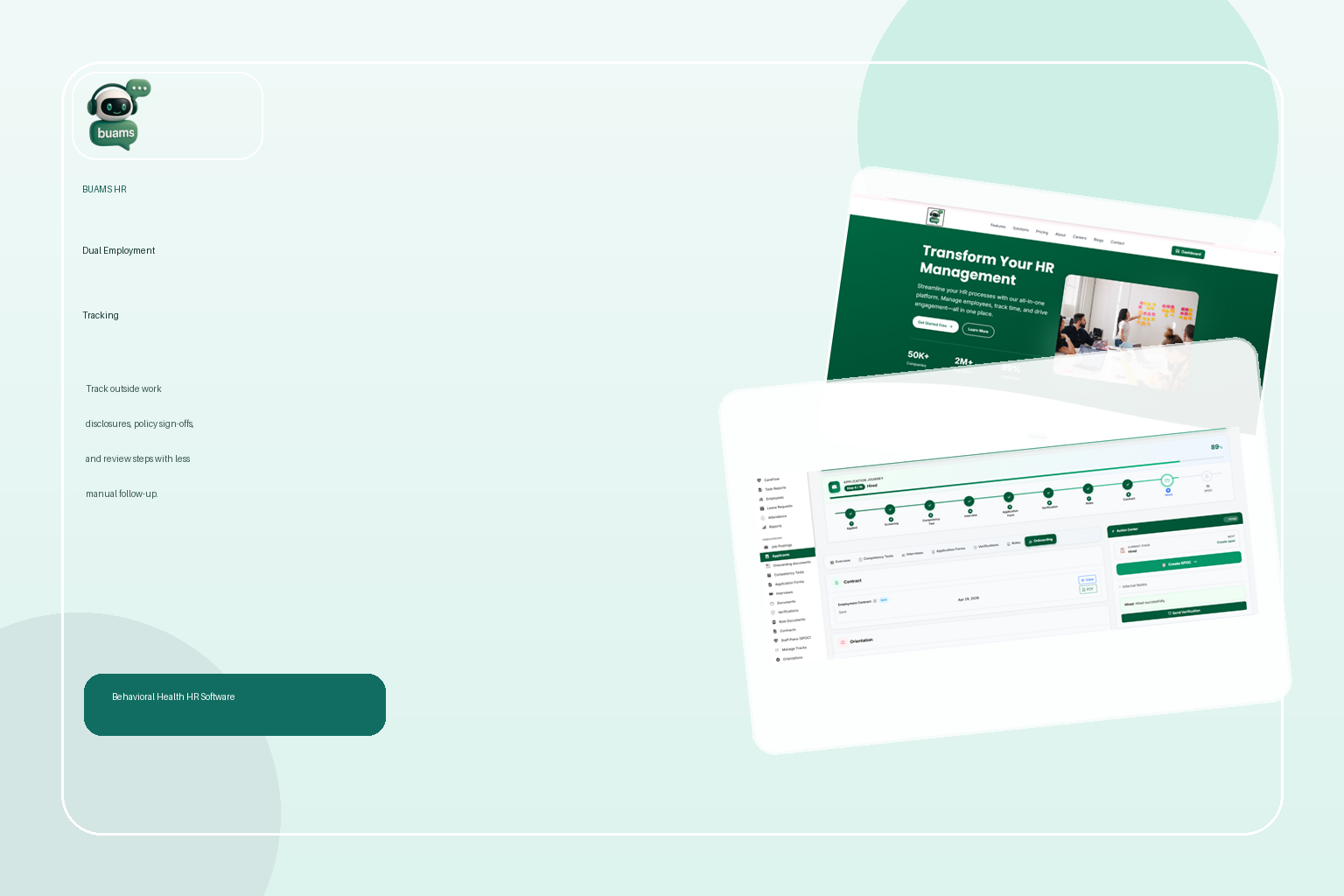
BUAMS HR helps behavioral health providers centralize employee records, acknowledgments, and HR documentation so outside employment reviews are easier to organize and maintain. Instead of splitting disclosures, approvals, and supporting notes across multiple systems, teams can keep the process closer to the employee file and reduce the manual follow-up that usually slows HR work down.
That is especially helpful for growing organizations with multiple programs, mixed employment types, and frequent status changes. When HR can review disclosures alongside employee details and documentation history, it becomes easier to apply policy consistently, route questions to the right leaders, and confirm whether follow-up is still outstanding.
By giving teams a more structured way to manage workforce documentation, BUAMS HR supports a practical dual employment tracking software workflow that fits the compliance needs of behavioral health providers without adding unnecessary administrative friction.
Final Thoughts
Dual employment tracking software gives behavioral health providers a cleaner way to manage a common but easily overlooked workforce issue. Outside work does not have to create confusion, but it does need documentation, review, and follow-through if the organization wants to protect scheduling, policy compliance, and employee accountability.
For providers that want a more organized way to handle secondary employment disclosures and keep related HR records connected, BUAMS HR offers a strong foundation for consistent review, documentation control, and workforce oversight.