Behavioral health organizations rarely struggle because they lack qualified people entirely. More often, they struggle because it is difficult to confirm which qualified person is actually ready for a specific assignment at a specific moment. A clinician may be licensed but missing a site-specific training. A counselor may be available for a program move but not yet linked to the right supervisor. A new hire may have completed onboarding tasks but still be waiting on one final clearance before working independently. When those details live across spreadsheets, inboxes, and disconnected HR records, assignment decisions become slower and riskier than they need to be.
That is why workforce assignment eligibility software matters. Instead of relying on memory or last-minute file checks, behavioral health providers can use a structured system to see whether each employee meets the documented requirements for a role, location, shift pattern, or service line before that assignment is made. The point is not just scheduling convenience. The point is to reduce compliance gaps, protect client care continuity, and give HR and operations teams a more dependable way to confirm staff readiness.
Key Takeaways
What Is Workforce Assignment Eligibility Software?
Workforce assignment eligibility software is a system that helps organizations determine whether a staff member is ready and approved for a particular work assignment. In behavioral health, that decision may depend on more than job title alone. Eligibility can involve active credentials, required onboarding steps, annual training, supervisor alignment, employee status, site access, program-specific documentation, and other internal workforce rules.
Without software, teams often piece this answer together manually. HR checks the employee file, a supervisor confirms role fit, operations reviews availability, and compliance may need to verify that required documentation is still current. Each step may be reasonable on its own, but the full process becomes fragile when it depends on several people remembering where the latest information lives.
A better system turns assignment eligibility into a visible status rather than a guess. It helps teams define what must be true before an employee can work in a given context and then track whether those conditions are satisfied, pending, expired, or blocked.
Why Assignment Eligibility Gets Complicated in Behavioral Health
Behavioral health workforce operations involve constant movement. New hires are coming online, employees transfer between programs, supervisors change, credentials renew, and coverage needs shift quickly when census or staffing pressure changes. At the same time, organizations still need confidence that the person taking an assignment meets the underlying workforce requirements.
That complexity grows when requirements differ by site or service type. One assignment may require a fully active license and a documented supervisor. Another may depend on a background check, location-specific orientation, or proof of a training module tied to a payer or internal policy. The more programs a provider operates, the easier it is for assignment rules to drift into tribal knowledge instead of a documented workflow.
When assignment eligibility is unclear, teams often compensate with last-minute emails and exceptions. Someone asks whether an employee can cover a shift, and the answer depends on who responds first. That may feel manageable in the moment, but it creates avoidable delays and increases the chance that a missing requirement is discovered too late.
Common Assignment Risks a Manual Process Can Miss
Most assignment problems do not begin with obvious negligence. They begin with partial visibility. Common examples include.
These issues matter because assignment decisions carry real consequences. They affect care continuity, supervisor workload, compliance exposure, and the amount of rework HR must handle later. Even when the employee is ultimately qualified, a weak verification process can waste time and create preventable uncertainty.
What to Look for in Workforce Assignment Eligibility Software
Role and Site-Based Requirement Logic
The most useful systems allow organizations to define assignment requirements based on the actual work context. That may include role, program, site, employment type, supervisor structure, or service line. Behavioral health providers need more than a generic active employee list. They need to know whether the employee is ready for this assignment.
Centralized Readiness Signals
Eligibility should be easy to interpret. HR and operations leaders should be able to see whether a staff member is cleared, pending, blocked, or approaching a risk point without opening several separate records. A single view saves time and improves confidence when coverage decisions need to happen quickly.
Clear Ownership of Missing Requirements
When eligibility is blocked, the workflow should show why and who needs to act. Some issues belong to HR, some to a supervisor, some to compliance, and some to the employee. If ownership is unclear, the assignment stays in limbo while everyone assumes someone else is handling it.
Audit-Friendly History
Organizations benefit from being able to explain how an assignment decision was supported. A strong system keeps track of approvals, document updates, status changes, and the timing of resolved gaps. That history is useful not only for audits but also for internal reviews when leaders want to understand why an assignment was delayed or approved.
Connection to Broader Workforce Records
Assignment eligibility works best when it is connected to onboarding, document management, credential tracking, and employee status changes. If the information is siloed, teams still end up doing manual reconciliation. The software should help reduce those handoffs rather than formalize them.
Best Practices for Building a Strong Eligibility Process
Start by documenting the assignment decisions that create the most friction or risk. That may include new clinical placements, internal transfers, supervisor changes, per diem coverage, telehealth assignments, or site moves. Once those high-impact scenarios are clear, define the minimum records or approvals required for each one.
Next, separate true eligibility requirements from optional preferences. If everything is treated as equally critical, teams may slow decisions unnecessarily. A stronger process identifies the items that genuinely determine whether an employee can work in the assignment and highlights those first.
It also helps to review eligibility continuously rather than only at onboarding. Employees who were fully ready at hire can fall out of alignment later because a document expires, a role changes, or a new program requirement is introduced. Ongoing visibility helps providers respond before a coverage need exposes the problem.
Finally, make sure assignment eligibility supports collaboration instead of creating more bottlenecks. HR should not be the only team capable of confirming readiness. Supervisors and operations leaders need an appropriate view of status so they can plan confidently while still relying on controlled, documented workforce data.
How BUAMS HR Helps
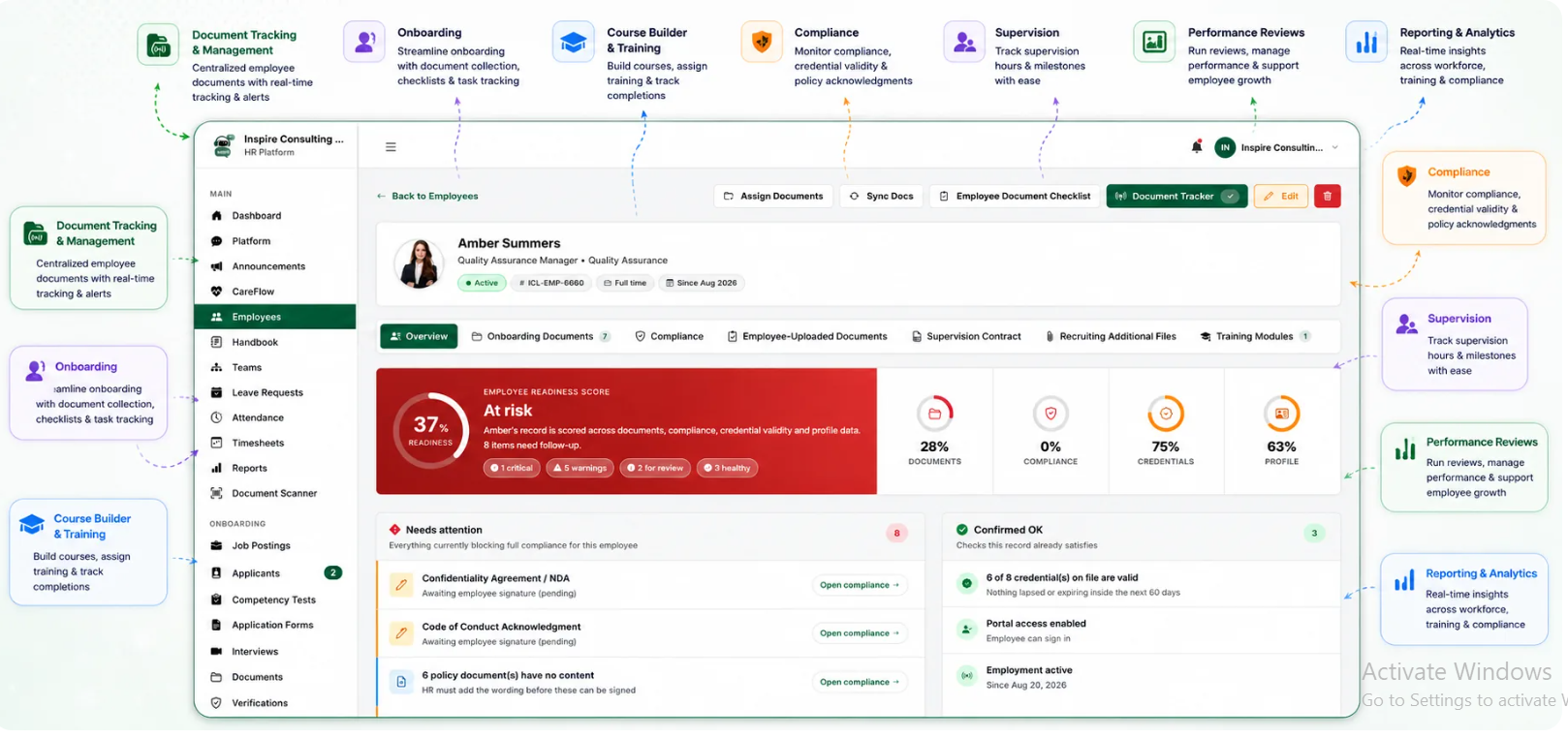
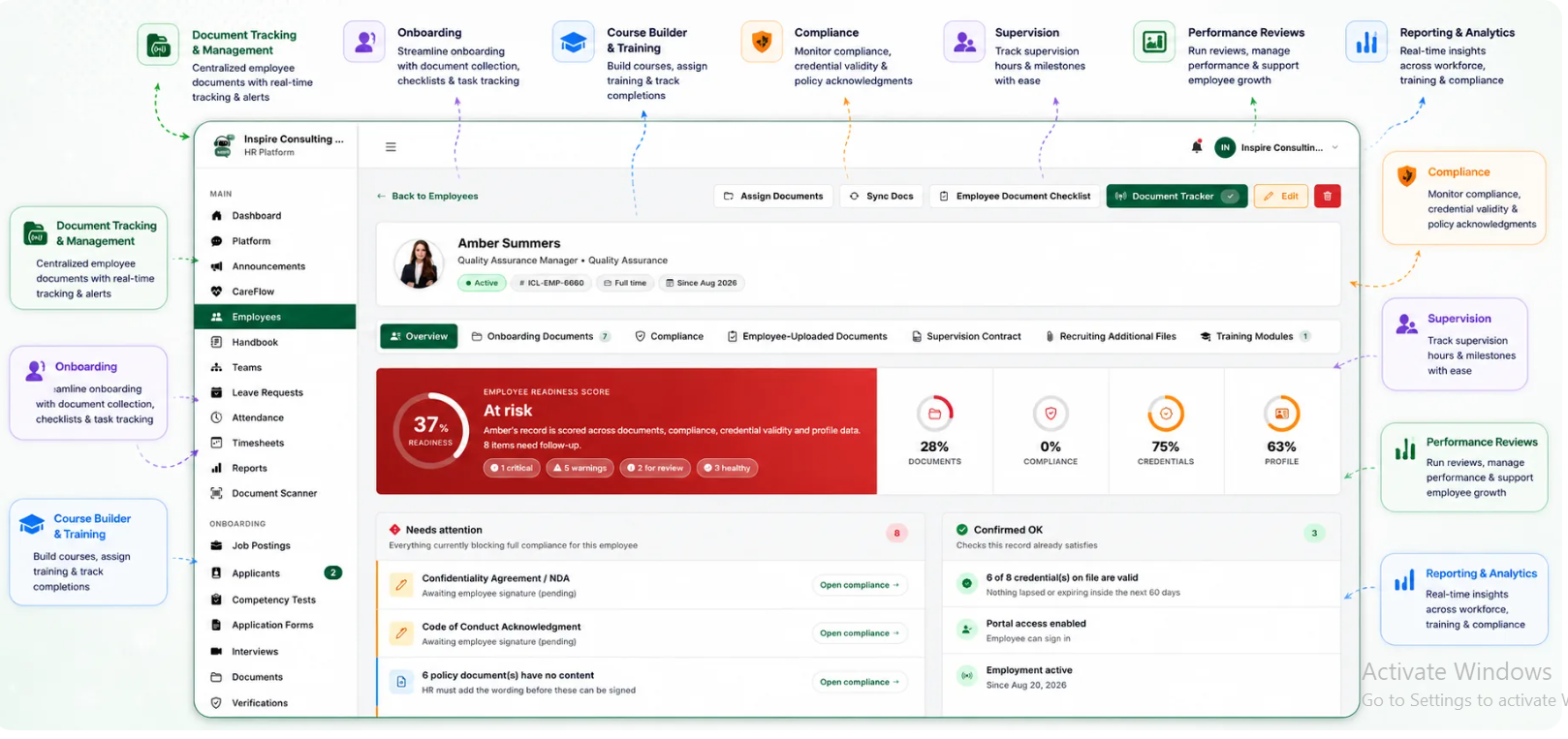
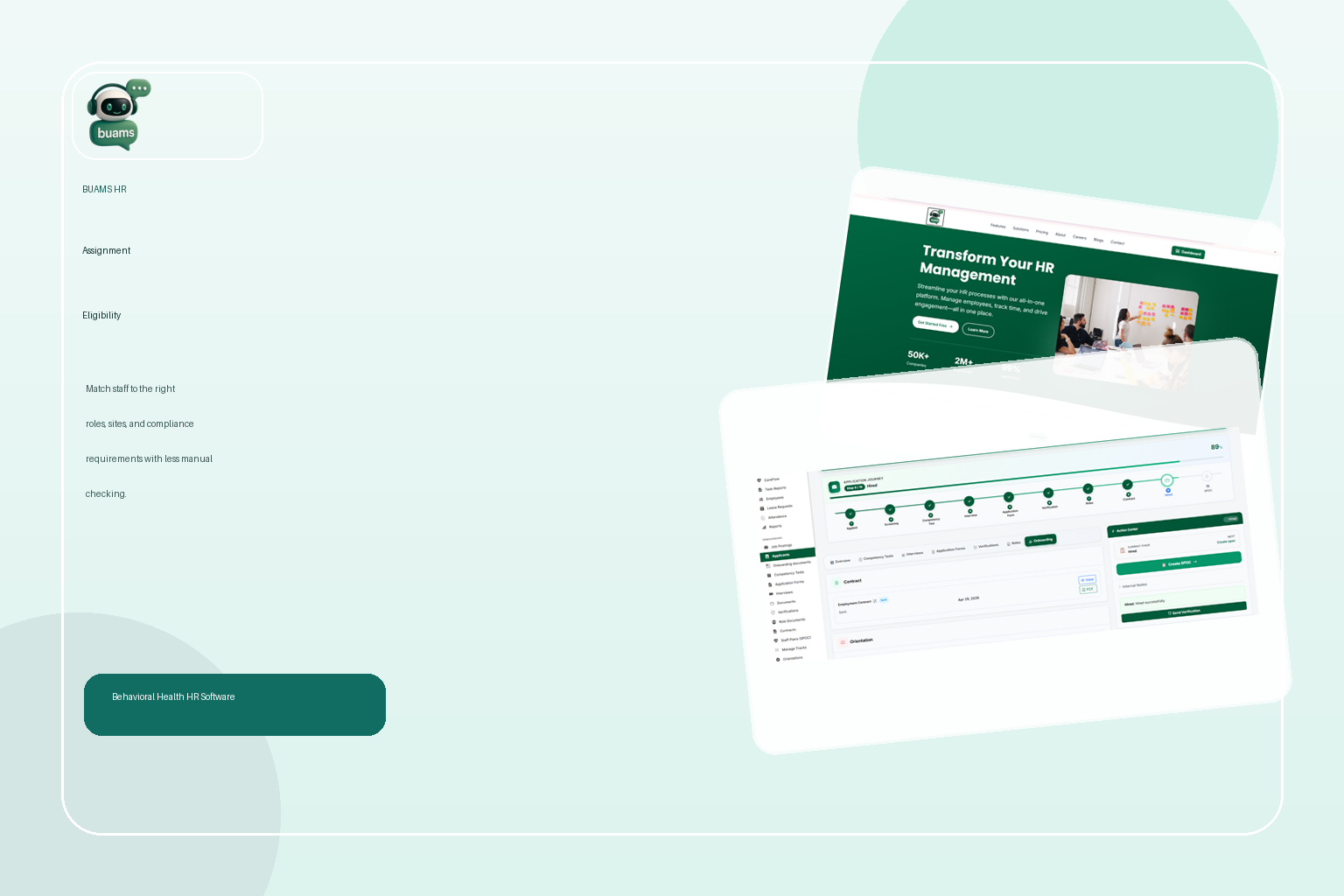
BUAMS HR helps behavioral health providers keep workforce records organized in a way that supports cleaner assignment decisions. By centralizing employee files, compliance-related documentation, and status visibility, teams can reduce the manual effort required to confirm whether a staff member is ready for a role, site, or program change.
With BUAMS HR, organizations can build a more repeatable process around employee records, onboarding completion, document collection, and ongoing workforce maintenance. That makes it easier to identify missing requirements earlier, route follow-up to the right people, and keep assignment decisions grounded in current information instead of scattered notes.
For growing providers, that structure can reduce preventable delays and improve confidence across HR, compliance, and operations. Instead of asking several teams to reconstruct employee readiness each time coverage changes, leaders can work from a more reliable workforce record.
Final Thoughts
Workforce assignment eligibility software gives behavioral health providers a more practical way to match staff to roles, sites, and service needs without losing sight of compliance and documentation requirements. In environments where workforce movement is constant, assignment readiness cannot depend on guesswork or disconnected records.
For organizations that want a better way to confirm who is truly ready before making staffing moves, BUAMS HR offers a structured approach that helps connect workforce information to day-to-day operational decisions.