Behavioral health organizations do not just need to know whether an employee is hired, onboarded, or credentialed. They also need to know what that person is actually allowed to do, where they can do it, and what conditions apply before they take on certain duties. When those answers live in scattered notes, spreadsheets, supervisor memory, and disconnected employee files, scope-of-practice questions turn into avoidable operational and compliance risk.
Scope of practice tracking software gives HR and operations teams a clearer way to connect staff duties with licenses, certifications, supervision status, training completion, and site assignments. Instead of relying on informal handoffs, organizations can keep the details that affect role readiness in one system. That matters in behavioral health, where staffing decisions often move quickly and the consequences of role mismatch can reach clients, supervisors, schedulers, and compliance reviewers at the same time.
Key Takeaways
What Is Scope of Practice Tracking Software?
Scope of practice tracking software is a structured way to document what responsibilities an employee may perform based on their job title, professional credentials, supervisory status, training completion, and organization-specific approvals. In behavioral health, that can include whether a clinician may practice independently, whether a provisional staff member must work under documented oversight, whether a peer support employee has completed required training, or whether a team member is cleared for a specific service line or setting.
The point is not to replace clinical judgment or legal review. The point is to make workforce readiness easier to see. When HR teams can connect role permissions to the employee record, they reduce the risk that staffing assumptions drift away from what has actually been documented and approved.
Why It Matters for Behavioral Health Providers
Behavioral health providers often operate across outpatient programs, community-based services, school partnerships, residential settings, telehealth teams, and multi-site clinics. A staff member may be fully ready for one assignment but not for another. Another employee may hold the right license but still need training, a documented supervisor relationship, or site-level approval before taking on certain duties. Without a reliable tracking process, managers can make fast decisions with incomplete information.
That creates risk in several directions. Client care can be affected when assignments are made based on outdated assumptions. Supervisors may inherit oversight obligations that were never documented clearly. HR may discover after the fact that a training requirement, license update, or approval step was missing from the file. During audits or internal reviews, the organization may have difficulty proving that role decisions were made consistently.
The need becomes even more important for providers working across Maryland, DC, or neighboring jurisdictions where rules, documentation expectations, or program requirements may differ. Scope of practice tracking software helps organizations keep those role-readiness details visible instead of buried in email threads or local spreadsheets.
Where Manual Processes Break Down
These breakdowns are common because most organizations do have the information somewhere. The problem is that the information is not connected well enough to support fast staffing decisions. Behavioral health providers need visibility that is operational, not just archival.
What to Look for in Scope of Practice Tracking Software
Role-Based Readiness Visibility
The system should help HR define what must be true before an employee is considered ready for a specific duty, service line, or assignment. That can include license status, required training, supervisor assignment, acknowledgments, and supporting documents. Readiness should be easy to review without opening multiple systems.
Clear Documentation of Limits and Conditions
Not every employee is either fully cleared or fully restricted. Some staff may be approved for certain responsibilities but not others. The software should make those conditional limits easy to understand so managers do not rely on vague comments or outdated memory.
Connection to Employee Records
Scope-of-practice tracking works best when it stays attached to the core employee file. HR should be able to review role details alongside credentials, training records, supervisory assignments, and key documents. That connection reduces confusion during audits, staffing escalations, and internal reviews.
Site and Program Awareness
Behavioral health providers often need to know whether an employee is ready for a particular location, payer environment, or program type. The right software should support that context so staffing decisions are not made as if every site has identical requirements.
Approval History and Ownership
When role permissions change, organizations need to know who approved the change, what documentation supported it, and who owns follow-up. This matters when staff transfer, supervisors change, or exceptions are granted temporarily. Clear ownership reduces the chance that an unfinished review is mistaken for a completed approval.
Reporting for Risk Review
Leaders should be able to identify employees with pending approvals, missing documents, expiring prerequisites, or role mismatches before those issues spread. Reporting helps HR move from reactive cleanup to proactive workforce oversight.
Best Practices for a Stronger Workflow
Start by defining scope of practice in operational terms instead of leaving it as an abstract compliance concept. For each role category, identify the documents, credentials, training elements, and approvals that support specific duties. If those standards are too informal, different managers will interpret readiness differently.
Next, separate permanent qualifications from temporary conditions. An employee may have a long-term professional credential but still be subject to short-term restrictions tied to orientation, supervision, site access, or phased duty expansion. Tracking both types of information in one workflow gives HR a more realistic picture of readiness.
It also helps to review scope-of-practice assumptions during common workforce events. New hire onboarding, transfers, supervisor changes, leave returns, provisional-license renewals, and new program launches can all change what an employee is approved to do. If those moments are not built into the process, the employee record can fall behind real operations.
Finally, make documentation review part of routine workforce management, not just audit preparation. The organizations that handle scope-of-practice questions best are usually the ones that can answer them quickly on an ordinary weekday, not only after leadership asks for an urgent file review.
How BUAMS HR Helps
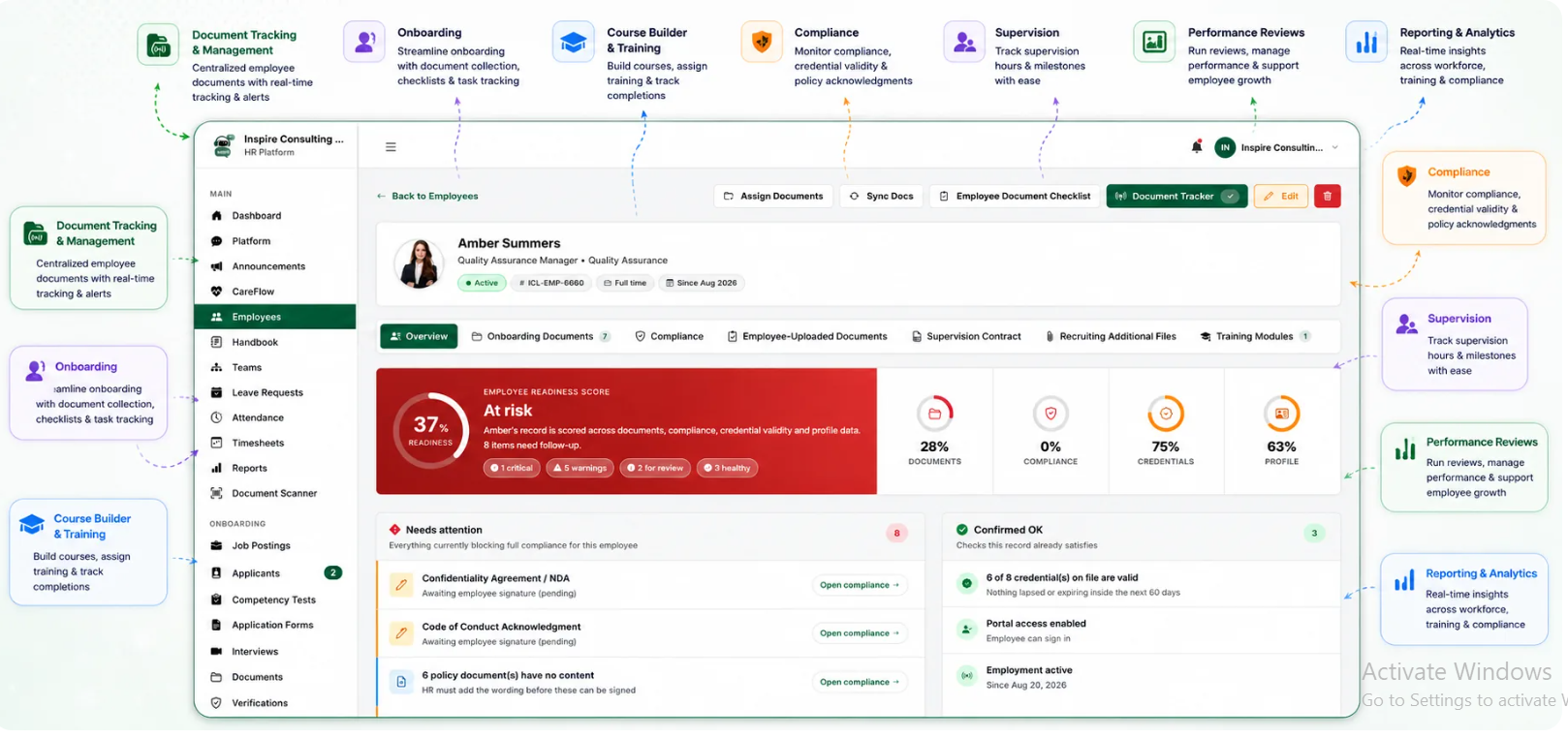
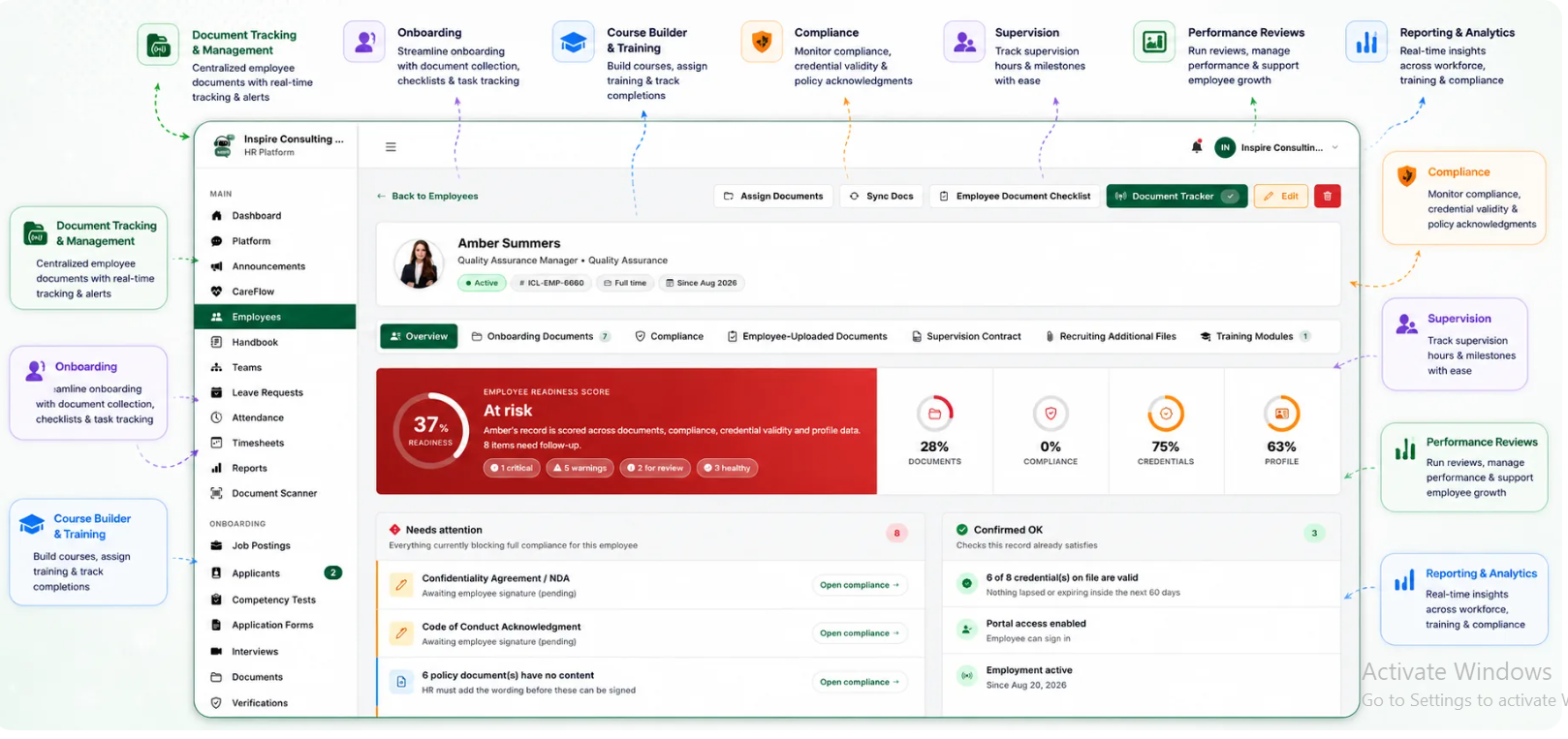
BUAMS HR helps behavioral health providers keep employee records, documents, and compliance-sensitive workforce details organized in one system. That structure supports better visibility into the information that often shapes scope-of-practice decisions, including credentials, training records, supervisor relationships, and related HR documentation.
For growing providers and multi-site organizations, centralized records make it easier to review role readiness without chasing disconnected files. HR teams can maintain a cleaner source of truth, reduce avoidable back-and-forth with managers, and prepare more confidently for audits or internal oversight reviews.
By connecting workforce documentation to day-to-day HR operations, BUAMS HR helps providers build a more consistent process for aligning staff duties, readiness requirements, and organizational accountability.
Final Thoughts
Scope of practice tracking software gives behavioral health providers a more dependable way to align staff duties with documented readiness. When role conditions, credentials, approvals, and site-specific requirements are easier to review, organizations are better positioned to make fast staffing decisions without creating preventable risk.
For providers that want stronger workforce oversight and clearer operational control, BUAMS HR offers a practical foundation for keeping scope-of-practice information organized, visible, and easier to act on.