Behavioral health providers deal with more workforce exceptions than many HR teams expect. A clinician may request extra time for a training requirement, an employee may need a documented policy exception, or a program leader may need proof that an exemption was reviewed before a staff member was assigned to a role. When these requests live in email threads, spreadsheets, or paper folders, HR ends up chasing approvals and compliance teams lose visibility into what was approved, why it was approved, and when it needs to be revisited.
Employee exemption request software gives behavioral health organizations a more reliable way to intake, review, approve, document, and monitor exceptions. Instead of treating each request as a one-off fire drill, providers can standardize how exemptions are handled and keep the supporting evidence tied to the employee record.
Key Takeaways
What Is Employee Exemption Request Software?
Employee exemption request software is a workflow for managing requests that temporarily or permanently depart from a standard HR, training, health, scheduling, or policy requirement. In behavioral health settings, these requests might involve annual training timing, documentation substitutions, temporary clearance accommodations, role-specific exceptions, or other workforce requirements that need formal review.
The goal is not to approve every request. The goal is to create a consistent process that captures the request, routes it to the right reviewer, records the decision, stores attachments, and triggers follow-up if the exemption is conditional or time-limited.
Why Exemption Tracking Matters in Behavioral Health
Behavioral health employers often operate across multiple sites, programs, and service models. That creates real complexity. One employee may work in outpatient services, another may support mobile crisis work, and another may split time across administrative and direct-care responsibilities. If exemptions are handled informally, leaders may not know whether a request applies only to one role, one program, or one time period.
That creates avoidable risk in several areas. Supervisors may assign work based on outdated assumptions. HR may not know when an approved exception has expired. Compliance reviewers may find that the organization cannot show the reason for a deviation or the person who authorized it. Even when the original decision was reasonable, poor documentation can make the process look inconsistent.
A cleaner process protects both operations and compliance. It helps organizations show that exceptions were reviewed intentionally, that supporting documents were collected, and that follow-up actions were defined before the employee continued in the affected role.
What to Capture in a Strong Exemption Workflow
For employee exemption request software to be useful, it should collect more than a yes-or-no decision. Behavioral health HR teams need enough detail to explain the request later and manage the next step without guesswork.
Best Practices for Review and Follow-Up
Standardize request categories
When every request is labeled differently, reporting becomes weak and reviewers spend more time interpreting what was asked. Standard categories make it easier to route requests, compare decisions, and spot patterns across locations.
Require documented rationale
Approvals should never rely on memory alone. A short, clear rationale helps explain why the exception was granted, what controls were put in place, and whether additional review is needed. That matters when leadership changes or when an auditor asks why one employee was treated differently from another.
Use expiration dates for temporary approvals
Many exceptions should not stay open forever. If a training deadline was extended or a policy exception was granted pending more documentation, the record should include a review date. Automated reminders are far safer than hoping someone remembers to check later.
Keep the decision tied to the employee file
If exemption records are stored separately from personnel files, supervisors and HR teams may miss them when making assignment or readiness decisions. Linking the exemption to the employee profile helps the organization understand the full compliance picture in one place.
How BUAMS HR Helps
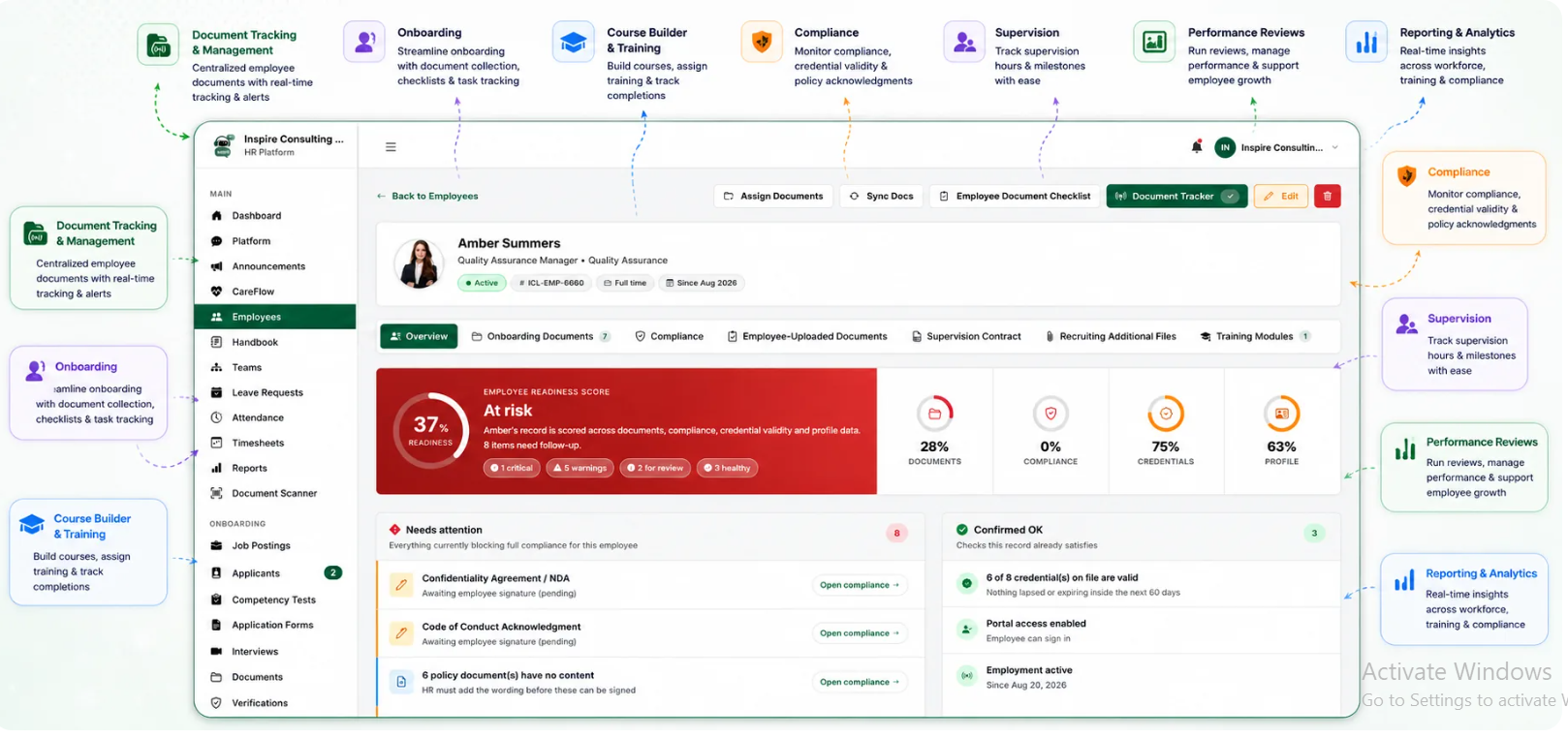
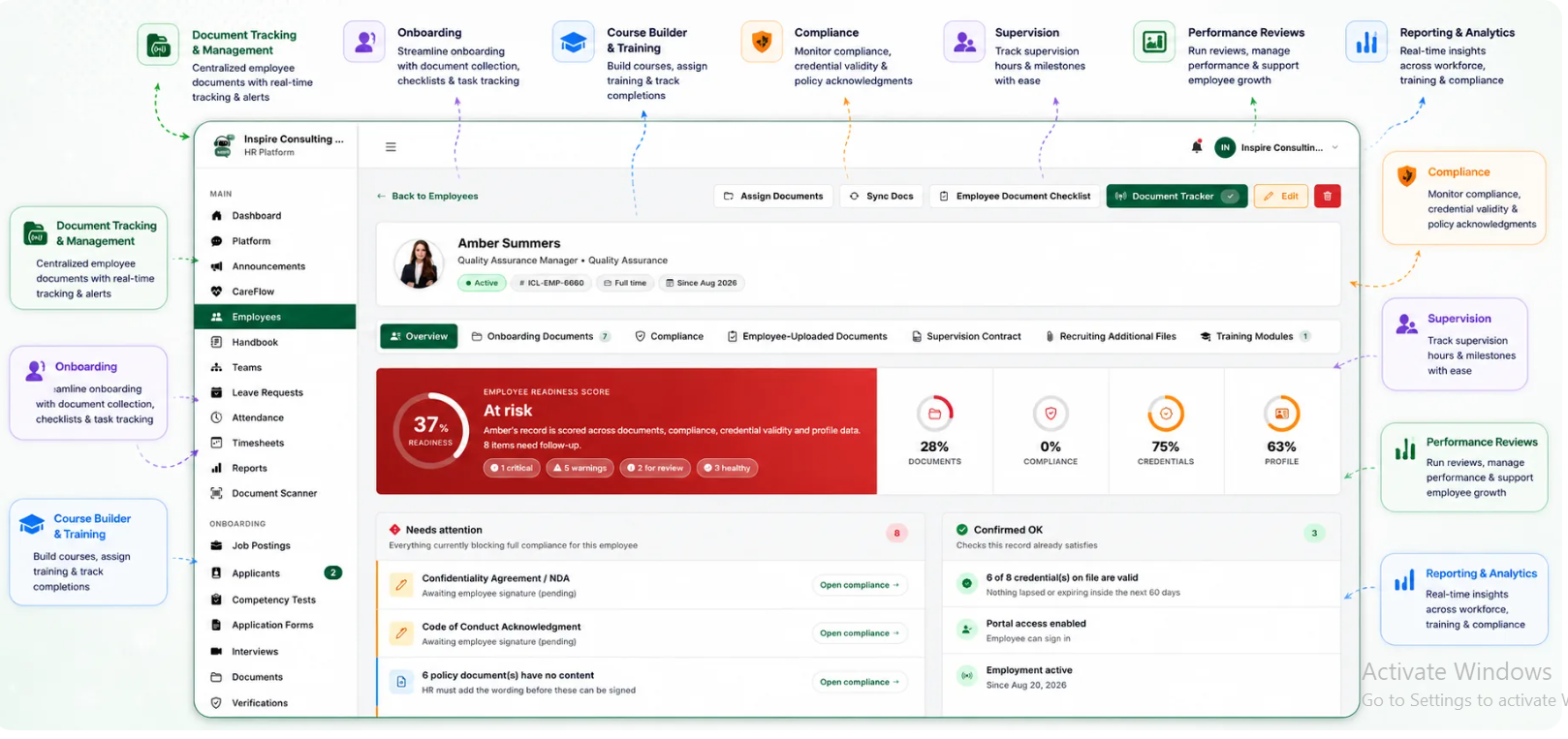
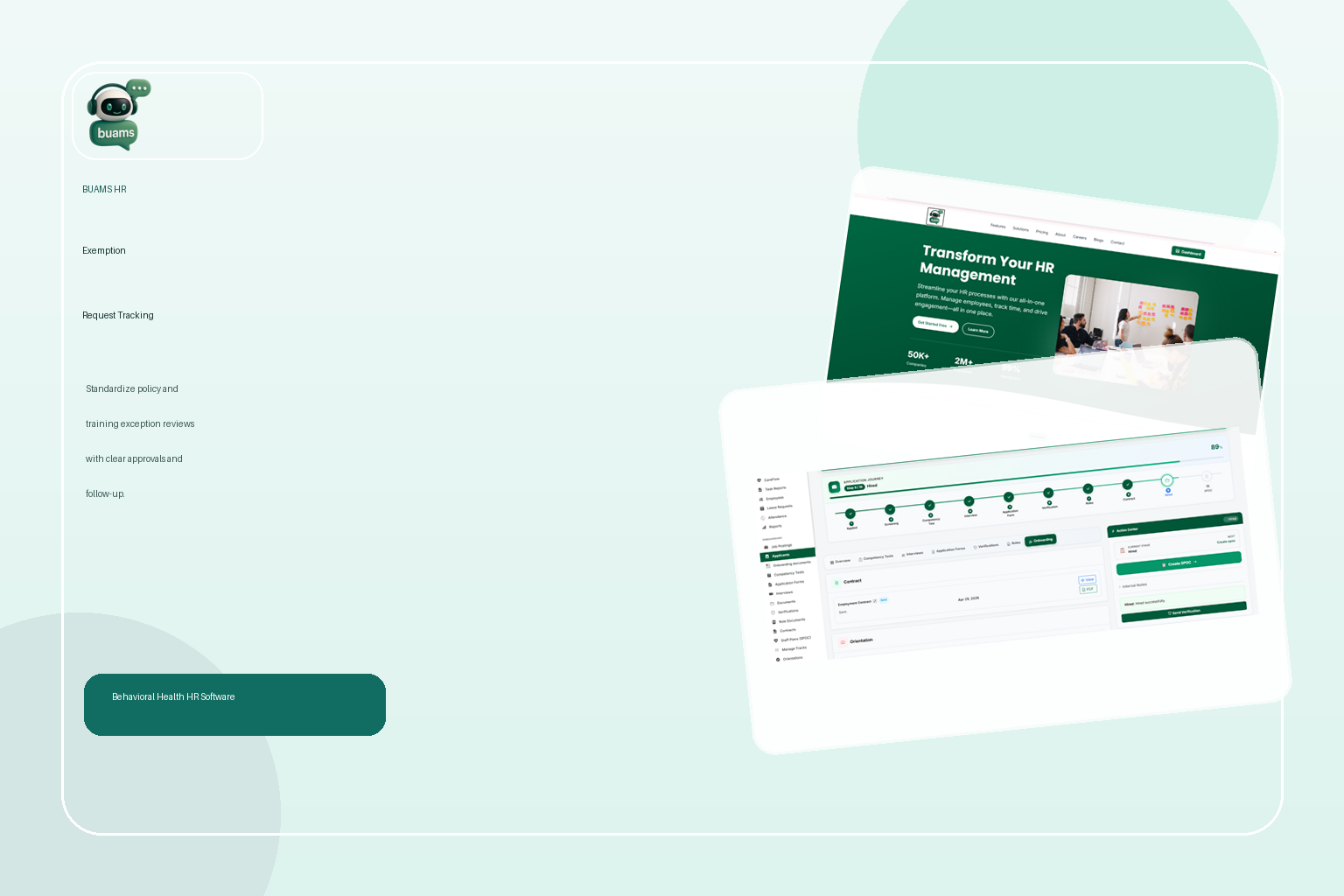
BUAMS HR can support a more disciplined exemption process by giving behavioral health organizations one place to organize workforce records, approvals, and compliance-related follow-up. Instead of juggling shared inboxes and disconnected spreadsheets, HR teams can keep employee documentation, role context, and decision records connected.
That matters when requests involve multiple stakeholders. HR may need input from compliance, operations, or a supervisor before a final decision is made. With a centralized system, the organization can preserve the request history, attach supporting evidence, and track whether a temporary exception still needs action.
BUAMS HR also helps teams reduce repeat work. When exemption data is searchable and attached to the right employee record, leaders can respond faster to internal reviews, accreditation preparation, and routine workforce oversight without rebuilding the story from old emails.
Final Thoughts
Behavioral health providers do not eliminate risk by pretending exceptions never happen. They reduce risk by managing exceptions consistently. Employee exemption request software helps HR teams replace ad hoc decisions with a process that is visible, reviewable, and easier to defend.
For organizations balancing workforce flexibility with documentation discipline, that kind of structure can make a real difference. The right workflow helps teams move faster on legitimate requests while keeping the evidence, approvals, and follow-up steps needed to stay operationally sound and compliance ready.