Behavioral health providers manage a workforce that changes constantly. New hires become benefit eligible, employees move between full-time and part-time status, families add dependents after life events, and HR teams must keep documentation aligned with enrollment decisions. When dependent verification is handled through scattered inboxes, paper attachments, and manually named folders, even routine benefits updates can turn into long follow-up chains that frustrate employees and create avoidable audit risk.
Dependent verification software gives behavioral health organizations a cleaner way to collect, review, and retain proof tied to medical, dental, and other dependent-related benefit elections. Instead of relying on memory to track which document is still missing, HR can organize requests by event type, route review tasks to the right owner, and keep the final proof connected to the employee record. That structure matters for agencies trying to move quickly without losing control of sensitive documentation.
Key Takeaways
What is dependent verification software?
Dependent verification software is a system used to manage the documents and approval steps required when an employee enrolls or updates dependent coverage. In a behavioral health organization, that may include marriage certificates, birth certificates, adoption paperwork, court orders, student status proof, or other records needed to confirm eligibility under the employer's plan rules.
The value is not just secure storage. A strong workflow shows which event triggered the request, what documentation applies, whether the submission is complete, who reviewed it, and when the enrollment change was approved or declined. That visibility helps HR teams answer practical questions quickly while keeping sensitive family information better organized.
Why it matters for behavioral health providers
Behavioral health employers often support a distributed workforce across clinics, residential programs, community services, crisis operations, and administrative teams. Employees may not sit near HR, and benefits changes may arrive during busy hiring periods, open enrollment windows, or staffing shortages. If dependent verification depends on manual chasing, HR can lose time on repeated reminders, incomplete attachments, and back-and-forth clarification about what proof is acceptable.
These delays affect more than convenience. Employees want timely confirmation that their spouse, child, or other dependent was added correctly. Finance and payroll teams need confidence that deductions align with approved elections. Compliance-minded organizations also need a reliable record showing why a coverage change was processed and what evidence supported it. Without a centralized process, small documentation gaps can turn into larger trust and control problems.
Where manual dependent verification breaks down
Many HR teams start with a shared mailbox and a checklist, but the process becomes harder to control as the organization grows.
Those breakdowns are especially frustrating in behavioral health settings where HR is already balancing credential tracking, onboarding, supervision records, training compliance, and staffing support. Dependent verification may seem like a smaller administrative task until a missing document delays an employee's coverage update or an audit asks for proof that cannot be retrieved quickly.
What to look for in dependent verification software
Event-based request tracking
The system should distinguish between open enrollment, marriage, birth, adoption, guardianship, aging out, and other change events. That makes it easier to request the right proof at the right time instead of sending a generic list to every employee.
Clear status visibility
HR should be able to see whether a request is waiting on the employee, under review, approved, denied, or overdue. That visibility cuts down on guesswork and keeps service expectations clearer for employees and internal teams.
Secure document organization
Dependent-related documents contain sensitive personal information. A useful workflow keeps files organized, access controlled, and connected to the employee record so teams are not searching across unsecured attachments and disconnected folders.
Approval history and audit trail
Organizations need a record of who reviewed the documentation, when the decision was made, and what evidence supported that decision. This is especially helpful when employees have repeated life events or when carriers request supporting records later.
Connection to payroll and HR change workflows
Dependent verification should not live in isolation. Once documentation is approved, downstream HR and payroll updates should be easier to coordinate so deductions, plan records, and employee communications stay aligned.
Best practices for a smoother workflow
These steps help organizations reduce friction while strengthening documentation discipline. The goal is not to make benefits changes harder. The goal is to make them more predictable, more secure, and easier to defend when questions arise.
How BUAMS HR helps behavioral health organizations stay organized
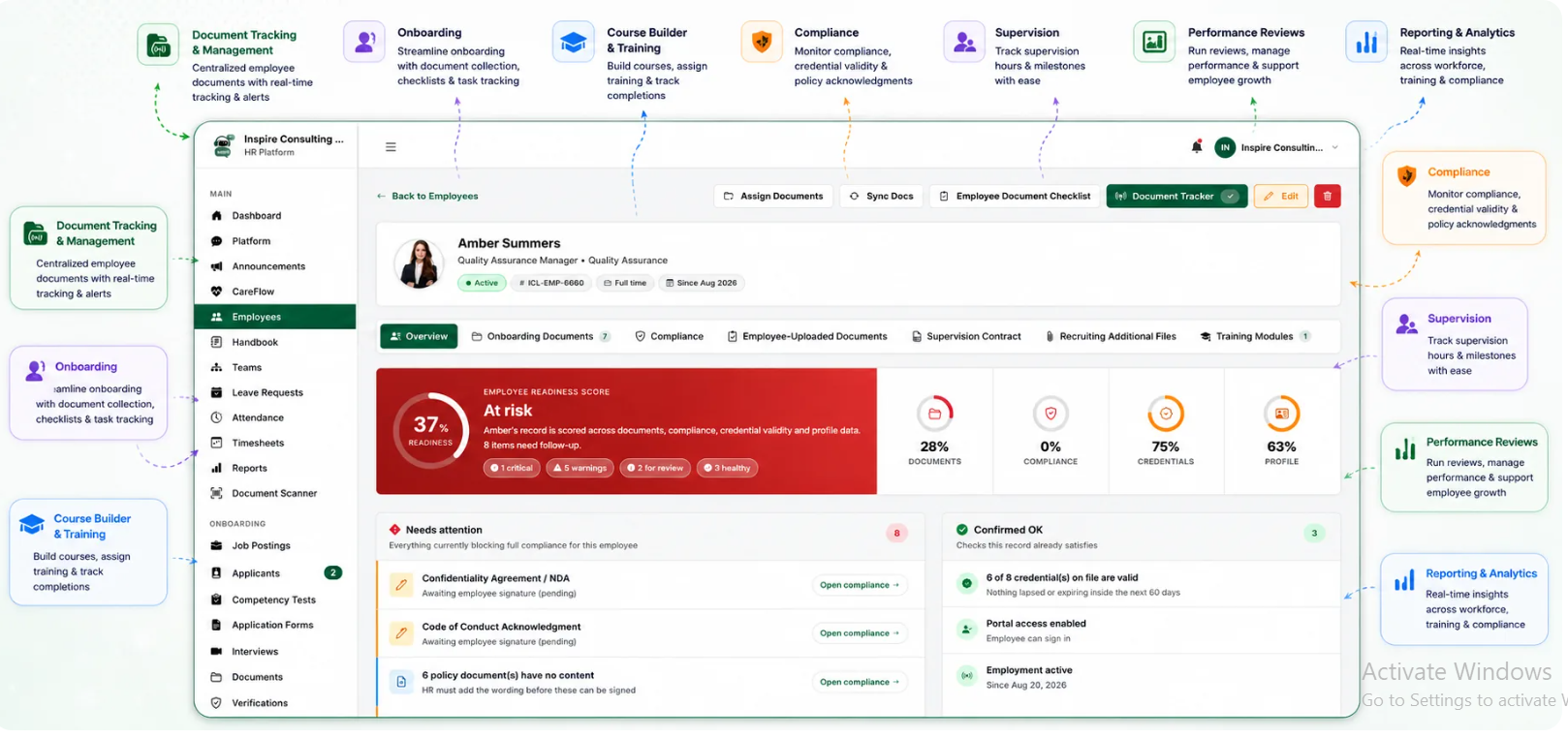
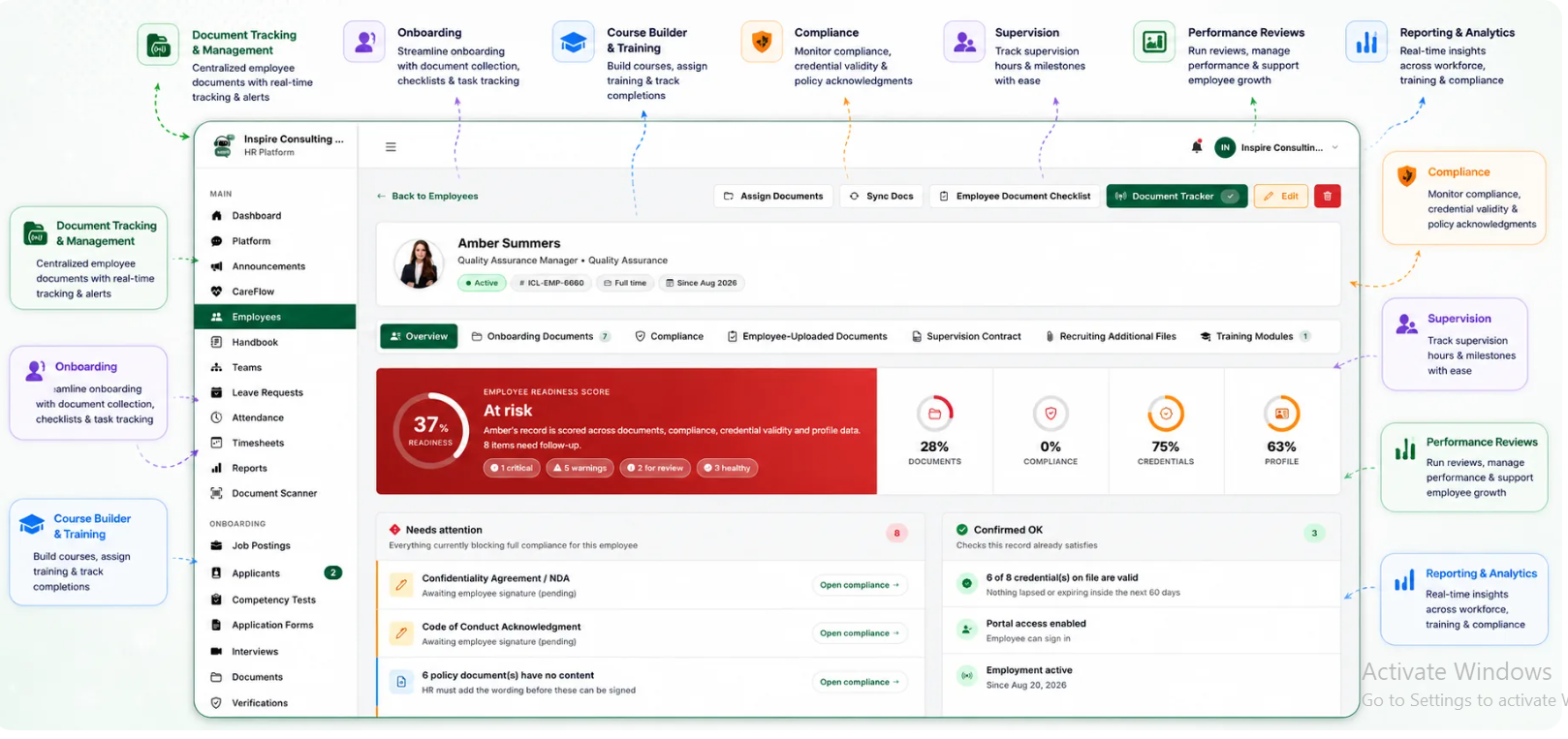
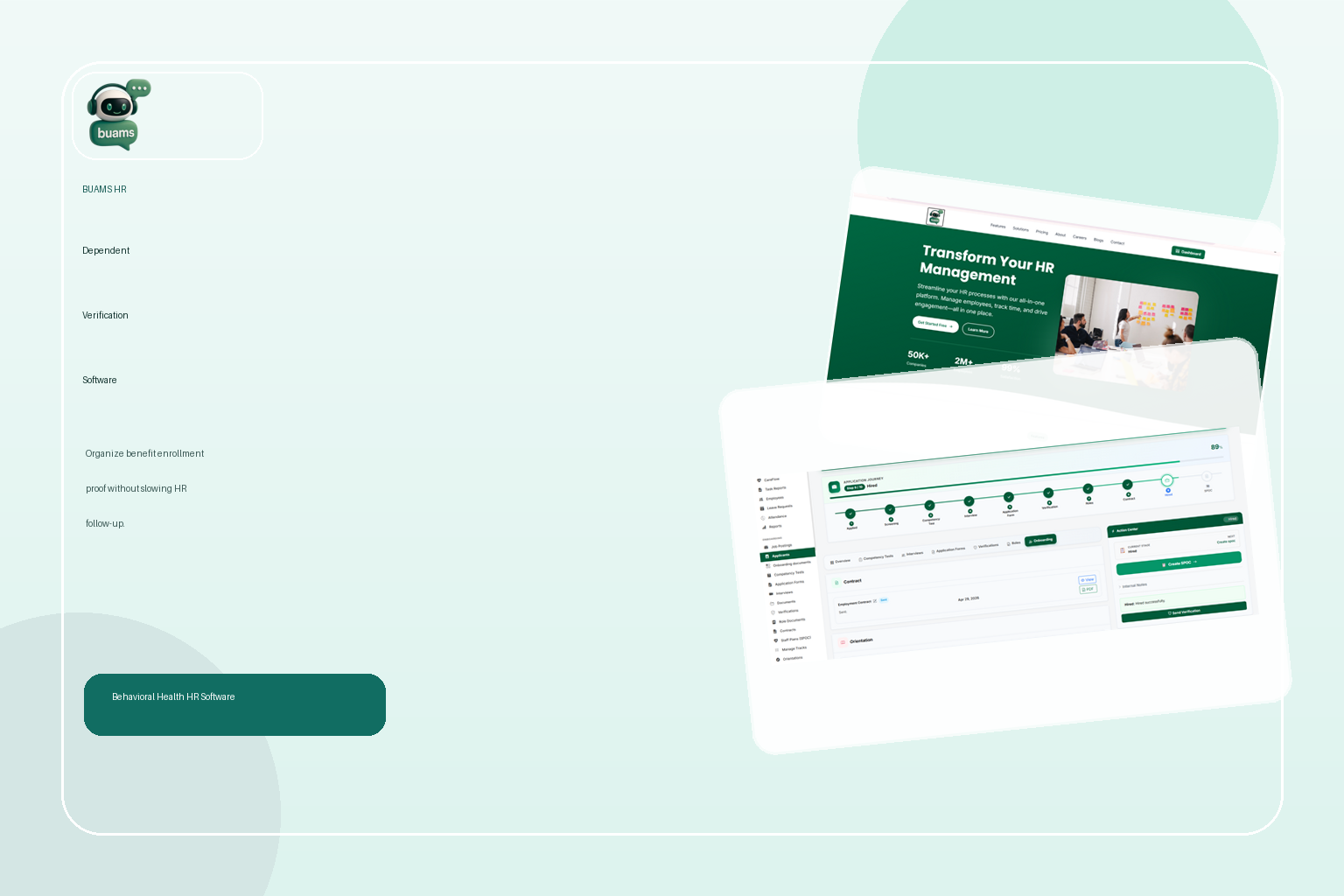
BUAMS HR helps behavioral health providers keep employee records, onboarding steps, compliance documents, and workforce updates in one connected environment. That makes it easier to manage dependent verification as part of a broader employee lifecycle instead of handling it through disconnected messages and folders.
When benefits-related documentation can stay aligned with employee records, status changes, and approval workflows, HR teams spend less time reconstructing what happened. Leaders gain better visibility into pending requests, employees receive faster responses, and organizations are better prepared when a carrier, auditor, or internal reviewer asks for proof tied to an enrollment decision.
For providers operating across multiple sites or programs, BUAMS HR also supports more consistent process design. Instead of each HR team member using a different naming convention or follow-up habit, agencies can standardize how requests are collected, reviewed, and retained.
Final thoughts
Dependent verification software gives behavioral health providers a practical way to manage one of the most sensitive parts of benefits administration with more speed and less confusion. It helps HR teams collect the right proof, document decisions clearly, and keep enrollment changes connected to the employee record.
As organizations grow, manual benefits workflows become harder to monitor and harder to trust. A structured process inside BUAMS HR helps dependent verification stay organized, secure, and easier to complete without creating unnecessary bottlenecks for employees or HR staff.